

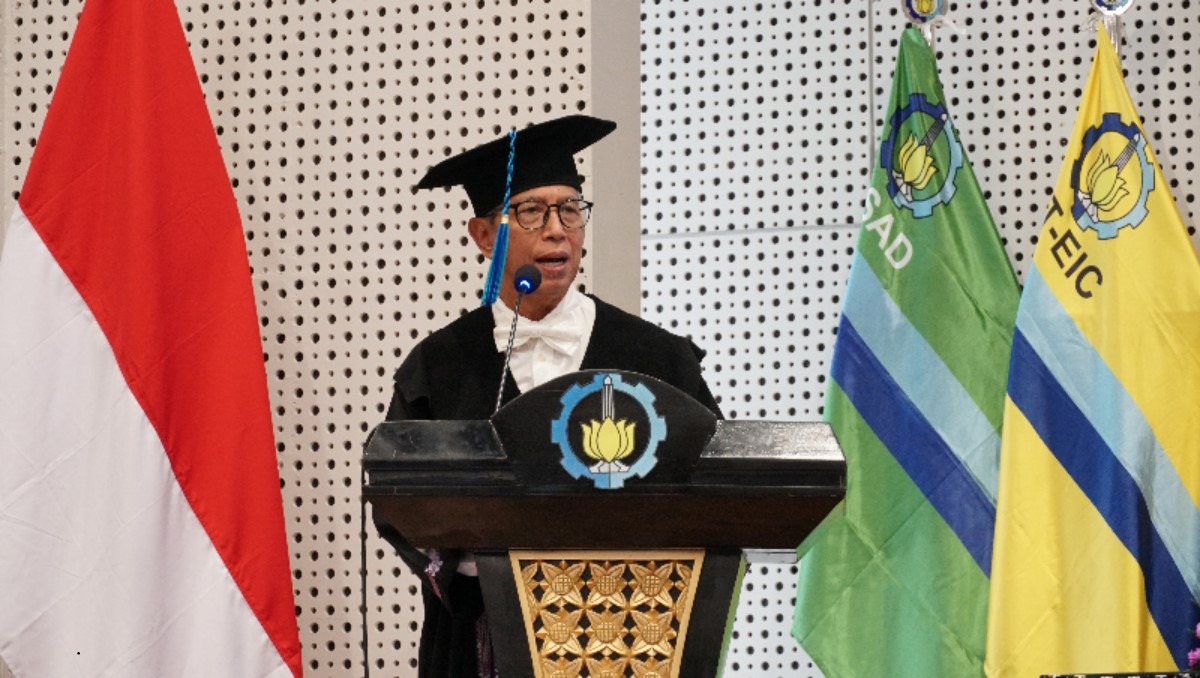
ITS Campus, ITS News — In regional planning, economic inequality is one of the challenges in realizing the progress and independence of the nation. This prompted the 209th Professor of Institut Teknologi Sepuluh Nopember (ITS) Prof Dr Ir Eko Budi Santoso Lic Rer Reg to study further in the field of regional economic planning and development.
In his scientific oration, the Professor of the Department of Urban and Regional Planning (PWK) ITS explained that differences in regional characteristics can make one region develop faster than others. In the long run, this condition can lead to inequality in the economic sector. “These different economic conditions usually make superior human resources only concentrated in developing regions,” added Eko.
Answering this challenge, the research member of the ITS Center for Regional Potential and Community Empowerment (PDPM) initiated the Place-based Policy approach. This approach adapts development strategies to the specific characteristics and needs of each region. By focusing on the utilization of local potential, he added, economic planning can improve regional competitiveness.
Eko explained that the measurement of the Regional Competitiveness Index (IDSD) is carried out with reference to the measurement of the global competitiveness index (GCI). This measurement consists of four components that form competitiveness, namely supporting environment, human resources, market and innovation ecosystem. “From these components, there are 12 pillars of competitiveness formed to measure IDSD in Indonesia,” explained the father of two daughters.
According to Eko, the measurement of economic competitiveness will be effective if supported by a data and technology-based approach. The development of digital technology supports the use of big data and artificial intelligence to analyze economic conditions based on regional competitiveness pillars. With data integration in Geographic Information Systems (GIS), planners can comprehensively understand spatial patterns and regional economic characteristics.

The bespectacled man said that by measuring and evaluating regional competitiveness, planners can develop sustainable local economic centers. The selection of regional development themes must be in accordance with the region’s leading sectors. “Areas that excel in the agricultural sector will be developed into agropolitan areas, while tourism, industry, and so on have different concepts,” he explained.
With the application of various disciplines, efforts to improve regional competitiveness contribute to the achievement of Sustainable Development Goals (SDGs). The synergy between the pillars of regional competitiveness and SDGs indicators covers 10 of the 17 sustainable development goals, especially in the aspects of economic growth, social equity, and environmental conservation.
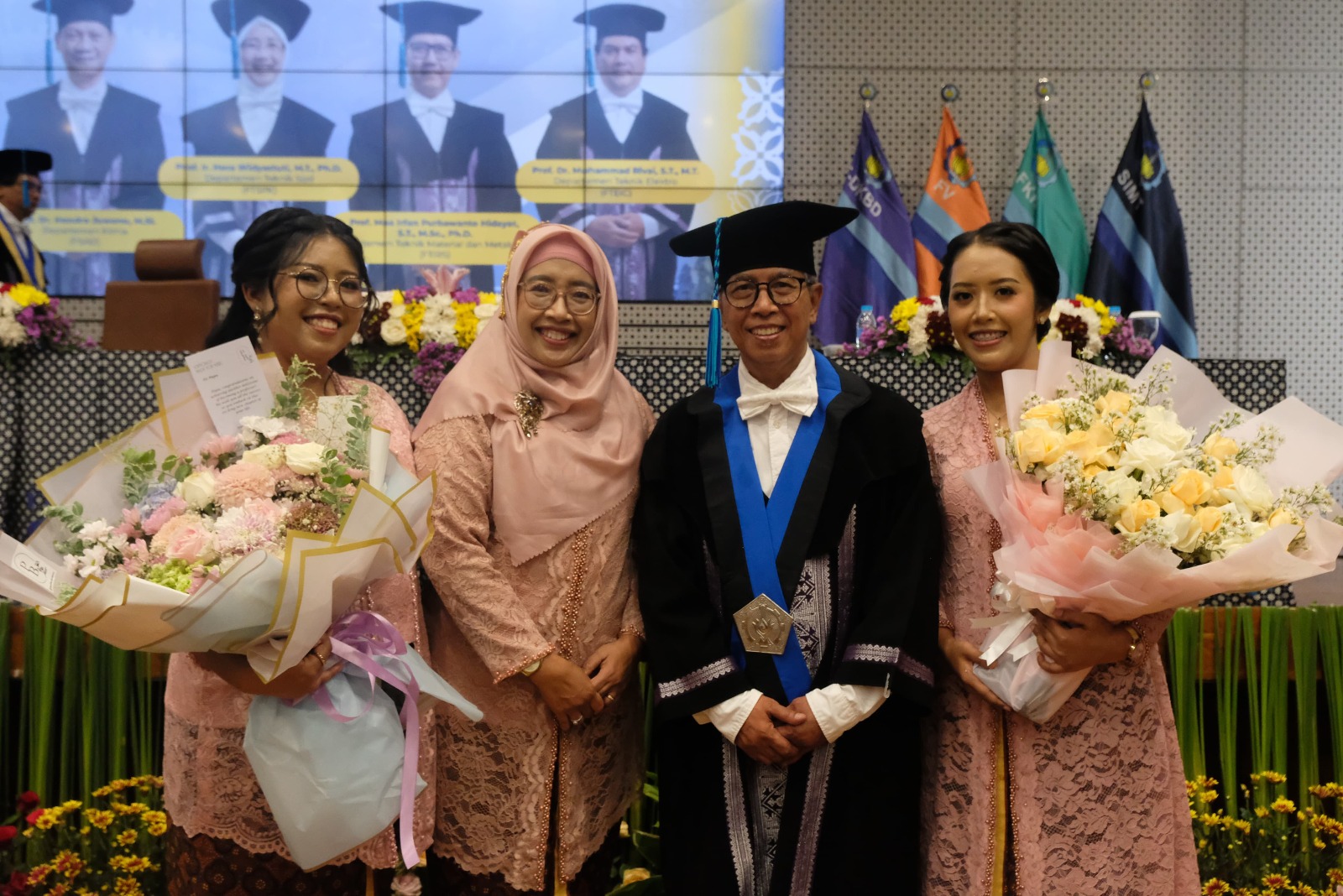
Finally, Eko hopes that multi-stakeholder collaboration can help regions with high economic inequality to catch up. Regions can optimally utilize resources to improve the welfare of the people. “Increasing the competitiveness of this region will create an independent and globally competitive nation,” he said optimistically. (ITS Public Relation)
Reporter: A Rifda Yuni Artika