
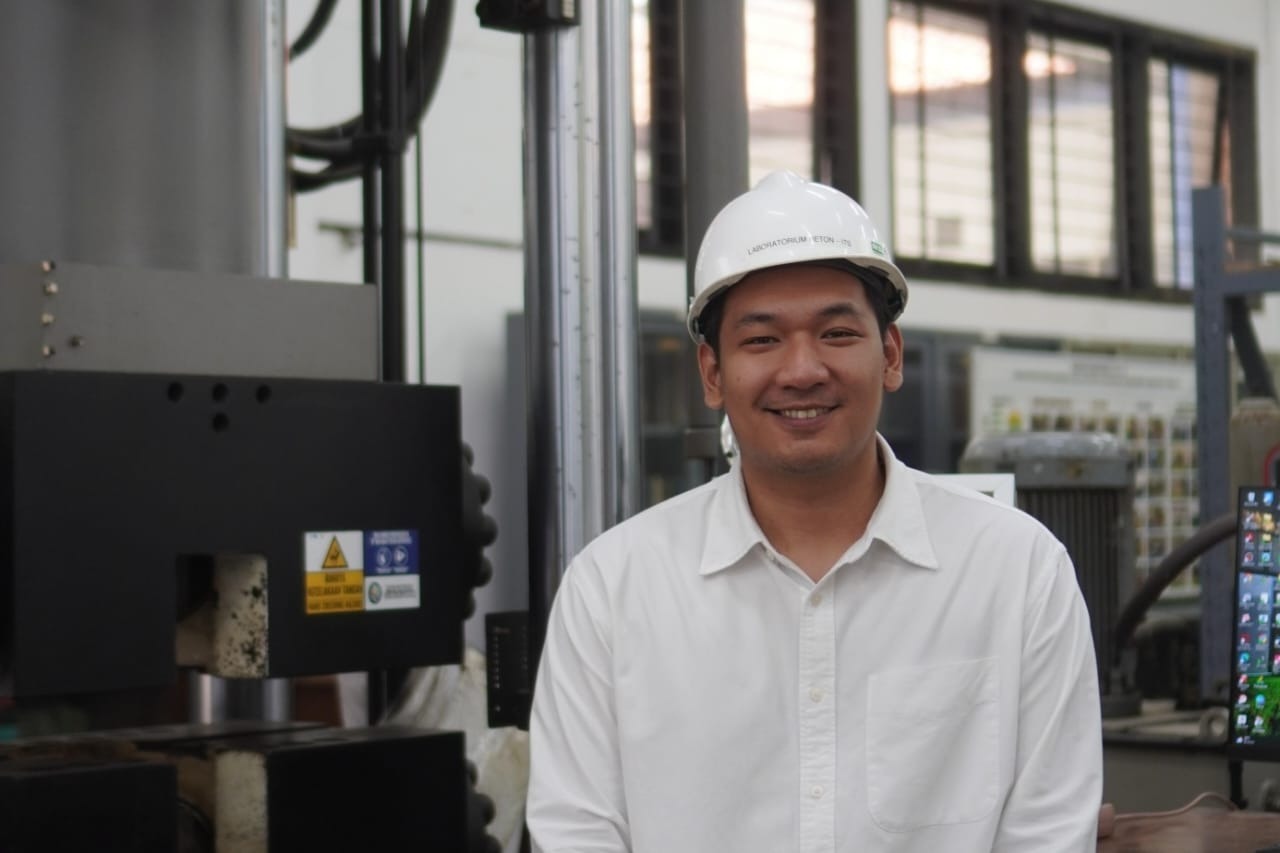
ITS Campus, ITS News — The Sepuluh Nopember Institute of Technology (ITS) has once again presented cutting-edge technological ideas through a dissertation by its academics. In this research, Dr. Danny Triputra Setiamanah, ST, MT, MEng, a doctoral graduate from the ITS Department of Civil Engineering, has developed an innovative slab track design based on advanced materials and a panel system for the development of national high-speed rail infrastructure.
Slab track is a crucial structural component that serves as the rail foundation for high-speed rail systems and has been implemented in the Jakarta-Bandung High-Speed Rail project. This innovation was introduced in response to the lack of relevant research and the lack of specific national standards for its design.
Therefore, the lack of research on this subject in Indonesia has prompted the need to develop a more adaptive design. “This research aims to demonstrate ITS’s readiness to support the independent development of high-speed rail in Indonesia,” explained the 31-year-old.
He explained that the high stiffness required for slab track makes this system demanding precise maintenance, while also impacting high construction and maintenance costs. Furthermore, he noted that the lack of a specific Indonesian National Standard (SNI) for high-speed rail slab track design was the primary reason for this research.
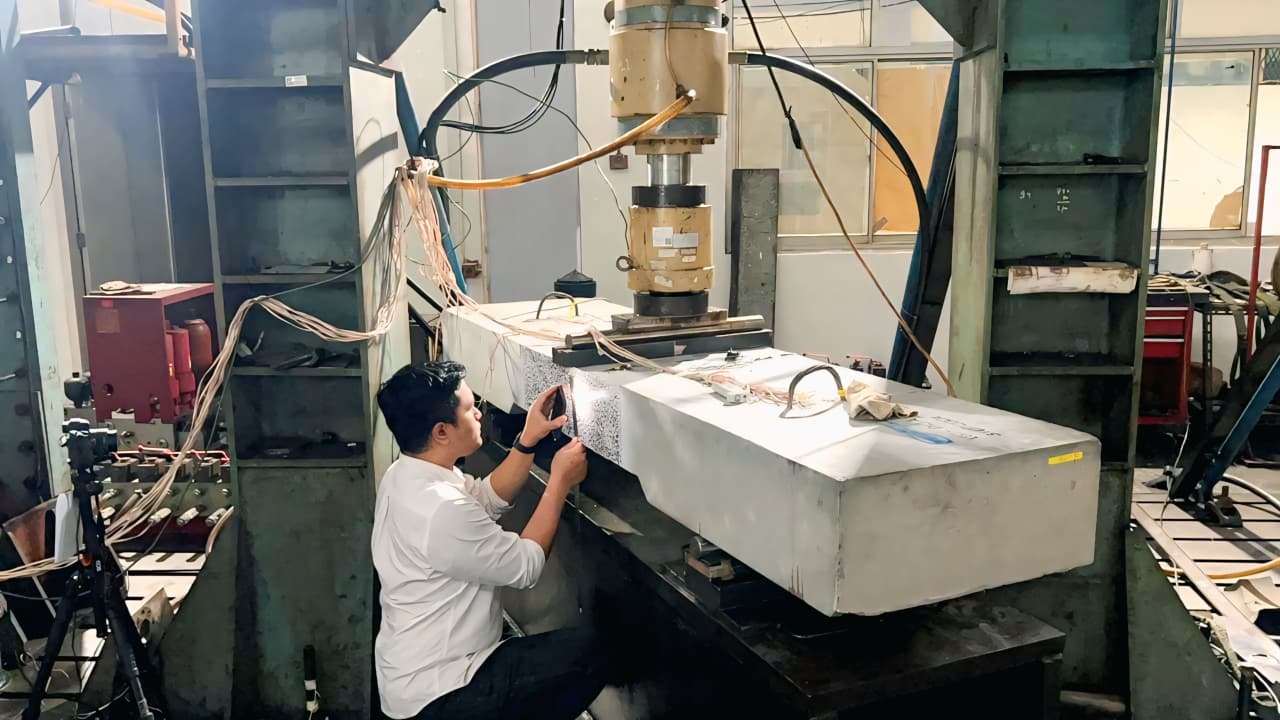
One of the research team during the reading stage of the number, length and width of cracksBased on this focus, this dissertation, titled “Fatigue Performance of Fiber-Reinforced Concrete Slab Track, ” develops a slab track design utilizing advanced materials such as steel fiber and polypropylene fiber , along with a 60-centimeter-wide modular panel system. The advanced materials are considered capable of improving fatigue resistance and crack control in concrete, while the panel system is designed to simplify maintenance and partial component replacement.
Danny stated that the choice of materials and systems was based on increased durability and efficiency, as well as their ability to enhance structural performance through the bridging effect of fiber-reinforced concrete. “With this advanced panel system and materials, maintenance requirements can be minimized and maintenance costs more efficient,” explained the Palembang native.
The ITS Civil Engineering graduate also revealed that this was proven through analysis results that showed significant performance improvements in the aspects of crack control and distribution, as well as post-cracking behavior stability compared to the reference prototype. Furthermore, this innovation also has the potential to reduce material costs by around 10-15 percent compared to the previous system. “Even though the plate is thinner and the reinforcement ratio is smaller, fatigue performance remains competitive and even better in the crack aspect,” explained Danny.
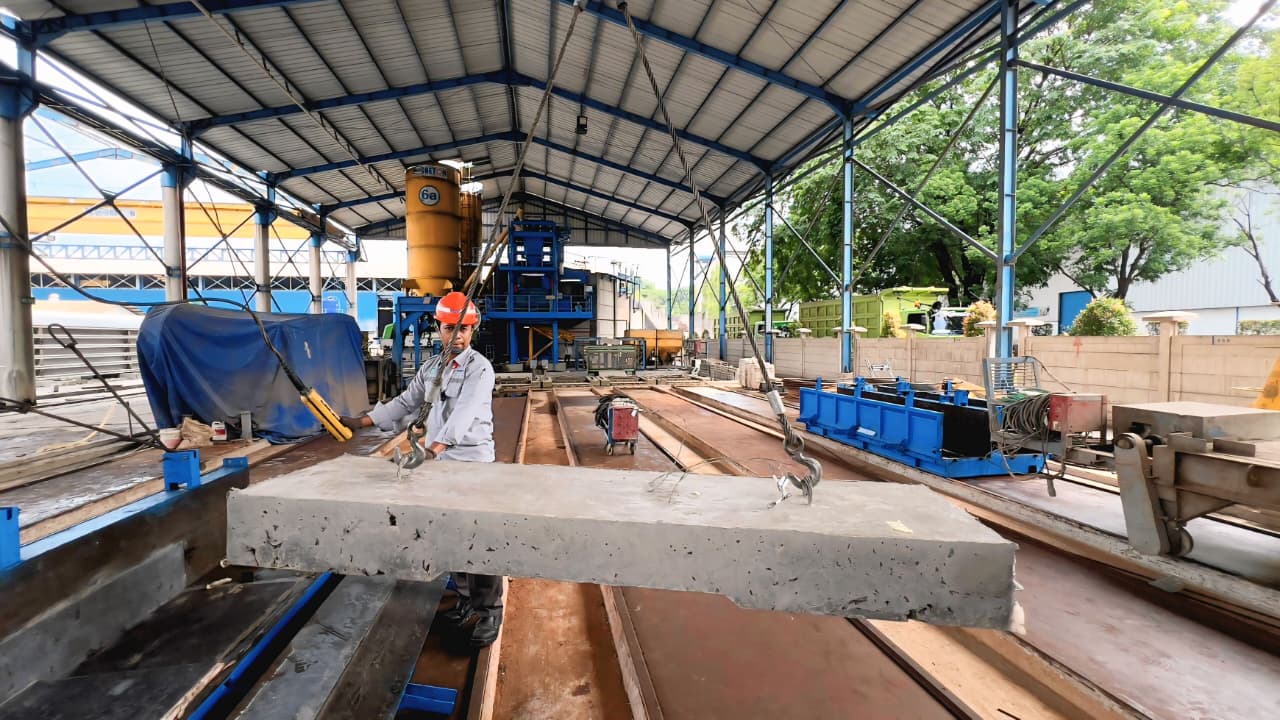
He stated that the test results also showed that the slab track design he developed was more adaptable to long-term, repetitive loads. These findings are expected to provide a scientific basis for developing national standards for high-speed rail slab track designs in the future.
He hopes that the slab track innovation developed by the ITS doctoral students can be implemented in the national high-speed rail project, while strengthening the independence of transportation technology based on Indonesian research. This research also demonstrates ITS’s commitment to supporting the Sustainable Development Goals (SDGs), particularly point 9 on Industry, Innovation, and Infrastructure. “Hopefully, this innovation can be used in Indonesia’s high-speed rail infrastructure in the future,” he concluded. (ITS Public Relations)
Reporter: Nailah Rifdah Zakiyah
Translator: Devinka Mutianeira