Published on
Wednesday, 8 April 2026
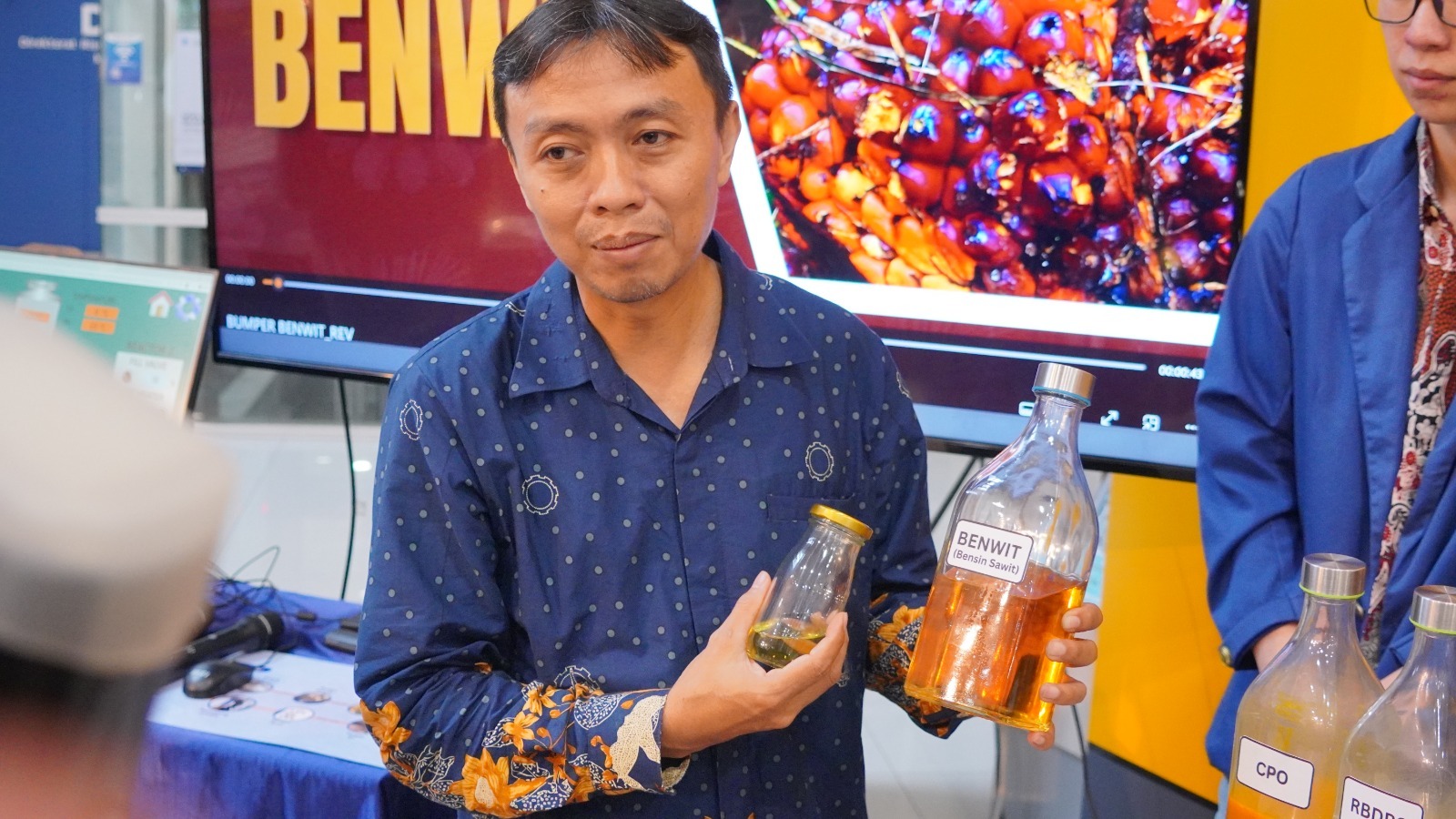
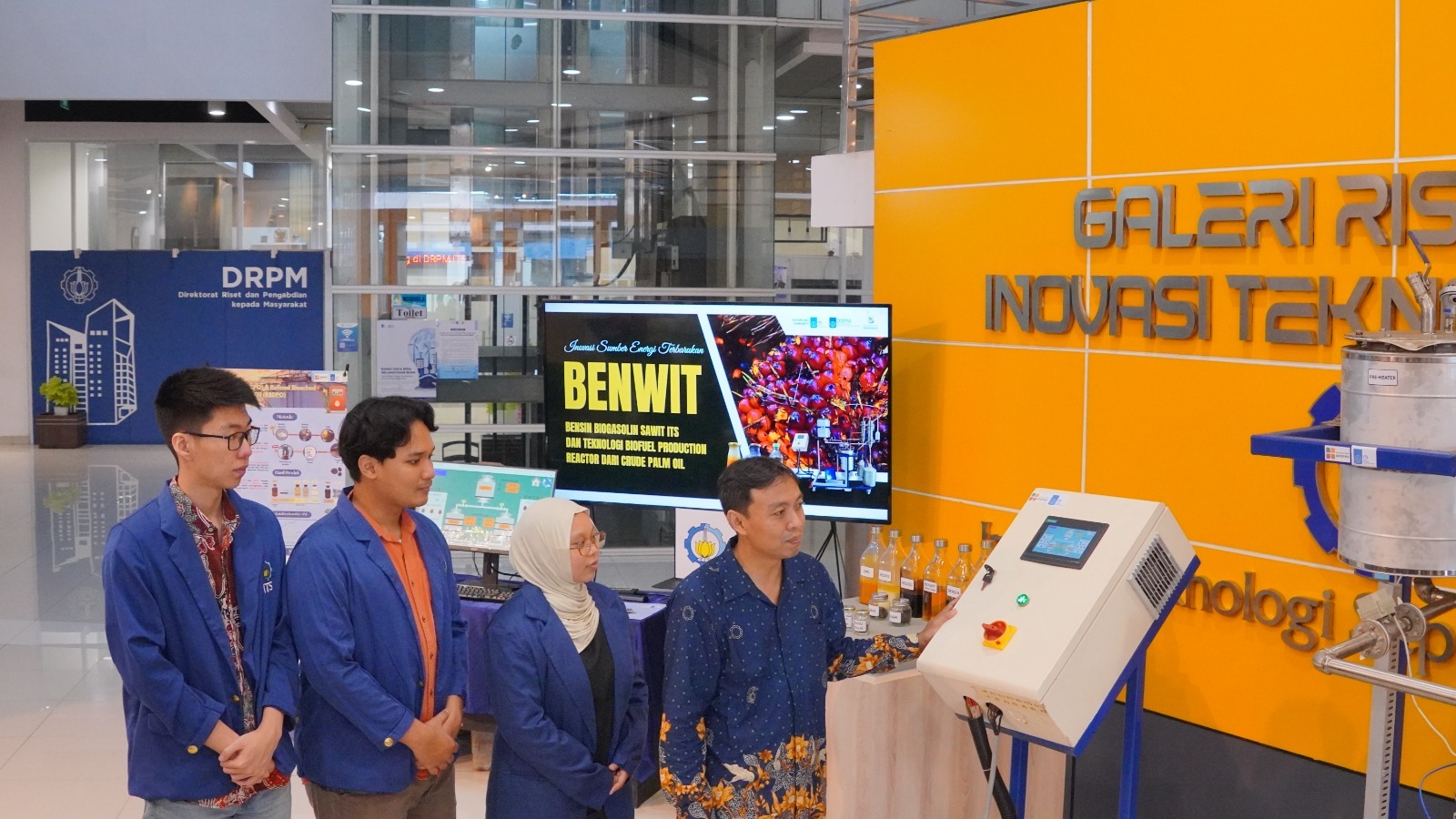
ITS Campus, ITS News — The issue of the energy crisis and the demand for a green energy transition continue to push academics to create alternative innovations. As an answer and to show support for renewable and sustainable energy innovation, a lecturer from the Materials and Metallurgical Engineering Department of Institut Teknologi Sepuluh Nopember (ITS), Dr Eng Hosta Ardhyananta ST MSc, together with his team developed a method for producing low-emission alternative fuel made from palm oil.
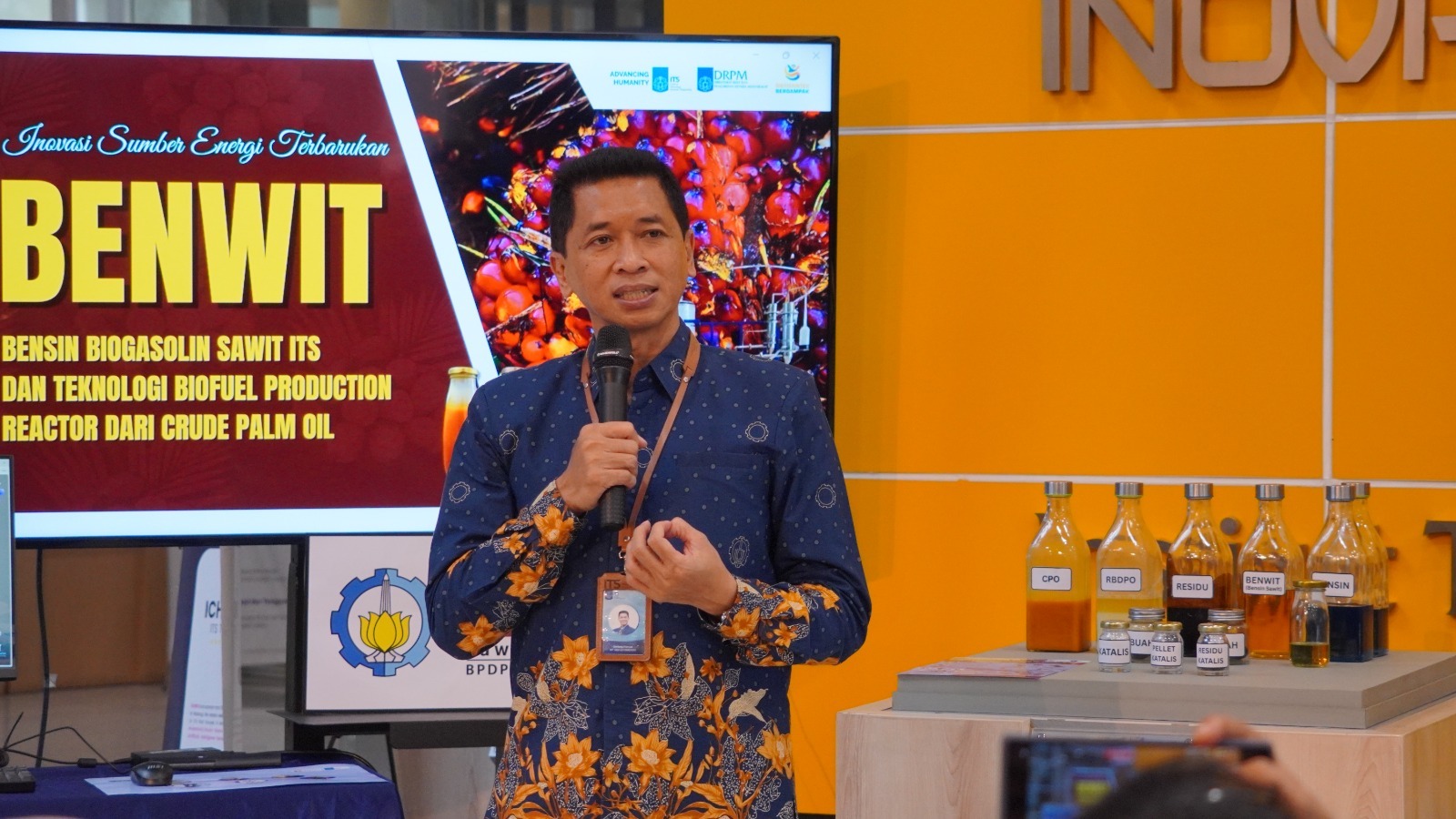
Seeing the current geopolitical situation, where countries in the world, especially ASEAN, are facing a fuel oil (BBM) crisis condition. ITS Rector Prof Dr (HC) Ir Bambang Pramujati ST MScEng PhD conveyed that the palm gasoline (Benwit) innovation by the ITS research team can help the Indonesian government to reduce dependence on fossil fuels. “This is an opportunity for the government to develop alternative energy sources amidst the fuel crisis issue due to the current conflict in the Middle East region,” said Bambang.
Hosta, who is an expert in the field of polymers, composites, and nanomaterials, stated that this research, funded by the Plantation Fund Management Agency (BPDP), focuses on reducing the residue generated from the production process. “The focus of our innovation is how to convert solid crude palm oil into a biogasoline product that is ready to use,” explained Hosta, who researched with his team.
In the process, the ITS team utilizes the catalytic cracking method, which is a technique of breaking large molecules into smaller molecules using a catalyst. Initially, this process used an alumina-based catalyst (γ-Al₂O₃) which acts as a molecular scissors to break down triglycerides in Crude Palm Oil (CPO) into light hydrocarbon fractions. Through this approach, biogasoline conversion can reach around 60 percent, although it still requires a high operating temperature of up to 420 degrees Celsius.
Further development was then carried out by presenting a bimetallic catalyst based on nickel oxide (NiO) and copper oxide (CuO) with a balanced composition. This combination works synergistically, where NiO plays a role in breaking the carbon chain, while CuO helps remove the oxygen content. As a result, the reaction process becomes more efficient with a decrease in operating temperature to 380 degrees Celsius and an increase in biogasoline yield reaching up to 83 percent.
The produced biofuel gasoline product is dominated by short-chain hydrocarbons in the C5 to C11 range, which are the main components of commercial gasoline. In addition, a portion of the gas by-product can be reused as reactor heating fuel.
Meanwhile, the oil-like liquid residue can be used as another alternative fuel, thus supporting a minimal waste production concept. “Because its characteristics resemble oil or used cooking oil, the liquid residue can be reused as stove fuel,” explained Hosta.
Not only technically superior, Hosta as the lead researcher explained that this research also considers life cycle assessment (LCA) in renewable and sustainable principles. The analysis results show that the biogasoline production process from CPO has a very low carbon footprint, so it is in line with clean and sustainable energy principles.
The production system implementing zero emission developed by the ITS research team is in line with the Sustainable Development Goals (SDGs). Specifically on point 7 regarding Affordable and Clean Energy as well as point 12 regarding Responsible Consumption and Production.
Hosta also explained that his innovation design is dedicated to Indonesia’s technological independence. To date, his innovation technology has been implemented in agricultural machinery that has high modification flexibility. According to Hosta, this was chosen because agricultural machinery is more open to adaptation with alternative fuels. “Also through this palm biogasoline, farmers no longer depend entirely on petroleum-derived gasoline whose prices are fluctuating,” expressed Hosta.
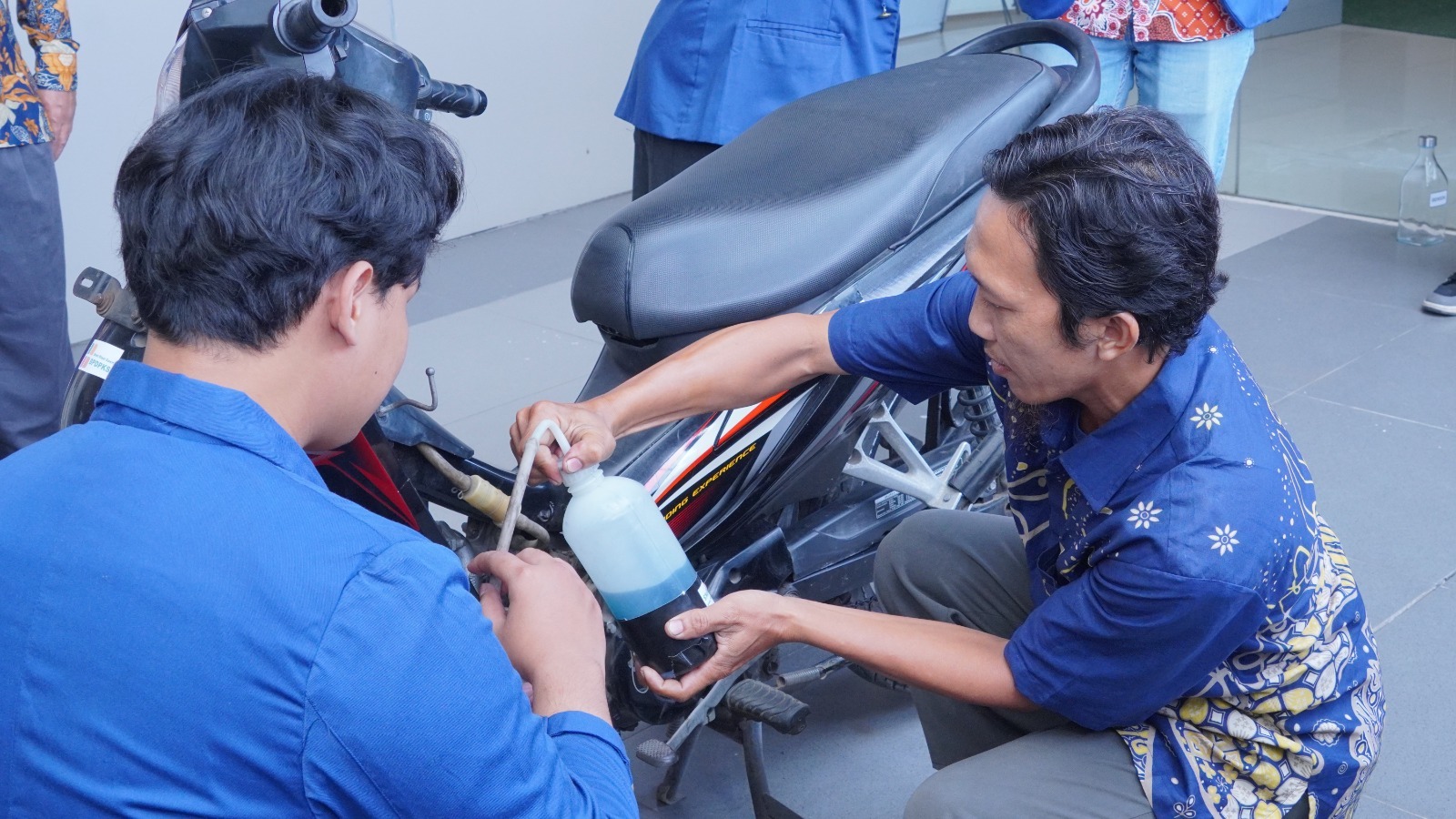
The birth of technological independence in gasoline production will certainly suppress the selling price to the public. It is also known that until now, oil and gas producers in Indonesia still depend on production tools and machines belonging to foreign parties, such as the United States.
Going forward, Hosta wants to continue developing his innovation so that it can be implemented more widely with a larger production capacity. Thus, it is expected to answer the threat of the energy crisis in Indonesia. This also helps answer SDGs point 13 regarding Climate Action.
In line with this, the ITS Director of Research and Community Service (DRPM) Fadlilatul Taufany ST PhD admitted that he will coordinate with the Republic of Indonesia Ministry of Energy and Mineral Resources (ESDM), so that this innovation product can be tested as a national project. “At the very least, the existence of this innovation will reduce Indonesia’s burden on export-import dependence,” he asserted optimistically. (ITS Public Relations)
Reporter: Syifa Rahmadina