Published on
Thursday, 13 August 2026
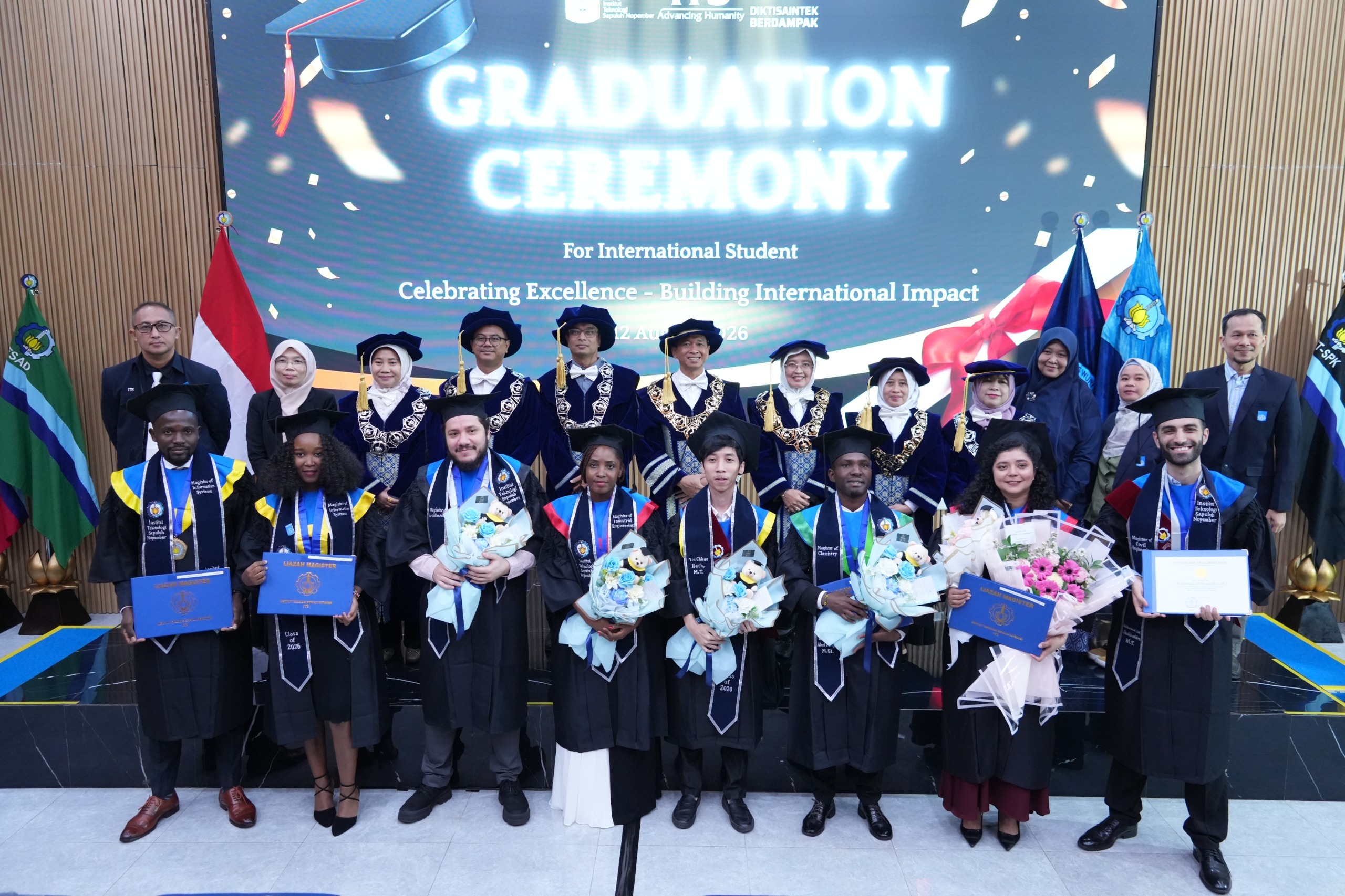
ITS Campus, ITS News — The Sepuluh Nopember Institute of Technology (ITS) demonstrated its global academic quality through a graduation ceremony for international master’s students on Wednesday (August 12th). Held at ITS Tower 2, the Campus of Heroes inaugurated nine students from six countries in a special ceremony.
ITS Rector Prof. Dr. (HC) Ir. Bambang Pramujati, ST, MScEng, PhD, expressed his appreciation for the graduates’ efforts. He assessed that completing studies far from home requires mental toughness and strong adaptability. The students also had to become familiar with a new culture, including the language, customs, and tastes of Indonesian cuisine.
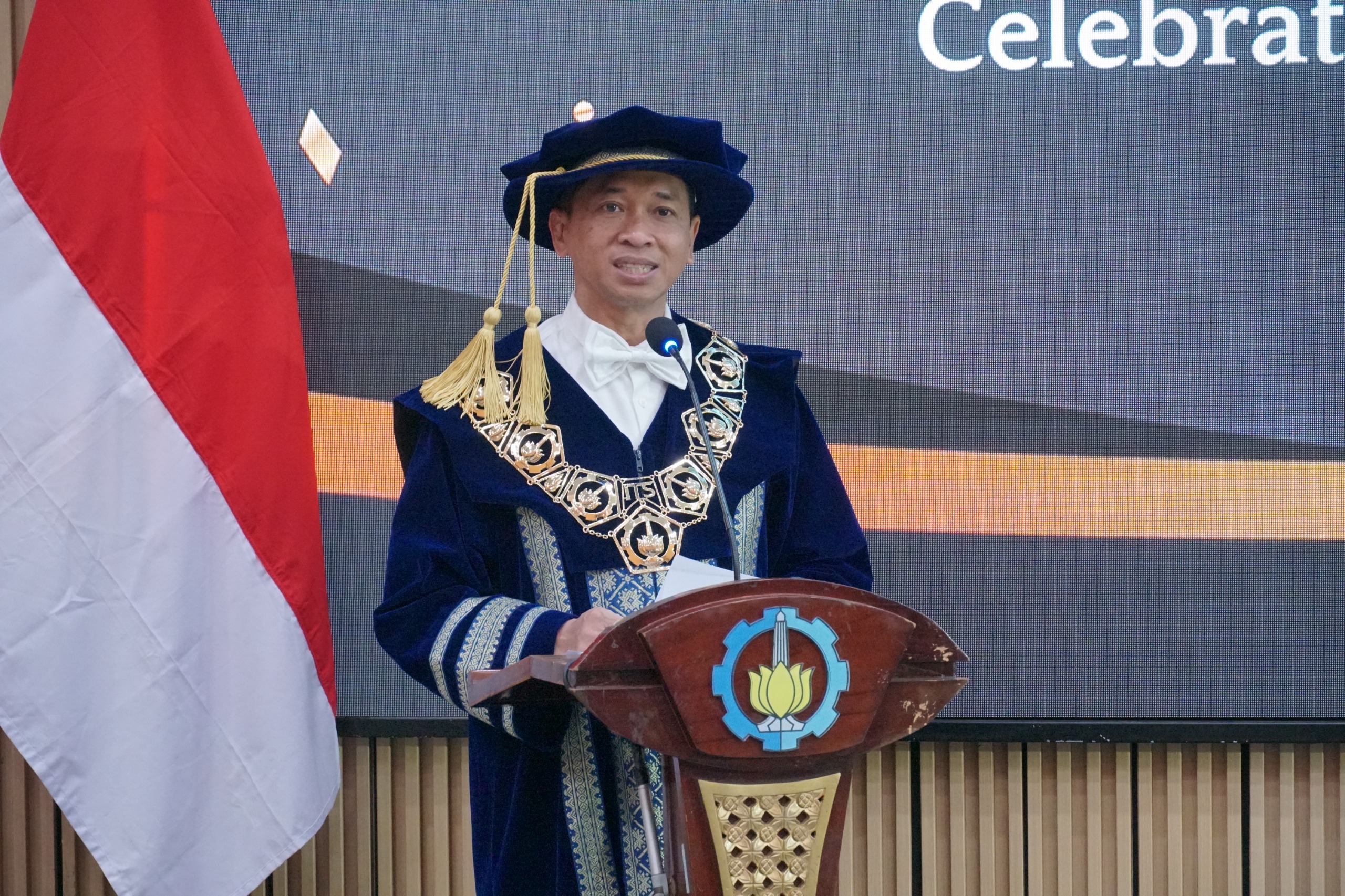
ITS specifically graduated five students receiving the Developing Countries Partnership (KNB) scholarship and four students receiving the Indonesian AID Scholarship (TIAS). The Rector conveyed this openness as part of ITS’s efforts to expand access to education globally.
The ITS Mechanical Engineering Professor encouraged the graduates to be the face of ITS in their countries by sharing their positive experiences during their studies. “Be a bridge of collaboration between Indonesia and your home countries through the knowledge and experience you gain,” Bambang urged.
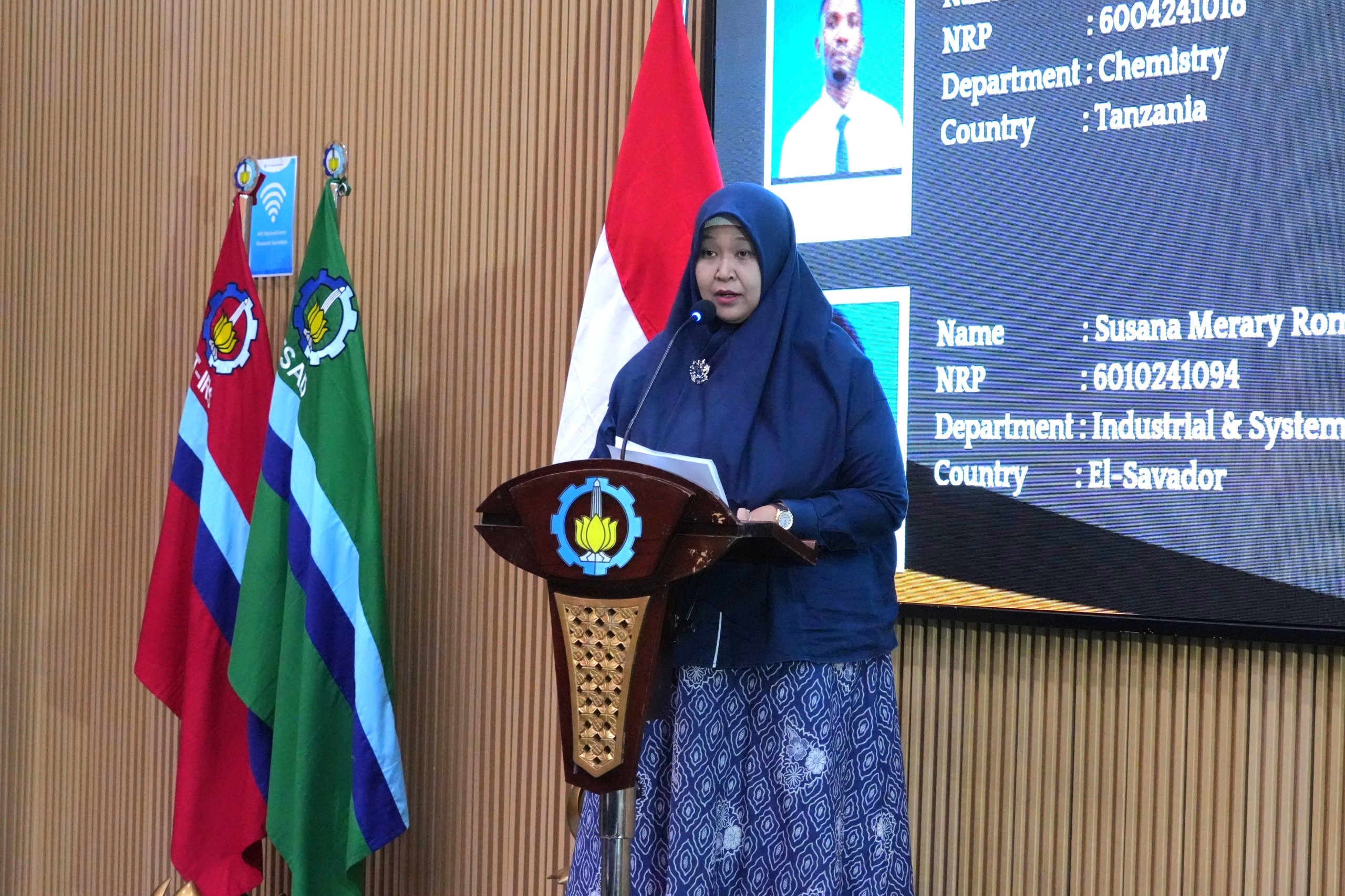
ITS Director of Undergraduate and Postgraduate Education, Prof. Dr. Eng. Chastine Fatichah, S.Kom., M.Kom., explained the diverse nationalities of the students graduating that day. The graduates came from various parts of the world, representing six countries: Kenya, Syria, Tanzania, Cambodia, Laos, and El Salvador. “This distribution demonstrates the broad reach of ITS’s scientific expertise in attracting and nurturing superior talents from the international arena,” Chastine said.
The nine graduates were spread across four faculties with diverse academic fields. Two graduates were from the Faculty of Civil Engineering, Planning, and Geoscience (FT-SPK), and one from the Faculty of Science and Data Analytics (FSAD). Four graduates were from the Faculty of Intelligent Electrical and Informatics Technology (FTE-IC), and two others were from the Faculty of Industrial Technology and Systems Engineering (FTI-RS). A KNB scholarship student, Mohammad Jad Shakhashiro from Syria, achieved the highest GPA of 3.92.
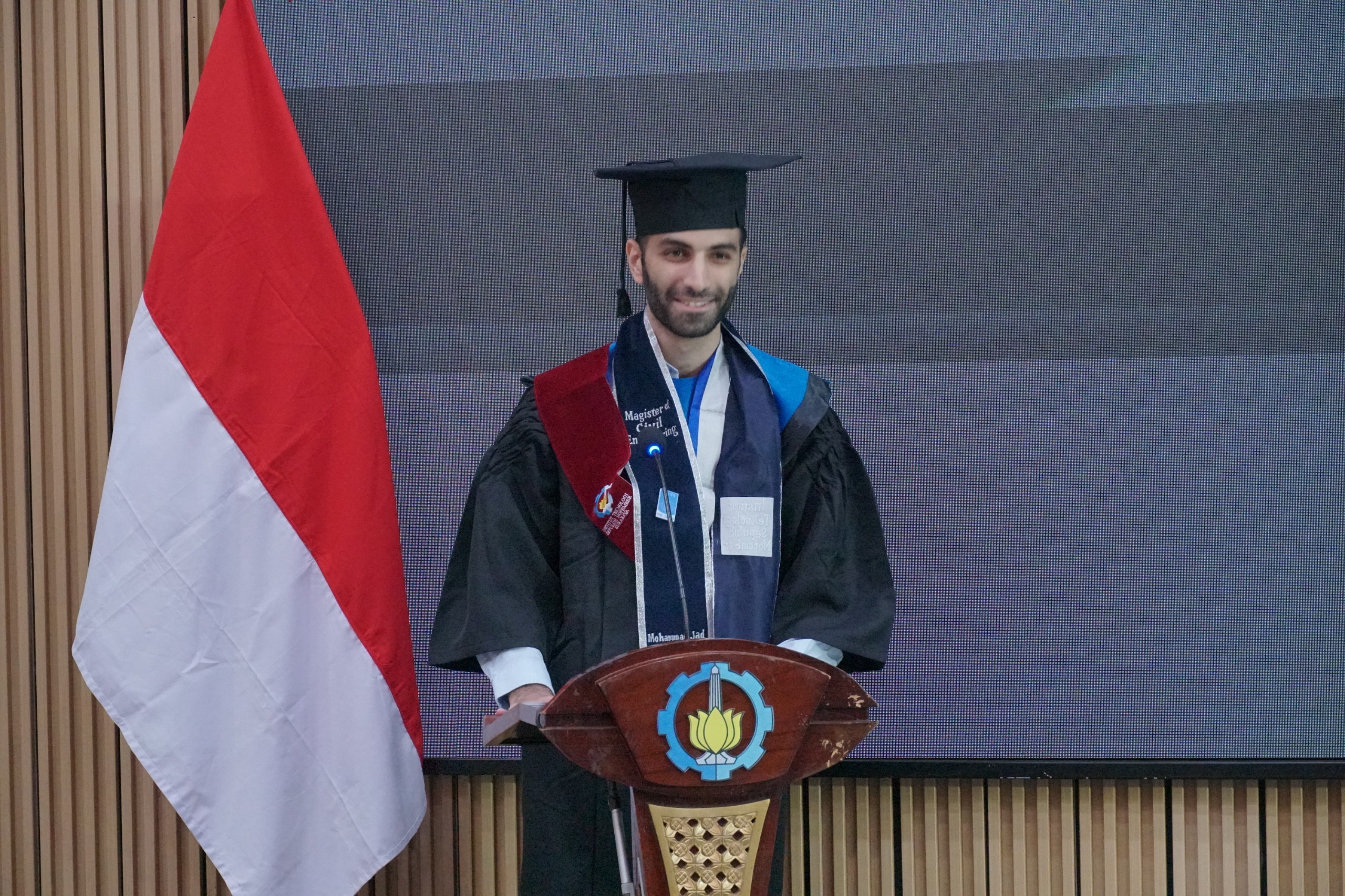
This is also reflected in the graduates’ academic experiences during their studies at ITS. FT-SPK Master’s graduate Mohammad Jad Shakhashiro experienced significant changes since arriving in Indonesia. He faced not only academic challenges but also the process of adapting to a new culture.
The man familiarly known as Jad said his experiences were enriched by joining the Concrete Laboratory research team at the Faculty of Engineering and Technology (FT-SPK) ITS. “Through research and experimentation, I honed my technical skills and problem-solving skills,” Jad shared his impressions of his studies.
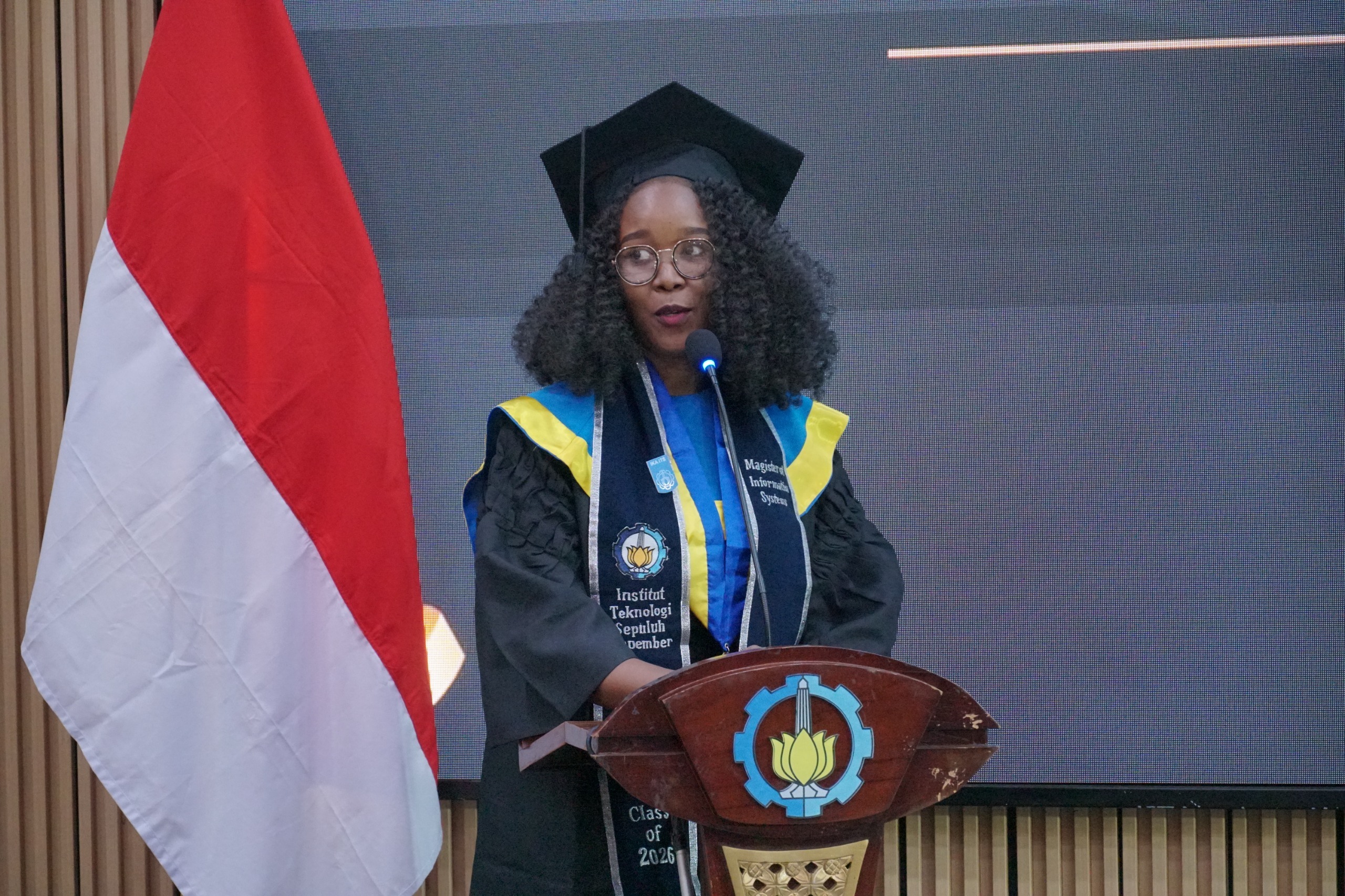
Meanwhile, FTE-IC Master’s graduate Treza Nyanchama Ogeto shared how he began his journey with apprehension. He admitted that Indonesia was the first country he had visited. However, the friendliness of the Indonesian people gradually transformed those concerns into a sense of comfort.
As part of the first cohort of TIAS recipients, Treza expressed his appreciation for the support of the ITS Directorate of Global Partnerships (DKG), the lecturers, and academic buddies who have been part of his academic journey. “Indonesia feels like family because of the support and friendship we’ve received,” Treza said, filled with emotion.
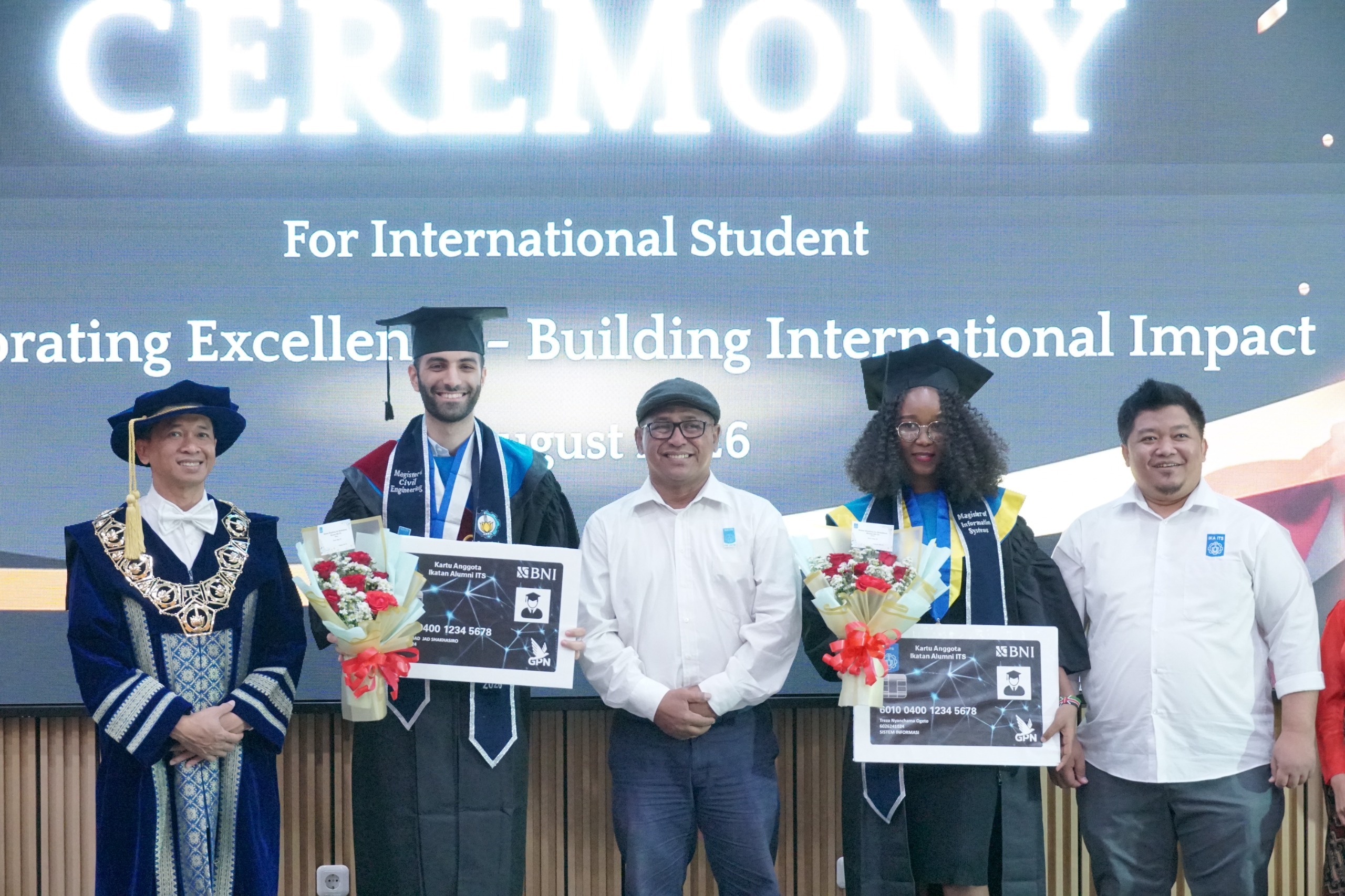
It is hoped that these diverse experiences will equip the graduates to continue their studies after completing their studies at ITS. The Rector and ITS leadership welcomed the international graduates to become part of the extended ITS Alumni Association family.
This ITS graduation ceremony, specifically for international students, also represents several pillars of the Sustainable Development Goals (SDGs). ITS has supported the achievement of point 4, namely creating quality education by providing access to inclusive education that meets international standards. Furthermore, ITS expands equitable learning opportunities and reduces global disparities, in line with point 10 of SDGs.