Published on
Thursday, 3 September 2026
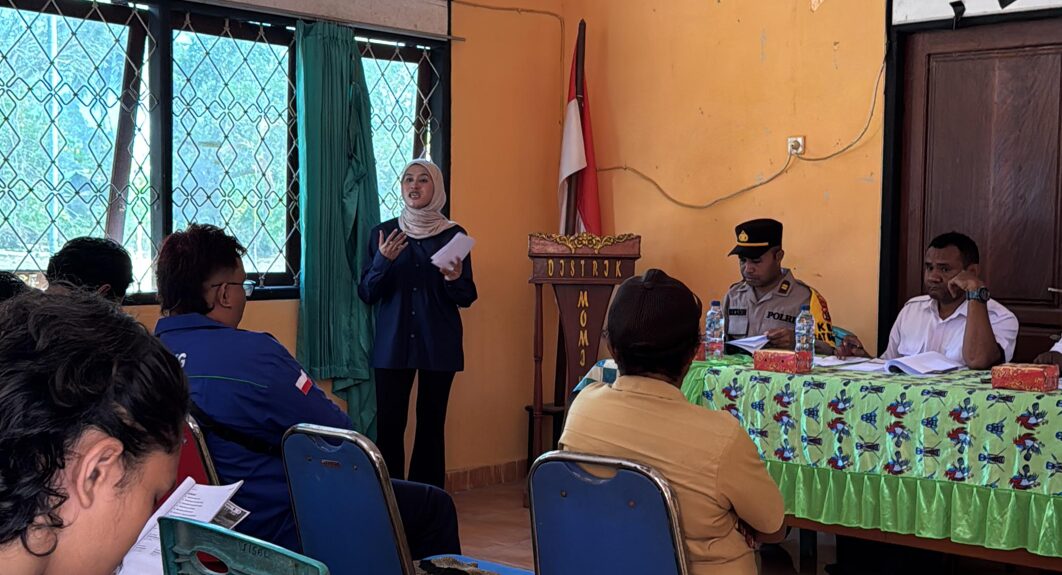
South Manokwari, ITS News — The Patriot Expedition Team (TEP) of the Sepuluh Nopember Institute of Technology (ITS) in 2026 provided assistance to cocoa farmers to strengthen a productive economy based on local potential. Working in the Momi Waren and Ransiki Districts of West Papua, the patriot team was led by Berto Mulia Wibawa, SPi, MM, PhD.
According to Berto, the Momi Waren area faces various complex social, economic, and environmental challenges. He explained that the structural poverty rate in the region reached 26.83 percent in 2024. This figure indicates that the Human Development Index (HDI) is in the moderate category.
In fact, Berto revealed that Momi Waren has promising economic potential. In 2023, the region’s cocoa commodity won an international Gold Award for Cacao of Excellence. “However, the reality is that farmers still sell their harvest as raw beans, with marketing not yet communal and prices unstable,” he concluded.
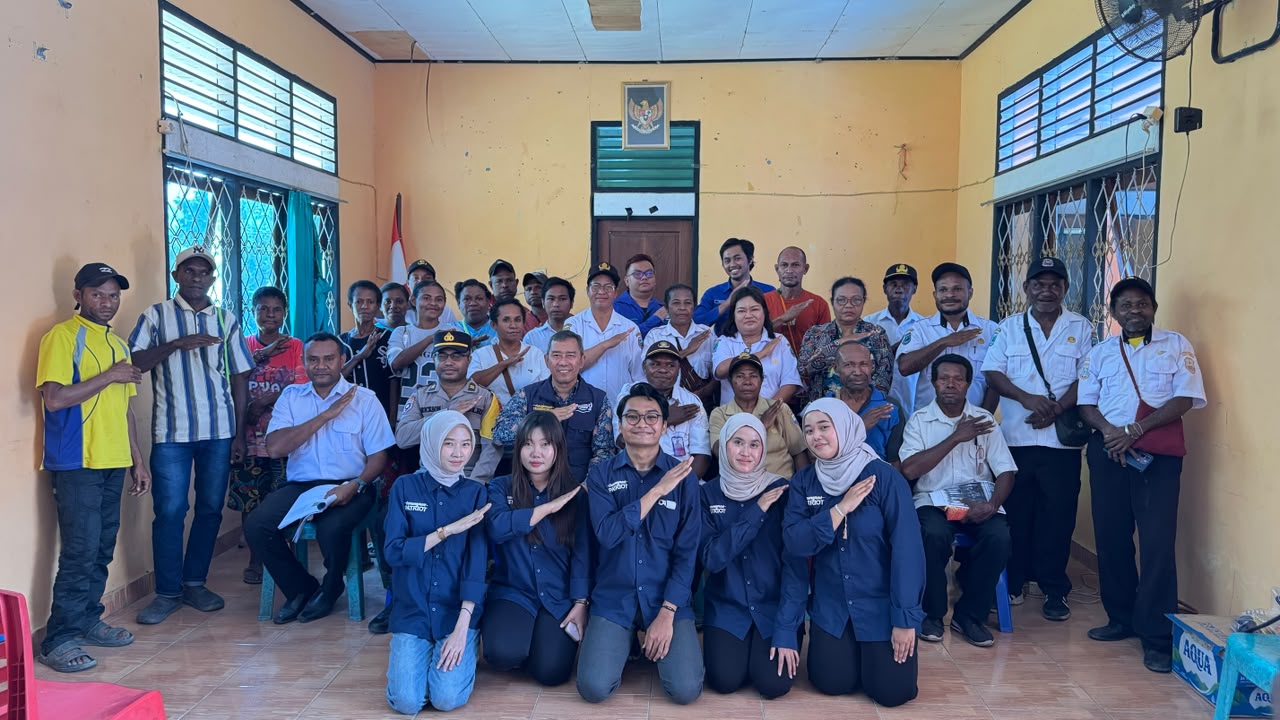
Harvest success is often threatened by limited climate data from the Meteorology, Climatology, and Geophysical Agency (BMKG) and the challenges of road infrastructure to villages on slopes. Furthermore, there are other issues such as low food diversification, with a heavy reliance on a single commodity. “We found no rice farmers, only cocoa farmers, indicating this region’s heavy dependence on a single commodity,” explained the head of TEP 6 ITS.
To address this issue, the ITS Patriot 6 team introduced a flagship program focused on mentoring cocoa farmers, divided into two phases. First, on-farm training to improve soil fertility and water conservation. Next, the team provided off-farm training to improve post-harvest quality and expand access.
PT Eiber Suth Cokran was directly involved in the training to ensure farmers had permanent industry contacts. Furthermore, the team facilitated a communal harvest collection mechanism and piloted seed deliveries to the company. “Because our principle is that what we leave behind is not assistance, but rather capabilities, tools, institutions, and networks,” said Berto.
To ensure sustainability, the patriot team, led by an ITS Business Management lecturer , developed a nine-step roadmap to address existing issues. Through focus group discussions (FGDs) with policymakers and the local community, the team provided workshops to support local economic development. “We provided training in bookkeeping, digital marketing, and collaboration with industry players in stages,” said Berto.
Furthermore, the patriot team emphasized strengthening local institutions, rather than replacing them with new groups. This was deemed far more effective and sustainable, preventing institutions from being at risk of dying once the team returned.
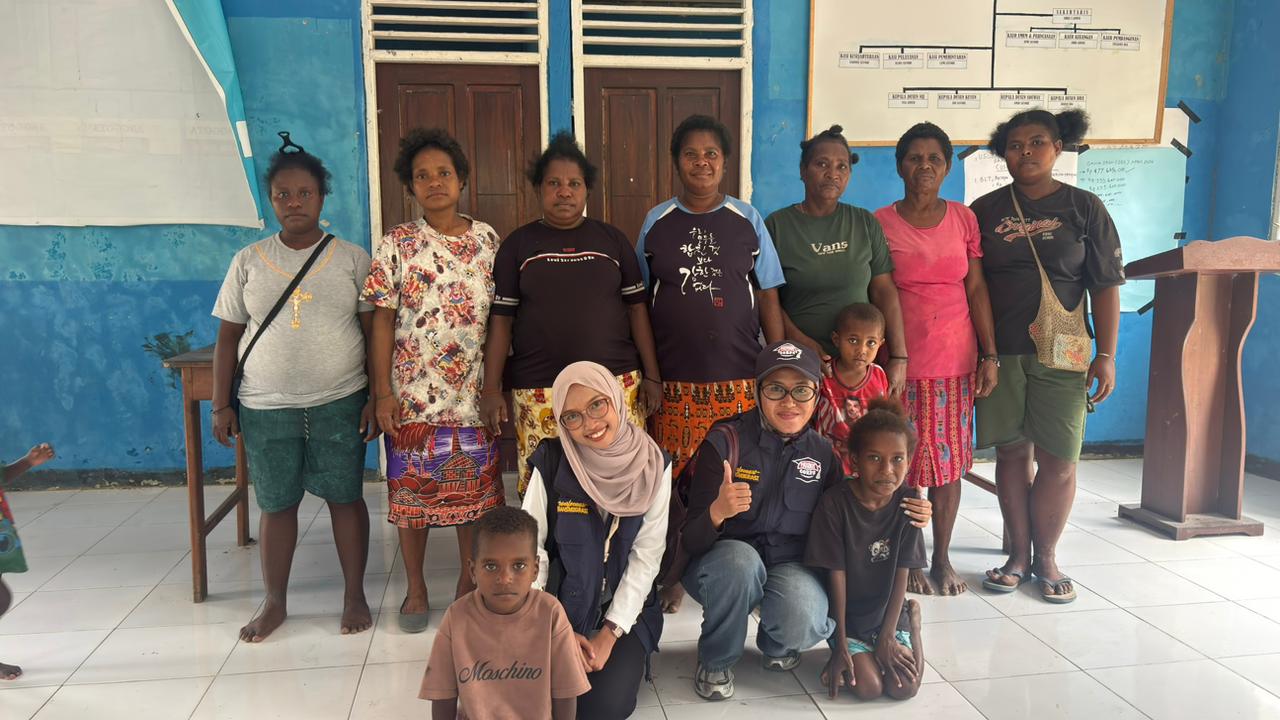
Furthermore, Berto revealed that the team successfully produced several concrete, long-term innovations. These included the development of a planting calendar based on BMKG rainfall data, a soil pH measurement guide, and a standard operating procedure (SOP) for digging holes or small trenches. ” Everything is documented as a written guide that can be reused, not a one-time training,” explained the ITS expert lecturer in Entrepreneurship Marketing.
The support provided by the ITS Patriots team not only contributes to the success of the Indonesian Ministry of Transmigration (Kementrans) program but also contributes to the Sustainable Development Goals (SDGs), particularly SDGs points 1 and 8, which emphasize economic growth to achieve a poverty-free society. (*)