Published on
Friday, 14 August 2026
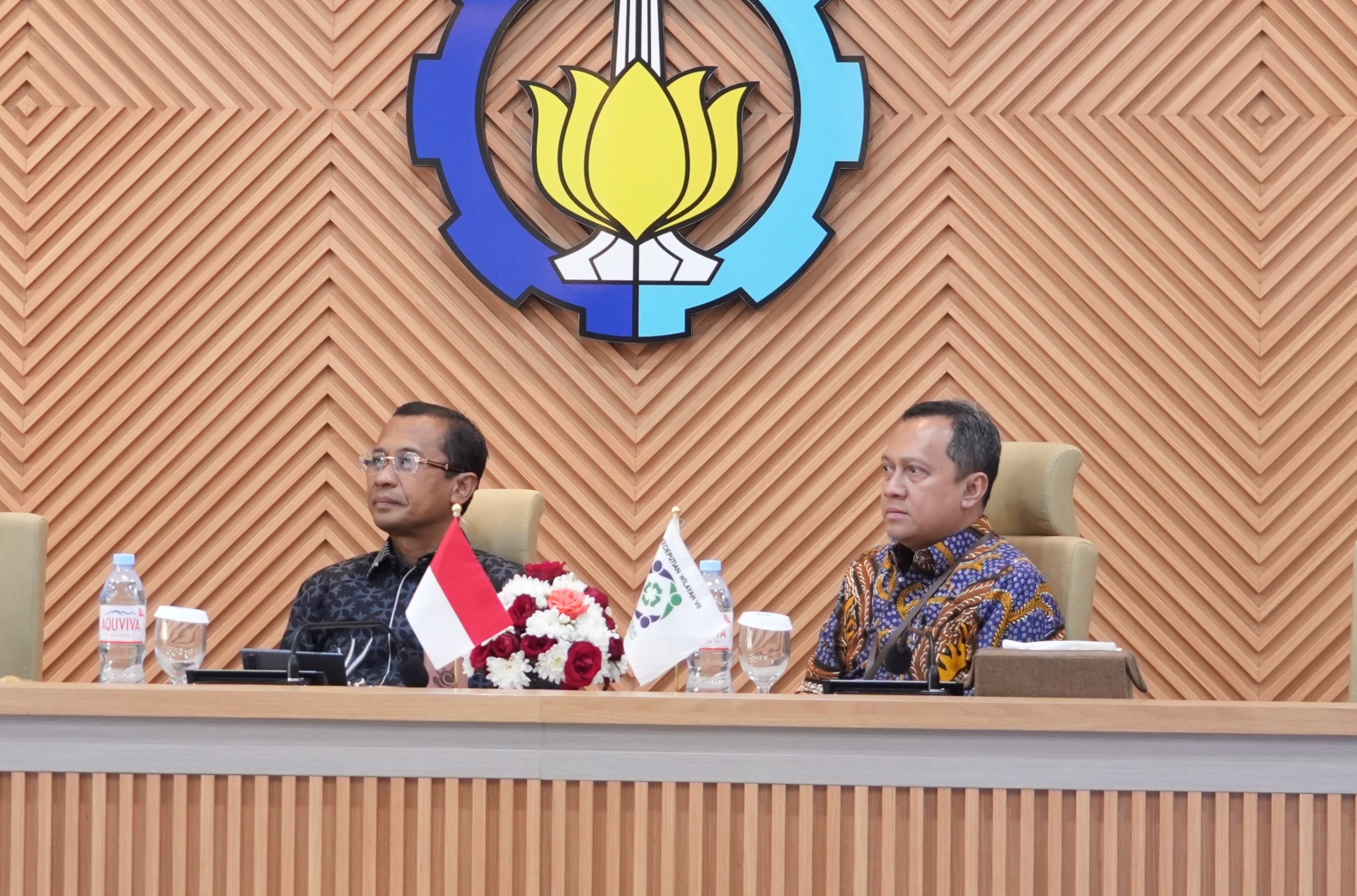
ITS Campus, ITS News — The Sepuluh Nopember Institute of Technology (ITS) once again held the 2026 National CEO Talk forum, featuring cross-sector policymakers, on Thursday (August 13). This meeting provided a strategic platform for formulating national policy directions, particularly in the energy sector, industrial downstreaming, and increasing Indonesia’s global competitiveness.
In collaboration with Airlangga University (UNAIR), this year’s CEO Talk focused on integrating the health and energy sectors. The forum brought together academics and practitioners to accelerate national innovation in addressing global challenges.
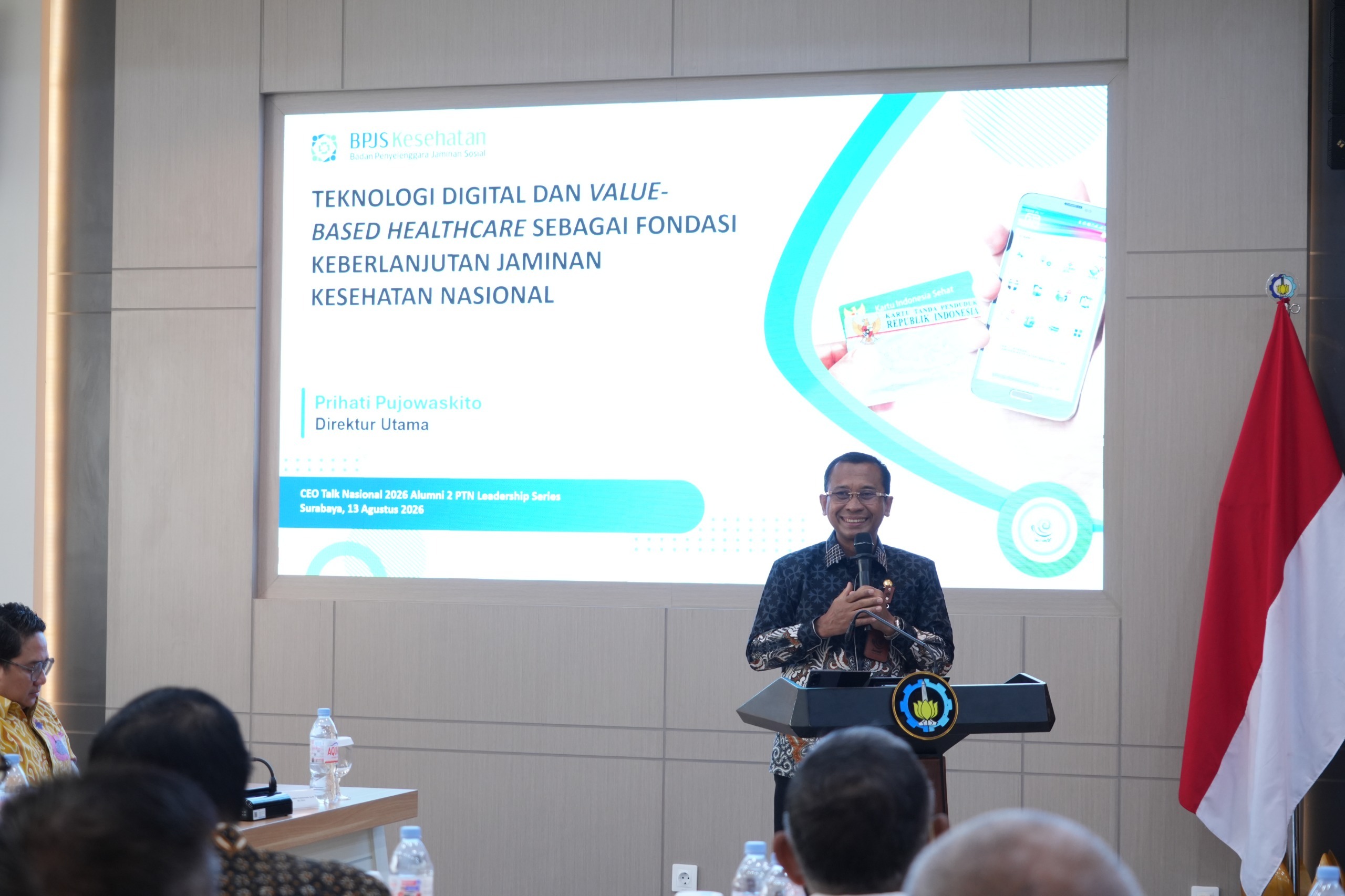
The President Director of the Indonesian Social Security Agency for Health (BPJS Kesehatan), Major General (Ret.) Dr. Prihati Pujowaskito, emphasized the importance of strengthening promotive and preventive efforts in the healthcare sector. This is an essential step that must be prioritized to address the epidemic of chronic disease spikes caused by demographic shifts.
The cardiologist and blood vessel specialist explained that BPJS Kesehatan (Indonesian Health Insurance) is continuously striving to optimize primary care services as the main coordinator. This is to support increased efficiency in medical care for the public. “Digitalization of services is now being accelerated to reduce bureaucracy and improve the overall patient experience at healthcare facilities,” he said.
With this strategic meeting at CEO Talk 2026, Prihati believes cross-sector synergy is essential to ensure the sustainability of social security programs for all. She hopes that ITS, as a technology campus, can contribute to the development of digital technology that aligns with the needs of both government and private institutions.
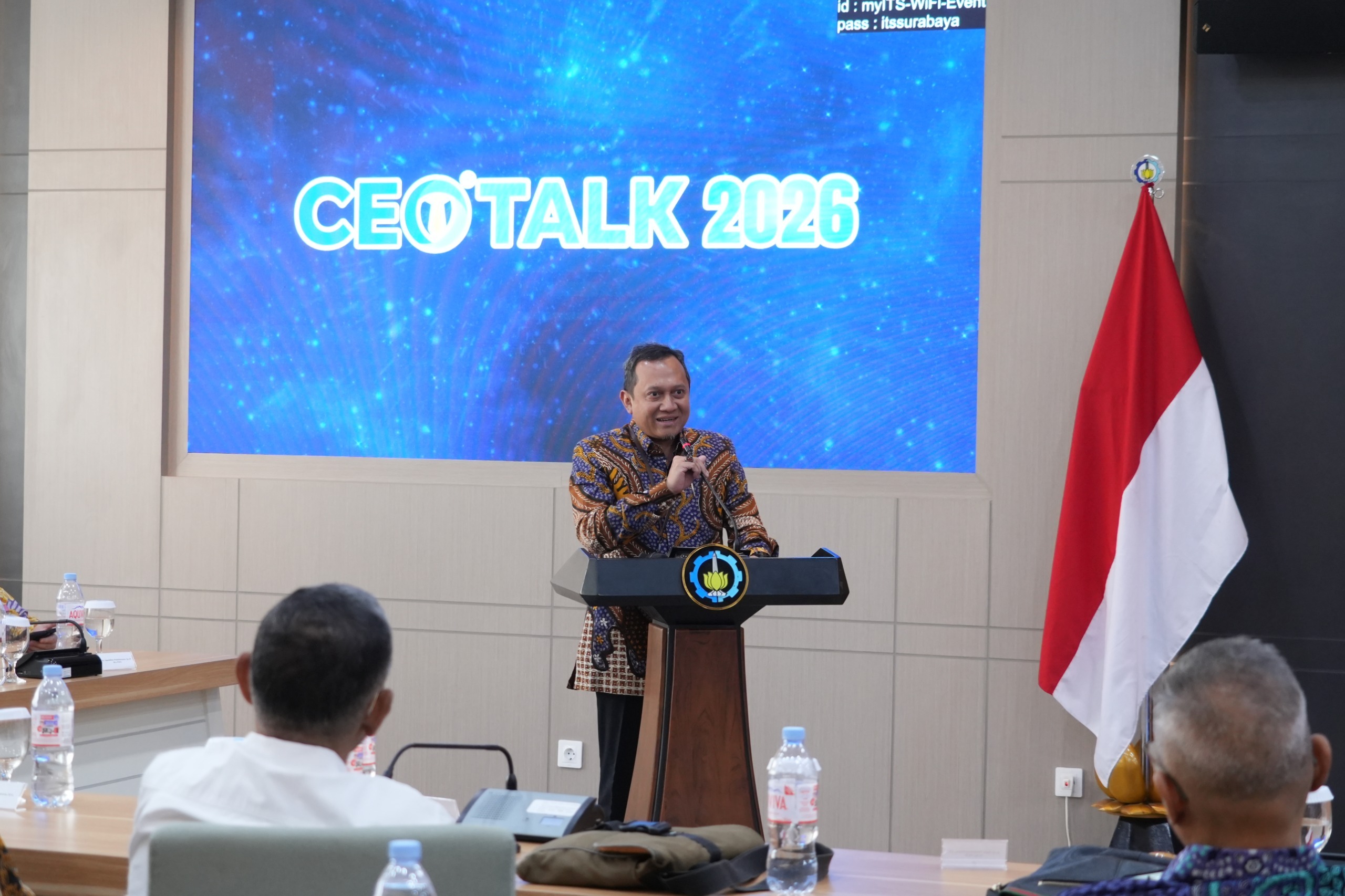
In line with this, ITS Vice Rector for Research, Innovation, Cooperation, and Alumni, Prof. Ir. Agus Muhamad Hatta, ST, MSc, PhD, stated that the university plays a vital role as a driving force for the national system. According to Hatta, existing challenges require human resources (HR) with relevant competencies across various sectors of life.
Furthermore, considering that the number of entrepreneurs in Indonesia currently remains at around 3%, while in developed countries it has reached 6%. Therefore, CEO Talk is one of ITS’s efforts to develop talents capable of driving solutions to the nation’s problems. “Through qualified entrepreneurs, it is hoped that various national problems can be better supported and resolved together,” Hatta said.
In addition to human resource development, Hatta highlighted another crucial challenge: building an effective and sustainable partnership ecosystem. Through equal collaboration with stakeholders , these partnerships are expected to foster mutually beneficial solutions for the nation’s progress.
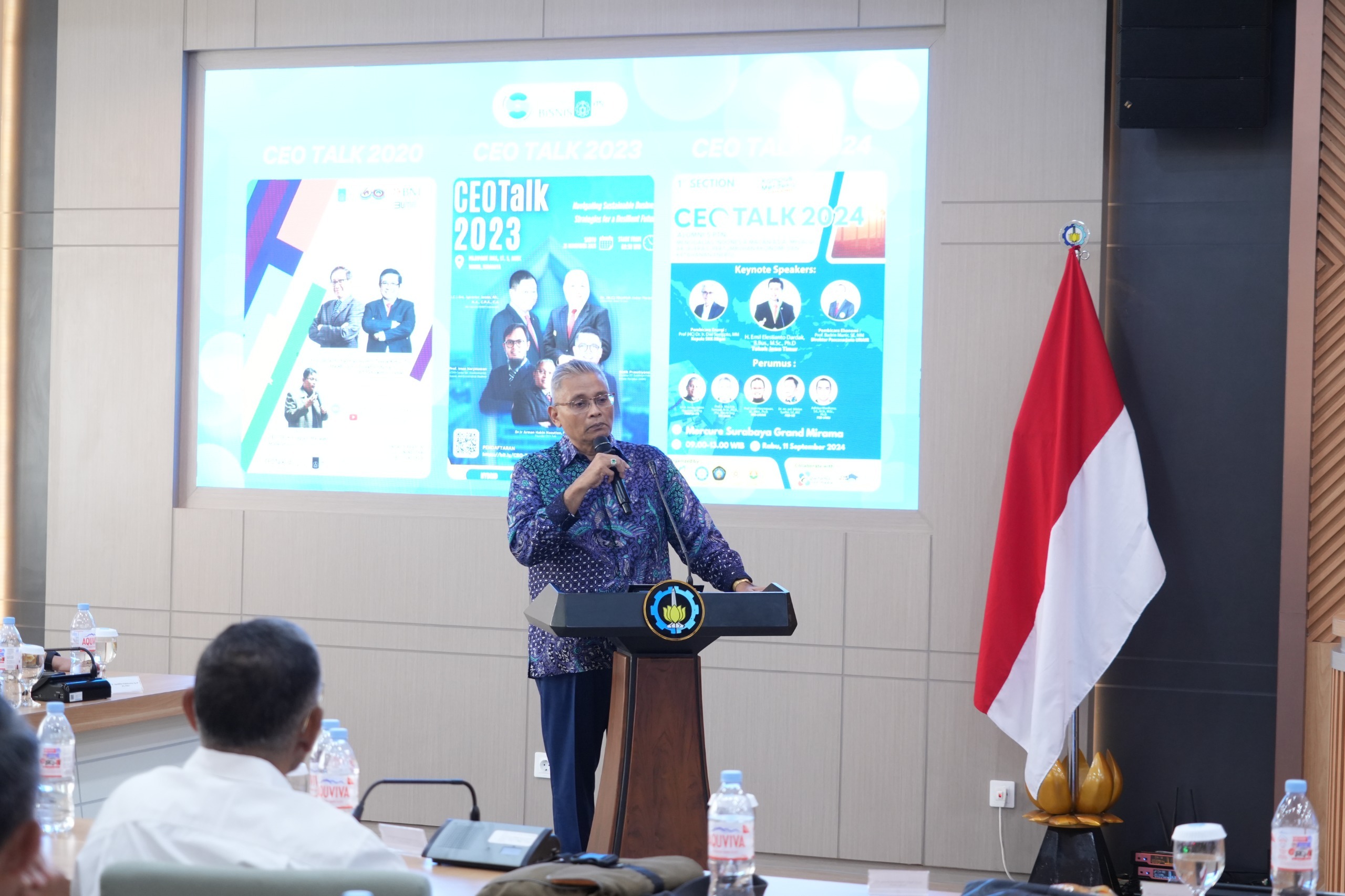
This perspective can help strengthen the mission of CEO Talk 2026. The Head of the Center for Public Policy, Business, and Industrial Studies (PKKPBI) ITS, Dr. Ir. Arman Hakim Nasution, MEng., explained that this program is aimed at creating leadership with impactful actions and high results. “Because this program is indeed designed to accelerate the birth of a future generation of leaders and entrepreneurs who are ready to face global challenges,” explained Arman, Founder of CEO Talk.
Furthermore, the development of this entrepreneurial ecosystem is strengthened through initiatives such as sociopreneur camps and the presence of international mentors. Arman stated that this is a step to accelerate the learning process and transfer experience to students. “Through this comprehensive mentoring system, ITS targets an increase in the number of entrepreneurial graduates to 7% by 2027,” he explained.
Founded in 2020, CEO Talk has consistently provided training to students at its campuses each year. This strategic initiative is part of ITS’s efforts to achieve the Sustainable Development Goals (SDGs).
SDG point 1, in particular, aims to create a life without poverty, by providing quality education aligned with SDG point 4. Furthermore, ITS is also working to realize SDG point 8, decent work and economic growth, through partnerships to achieve the goals outlined in SDG 17. (*)