

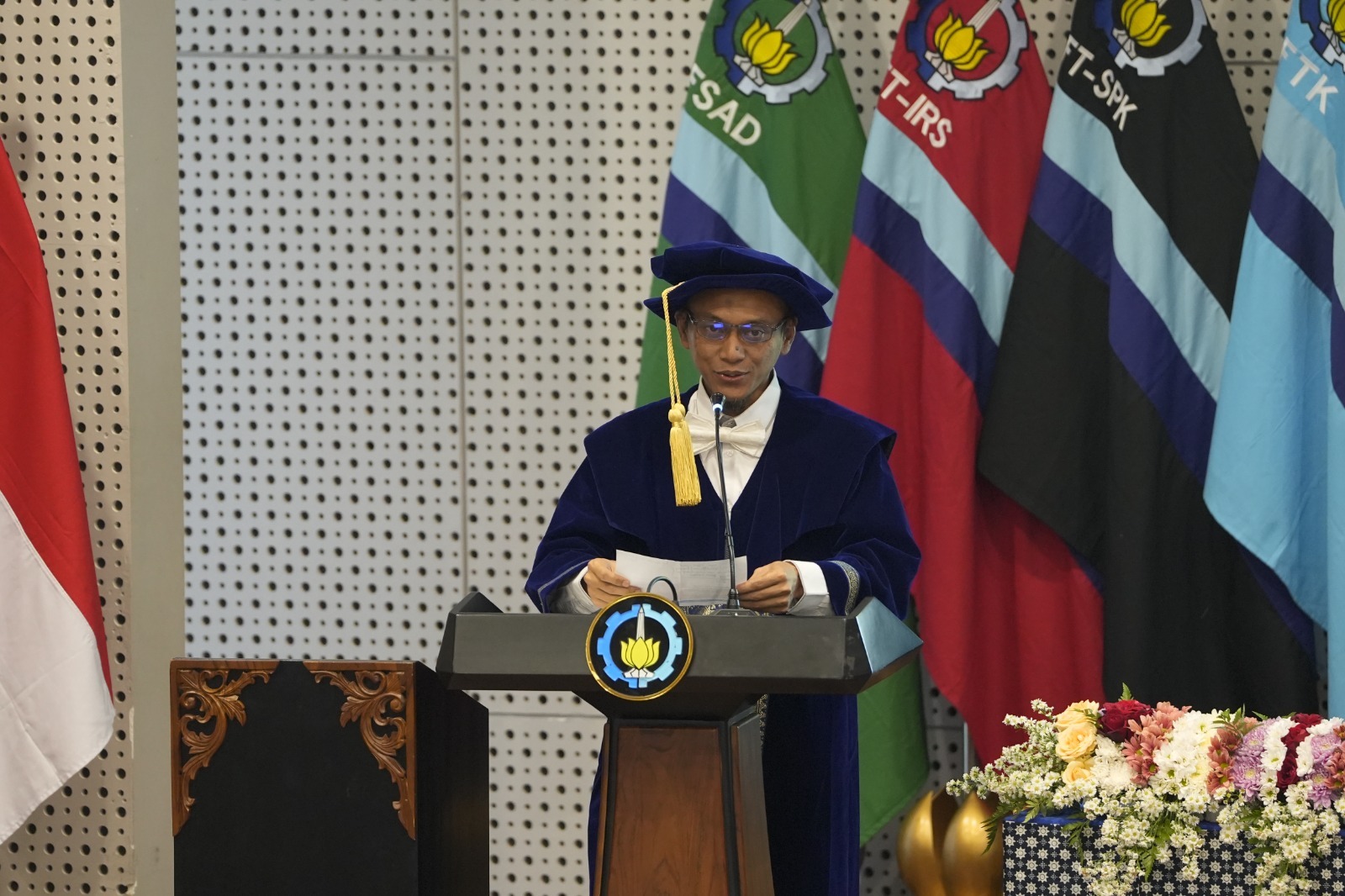
ITS Campus, ITS News — The numerous needs of government and industry in addressing financial issues demand the development of superior predictive methods. In response to this challenge, the 253rd Professor of the Sepuluh Nopember Institute of Technology (ITS), Prof. Dr. rer.pol. Dedy Dwi Prastyo, SSi, MSi, initiated an innovation in integrated decision-making intelligence for financial stability, economic resilience, and evidence-based public policy.
The Head of the ITS Statistics Department explained that the best prediction methods are crucial for analyzing current issues. These methods must meet high levels of accuracy to minimize uncertainty and errors in the models they create. “Not only can they predict, but they can also anticipate various potential risks,” Dedy added.
Based on these challenges, the Integrated Decision Intelligence concept was developed as a decision support system within a comprehensive model framework. This concept combines financial statistics, machine learning , and risk analysis methods to generate conclusions that can inform policy formulation. These conclusions can provide a more adaptive approach in various situations.
Technically, this research begins by building a predictive model using historical data through a combination of time series and machine learning methods to generate predictions. The resulting data will be subjected to stress testing to assess various risks within the model. The results of the previous steps will then be transformed into a decision support system capable of predicting economic and financial conditions at specific points in time.
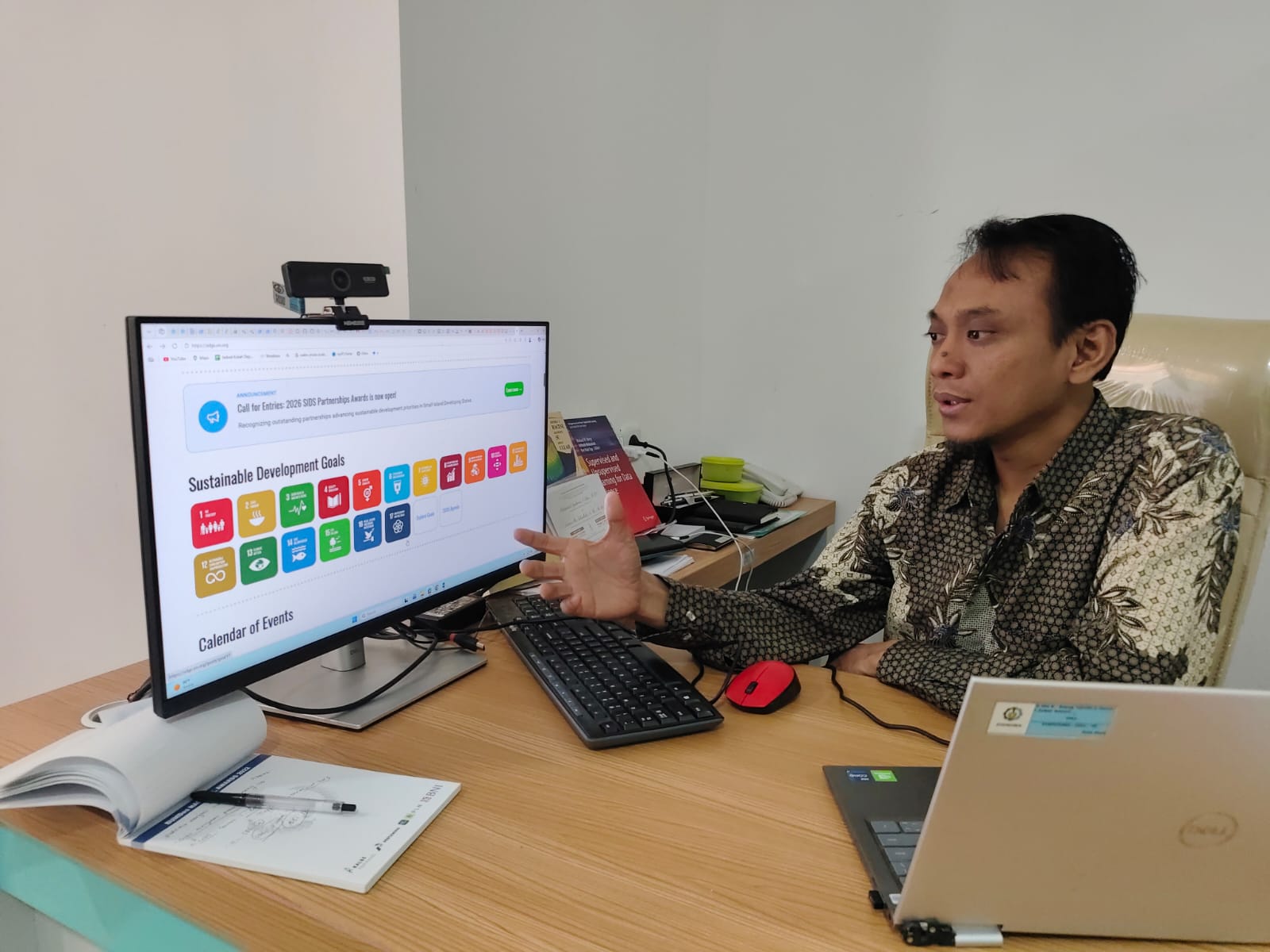
Furthermore, this research can also be used as a Crisis Management Protocol (CMP) for institutions. This means that if a crisis is imminent, institutions can be aware of the Early Warning System (EWS) or early warning signals of the crisis. “For example, with COVID-19, institutions can manage risks through the EWS during the COVID-19 crisis using various scenarios created in the model,” explained the Pacitan native.
Furthermore, this research has the potential to generate tangible impacts through quality improvements in various strategic sectors. For example, potential crises in the economic sector can be detected pre-crisis, allowing for early formulation of mitigation policies. Furthermore, operational efficiency and business risk reduction in the industrial sector are also increasing, based on concrete, data-driven decisions by company management.
Through this innovation, research must remain consistent to improve risk resolution in policymaking. Continued development also initiates EWS to become more sensitive, thus extending the anticipation timeframe. “We hope this research will develop more rapidly so that the methods designed become more sophisticated and easier to use,” explained the doctoral alumnus of Humboldt-Universitat ze Berlin (HUB), Germany.
Dedy’s determination aligns with ITS’s commitment to supporting the achievement of the Sustainable Development Goals (SDGs). The realization of the SDGs in his research refers to point 4 on Quality Education and point 8 on Decent Work and Economic Growth. Furthermore, this commitment helps strengthen institutions and industries, enabling the realization of point 17 on Partnerships to Achieve the Goals. (ITS Public Relations)
Reporter: Mohammad Fariz Irwansyah