Published on
Monday, 9 February 2026
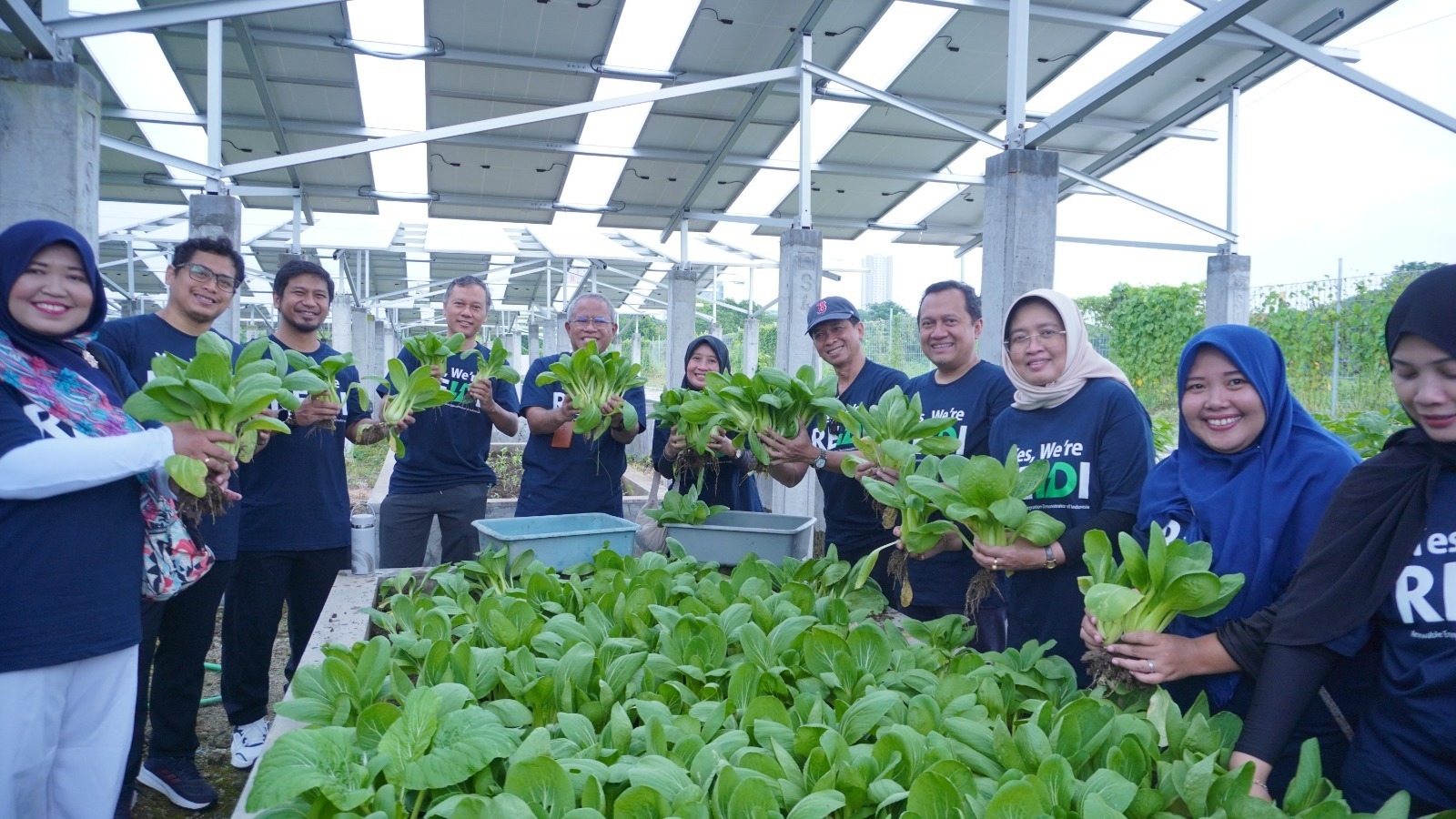
ITS Campus, ITS News — A vibrant atmosphere marked the Great Harvest at the Smart Agrivoltaic Project within the Renewable Energy Integration Demonstrator of Indonesia (REIDI) at Institut Teknologi Sepuluh Nopember (ITS) on Friday (Jan 23). Led personally by ITS Rector Prof. Dr. (HC) Ir. Bambang Pramujati, ST., MSc. Eng., PhD., the harvest signified the tangible success of research grown in the heart of the campus. Fresh mustard greens and water spinach were ready to be picked from the plot situated directly beneath solar panel installations.
This event was about more than just harvesting crops; it was about harvesting hope. Through the agrivoltaic concept, ITS has demonstrated that food production can coexist harmoniously with solar panels serving as renewable energy generators. Bambang explained that the REIDI facility is a key component of the INSPIRASI program—a collaboration between ITS, Nanyang Technological University (NTU) Singapore, and several other Indonesian universities to develop the nation’s first living laboratory for renewable energy. “Despite facing numerous challenges, ITS remains committed to developing REIDI so that it continues to provide benefits in terms of science, energy, and food security,” he stated optimistically.
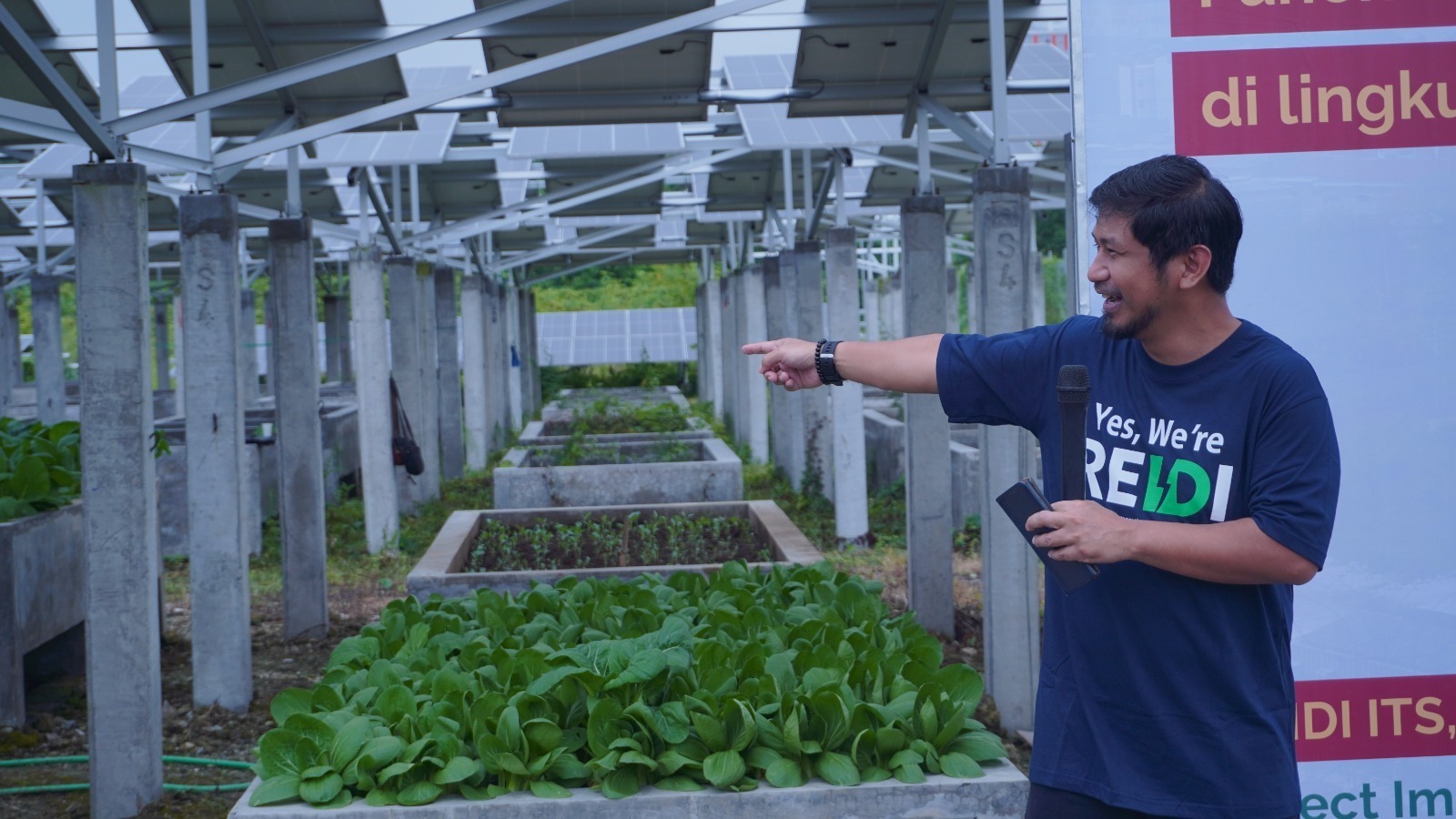
Director of Research and Community Service (DRPM) at ITS, Fadlilatul Taufany, S.T., Ph.D., noted that the REIDI facility contributes approximately 1.2 MWh of electricity daily to the ITS environment, translating to an annual saving of 470 million IDR. In the context of Environmental, Social, and Governance (ESG) standards, the facility’s CO2 sequestration is estimated at 370 tons per year. “Following the success of the solar panels and the agrivoltaic garden, REIDI’s development will proceed with the construction of biomass and hydrogen energy plants,” Taufany added.
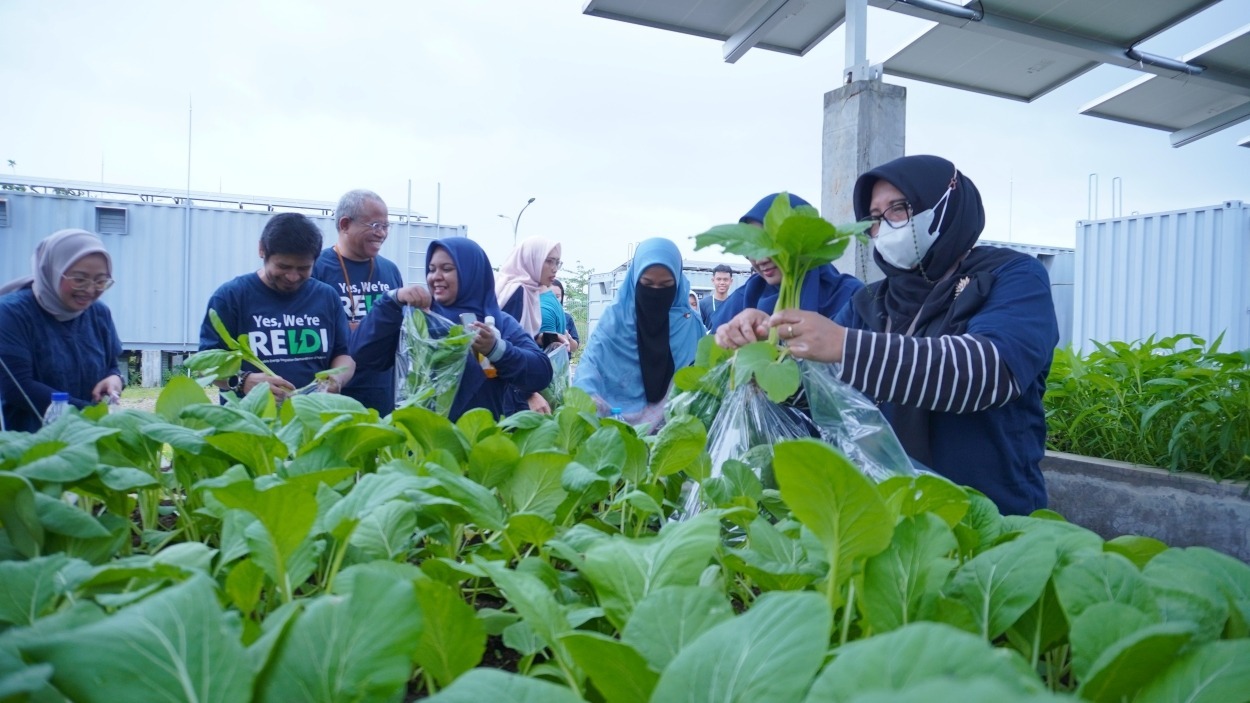
Furthermore, the REIDI agrivoltaic garden reflects the university’s commitment to providing sustainable solutions applicable to everyday life. From converting sunlight into energy to nurturing the lush vegetables growing beneath, ITS continues to take significant steps toward energy and food security through practical and impactful innovation. This initiative aligns with the United Nations Sustainable Development Goals (SDGs), specifically Goal 2 (Zero Hunger), Goal 7 (Affordable and Clean Energy), and Goal 13 (Climate Action). (ITS PUBLIC RELATIONS)