DTI ITS and UNESA Strengthen Academic Collaboration through IoT Guest Lecture
Published on
Tuesday, 6 October 2026
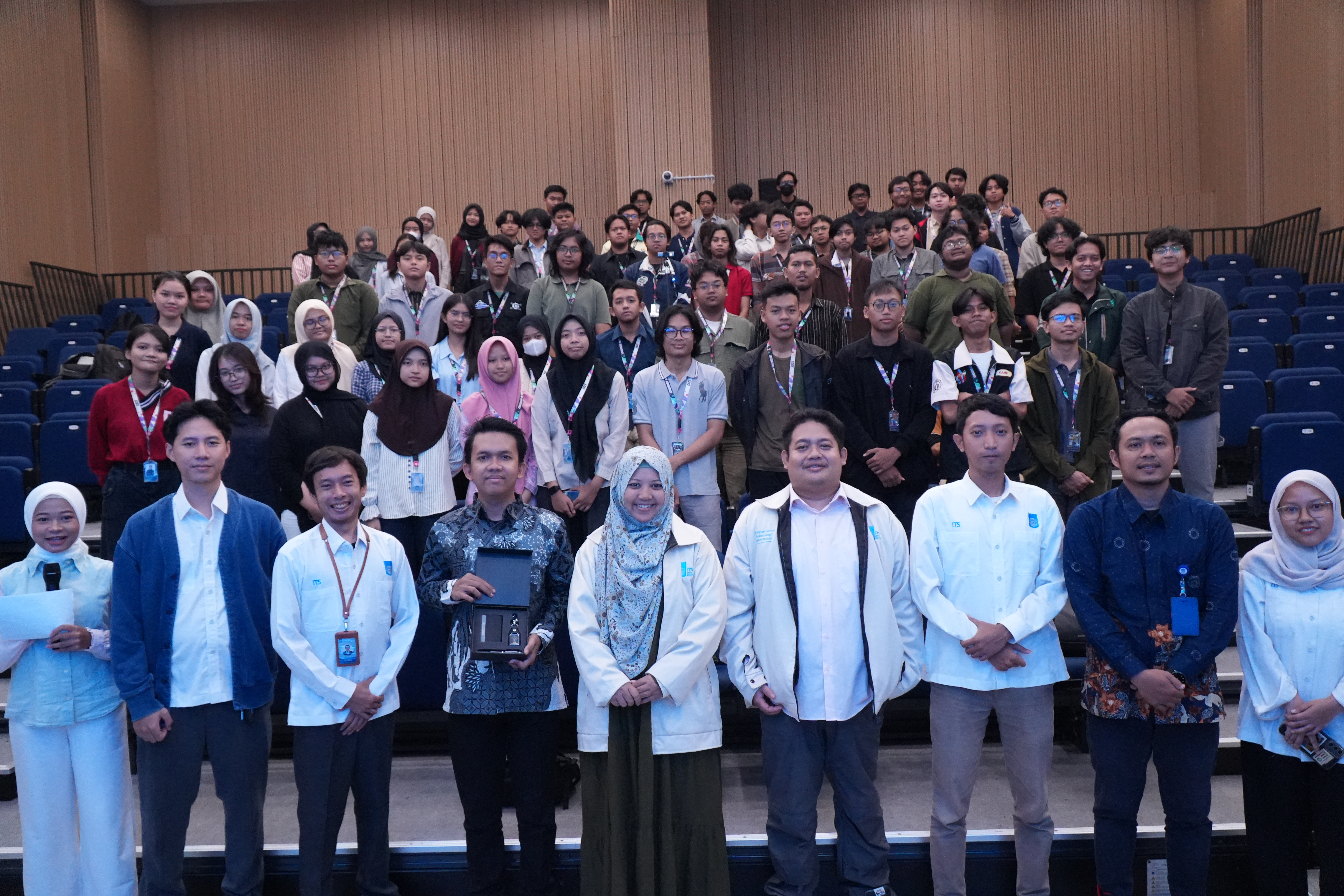
A group photo session involving the speaker, lecturers, and all participating students in the auditorium to conclude the event.
Surabaya, IT Journalistic — The Information Technology Department of Institut Teknologi Sepuluh Nopember (ITS) held a guest lecture themed “Things That Know Things” on Monday (Oct 5). The event, which ran from 07:30 to 10:00 AM WIB, took place in the 2nd Floor Auditorium of ITS Tower 2 Building and was attended by students taking the Internet of Things (IoT) course.
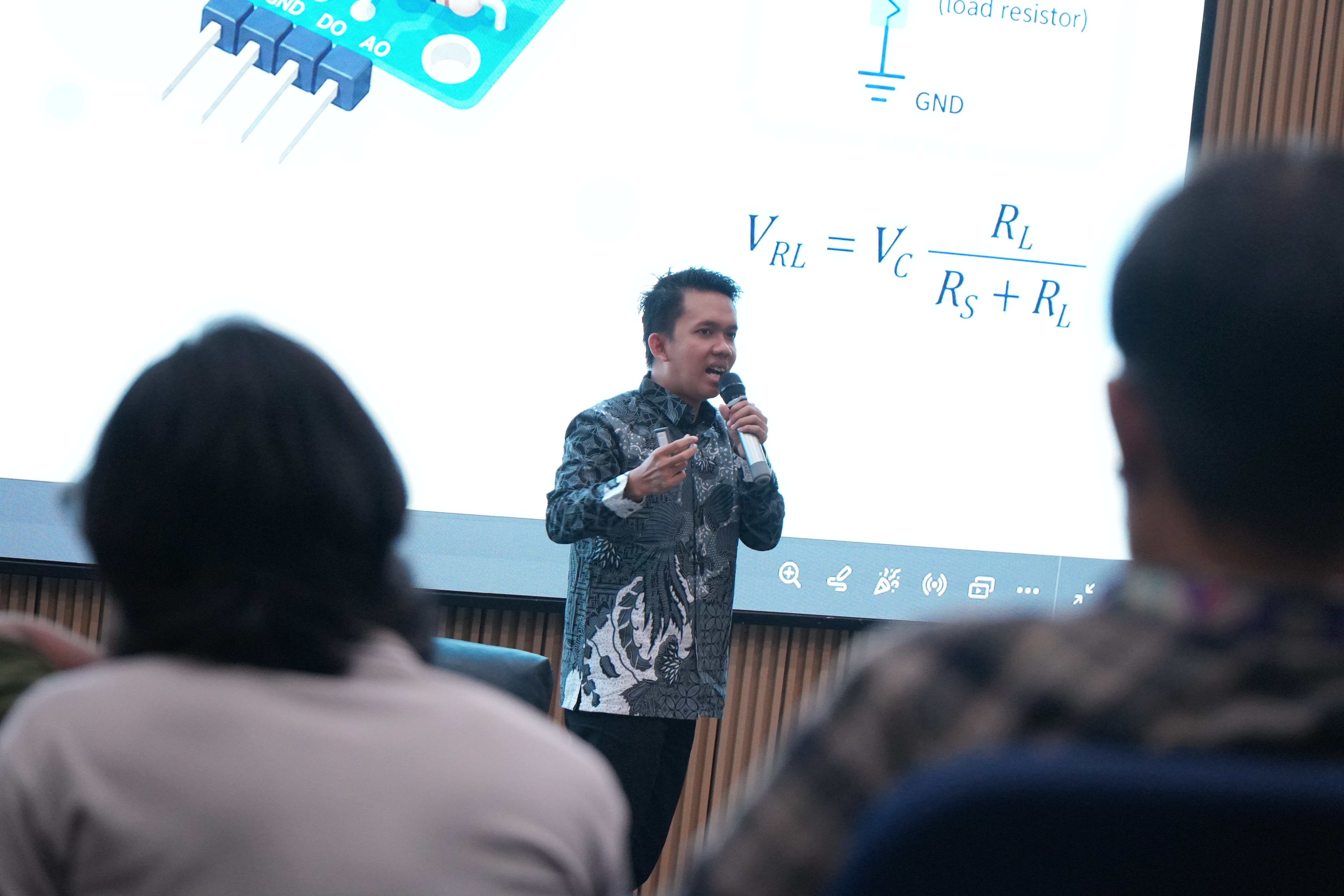
Rifqi Abdillah, S.Tr.T., M.Kom. delivering his presentation to students during the guest lecture.
This guest lecture featured Rifqi Abdillah, S.Tr.T., M.Kom., an Informatics Engineering Lecturer from Universitas Negeri Surabaya (UNESA), as the speaker. In his presentation, Rifqi discussed the development of smart technology, particularly the use of sensors in Internet of Things systems and their applications across various fields.
One of the technologies highlighted in the presentation was the electronic nose (e-nose). This technology utilizes sensors to detect and recognize various gas or odor characteristics. Its use is not limited to a single purpose but can be developed for multiple fields, ranging from healthcare to the food industry.
Students were also introduced to how sensor technology can be used to identify the condition of an object. One example is detecting food freshness based on the compounds or gases it produces. This technology shows that a single sensor can offer various benefits when developed and combined with other technologies.
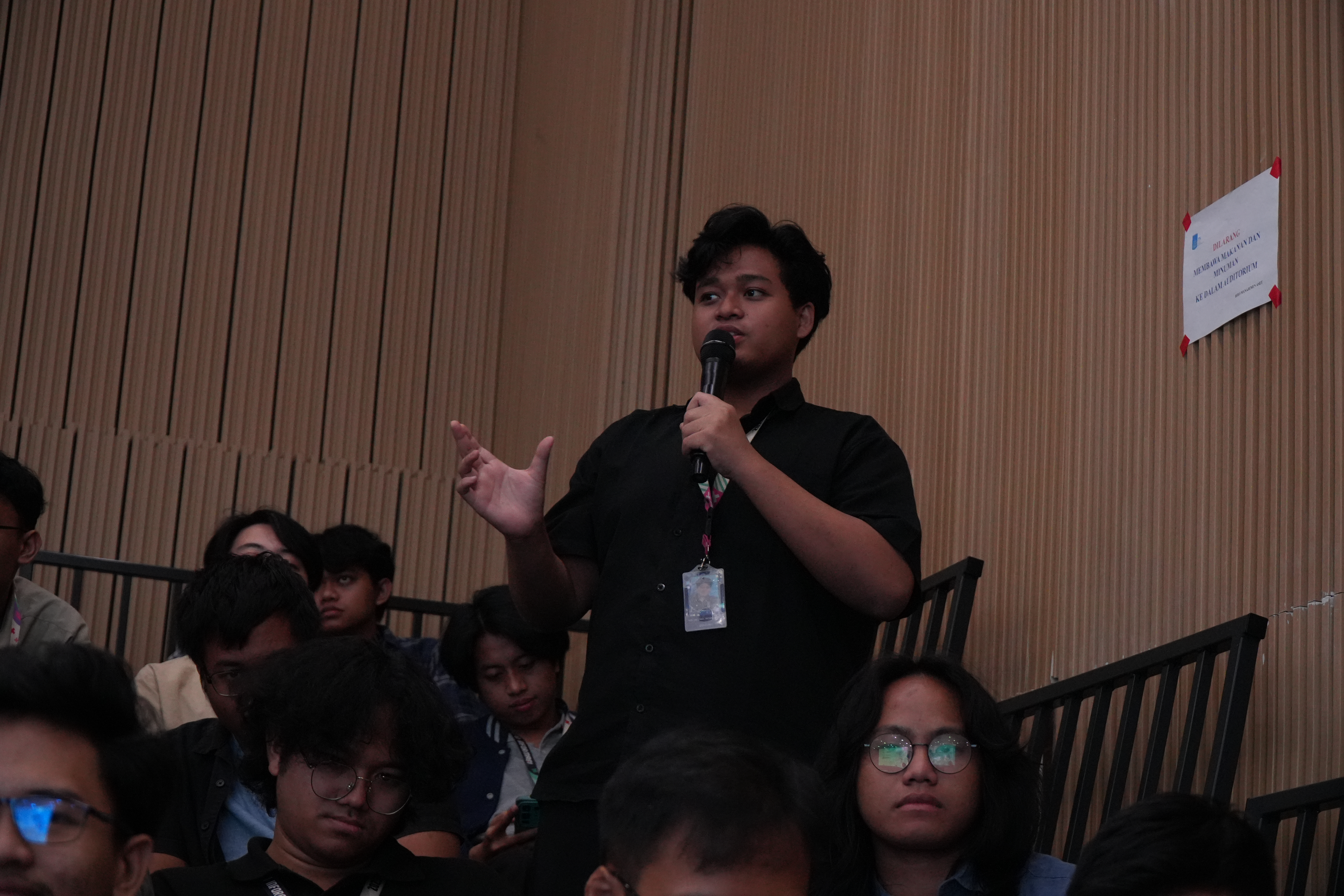
Maulana Zaki, an Information Technology student in the IoT class, looked enthusiastic while asking a question using a microphone during the interactive session of the guest lecture.
Zaki admitted to gaining new insights into the ability of sensors to detect odors. “It turns out there are sensors that can detect smells. Even though it is just one sensor, it can actually be used to detect many things, such as diseases or whether food is fresh or not,” he expressed.
According to Zaki, the material made him realize that sensor technology still has a lot of potential to be developed. “If we explore this single sensor deeper, it turns out it can have many benefits,” he added.
Besides the food sector, the application of the electronic nose also has potential in the healthcare field. Puput, a student from IoT Class C, noted that this technology can be developed for various needs, including student research and competitions.
“This electronic nose is actually relevant in various fields. For example, for competitions like PKM and Gemastik, and it is also highly suitable to help us in the medical world. Earlier, a Covid detection device was also shown,” she explained.
During the event, students also got an overview of the integration between IoT sensors and artificial intelligence (AI). Data obtained from sensors can be processed and analyzed using AI so that the system is not only able to capture information from the environment but also help recognize patterns and make decisions based on that data.
Rafa, a student from IoT Class C, said that one of the main insights he gained was how AI can be implemented alongside IoT sensors. “Within gas sensors, there are actually many different types and applications. A sensor to distinguish between edible and inedible food can actually be combined with AI implementation,” he said.
He added that the combination of IoT and AI opens up wider opportunities for technology application. According to him, the material presented provided an understanding that sensors do not merely function as devices to read environmental conditions, but can also be part of a smart system when combined with data processing technology.
Student enthusiasm was evident throughout the event. The three students felt the guest lecture was engaging and provided new insights into the development of IoT technology. The presentation, which highlighted real-world examples, allowed students to see the connection between their course materials and practical needs in the real world.
Through the “Things That Know Things” guest lecture, students are expected to understand that IoT development is not only related to the use of sensors but also includes data processing and integration with artificial intelligence technology. These insights can serve as a foundation for students to develop various technology-based innovations, both in the academic field and for industrial and societal needs.
Supporting the Achievement of SDGs
Through this activity, students gained new insights into the development of Internet of Things (IoT) and artificial intelligence (AI) technologies, while also getting the opportunity to broaden their perspectives through knowledge exchange between educational institutions.
This activity also supports the achievement of SDG 4: Quality Education by strengthening students’ knowledge and competence in understanding and developing innovative technologies. Additionally, the academic collaboration between ITS and UNESA in this event aligns with SDG 17: Partnerships for the Goals, specifically through strengthening cooperation between educational institutions to support the development of knowledge and innovation in the technology sector.
Reporter: Mutiara
=================================================================
Informasi provided by :
Department of Information Technology
Website: its.ac.id/it
Instagram: its_teknologi_informasi
Youtube: Teknologi Informasi ITS