58 ITS Information Technology Students ‘Escorted’ to the East Java Regional Police Headquarters
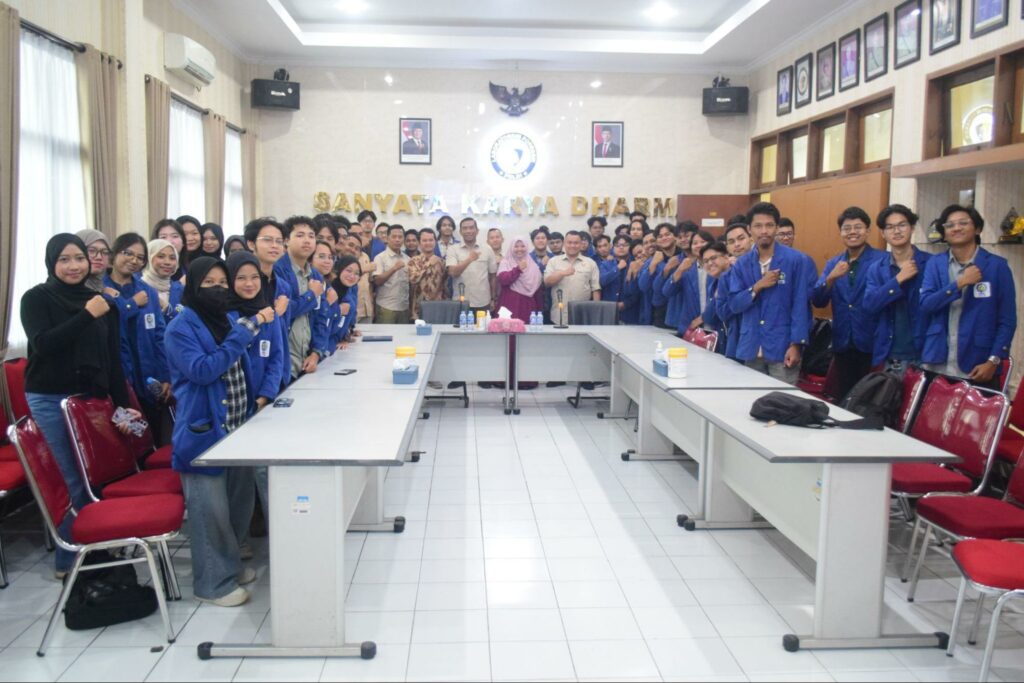
Documenting the moment of togetherness between students of the Department of Information Technology (DTI) ITS and the East Java Police Forensic Laboratory (Labfor) team after the practical learning session of the Digital Forensics course.
Surabaya, IT Journalistic — A total of 58 students from the Department of Information Technology (DTI) at Institut Teknologi Sepuluh Nopember (ITS) took part in a practical learning visit to the Forensic Laboratory (Labfor) of the East Java Regional Police. This activity was designed to provide an in-depth understanding of digital forensic processes within law enforcement, while also opening opportunities for strategic collaboration in research, internships, and final projects in the fields of Digital Forensics and Security Operation Center (SOC).
The students, accompanied by supervising lecturers Dr. Ir. Henning Titi Ciptaningtyas, S.Kom., M.Kom.; Irzal Ahmad Sabilla, S.Kom., M.Kom.; and Fuad Dary Rosyadi, S.Kom., M.Kom., were welcomed by Labfor leadership, including Imam Mukti, S.Si., Apt., M.Si. (Deputy Head of Labfor), Dedy Prasetyo, S.Si., M.M., M.Si. (Head of Dokupal Subdivision), Agus Santosa, S.T. (Head of Balmet Subdivision), and drh. Tri Yuni Eriadi, M.Si. (Head of Kimbio Subdivision). They provided a comprehensive overview of Labfor’s strategic role in supporting investigations through accurate, systematic, and legally standardized digital evidence examination.
During the opening session, the Labfor team presented materials on the stages of digital forensics, starting from the chain of custody and data extraction methods to principles for maintaining evidence integrity. They also highlighted modern technological challenges, particularly the rise of AI-based deepfakes that complicate video authenticity verification, as well as technical obstacles related to handling mobile devices locked by passcodes.

DTI ITS students observe a live demonstration of digital forensic examination conducted by Labfor officers of the East Java Regional Police, providing real insight into technical challenges in the field.
Following the presentation, students engaged in an interactive discussion and Q&A session. Questions ranged from techniques for unlocking secured devices, metadata analysis methods, procedures for securing digital evidence, to collaborative research opportunities that could support Labfor’s efforts in developing more efficient and adaptable examination techniques in response to technological advancements.
The highlight of the visit was the hands-on demonstration session held in the Digital Forensic (Digifor) room. Students were guided to observe firsthand how forensic analysts work using specialized tools and software such as Cellebrite UFED, Magnet AXIOM, and X-Ways Forensics. The demonstration covered forensic imaging using a write-blocker, data recovery techniques, and the workflow for handling evidence from receipt, documentation, physical security, examination, and the preparation of the final report.
At the end of the visit, one of the students, Dian Anggareni Putri, shared her impressions of the learning experience at Labfor. She expressed that the presentations and direct demonstrations were highly helpful.
“This visit opened my eyes to the fact that digital forensics is not just theory—it is a process that is highly detailed, structured, and accountable. Seeing firsthand how forensic tools and software operate makes me even more interested in exploring this field. I hope ITS can continue to collaborate with Labfor so students have more opportunities to gain real-world exposure,” she said.

Imam Mukti, S.Si., Apt., M.Si. (Deputy Head of Labfor) and Dr. Ir. Henning Titi Ciptaningtyas, S.Kom., M.Kom. (DTI ITS Lecturer Representative) during the opening session, presenting the strategic roles and current challenges faced by the forensic laboratory.
Deputy Head of Labfor, Imam Mukti, stated that Labfor is highly open to collaboration opportunities, especially research and the development of methods that can help overcome existing technical obstacles. However, he emphasized a strict requirement that must be upheld by students: all identities of suspects, victims, and reporters must remain confidential. Students must focus on examination methods, not on sensitive details of ongoing cases.
Through this collaborative exploration, the ITS Department of Information Technology reaffirms its commitment to supporting innovation aligned with the Sustainable Development Goals (SDGs), specifically SDG 9: Industry, Innovation, and Infrastructure. This partnership is expected not only to produce graduates competent in cybersecurity and forensics but also to contribute to building law enforcement infrastructure that is robust and adaptive to future technological developments.
Reporter : Angga Firmansyah
==================================================================
Information provided by:
Department of Information Technology
Website: its.ac.id/it
Instagram: its_teknologi_informasi
Youtube: Information Technology ITS