From Network to Knowledge: Dr. Achmad Choiruddin’s Academic Exchange to Málaga, Spain
Published on
Wednesday, 23 September 2026
“The more we connect with people from different perspectives, the wiser we become, and the less likely we are to judge others for thinking differently.”
Dr. Achmad Choiruddin, S.Si., M.Sc., or Pak Didin as he is fondly known, is a Statistics lecturer at Institut Teknologi Sepuluh Nopember (ITS) who took part in an academic mobility journey to Málaga, Spain, in June 2026 through the Erasmus+ International Credit Mobility program for lecturers.
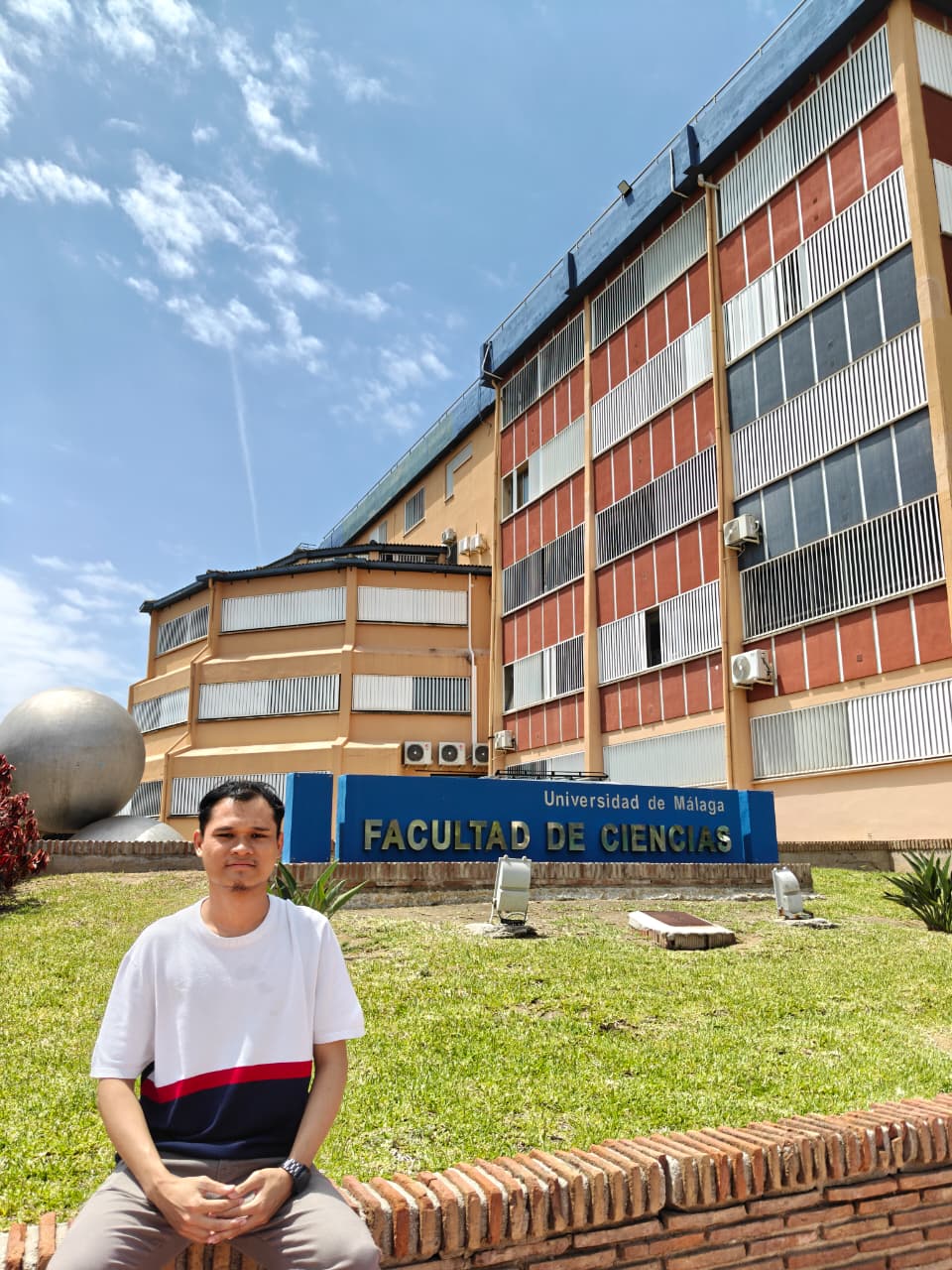
Dr. Achmad Choiruddin at Universidad de Málaga
One Contact Leads to Another
Didin’s journey to Spain began with an offer for Erasmus+ mobility from ITS’s Global Engagement (DKG), upon his existing collaboration with a Spain university. His kind colleague, Prof. Dr. Jorge Mateu from Universitat Jaume, encouraged him to connect with a colleague in Málaga named Prof. Antoni Torres from within the Department of Mathematical Analysis, Statistics and Operations Research, alongside Applied Mathematics under the Faculty of Sciences who worked in a field similar to his own.
A Plan That Took an Unexpected Turn
The application was offered in 2025. The preparation mainly involved putting together the required documents and discussing details with his contact in Málaga, in which the discussions initially focused on potential courses he would teach, and the potential of doing a research collaboration. DKG helped him for agreement review and process, and encouraged the discussion of areas of the application that needed strengthening. The waiting period afterward felt long enough that Pak Didin assumed he hadn’t been selected, but he later found out he had passed.
Though the application to get the grant was conducted in 2026, Didin began the discussion of the program in March-April 2026. Due to the feasibility of period implementation from both party, by the time Didin arrived in Málaga in June, the semester had already ended, making the original plan unfeasible. The program had to be adjusted on the spot in coordination with the Erasmus+ team, and ultimately looked a little different from what had initially been planned.
What Málaga Taught Him About Teaching
Since the semester had already concluded upon his arrival, Didin was not able to directly observe how classes were conducted at the host university. Still, he took part in an Open Talk/Lecturer Seminar, which was also attended by final-year students working on their theses.
One practice that stood out to him was how even after the final period students could request their exam results directly, with each lecturer meeting them one-on-one to explain and discuss their scores; a kind of grade transparency he found notable. He felt this approach was generally effective, though difficult to replicate at ITS given the much larger number of students. In Málaga, the one-on-one format allowed for straightforward conversations, where students could ask about their results without needing to bring exam papers, and lecturers could quickly understand and explain their questions. At ITS, this kind of setup would only really be feasible for the International Undergraduate Program (IUP), where class sizes are smaller, not for regular classes with around 50 students.
He also noticed that final exams in Málaga were much more efficient, in which proposal and thesis defenses were wrapped up in around 45 minutes. In comparison to ITS’s typical 1 hour and 40 minutes, the difference reportedly surprised the lecturers in Málaga.
This observation ended up having a real impact back home. Starting in 2026, Didin introduced the 2023 batch of students to a more time-efficient exam format, especially given the large number of students. As a result, proposal seminars at ITS have now been shortened to 45 minutes.
Wiser Through Connection
Beyond the academic side, Didin also laid the groundwork for future research collaboration during his time in Spain. He delivered a seminar/talk during his visit, which opened up discussions with his hosts on research collaboration in the near future under a potential field of data science or machine learning for health.
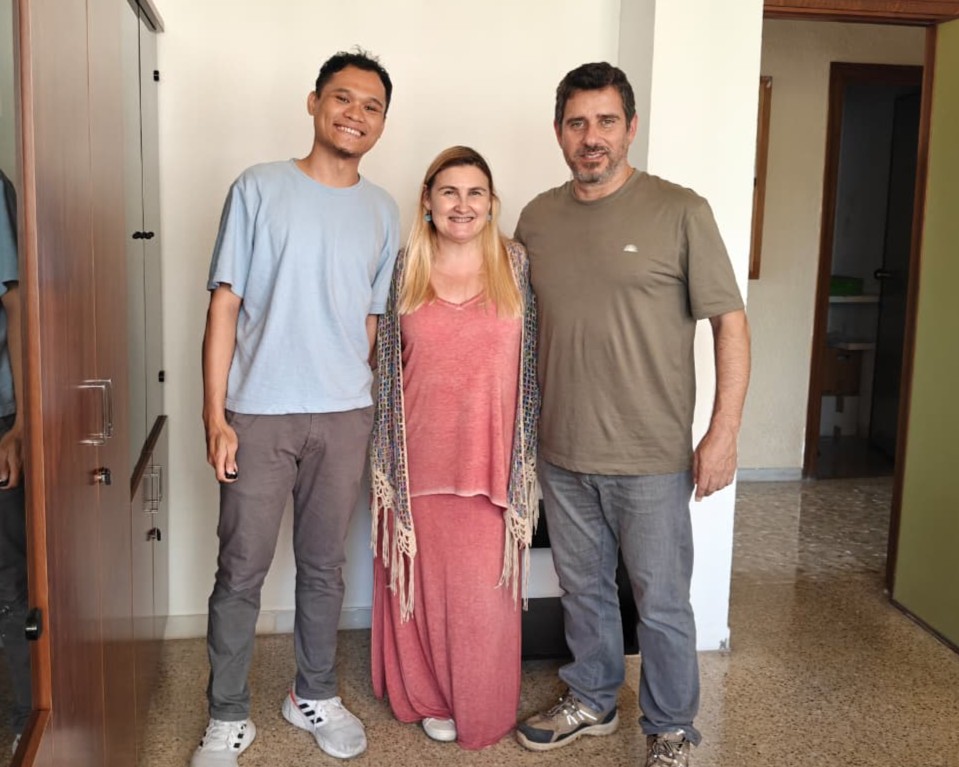
For him, the value of Erasmus+ goes beyond just the exchange itself. He noted that ITS’s academic system is already well-managed, though it can feel overwhelmed simply due to the sheer number of students. He believes Erasmus+ offers a broader perspective: the chance to explore different cultures, become more open-minded, and think a little less rigidly. In the end, this kind of exposure helps build wiser, more considered thinking.
Just as importantly, the program helped him expand his professional network, forming new connections abroad. He noted that ITS International Office had reached out to him specifically because their database showed he had contacts in Spain, a reminder of just how valuable having an international network can be.
Reflecting on his experience, Didin left one thought for future participants: “The more we connect with people from different perspectives, the wiser we become, and the less likely we are to judge others for thinking differently.”
Writer: Syafinka Zahra Riandina
Editor: Nastiti Primadyastuti