About

Published on
Thursday, 5 November 2026
FTEIC ITS, Malaysia – Strengthening the innovation ecosystem and the commercialization of research outputs is one of the strategic steps taken by Institut Teknologi Sepuluh Nopember (ITS) to enhance its competitiveness at the international level. This commitment is realized through the UTM–ITS STELLAR Training program, attended by 19 ITS delegates for two weeks in November 2026 at Universiti Teknologi Malaysia (UTM), Malaysia. Notably, four of the delegates represent the Faculty of Intelligent Electrical and Informatics Technology (FTEIC) ITS, consisting of three lecturers and one education staff member.
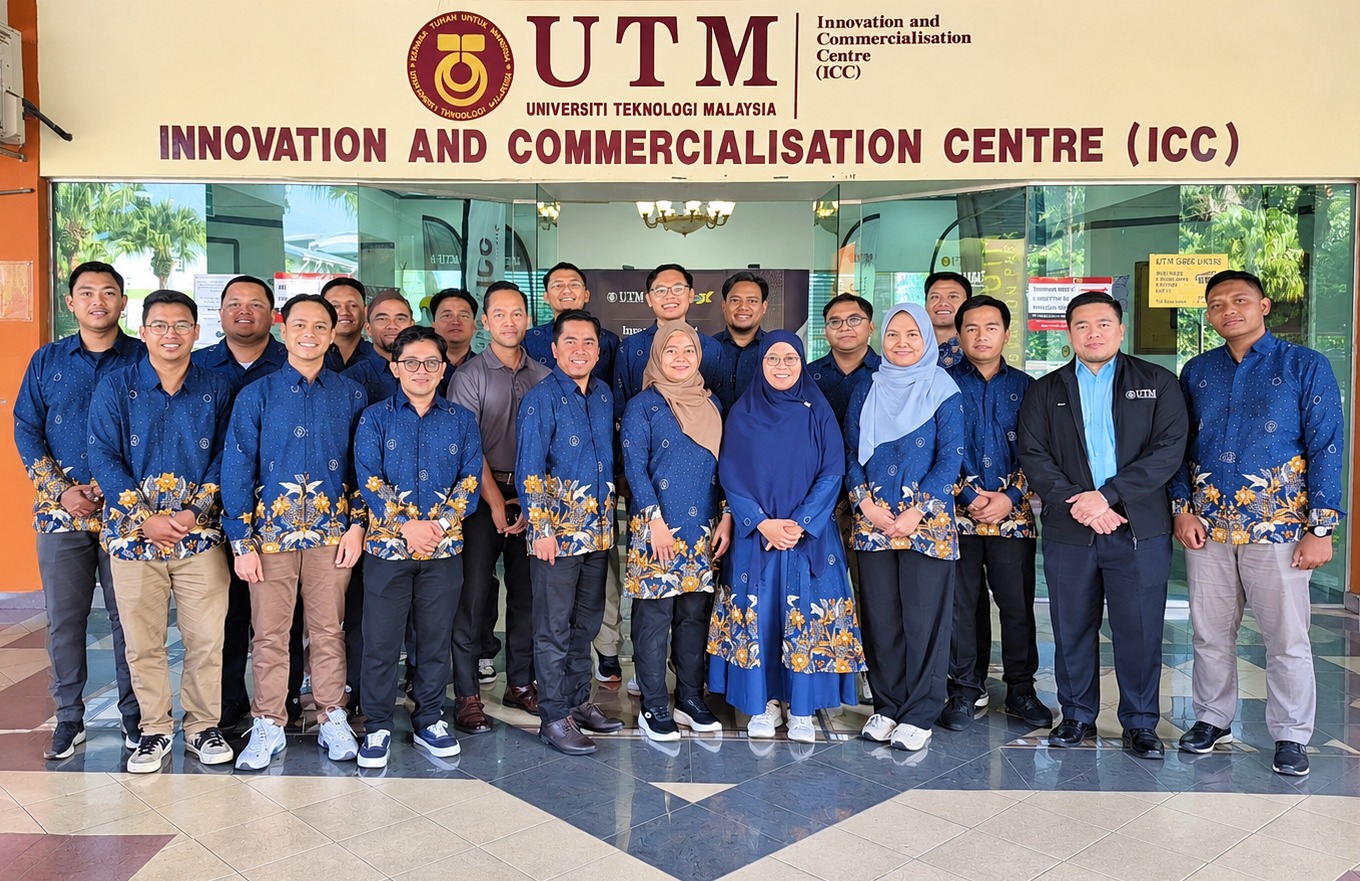
The three FTEIC lecturers are Yurid Eka Nugraha, S.T., M.Eng., Ph.D., Yogantara S. Dharmawan, S.Kom., MBusProcessMgt., and Arta Kusuma Hernanda, S.T., M.T. The education staff representative is Rio Tria Hardhitya, S.ST. The involvement of these four delegates reflects FTEIC’s contribution to strengthening human resource capacity, particularly in innovation governance, research development, and the downstream application (hilirisasi) and commercialization of research results.
The UTM–ITS STELLAR program is a collaborative initiative between ITS and UTM focused on strengthening the science and technology ecosystem, institutional leadership, and accelerating the downstream application and commercialization of university research. STELLAR stands for Science and Technology Ecosystem Leadership for Acceleration and Research Translation. The program is designed to address various institutional challenges through implementable solutions, in order to build a stronger, more integrated, and sustainable innovation ecosystem.
In its implementation, UTM–ITS STELLAR has three main pillars. First, Institutional Governance, which focuses on strengthening institutional governance, including the mandate, structure, policies, and performance management of the Technology Transfer Office (TTO). Second, Research Translation, which aims to encourage research results to be translated into practical applications through technology assessment and commercialization. Third, Innovation Ecosystem, which is directed at strengthening the connections between university research, industry engagement, entrepreneurship, and Techno Park management. These three pillars serve as the foundation for turning institutional challenges into real implementation solutions.
The choice of UTM Malaysia as the training venue is closely tied to the established cooperation and collaboration between ITS and UTM. Both universities continue to build synergy in the development of education, research, innovation, and human resource capacity building. Through the UTM–ITS STELLAR Training program, this collaboration is further strengthened by giving ITS delegates the opportunity to directly learn from UTM’s experience and best practices in building a research, innovation, and technology commercialization ecosystem. As one of the world’s leading universities, UTM is a strategic partner for ITS in broadening perspectives and developing internationally standardized innovation management practices.
Over the two weeks of the training, the ITS delegates took part in various learning activities focused on research governance and the commercialization of research results. One of the main learning focuses was the management of the Technology Transfer Office (TTO), an institutional unit or mechanism that bridges university research and innovation with the needs of industry and society. Through this learning, participants gained insights into intellectual property management strategies, technology potential assessment, technology transfer, and the processes of downstream application and commercialization of research results.
Beyond classroom learning, the program also provided hands-on experience through benchmarking visits to various faculties and the Science Technopark facilities at UTM Malaysia. The delegates had the opportunity to observe research management practices, technology development, industry collaboration, and innovation commercialization strategies implemented at UTM. These activities served as a means of knowledge exchange as well as a reference for ITS in developing innovation governance that is more integrated and implementation-oriented.
One of the main learning centers in this program was the Innovation and Commercialisation Centre (ICC) UTM, led by its Director, Assoc. Prof. Ts. Dr. Noor Azurati Ahmad. ICC UTM served as a strategic learning center for the ITS delegates to understand the institutional role of connecting academic research results with market needs, while also encouraging the creation of products and technologies with added value in terms of technology, economy, and benefit to society.
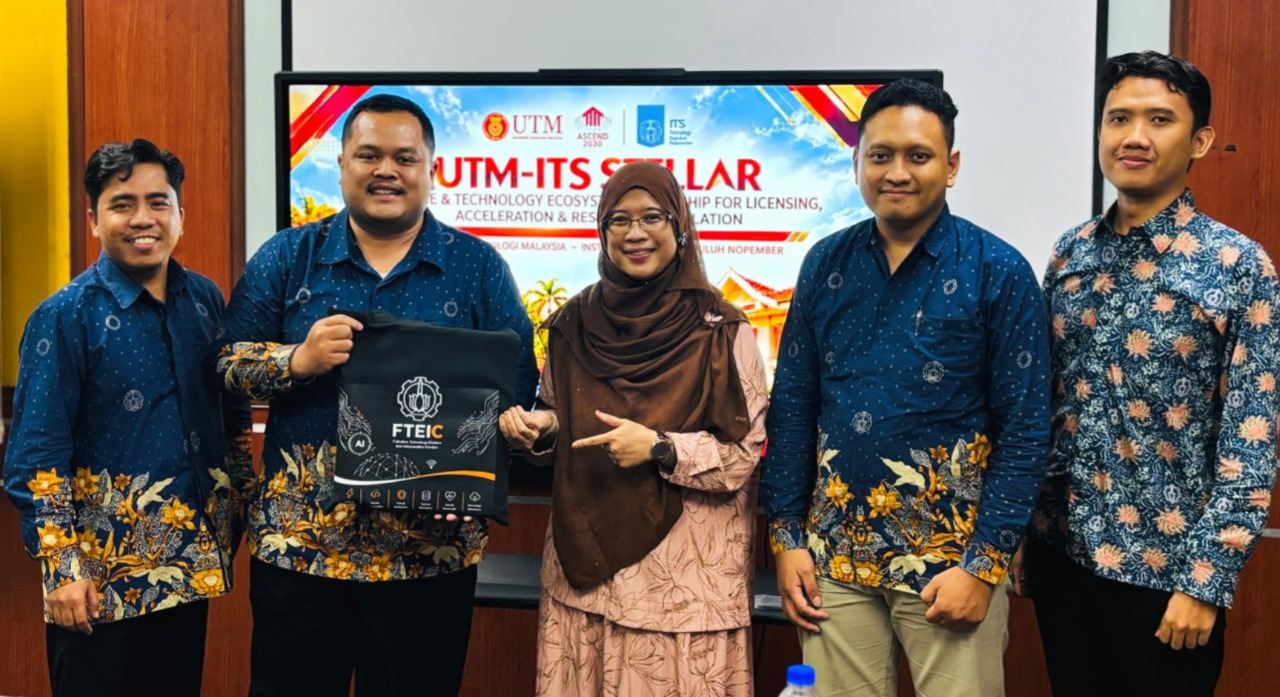
During the activities at ICC UTM, the delegates also received a welcome and a Program Overview of UTM–ITS STELLAR presented by Encik Muhammad Arif Bin Harun and Puan Siti Asma Binti Abd Latif. The presentation described the background, objectives, development direction, and scope of the program, including strengthening institutional governance, accelerating the downstream application of research results, and building an innovation ecosystem involving universities and industry.
The participation of three lecturers and one education staff member from FTEIC ITS in this program is expected to strengthen synergy between academic and education staff in building more integrated innovation governance. Strengthening the innovation ecosystem requires not only quality research and technology development, but also support from institutional governance, administration, information management, and service systems capable of sustaining the innovation process.
Through the UTM–ITS STELLAR Training program, ITS and UTM Malaysia continue to strengthen international collaboration in building a university innovation ecosystem that is adaptive, productive, and oriented toward the downstream application of research results. For FTEIC ITS, the involvement of four delegates in this program is a strategic opportunity to gain knowledge, experience, and best practices that can be further developed within the faculty. Thus, this participation is not only an international learning experience, but also a tangible contribution by FTEIC to supporting ITS’s transformation into a world-class university that produces innovations with real impact on society and industry.(Humas-Sh)