About
Published on
Sunday, 20 September 2026
As an effort to strengthen objective organizational evaluation, FTEIC ITS students carried out a benchmark activity to Institut Teknologi Bandung (ITB) to gain in-depth insights into organizational structure and work program management.
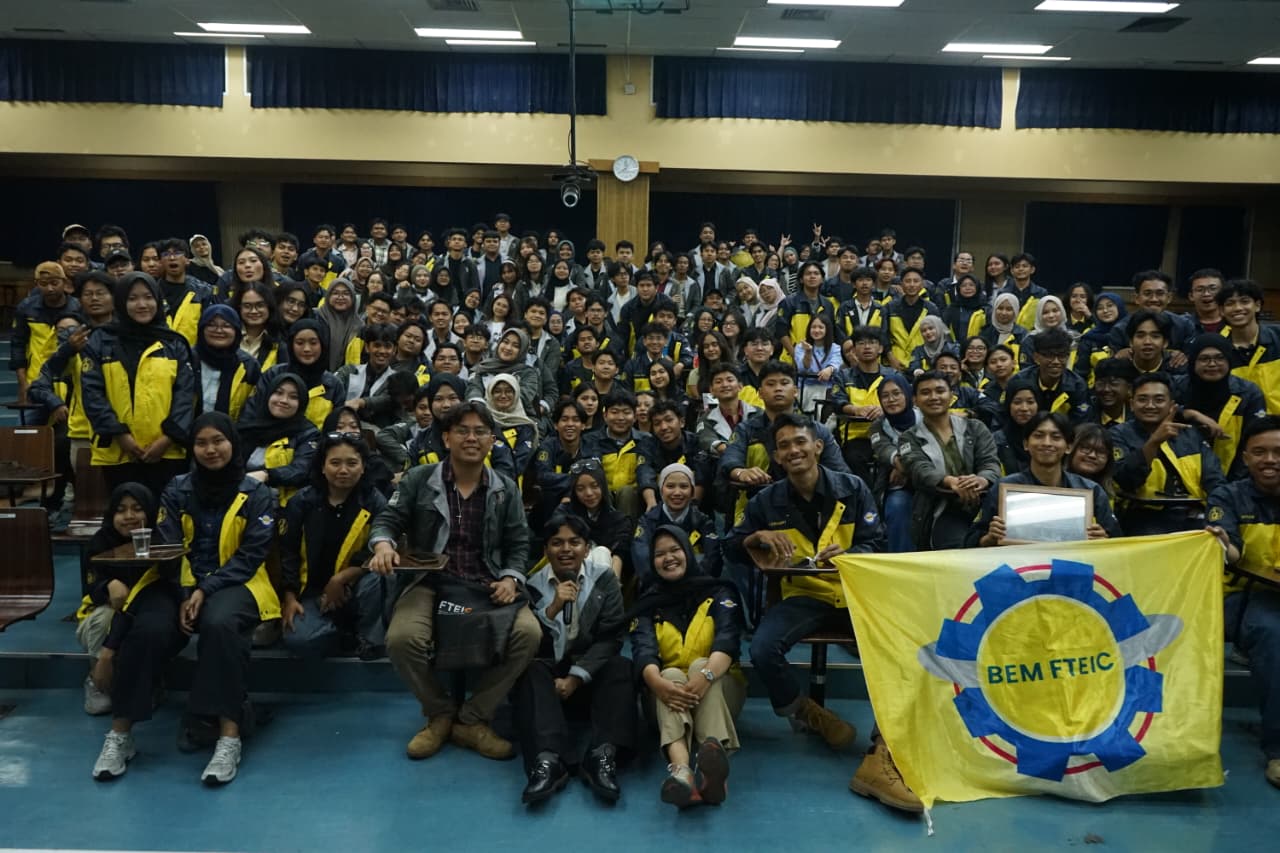
Surabaya, FTEIC ITS – Students of FTEIC ITS carried out a benchmarking visit to ITB on September 2, 2026, held at the ITB Ganesha Campus. The student organization visited was the Metallurgical Student Association (IMMG) ITB. The activity was attended by 110 participants from various divisions, including the Executive Board (BPH) with 6 people, Foreign Affairs with 18 people, Research and Technology with 15 people, Domestic Affairs with 12 people, Human Resource Development (PSDM) with 12 people, Entrepreneurship (KWU) with 13 people, the Supervisory Board (BPS) with 8 people, Social Affairs (Sosmas) with 17 people, and the Coordinating Body (Bakor) with 9 people.</p>
Iqbal Aflah Al Farisi, a Electrical Engineering student from the class of 2024 who is part of the Foreign Affairs Department, explained that he was appointed as the person in charge (PIC) of this benchmark activity through a task division carried out by the Head of the Foreign Affairs Bureau. In addition, he himself had actively sought out student associations at ITB from the outset that could become partners for this benchmark activity.
This activity did not go through a special selection process for participants; it only required filling out an RSVP to confirm attendance. This benchmark activity was free of charge and specifically intended for all FTEIC ITS student functionaries within the Pola Harmonis cabinet.
The background behind holding this benchmark activity with IMMG ITB stemmed from the organization’s need to conduct an objective evaluation through a comparative study with other student organizations. ITB was chosen as the benchmark destination, compared to other campuses or organizations, based on the consideration that ITB is an older institution than ITS, meaning its organizational governance is considered to have developed earlier. In addition, the shared character of being fellow institutes of technology also became a reason why ITB was seen as a relevant comparative study partner.
The preparation and coordination process began with contacting the external party of IMMG ITB, who then approved the benchmark collaboration request from FTEIC ITS students. Further coordination was carried out through a WhatsApp group and Zoom Meetings to prepare various technical needs for the activity. During implementation, there was a minor obstacle in the form of one of the buses in the convoy arriving late; however, the event was still able to proceed once all participants arrived at the location. There was also a minor issue regarding the dining venue during the course of the activity.
The main topics discussed during the discussion session included organizational governance at ITB as well as the organizational chart structure applied within the campus. The most memorable insight for participants was the efficiency of governance and internal management applied by IMMG ITB.
From the discussion, several notable differences were found between the organizational management systems at ITB and those currently applied at FTEIC ITS, particularly in terms of organizational management practices, organizational chart structure, and job description distribution among staff. These differences serve as valuable material for evaluation and learning for FTEIC ITS students going forward.
Overall, the preparation process through the implementation of this benchmark activity ran without any significant obstacles. Minor issues that arose during the activity were immediately discussed with the PIC from IMMG ITB, allowing them to be resolved quickly without disrupting the overall course of the event.(Humas-Sh)