About
Published on
Tuesday, 7 October 2025
Surabaya, ELECTICS ITS – Institut Teknologi Sepuluh Nopember (ITS) has once again made its mark on the international stage. Two lecturers from the Faculty of Electrical Technology and Intelligent Informatics (ELECTICS) successfully won funding from the Engineering Projects in Community Service (EPICS) in IEEE, a global grant program that supports technology-based projects for community benefit. This achievement underscores ELECTICS’ commitment to delivering sustainable innovations with tangible impacts on the environment and society.
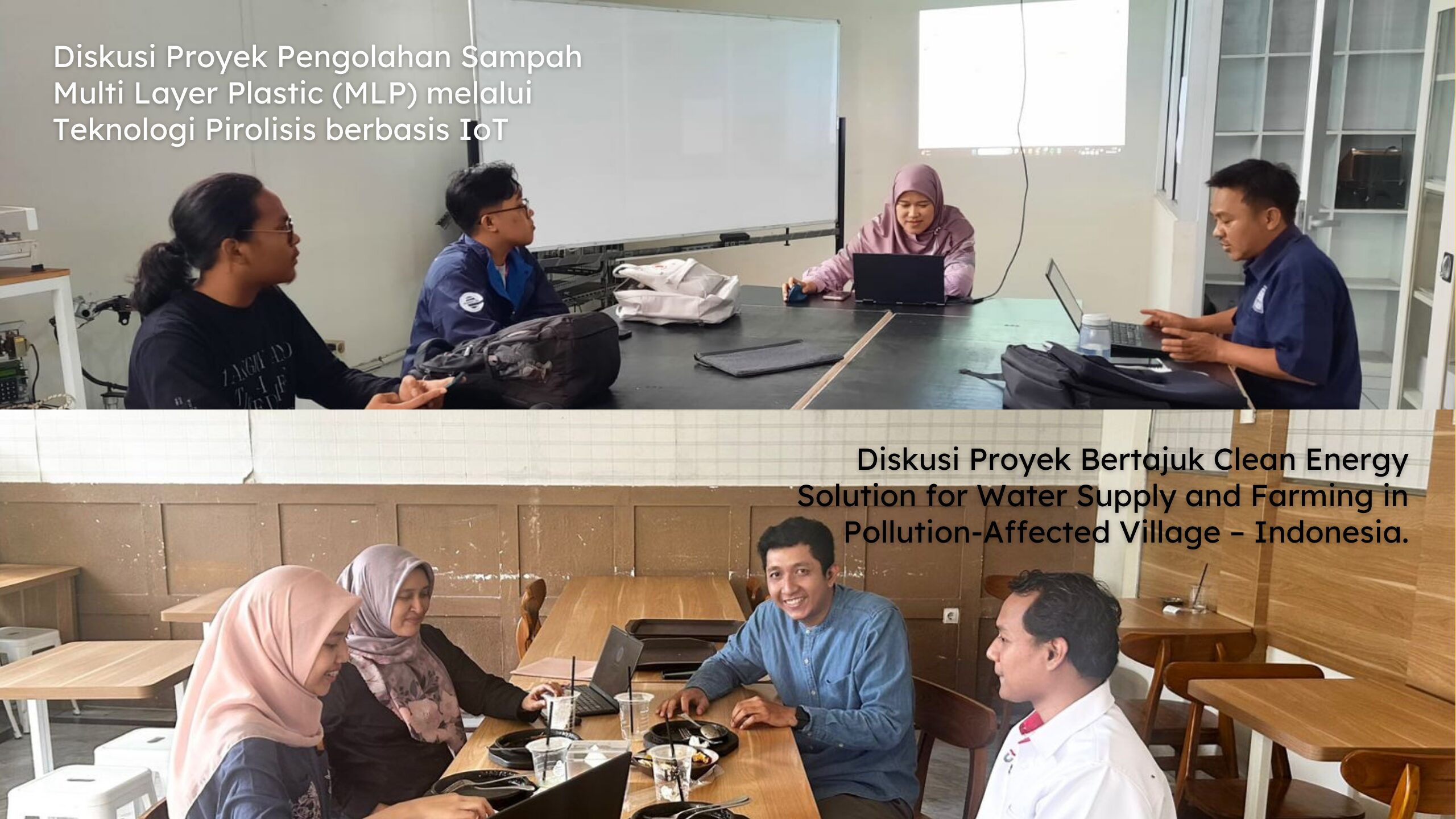
Safitri Juanita, a lecturer in Informatics Engineering at ELECTICS, leads a project on processing Multi Layer Plastic (MLP) waste through IoT-based pyrolysis technology. This project partners with Bank Sampah Darling to recycle hard-to-decompose plastic into alternative fuel oil.
The uniqueness of this project lies in integrating pyrolysis technology with an IoT-based monitoring system and solar panels as the energy source. “With this technology, we want to help waste banks process plastics independently while driving a circular economy in the community,” explained Safitri.
The benefits extend not only to the community but also to students involved, who gain hands-on experience in multidisciplinary research combining IoT, renewable energy, and environmental engineering.
Meanwhile, Feby Artwodini Muqtadiroh, an Information Systems lecturer at ELECTICS, leads a project titled Clean Energy Solution for Water Supply and Farming in Pollution-Affected Village – Indonesia. The project focuses on providing clean water in Cokrokembang Village, Pacitan, which has long suffered from pollution caused by gold mining waste.
The solution introduced includes a solar-powered water pumping system without batteries, filtration units, and IoT-based water quality sensors. This approach is developed together with the local community, involving farmer groups, vocational high school students, and university students across different levels. “For us, technology should not stop at the laboratory, but must present real solutions in the heart of the community,” said Feby.
In addition to providing clean water, the project strengthens the community’s capacity to manage and maintain the technology independently, ensuring sustainable impact.
Both projects showcase how ELECTICS ITS can deliver technological innovations rooted in real societal problems. This international funding is a recognition that ITS lecturers’ research and community service are not only relevant but also globally acknowledged.
Safitri hopes her innovation can be replicated in hundreds of other waste banks around Ciledug, supporting the Sustainable Development Goals (SDGs) through reduced carbon emissions. Meanwhile, Feby envisions the clean water project in Pacitan becoming a model for other villages facing similar challenges.
This achievement also serves as an inspiration for other lecturers and students. As Feby emphasized, “A proposal will be stronger if it starts from real problems in the field and involves the community from the very beginning. With the spirit of collaboration, opportunities to gain international funding will open wider.”
With this success, ELECTICS ITS once again reaffirms its role as a pioneer of technological innovations for the environment and sustainable energy, strengthening ITS’s reputation on the global stage.