


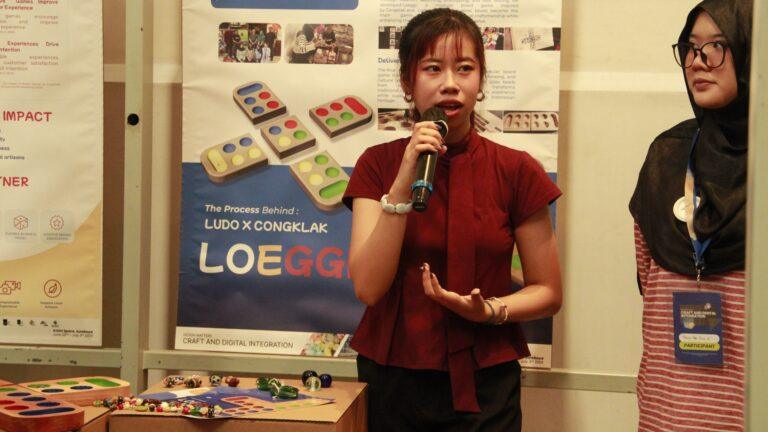
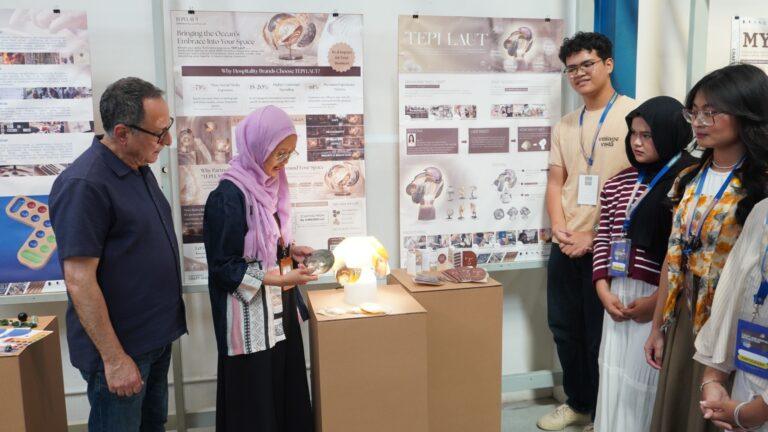
ITS Campus, ITS News — The Institut Teknologi Sepuluh Nopember (ITS) continues to intensify international collaboration across various dimensions. This time, through the Faculty of Creative Design and Digital Business (FDKBD) in partnership with Curtin University, Australia, ITS organized the Design Matters Exhibition on Friday, July 3.
This one-day exhibition, held at KOGU Space in Surabaya, served as a platform for ITS and its students to produce design works based on upcycling principles. Through the Adjunct Professor program, ITS welcomed Dr. Qassim Saad, an academic from Curtin University, as a visiting lecturer and researcher for a six-month period.
This program aims to broaden students’ global perspectives while providing direct learning experiences alongside internationally recognized academics. This teaching and learning scheme enables students to study design process standards applied at the international level.
At the exhibition opening, Dr. Qassim Saad explained that this exhibition project bridges the gap between craft practices and digital technology within the design process. In his view, this demonstrates that technology can be harnessed within creative works to maximize their potential. “The integration of technology and available resources produces various works that can bring benefits,” he stated.
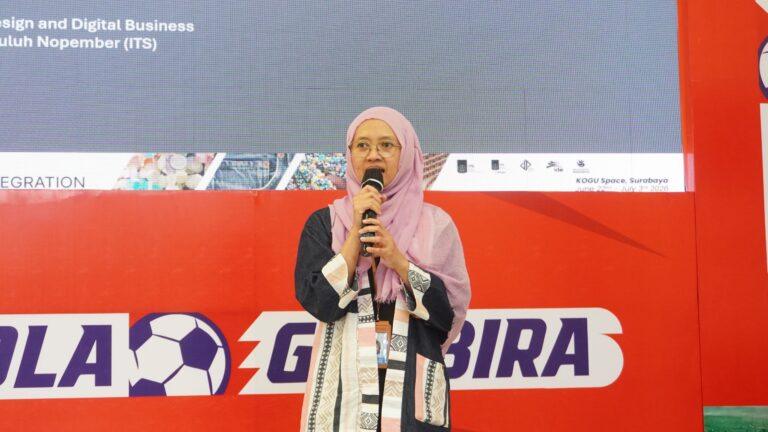
Meanwhile, the Dean of FDKBD ITS, Ellya Zulaikha, S.T., M.Sn., Ph.D., revealed that this exhibition emerged after six months of the learning process. The ITS alumna of the Industrial Product Design undergraduate program also added that the students participating in this activity came not only from the ITS Department of Industrial Product Design (Despro) but also from the Department of Visual Communication Design (DKV) and the Department of Business Management. “This collaboration optimizes the upcycling craft industry through digital approaches and appropriate business strategies,” she added.
The students involved in this exhibition project also faced the challenge of addressing waste problems through innovative solutions. A total of 20 students received the opportunity to conduct observations in various regions to identify existing development opportunities. As a result, through these observations, the student group identified opportunities to utilize cardboard, glass, convection textile, and seashell waste as innovative product materials.
Ellya explained that the students would transform these waste materials into creative works. The designs then underwent development using artificial intelligence (AI) to explore various design possibilities that meet community needs. “We utilize artificial intelligence not to replace the role of designers, but to maximize the potential of available resources,” she stated.
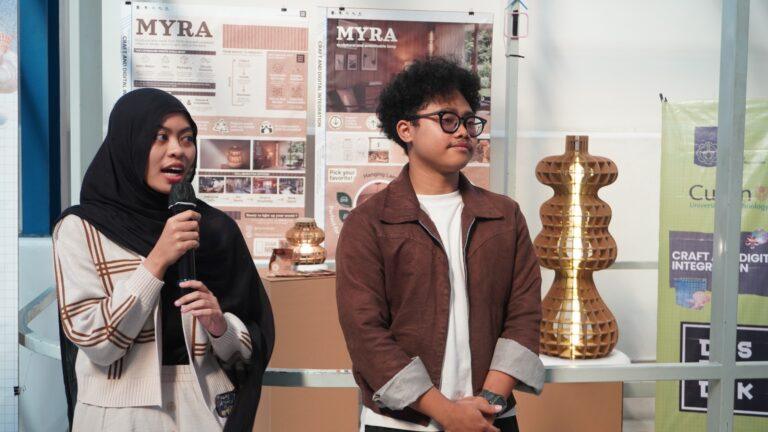
This exhibition also partnered with various industries to utilize their waste materials, ensuring that the innovative products could be adopted by craftspeople. One such craft sector collaborator was Dus Duk Duk, whose cardboard waste ITS students transformed into lamp fixtures. The ITS students observed that lamp fixtures produced from cardboard held potential as a promising product.
A similar approach applied to the kapis seashell waste from Mekarsari, Situbondo. The students assessed that the natural patterns found on these shells could be processed into lamp fixture materials.
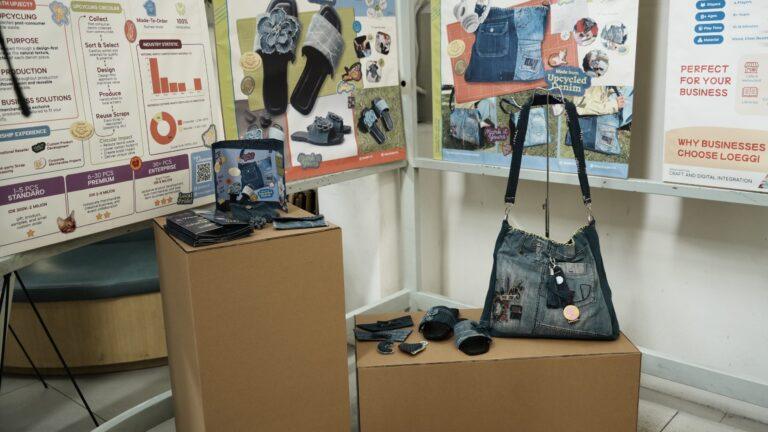
Meanwhile, student collaboration with Upject in Mojokerto produced fashion products such as bags and sandals that add value. Finally, student collaboration with Beads Flower in Jombang processed glass bead waste into traditional toys such as yo-yos, ludo, and dakon (a traditional board game).
Furthermore, Ellya views this exhibition as a platform to showcase the creative process of a work so that it can have impact and provide benefits. Therefore, Ellya emphasized that this exhibition, which opened to the public, has a primary vision of producing upcycling-based products toward realizing Indonesia’s zero-waste goals. This effort also supports the achievement of the Sustainable Development Goals (SDGs), particularly point 12 on Responsible Consumption and Production.
In line with this, the Design Matters Exhibition also reflects SDG point 8 on Decent Work and Economic Growth, as well as point 17 on Partnerships for the Goals through the ITS-Curtin University collaboration. Furthermore, the student learning process alongside Dr. Qassim Saad reflects SDG point 4 on Quality Education. (HUMAS ITS)
Reporter: Ahmad Maulana