Designing a Multiscale Support System for Digital Education to Improve Higher Education Access for People with Disabilities (PWDs) at Institut Teknologi Sepuluh Nopember (ITS)
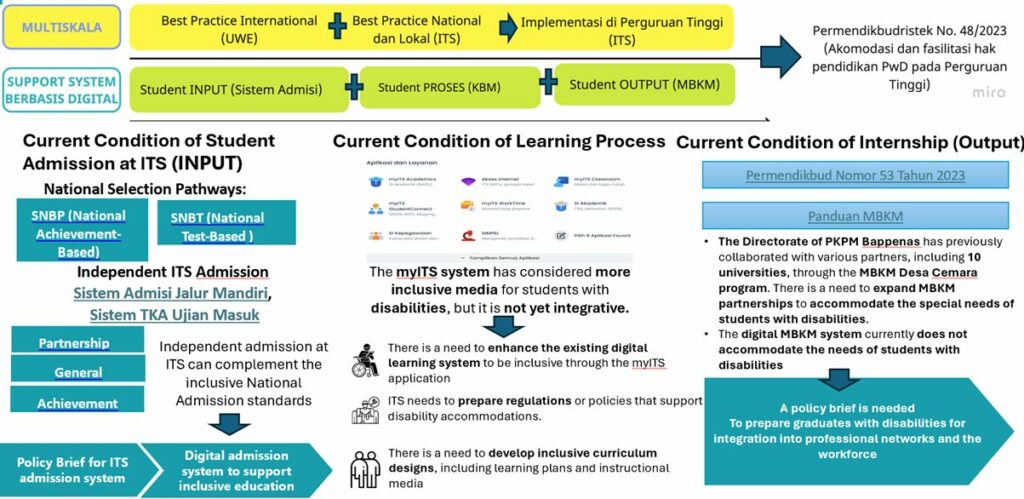
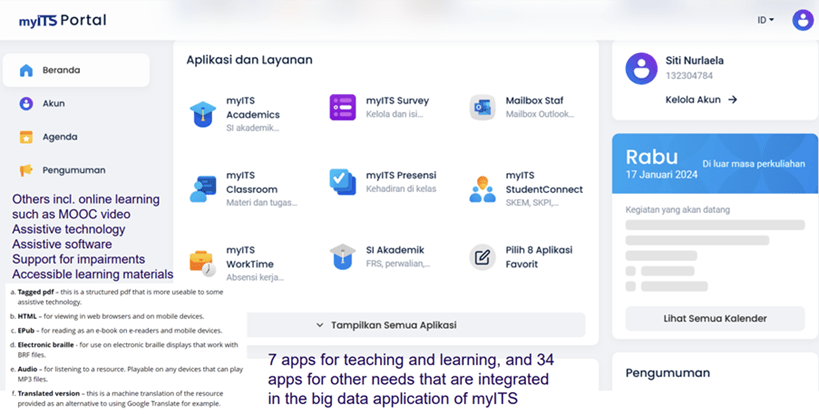
While Indonesia has a strong legal framework for inclusive education, implementation in higher education still faces challenges. Students with disabilities, particularly those with visual impairments, face systemic barriers in accessing digital education systems. ITS's current digital systems, such as myITSClassroom which consists of 41 applications , are not yet fully equipped with features that support disability inclusion.
Our Approach
This research uses a multiscale approach that integrates three main pillars: Student Input (Admissions), Student Process (Learning), and Student Output (Graduates & Careers). Data was collected through gap analysis, benchmarking with other universities (like UNESA and UNPAM) , and 33 workshops and Focus Group Discussions (FGDs) involving approximately 20 people with disabilities, lecturers, ITS leadership, and strategic partners like Bappenas and YPAB (Foundation for Blind Children Education).
Milestone 2: Student Process (Learning)
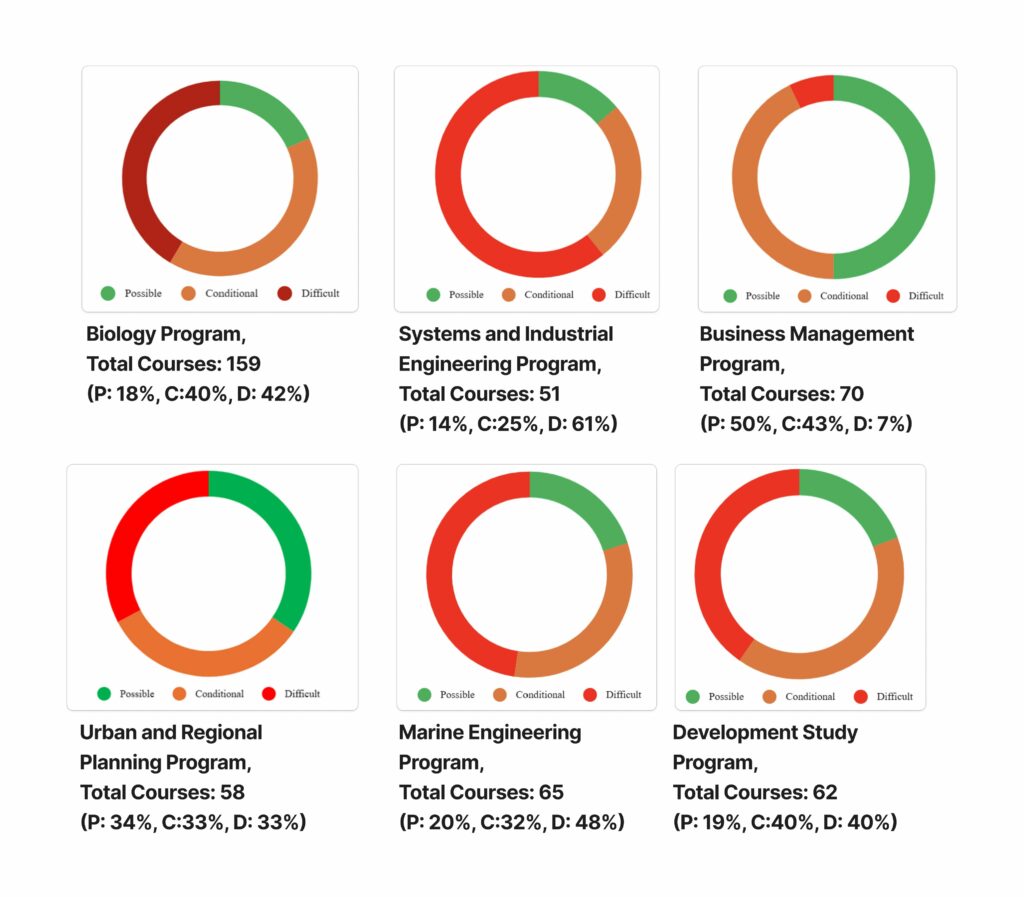
Adaptive Curriculum: Systematically map the curriculum (Expected Learning Outcomes/ELOs) to the barriers and needs of students with visual impairments.
Adjusted Teaching Methods: Adapt teaching materials into accessible formats, such as providing detailed descriptions for images, Braille materials, audiobooks, and tactile tools (3D models) .
Inclusive Assessment: Adjust evaluation methods, including providing extended time (at least 50% additional time) and accessible test formats (e.g., verbal or screen-reader-compatible digital tests) .
Standardize PBL/CBL: Promote Problem-Based Learning (PBL) and Case-Based Learning (CBL) methods to enhance active student participation.
Adopt Assistive Tech: Institutionally adopt assistive technologies like NVDA (NonVisual Desktop Access) and UserWay as cost-effective solutions.
Milestone 2: Student Process (Learning)
Adaptive Curriculum: Systematically map the curriculum (Expected Learning Outcomes/ELOs) to the barriers and needs of students with visual impairments.
Adjusted Teaching Methods: Adapt teaching materials into accessible formats, such as providing detailed descriptions for images, Braille materials, audiobooks, and tactile tools (3D models) .
Inclusive Assessment: Adjust evaluation methods, including providing extended time (at least 50% additional time) and accessible test formats (e.g., verbal or screen-reader-compatible digital tests) .
Standardize PBL/CBL: Promote Problem-Based Learning (PBL) and Case-Based Learning (CBL) methods to enhance active student participation.
Adopt Assistive Tech: Institutionally adopt assistive technologies like NVDA (NonVisual Desktop Access) and UserWay as cost-effective solutions.
Milestone 3: Student Output (Graduate Readiness)
Career Readiness: Equip students with the knowledge and confidence to advocate for and use assistive technology in the workplace.
Integrated Careers Hub: Provide a Careers Hub that is integrated with the Disability Service Unit (ULD) to offer high-quality career guidance.
Inclusive Internships: Ensure internship platforms (like myITS Student Connect) are accessible to PwDs and provide appropriate accommodations during the internship period.
Industry Partnerships: Build networks with companies to increase awareness and capacity for accommodating PwDs, including through the established partnership with Bappenas.