Biology
Indonesia ranks 4th in the world in natural resource mega-biodiversity across both terrestrial and marine environments. Synergizing with existing potential as well as the needs of society and the global community, the vision, mission, and objectives of ITS since 2014 have been developed and focused toward Marine Biology, Environment, Energy, and Food Security.
In line with this, since its establishment in 1998, the ITS Department of Biology, which is known for theories and applications in the scientific field of Marine Biology, has also expanded its theoretical and applied scope in that direction. This effort aims to contribute to Indonesia's national development by creating qualified human resources capable of playing a role in optimal and wise natural resource management, conducting nationally/internationally indexed research, and engaging in community service activities.
The Department of Biology under the Faculty of Mathematics and Natural Sciences (FMIPA) opened the Master's (S-2) Biology Study Program in the even semester of the 2015/2016 academic year (Decree No. 21/KPT/I/2015 of the Minister of Research, Technology, and Higher Education regarding the Biology Study Program of the ITS Master's Program).
Supported by 25 academic staff with qualifications: 1 Professor, 8 Doctors, 4 Doctoral candidates, and 12 Masters. The backgrounds of the academic staff are varied and evenly distributed across biochemistry, marine biology, molecular biology, physiology, and taxonomy in the realms of plant science, animal science, microbiology, and ecology.
 PRACTICUM AND RESEARCH FACILITIES
 For more information, please contact:
Objectives
Education in the Biology Master's (S-2) Study Program aims to educate and train participants in developing and updating biological science by mastering and understanding scientific methods. In addition, participants will be able to solve problems in related scientific fields through research activities, as well as enhance their intellectual and professional capabilities. Graduates of the Biology Master's Program are expected to achieve the 3 capabilities below: WORK FIELD CAPABILITIES- Capable of developing and applying biological science to solve problems in the fields of marine, environment, energy, and food security through creative and tested research with approaches ranging from the molecular level to ecosystems.
- Mastering in depth the biology and biotechnology of plants, animals, and microbes at individual, cellular, and molecular levels as well as their interactions with the environment, so as to contribute to development and problem solving in marine fields, environmental management, energy, and food security through interdisciplinary and multidisciplinary approaches.
- Capable of managing and developing biological research beneficial to science and society, gaining national and/or international recognition.
Fields of Interest
The Master's Program in Biology offers the field of interest in Biosciences and Biotechnology with 3 scientific sub-groups, namely: 1. Marine Biology 2. Environment 3. BiotechnologyAcademic Activities
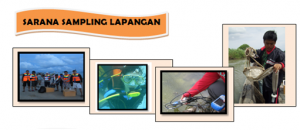
The Biology Master's (S-2) Study Program is conducted over 4 semesters with a minimum credit load of 36 credits (SKS). The credit load is distributed across Mandatory Courses including seminar and thesis, Mandatory Elective Courses in scientific fields, and Free Elective Courses. Academic activities include: lectures, laboratory practice, field practice, seminars, and research under a guidance system by academic advisors, course lecturers, and thesis advisors. Thesis research results are published in seminars or national/international scientific journals and concluded with an examination before an evaluation committee.Supporting Facilities
To enhance the understanding of Biology concepts and their applications, learning activities are supported by several facilities, including: ITS SUPPORTING FACILITIES- Central Library
- Language Center
- 9 Research Centers (Center for Energy Studies, Center for Environmental and Human Settlement Studies, Center for Marine Studies, Center for Information, Communication and Robotics Technology Studies, Center for Transportation and Logistics Studies, Center for National Ship Design and Engineering, Center for Geoscience, Disaster and Climate Change Studies, Center for Science Studies, Center for Regional Potential and Community Empowerment Studies, Center for Materials and Nanotechnology Studies)
- Student Center
- Student Advisory Center
- Various sports facilities
- Canteen
- Classrooms
- Meeting / Defense Rooms
- Reading Room with library materials
- International Scientific Journals
- National Scientific Journals
- Supporting Computers
- Open space with free internet access
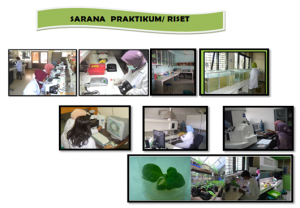
- Basic Laboratory I and II
- Zoology and Aquaculture Research Laboratory
- Plant Bioscience and Technology Research Laboratory
- Tissue Culture Laboratory
- Bacteriology Laboratory
- Mycology Laboratory
- Biomolecular Laboratory
- Ecology Research Laboratory
 PRACTICUM AND RESEARCH FACILITIES
 For more information, please contact:
Department of Biology Building H Department of Biology, ITS Sukolilo Campus, Surabaya 60111 Phone: (031) 596 3857 Fax: (031) 596 3857 Email: biologi@its.ac.id, kajur_biologi@its.ac.id