Published on
Tuesday, 11 August 2026
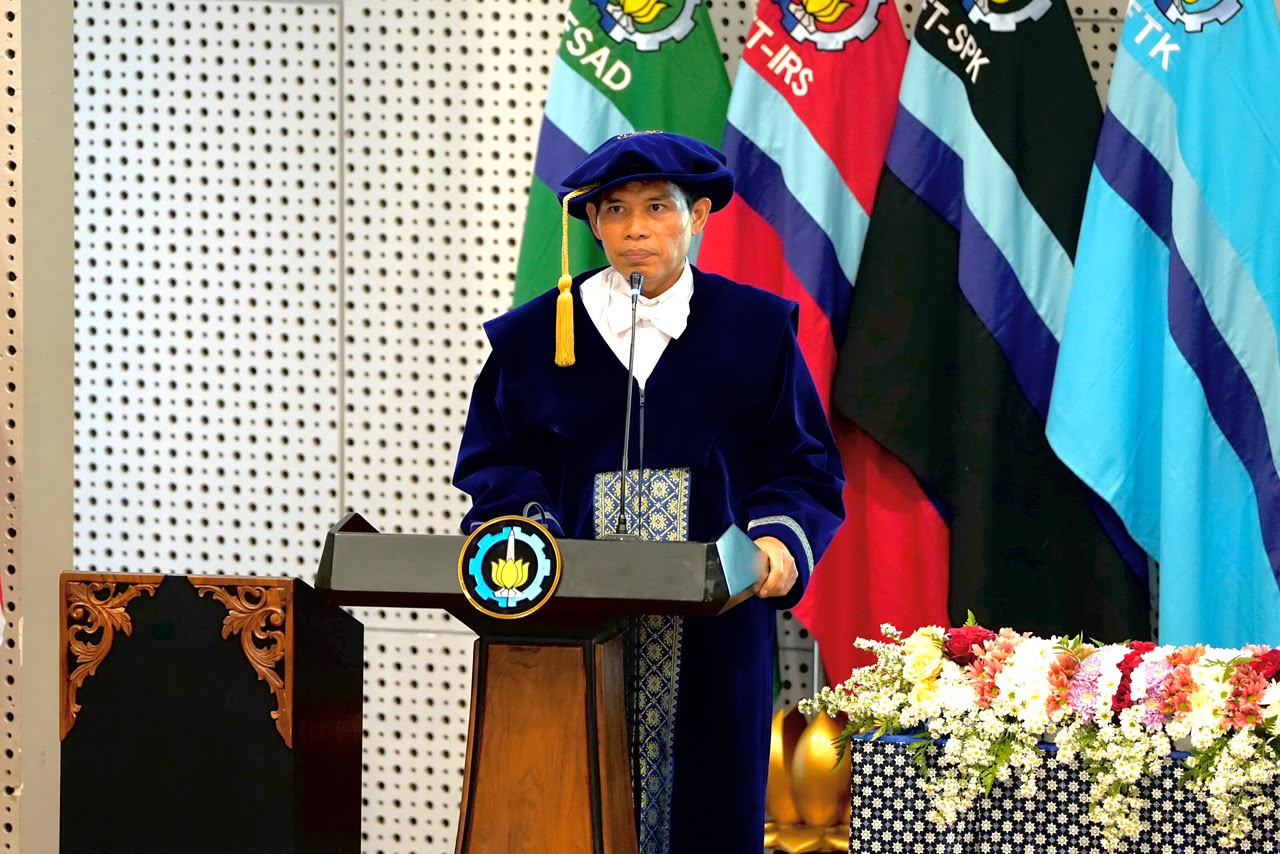
ITS Campus, ITS News – The dwindling global dependence on fuel oil (BBM) demands concrete steps to create environmentally friendly alternative energy sources. To address this significant challenge, Professor Dr. Ir. Imam Abadi, ST, MT, IPM, Professor of Engineering Physics at the Sepuluh Nopember Institute of Technology (ITS), has developed a smart hybrid power generation system that combines solar and wind power.
This strategic move stems from concerns about the global fossil fuel crisis and the limited access to electricity that still plagues remote areas in Indonesia. To address this disparity, Indonesia’s abundant potential as a tropical country with year-round sunshine and daily winds is beginning to be considered as a self-sustaining solution. “Indonesia is rich in wind farms and consistent sunshine year-round, so we chose this combination of these two natural resources as the primary support for this renewable energy system,” Imam explained, explaining the rationale for his choice of equipment.
This system applies the principle of energy complementarity to maintain the continuity and stability of daily electricity supply. The characteristics of these two New and Renewable Energy (NRE) sources are designed to complement each other alternately, with the solar panel components working optimally during the day to harvest and absorb sunlight. At night, wind turbine technology takes over as the primary generator, ensuring simultaneous electricity production.
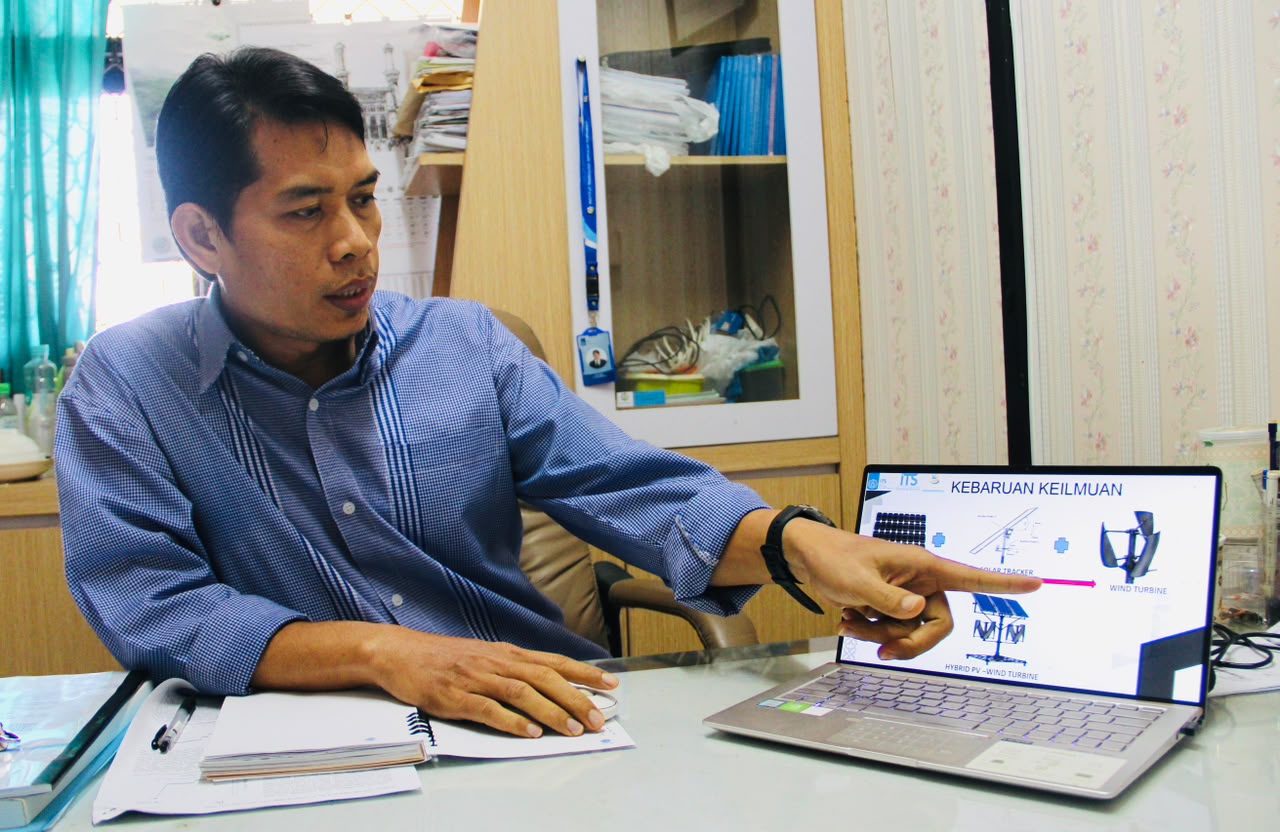
The uniqueness of the selected vertical spiral-shaped wind turbine is its ability to continue rotating to generate electricity even in the slightest breeze. This Savonius helix model was deliberately chosen because it has a very low initial rotational speed limit, making it suitable for the national windy climate. “The advantage of this type of turbine is its low cut-in speed system , so that at a wind speed of only 2.5 meters per second, the generator can rotate and produce a stable daily electricity voltage,” explained the man born in Lamongan in 1976.
Interestingly, the main advantage of this technology lies in the intelligent solar tracking system , which automatically moves the solar panels to follow the sun. Unlike conventional solar panels, this innovation can shift smoothly with the sun’s movement, ensuring the system’s solar energy absorption is always at its maximum.
According to the former Director of Student Affairs at ITS, this system is also equipped with the extraordinary ability to automatically detect weather changes. “When the sky suddenly becomes overcast or covered in thick clouds, this device will immediately switch its detection mode using astronomical calculations,” explained the 257th ITS Professor.
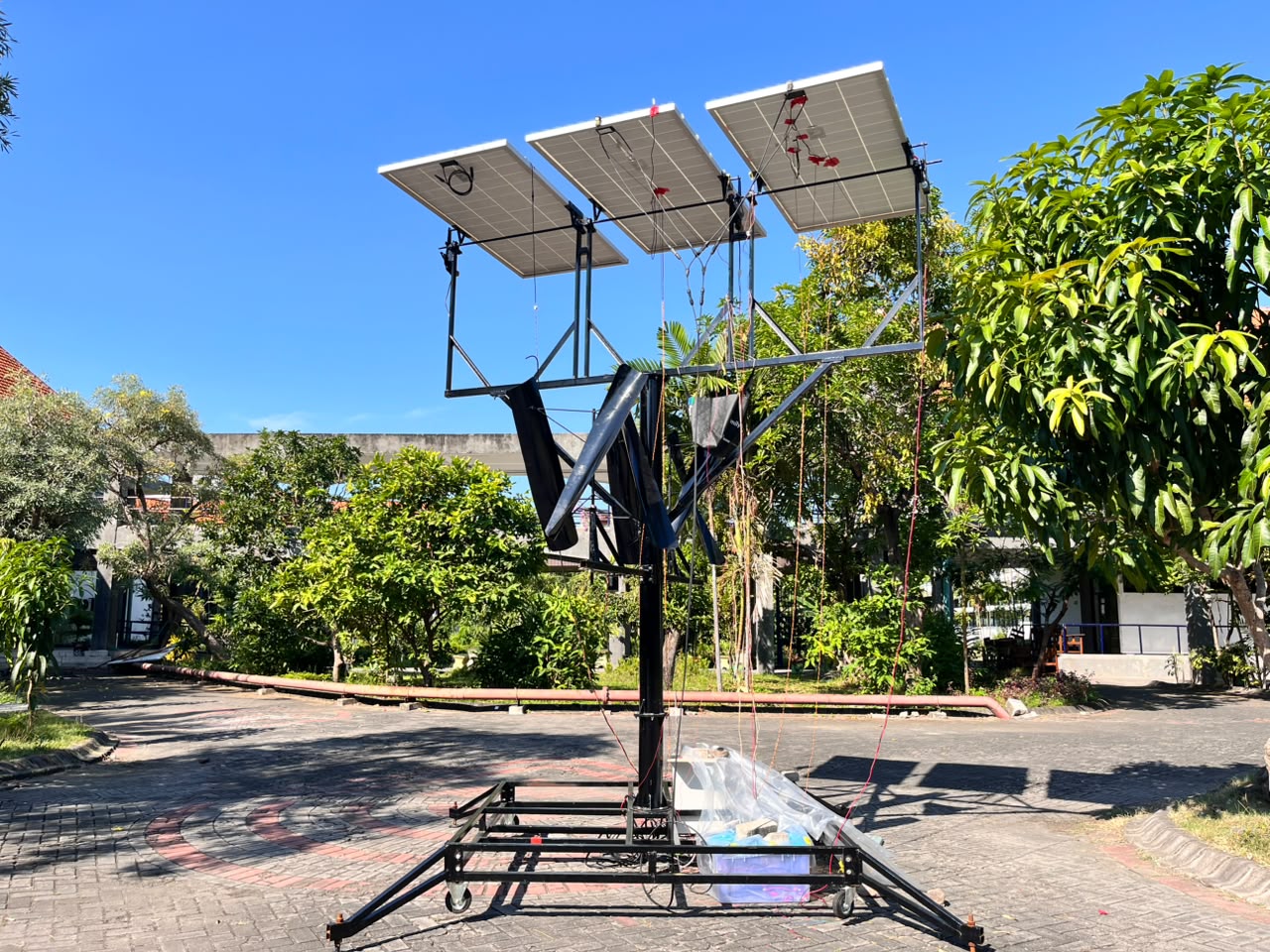
Through automatic switching based on artificial intelligence, the panels will intelligently sense and move in the direction of the sun’s trajectory. This ensures that the solar energy harvesting process continues optimally even when the weather is unpredictable. “When conditions are cloudy, the intelligent control will automatically switch the system to soft sensors based on astronomical calculations to keep the solar panels moving in the ideal position,” added the lecturer in the Measurement, Reliability, Risk, and Safety Laboratory of the ITS Department of Engineering Physics.
Through a series of field tests, this intelligent system successfully demonstrated its robustness, boosting electrical efficiency by up to 25.12 percent compared to conventional solar panels. This innovation further underscores ITS’s commitment to supporting the Sustainable Development Goals (SDGs), particularly point 7 on Affordable and Clean Energy and point 12 on Responsible Consumption and Production.
Imam also expressed his big dream of transforming this technology into a kind of free, self-contained, renewable energy-based charging station in the future. This facility would then be freely accessible to the public to charge electric vehicle batteries and support daily agricultural equipment operations. “For a researcher, the greatest joy is seeing the benefits of the technology they develop being felt by the wider community,” he concluded hopefully. (ITS Public Relations)
Reporter: Dinda Fithriyyah