
Published on
Saturday, 4 July 2026
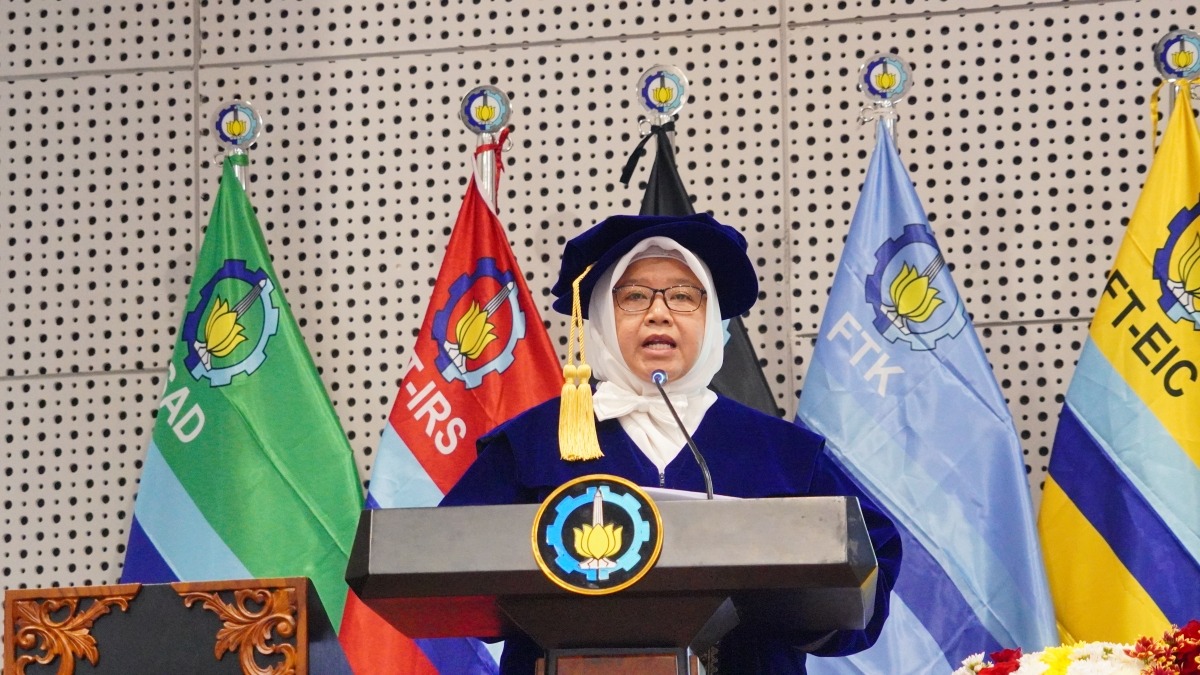
ITS Campus, ITS News — The energy crisis and environmental degradation are two crucial challenges, like two sides of the same coin. To address these issues, the 245th Professor of the Sepuluh Nopember Institute of Technology (ITS), Prof. Diah Susanti, ST, MT, PhD, initiated an advanced material innovation for sustainable energy storage and environmental pollution control.
Through research in a scientific oration entitled Advanced Material Engineering for Energy Storage Technology and Environmental Pollution Control, this lecturer from the Department of Materials and Metallurgical Engineering (DTMM) ITS highlighted the importance of the energy transition. Greenhouse gas emissions from fossil fuels are considered to be able to be reduced through the conversion of polluting waste. “With photocatalyst technology made from semiconductors such as reduced Graphene Oxide and copper oxide (rGO/CuO) composites, CO2 exhaust gas can be converted into alternative fuels such as methanol and methane,” explained Diah.
Furthermore, this photocatalyst technology, which supports chemical reactions with the help of light, has also been developed to decompose toxic industrial dye waste such as Rhodamine-B (RhB) and Methylene Blue (MB). The Tulungagung-born woman explained that her rGO/ZnO-based innovation is capable of cutting-edge performance. “This compound assembled by the ITS DTMM Materials Chemistry Laboratory successfully degraded the liquid pollutant RhB by up to 99.5 percent in just five hours,” she said.
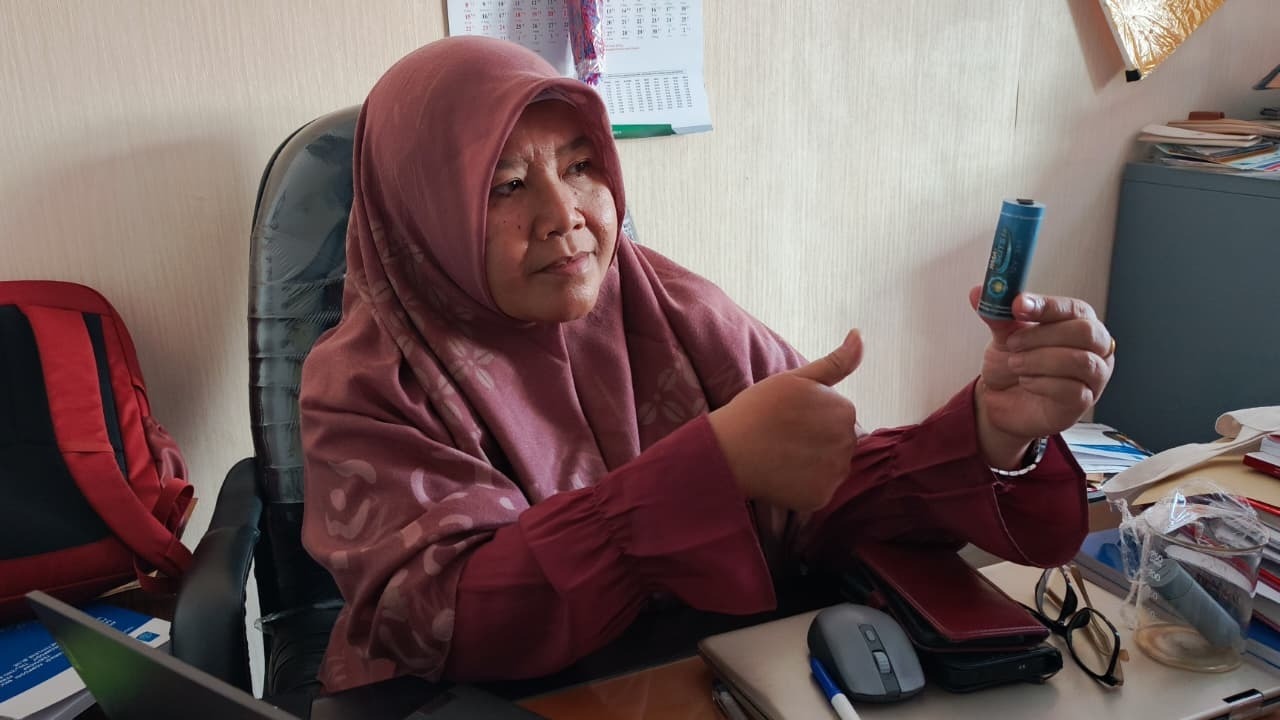
In the energy saving sector, the wife of George Endri Kusuma ST MScEng has also innovated an energy storage device in the form of an electrochemical supercapacitor. Bridging the functions of a conventional capacitor and a battery, this device makes up for the lack of energy density by excelling in its power density. “Its capacitance can even reach 10,000 times greater than that of a conventional capacitor,” explained the doctoral alumnus of the National Taiwan University of Science and Technology (NTUST).
In detail, Diah classified the instruments into three main types: Electric Double Layer Capacitor (EDLC), pseudocapacitor, and hybrid systems. The EDLC type utilizes porous carbon material to store charge, while the pseudocapacitor stores power through a reduction-oxidation reaction. Her latest research has successfully assembled all three device models using rGO material combined with various metal oxides such as WO3, NiO, CuCr2O4, and manganese oxide compounds.
To create an environmentally friendly massive energy storage system, Diah is synthesizing local Indonesian biomass waste such as water hyacinth, coconut shells, and kluwak (a type of palm tree) into porous, active rGO. This high-performance device will be integrated in a hybrid system with a battery or fuel cell in future electric vehicles. This intelligent system plays a crucial role, acting like a reservoir, capable of rapid charging and discharging to stabilize the overall electricity supply.
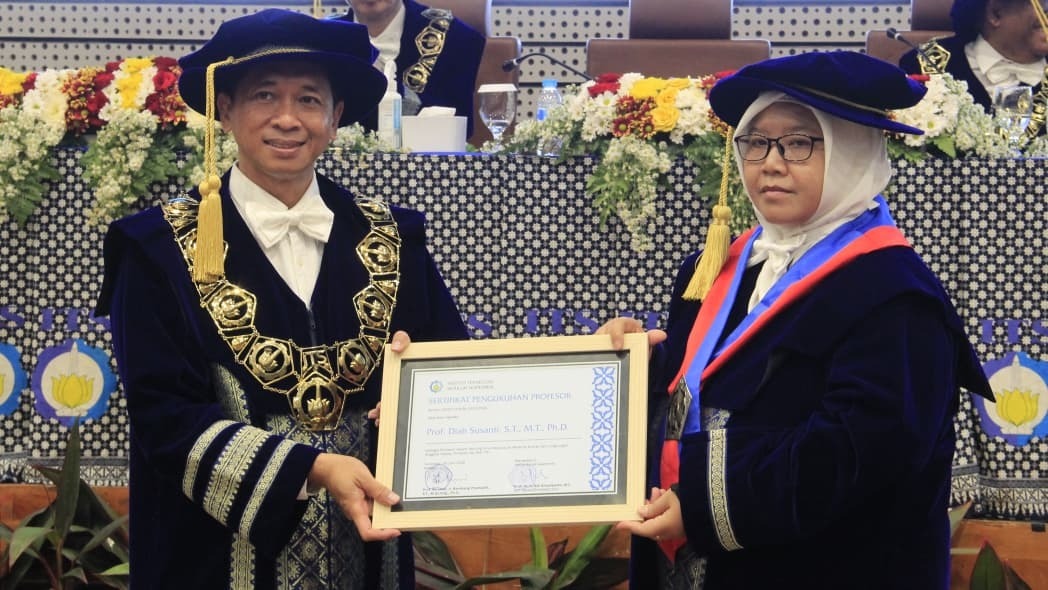
Going forward, this woman, who has dedicated her life to academic research, hopes her nanotechnology breakthroughs won’t just stagnate at the laboratory level. She is determined to continue expanding her collaborative network with global industry partners to achieve the Net Zero Emissions target by 2060. “While there is an opportunity, women must also continue to be empowered and strive to make the best research contributions to environmental sustainability,” she said motivatingly.
This progressive step through a series of material engineering innovations is in fact aligned with the global commitment to realizing the Sustainable Development Goals (SDGs). This achievement directly supports point 7 on Clean and Affordable Energy, point 12 on Responsible Consumption and Production, and point 13 on Climate Change Management. Through the utilization of biomass waste and carbon emission conversion, this research is a concrete manifestation of ITS’s commitment to delivering smart technology that supports the sustainability of the earth. (ITS Public Relations)
Reporter: Dicka Elkana Putra