Published on
Tuesday, 10 November 2026
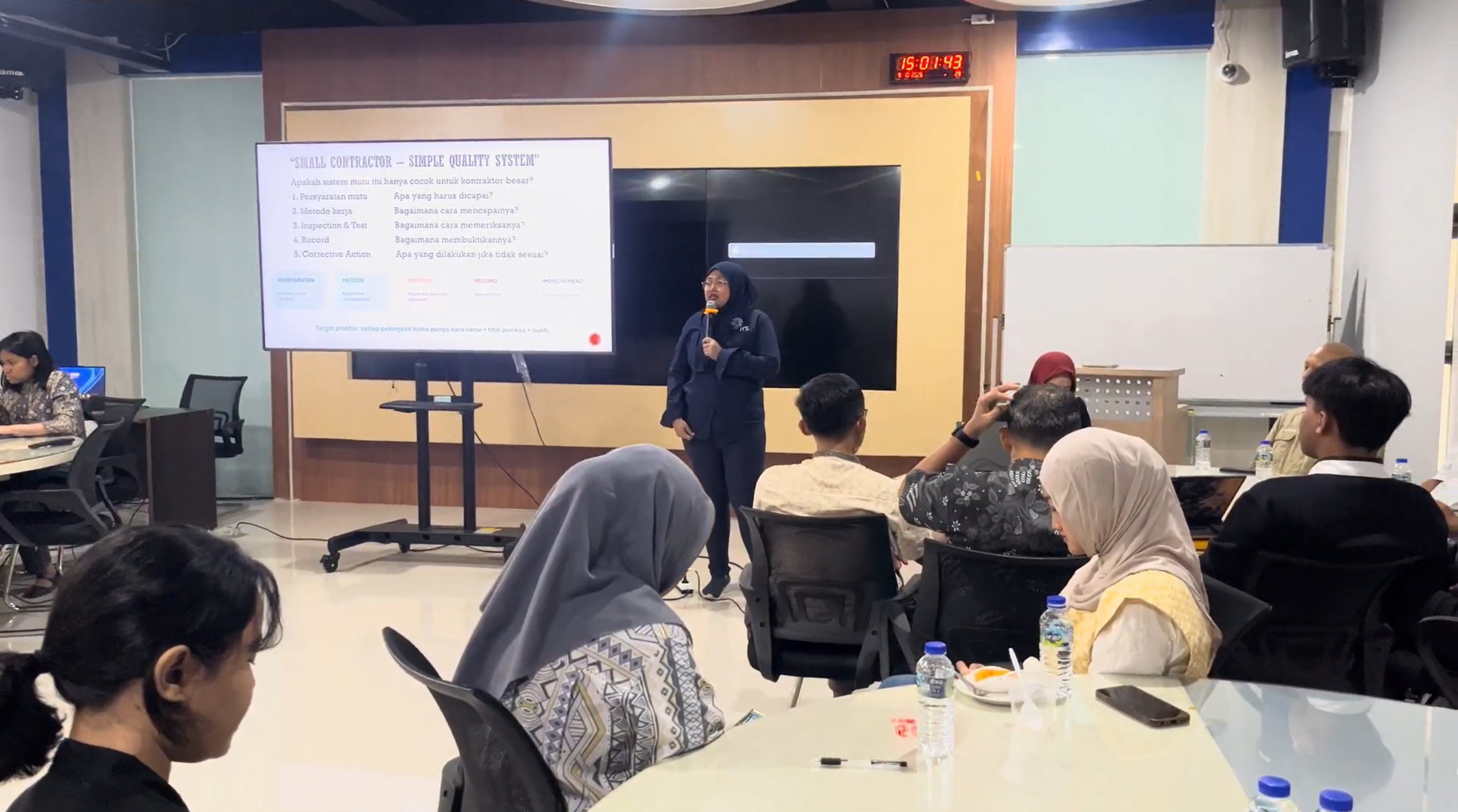
Surabaya, ITS News – The Sepuluh Nopember Institute of Technology (ITS) provided small-scale construction service providers in Surabaya with knowledge of quality management systems through training that combined material presentations and case study discussions. The training, organized by the ITS Civil Engineering Department’s community service team, took place in the Smart Learning Classroom on the first floor of the Civil Engineering Department on Friday (October 9th).
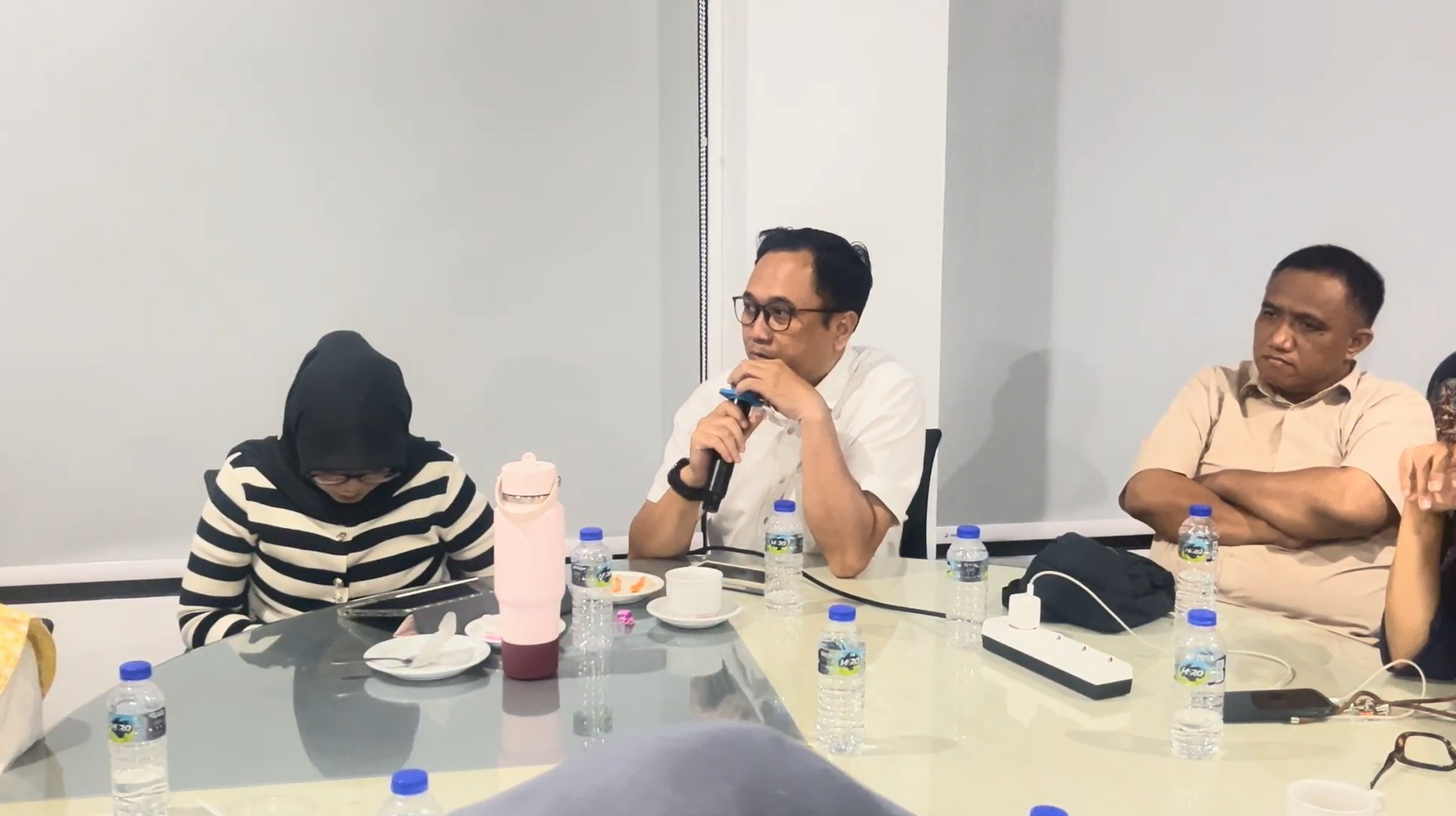
A total of 60 participants from construction companies and universities attended the event. According to attendance records, participants included limited partnerships (CVs), limited liability companies (PTs), and ITS internal units. They came from diverse backgrounds, ranging from business leaders and project implementers to administrative, supervisory, and other support staff.
This training emphasizes that construction quality must be managed from the moment technical requirements are established, not just inspected after completion. Field inspections require clear acceptance criteria, a division of responsibilities, and documentation that allows for traceability of work results.
The training material covers three main aspects: quality planning, quality management, and quality control. Quality planning addresses the establishment of requirements and acceptance criteria for work. Quality management emphasizes the allocation of personnel responsibilities and error prevention efforts. Quality control focuses on inspecting work results, recording nonconformities, and following up on their resolution.
One practical tool introduced is the checklist. This tool helps implementers and inspectors ensure that each work item meets the established requirements. Recording the work location, inspection criteria, inspection results, and inspector identity is also essential for supporting the traceability of project documents.
In addition to inspections, participants are encouraged to understand how to handle nonconformities through root cause analysis and establishing corrective actions. Handling findings is not sufficient by simply fixing the problematic part of the work. The cause of the nonconformity needs to be investigated to ensure that the actions taken are appropriate to the problem. The results of subsequent improvements need to be reviewed and supported by documentation.
Case study discussions, including those related to construction work within the ITS environment, are used to connect the material to field situations. Through this approach, participants learn the interrelationships between technical requirements, inspection decisions, documentation, and communication among the parties involved in a project.
The team of lecturers involved in this activity consisted of Yusroniya Eka Putri RW, Christiono Utomo, Tri Joko Wahyu Adi, and Moh. Arif Rohman, Farida Rachmawati, I Putu Artama Wiguna, Steffanie Christarindra, and Cahyono Bintang Nurcahyo. This activity also involved CV Barata Satya Cipta as a collaboration partner, along with other companies and internal elements.
As a follow-up step, quality management implementation can begin within the company’s routine work. Businesses can designate a person responsible for inspections, use relevant technical references, and maintain records of non-conformities and evidence of their resolution. These steps can help establish more systematic work habits and facilitate evaluation of work quality.
This activity is part of ITS’s efforts to support capacity building for construction businesses through community service. This initiative aligns with Sustainable Development Goal (SDG) 8, namely decent work and economic growth. While the training provides initial training, its implementation in projects and its impact on the quality of construction results still require ongoing monitoring. (*)