Published on
Thursday, 5 November 2026
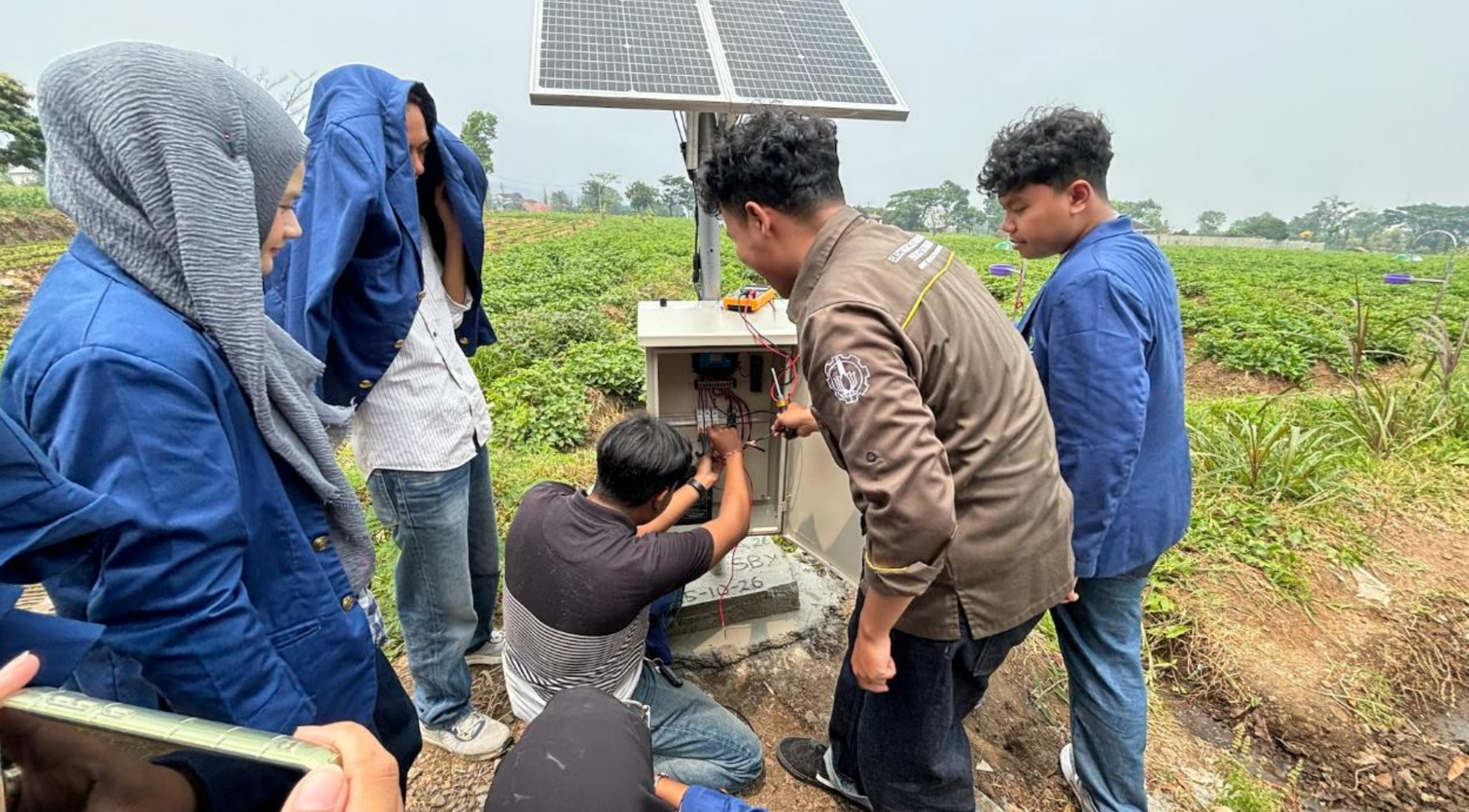
Mojokerto, ITS News – Accurate fertilization and pest control are challenges farmers often face in maintaining agricultural productivity. To address these challenges, the Physics Department of the Sepuluh Nopember Institute of Technology (ITS) has developed two appropriate technology innovations: an Internet of Things (IoT)-based soil fertility monitoring tool and a solar-powered pest control lamp for farmers in North Pacet Hamlet, Mojokerto Regency.
The innovation developed by a team of lecturers and students from the Department of Physics, Faculty of Science and Data Analytics (FSAD) ITS is part of the 2026 ITS Product-Based Community Service (Abmas) program. Led by Dr. Susilo Indrawati MSi, the program seeks to present technological solutions based on the real needs of the community, particularly in supporting more efficient and sustainable agriculture.
One issue the ITS team has focused on is fertilization practices that still rely on experience and intuition. Yet, every plot of land has different nutrient content characteristics. This situation requires farmers to have more accurate information to ensure fertilizer application is tailored to the plant’s needs.
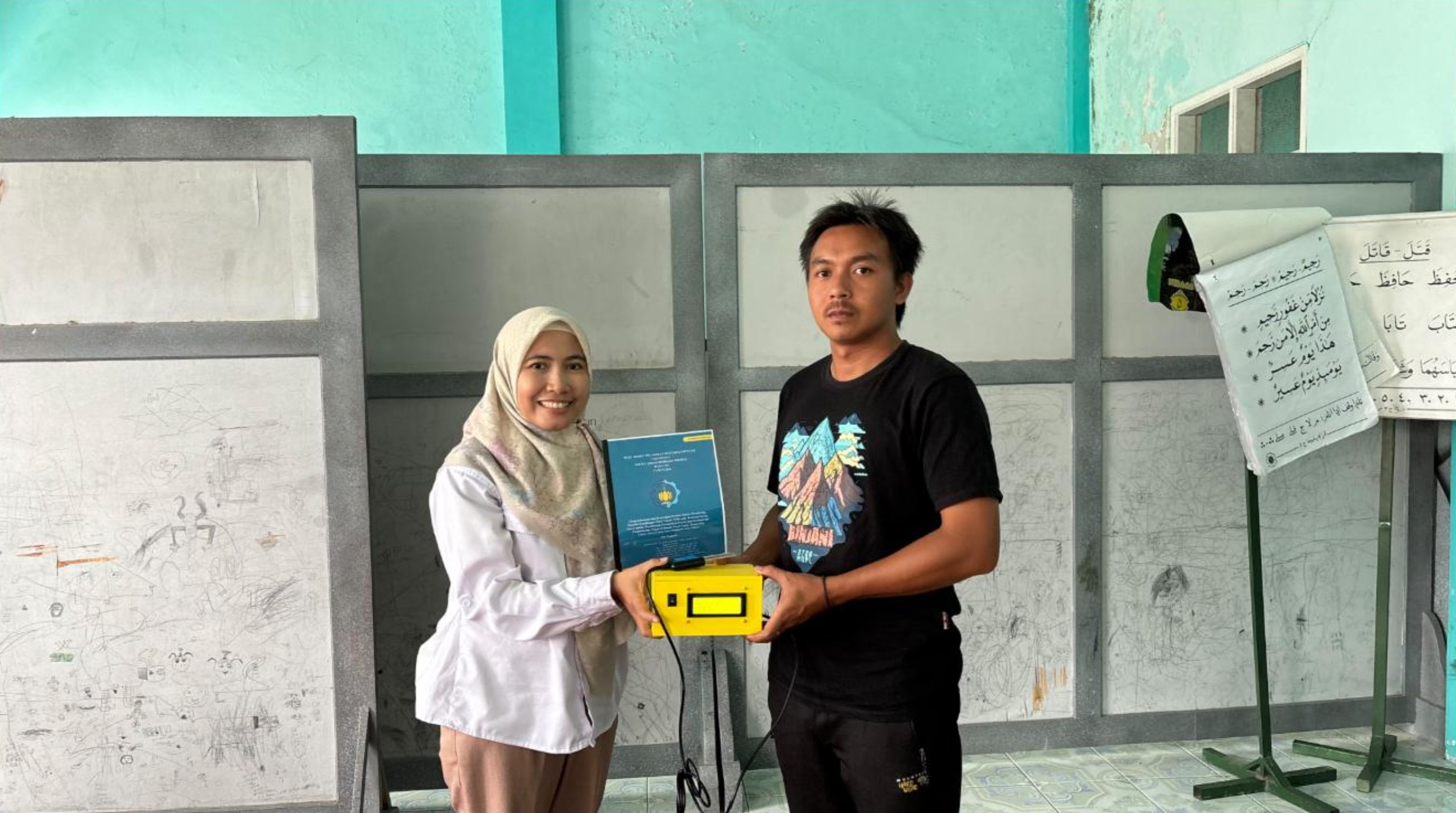
To address this challenge, the ITS team developed a portable device capable of monitoring nitrogen (N), phosphorus (P), potassium (K), and soil acidity (pH). This device integrates NPK and pH sensors with an ESP32 microcontroller and IoT technology. Measurement results can then be monitored via digital devices, including smartphones. “Through this technology, we want to help farmers obtain more measurable information on soil conditions so that in the future, fertilization can be carried out according to plant needs, more efficiently, and still maintain soil fertility,” explained Susilo.
Interestingly, the device is also equipped with solar panels and batteries as alternative energy sources. Utilizing solar energy offers a solution to limited electricity access in rice fields, allowing the device to be used more flexibly on farmland.
Beyond soil fertility issues, the ITS team’s interactions with farmers also uncovered another challenge: pest attacks on shallot crops. Farmers complained about the appearance of white insects that can quickly infest the plants. These attacks can even cause shallot bulbs to become hollow, harming the crop.
In response to these complaints, the ITS team developed an additional innovation in the form of a solar-powered pest control lamp (PLTS). This system utilizes solar energy stored in batteries to power the lamp at night. The development considers the use of light as an alternative method of insect pest control on agricultural land.
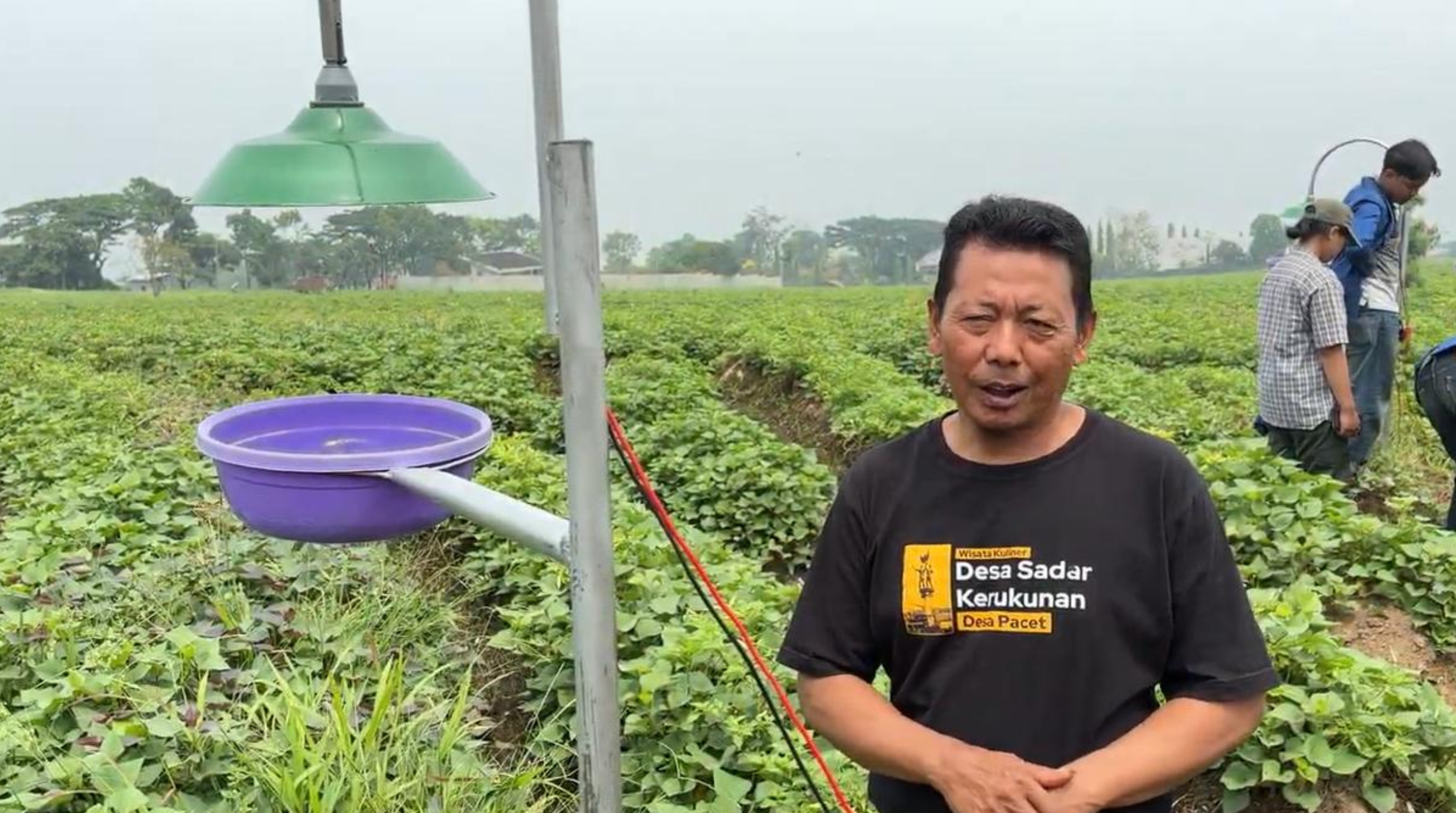
Prawoto, a farmer representative in Pacet, welcomed ITS’s efforts to provide technology tailored to their needs. He believes that information on soil nutrient content will help farmers determine more accurate fertilizer application. Furthermore, limited access to electricity in the rice fields has been a barrier to the use of electronic devices.
He hopes this innovation will help farmers address daily agricultural challenges, from fertilization to pest management. He also believes the presence of ITS lecturers and students provides an opportunity for farmers to gain new knowledge and experience in developing agricultural practices.
Furthermore, this program also provides a hands-on learning experience for ITS students involved in the Community Service Program (KKN). Students participate in various stages of technology development, from solar power plant system assembly, NPK and pH sensor calibration, microcontroller programming, and IoT system integration. This involvement provides students with the experience of applying their academic knowledge to address real-world problems.
Technology development has been ongoing since June 2026, involving team coordination, soil sampling, device assembly, and sensor testing. The ITS team then prepared the technology transfer process for farmers through device introductions, demonstrations of use, and assistance in interpreting measurement results.
The effectiveness of the device in optimizing fertilization and helping control pest infestations still requires further testing and monitoring on agricultural land. Therefore, the ITS team also plans to refine the technology and provide ongoing support for its use. The collaborative use of the device through the Farmers’ Group Association (Gapoktan) is expected to maintain the program’s sustainability after the community service activities conclude.
Through collaboration between universities and the community, ITS continues to promote the downstreaming of science and technology to provide direct benefits to the community. This effort also supports the achievement of the Sustainable Development Goals (SDGs), particularly point 2 on Zero Hunger and point 12 on Responsible Consumption and Production. (*)