Published on
Thursday, 12 November 2026
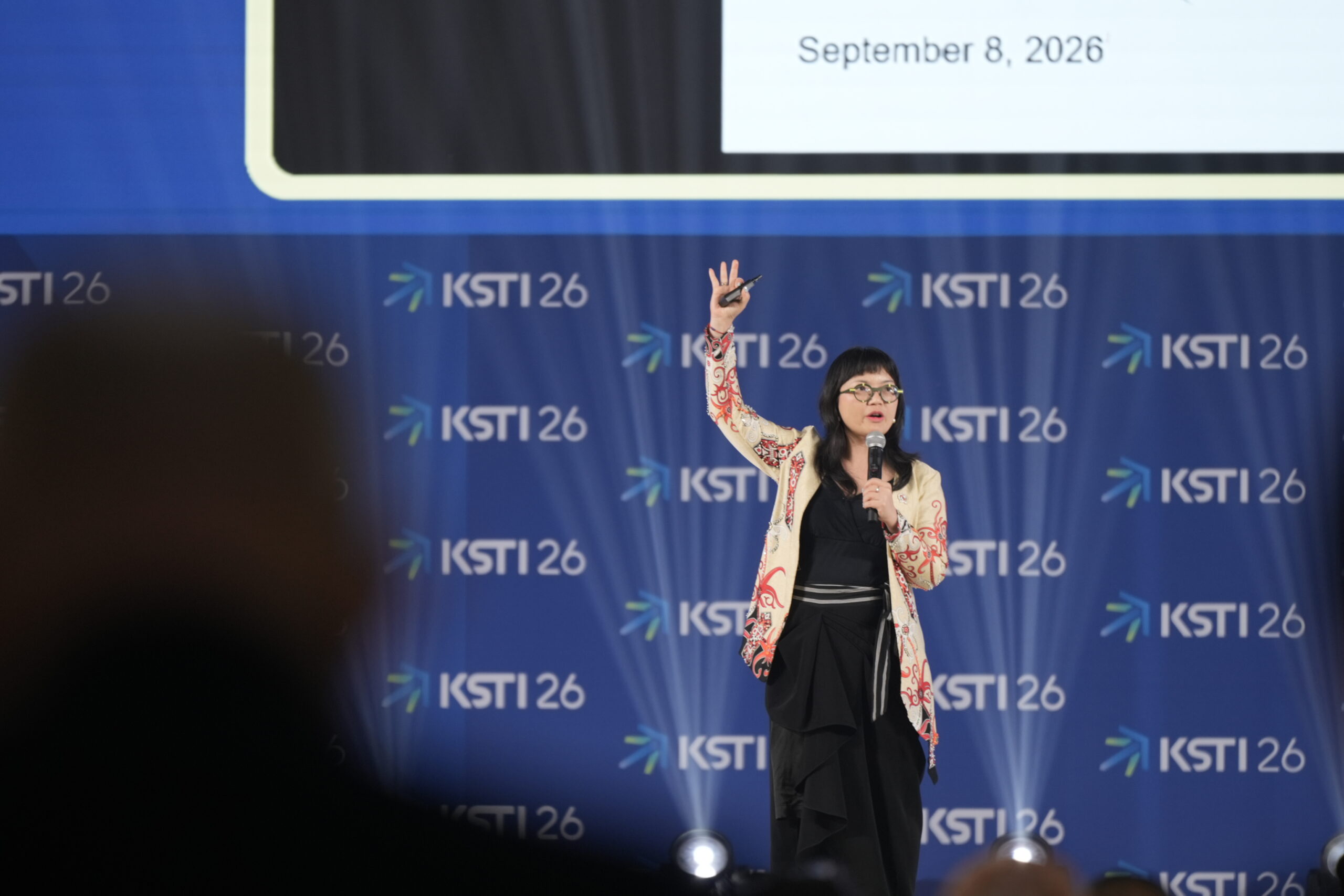
ITS Campus, ITS News – The rapid advancement of artificial intelligence (AI) is raising questions about the existence and role of humans in the development of science. This issue was highlighted by Deputy Minister of Higher Education, Science, and Technology (Wamendiktisaintek) Stella Christie in her keynote speech at the 2026 Indonesian Science, Technology, and Industry Convention (KSTI) at Grha Sepuluh Nopember ITS on Wednesday (11/11).
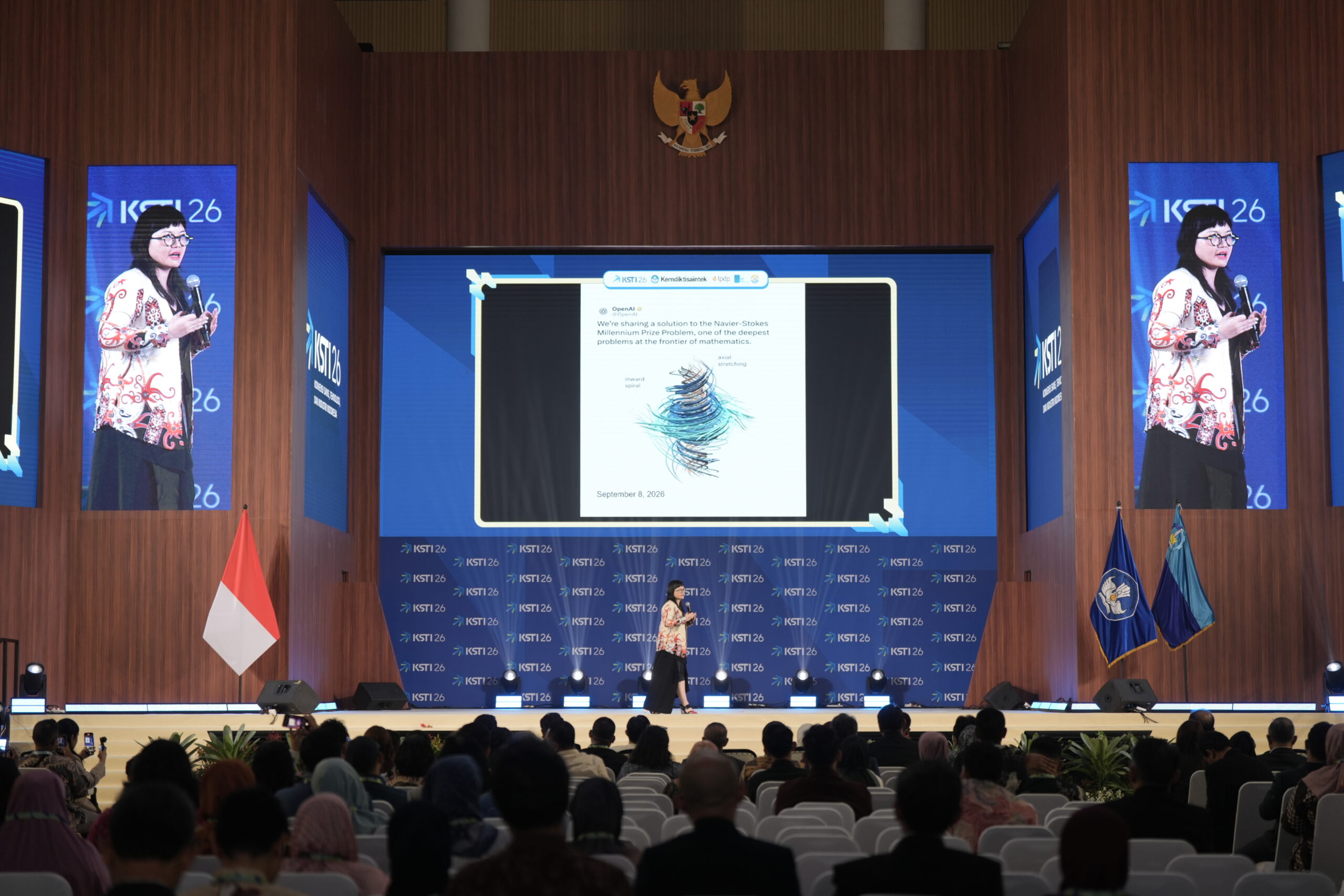
Deputy Minister Stella highlighted the increasingly sophisticated capabilities of AI, even surpassing human research achievements. One example is the claimed solution to the Navier-Stokes Millennium Prize Problem , a mathematical problem that has remained unsolved for approximately 90 years. This development raises concerns about the future role of humans, particularly academics and researchers.
“Ten years from now, will we, the lecturers, still be needed?” asked Professor Stella to the audience.
According to Professor Stella, AI development is occurring exponentially and has the potential to transform the demands of the workforce. AI developments are even beginning to impact programming fields that previously required specialized human expertise.
This situation requires universities to evaluate the competencies they need to equip students to remain relevant in the future. In response to this challenge, Deputy Minister Stella proposed three critical aspects for the sustainability of higher education: knowledge creation, knowledge transmission , and knowledge curation .
“All three encompass the processes of creating, delivering, and curating knowledge amidst the development of AI,” he explained.
Regarding knowledge creation , Prof. Stella questioned the role of humans when AI is also capable of generating knowledge independently. Meanwhile, regarding knowledge transmission , she highlighted the risks of using AI as an instant learning resource. Based on her research, students who rely on AI summaries tend to have shallower understanding than those who seek information independently.
Regarding knowledge curation, Prof. Stella emphasized the importance of human expertise in understanding and explaining facts, not simply accessing information. She illustrated this point by using the difference between learning a fact through online research and truly mastering a field of knowledge.
“The ability to curate information is important for determining knowledge that is relevant to the development of science,” he concluded.
Furthermore, the Tsinghua University professor emphasized that the sustainability of higher education depends on human capacity to create knowledge. Furthermore, universities must be able to define the purpose of their delivery and curate information as the vanguard of knowledge.
To that end, Prof. Stella urged academics to continue working with optimism and realism in the face of technological developments. “We are optimistic, but we must also be realistic and understand why we should be concerned,” she advised.
Efforts to maintain humanity’s role in scientific advancement align with the Sustainable Development Goals (SDGs), particularly SDG 4 on Quality Education and SDG 9 on Industry, Innovation, and Infrastructure. Strengthening the quality of education and developing knowledge-based innovation is expected to drive sustainable technological progress. (ITS Public Relations)
Reporter: Nadhifa Raghda Syaikha
More information: