Published on
Wednesday, 11 November 2026
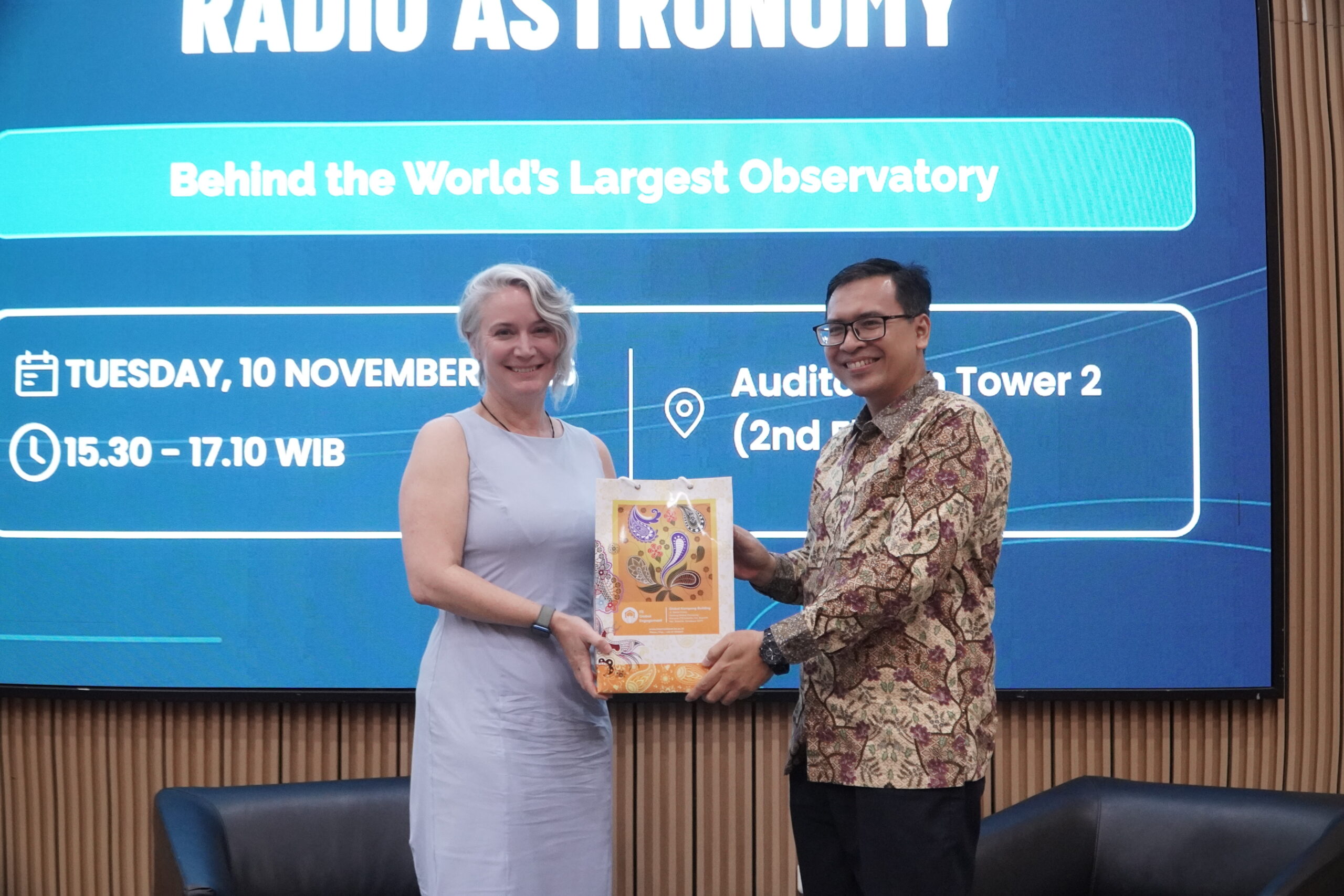
ITS Campus, ITS News – The Ministry of Higher Education, Science, and Technology (Kemdiktisaintek) together with the Sepuluh Nopember Institute of Technology (ITS) as the host of the Indonesian Science, Technology, and Industry Convention held an international seminar entitled SKA Observatory & Radio Astronomy: Behind the World’s Largest Observatory. The seminar took place at Tower 3, ITS Sukolilo Campus, Tuesday (11/10).
The dialectical session featured Professor Jessica Dempsey, Director-General of the SKA Observatory (SKAO) and Prominent Woman in Science in astronomy. In this session, Professor Jessica reviewed the technology and challenges of building the world’s largest radio observatory. Furthermore, the seminar provided an opportunity for students to understand the development of radio astronomy and large-scale observatory technology.
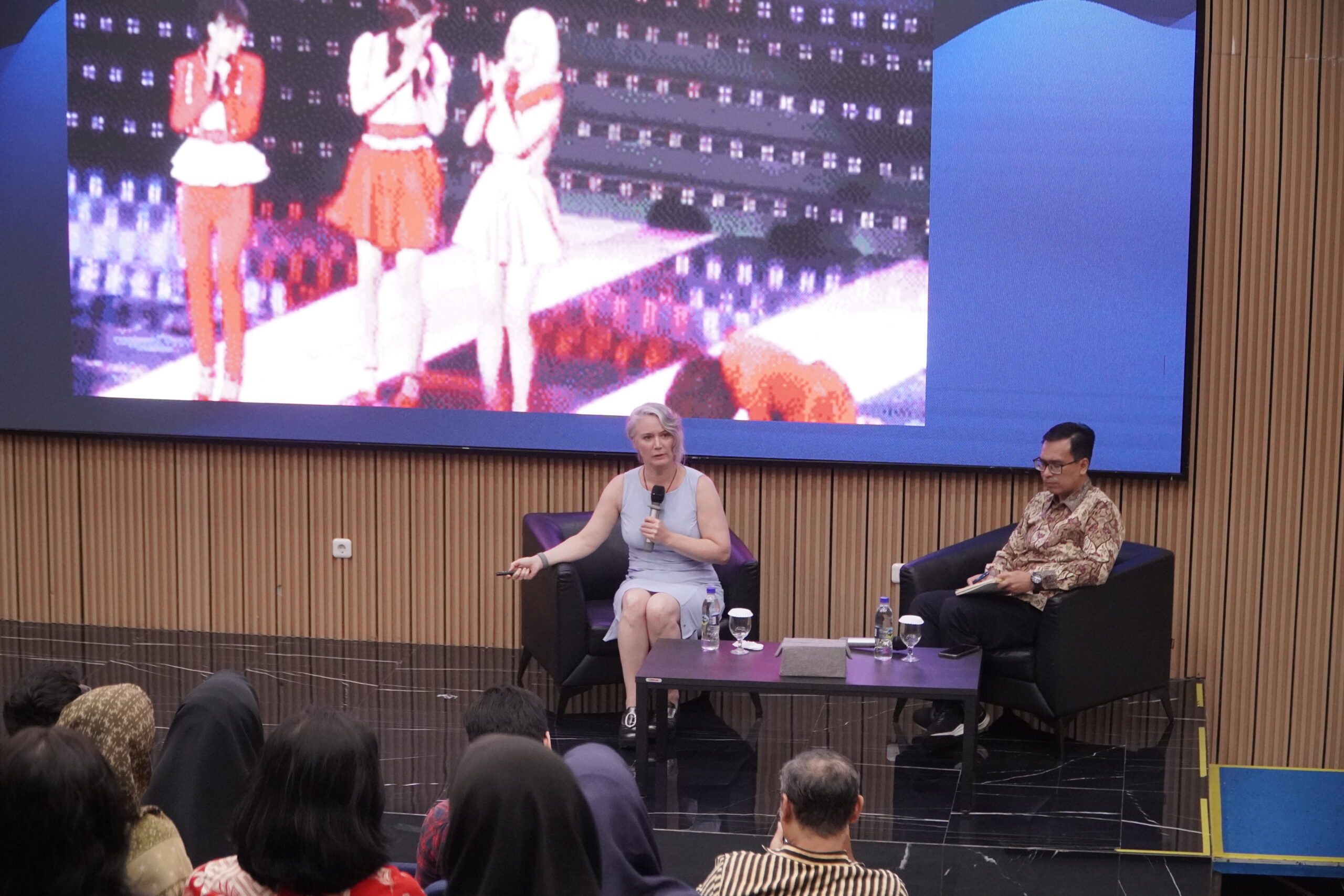
In her presentation, Professor Jessica Jessica explained that radio astronomy utilizes the principles of interferometry to combine signals from multiple antennas. Through this technique, the various antennas act as one enormous virtual telescope. “We can liken the synchronization and arrangement of these antennas to the harmony and high-precision choreography of a K-Pop group,” she explained.
To that end, he explained that SKAO has two main facilities: SKA-Low in Western Australia, which operates 131,072 low-frequency antennas, and SKA-Mid in South Africa, which uses 197 medium-frequency telescope dishes. “Both facilities support observations of the universe with complementary capabilities,” explained Jessika, Director of SKAO.
Beyond infrastructure development, Jessica highlighted the challenges of data management in modern astronomy. SKAO generates data streams of up to tens of terabits per second, requiring high-speed processing. Therefore, computing systems must be able to filter information in real time before storing and distributing it.
Jessica explained that data distillation technology plays a crucial role in processing raw data into more concise scientific products. SKAO is also developing regional data centers to support researchers’ access to observational results. This approach enables more efficient cross-border scientific collaboration.
Jessica further emphasized the importance of sustainability in the development of large-scale research facilities. SKAO strives to utilize renewable energy, achieve computational efficiency, and protect the night sky from radio signal interference. These efforts also include collaboration with regulators and communications technology providers.
Social and ethical aspects were also considered in the development of the SKAO. Jessica emphasized the importance of respecting the rights of indigenous communities as the owners of the land where the observatory is located. One example is a partnership with the Wajarri Yamaji community in Australia. The principle of open science also supports equitable access to knowledge and the benefits of research.
Through this seminar, participants gained insight into the interconnectedness of technology, computing, ethics, and sustainability in the exploration of the universe. SKAO serves as an example of international collaboration that integrates scientific advancement with social and environmental responsibility. This initiative aligns with efforts to support the Sustainable Development Goals (SDGs), particularly SDG 9 on industry, innovation, and infrastructure and SDG 17 on partnerships to achieve the goals. (*)
Reporter: Syifa Rahmadina