
Published on
Wednesday, 4 November 2026
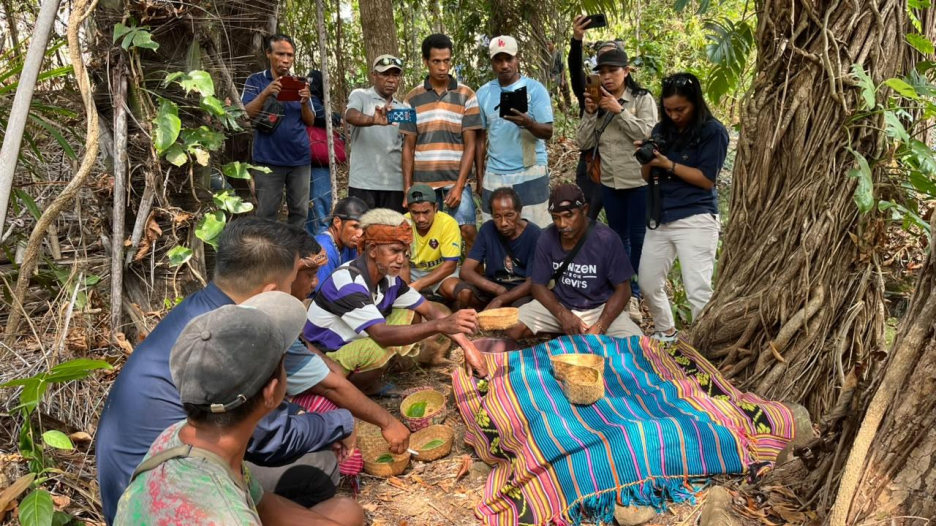
Belu, ITS News – Efforts to maintain the sustainability of clean water sources in the Tasifeto Mandeu transmigration area, Belu Regency, East Nusa Tenggara (NTT), are being carried out not only through infrastructure improvements but also through strengthening local wisdom. This is reflected in a traditional ritual held by the Dafala Village community in the Sanabibi Customary Forest, in the Tasifeto Mandeu transmigration area, on October 24, 2026, as an expression of gratitude to their ancestors and a reaffirmation of their commitment to preserving the spring area.
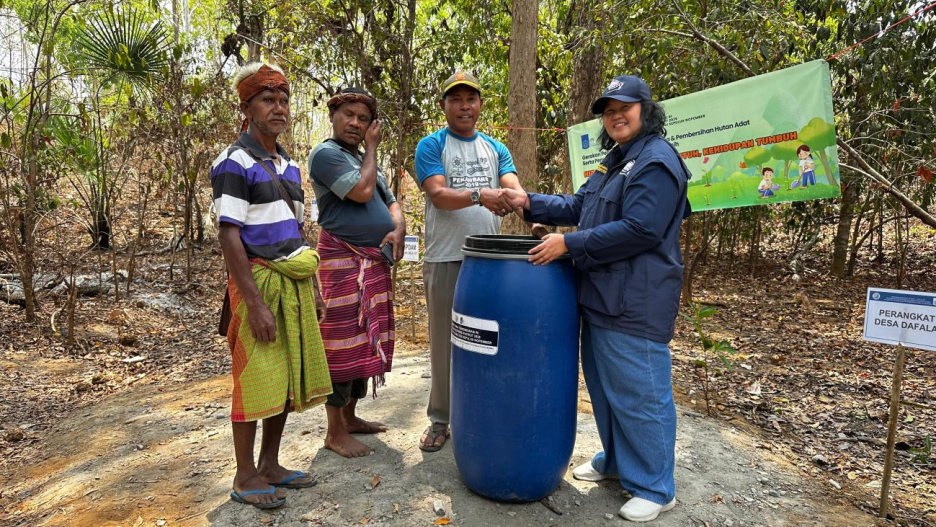
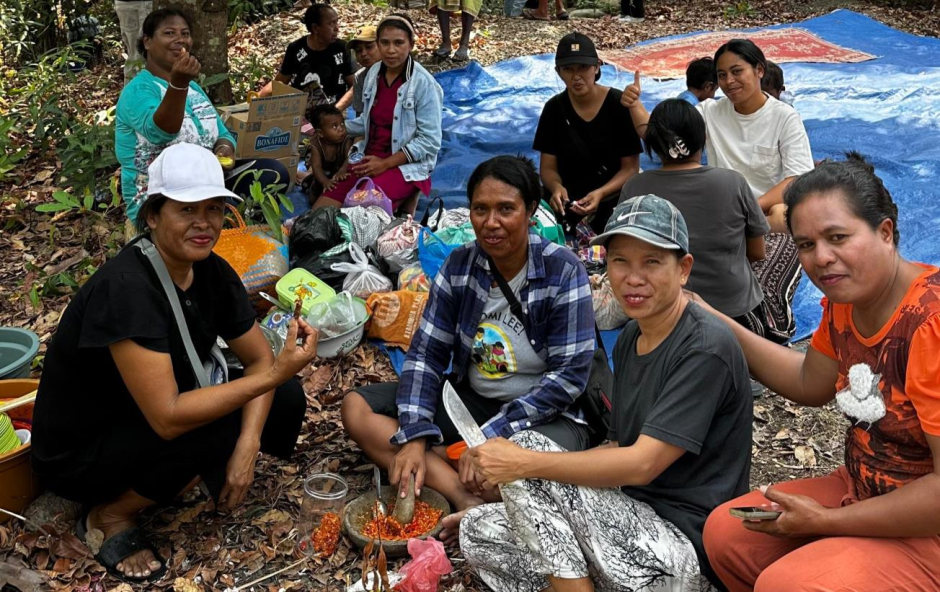
The activity involved the local community, along with the Patriot Expedition Team (TEP) 24 from the Sepuluh Nopember Institute of Technology (ITS) and the Indonesian Ministry of Transmigration (Kementrans). The series of events included traditional rituals, spring cleaning, tree planting, and communal cooking and eating. On the same occasion, TEP 24 ITS and Kementrans also donated 59 water tanks to support the household needs of Dafala Village residents.
For the local community, the springs in the Sanabibi Forest are not just a source of daily needs, but also an area with cultural significance and historical ties to their ancestors. Traditional rituals serve as a means of expressing gratitude and reinforcing collective responsibility for preserving the environment.
The series of activities began with a local traditional ritual. Afterward, residents and a team cleaned the spring area of accumulated trash and organic material, followed by tree planting. The event concluded with a communal meal and cooking as a demonstration of community togetherness.
One of the residents involved, Willi Brodus, explained that the ritual had a meaning beyond simply preserving tradition. It also served as a momentum to strengthen customary rules to protect the spring area that had been restored with TEP. “This is our expression of gratitude to our ancestors. With this activity, we also issued a customary prohibition to protect this area, which we have restored with the Patriot (TEP) brothers,” Willi explained.
Through these customary agreements and prohibitions, the community hopes to protect the spring area from activities that could potentially damage the environment. Thus, efforts to restore clean water infrastructure are expected to go hand in hand with long-term water source protection.
Previously, TEP 24 ITS, along with the Dafala Village community, revitalized the clean water network, which was experiencing leaks and decreased flow. The repairs were comprehensive, including renovating the spring area and water catchment structures ( broncapts ), repairing approximately three kilometers of high-density polyethylene (HDPE) pipes , and addressing leak points.
The team also built pipe supports at river crossings to help protect the network from disruptions caused by terrain and environmental conditions. These efforts were complemented by repairs to public fire hydrants and the provision of 59 water tanks for beneficiary households.
However, the sustainability of this infrastructure depends not only on the quality of technical improvements. Network maintenance, leak monitoring, and protection of water source areas are also crucial factors in ensuring the continued benefits for the community.
The Head of TEP 24 ITS, Prof. Ir. IDAA Warmadewanthi, ST, MT, PhD, who also witnessed the implementation of traditional rituals with the team, views community traditions as an important part of local wisdom that must be respected in the implementation of development. The values of respect for ancestors, togetherness, and adherence to customary agreements can be social capital to strengthen community concern for the environment. “This approach also shows that basic infrastructure development needs to consider the social conditions, culture, and local knowledge of the beneficiary community,” said the Professor of the ITS Department of Environmental Engineering.
The handover of 59 water tanks completes the network revitalization that has been carried out and supports the use of water services at the household level. This collaboration demonstrates that sustainable development requires an integration of infrastructure, community participation, and environmental conservation. Network improvements provide a means of water distribution, while mutual cooperation and customary agreements serve as a social foundation for preserving the source.
Through synergy between ITS, the Ministry of Transportation, and the Dafala Village community, it is hoped that the protection of the springs in the Sanabibi Forest will continue. For the Dafala residents, protecting the springs is not only about meeting current needs, but also ensuring that this source of life remains preserved for future generations. In the Sanabibi Forest, respect for ancestors is combined with concrete actions to protect the environment for the sustainability of clean water and the well-being of the community.
This activity aligns with the Sustainable Development Goals (SDGs), specifically SDG 6 (Clean Water and Adequate Sanitation) through efforts to maintain sustainable water sources; SDG 15 (Terrestrial Ecosystems) through cleanups and tree planting; and SDG 17 (Partnerships to Achieve the Goals) through collaboration between universities, government, and communities in supporting sustainable development. (*)