Published on
Thursday, 12 November 2026
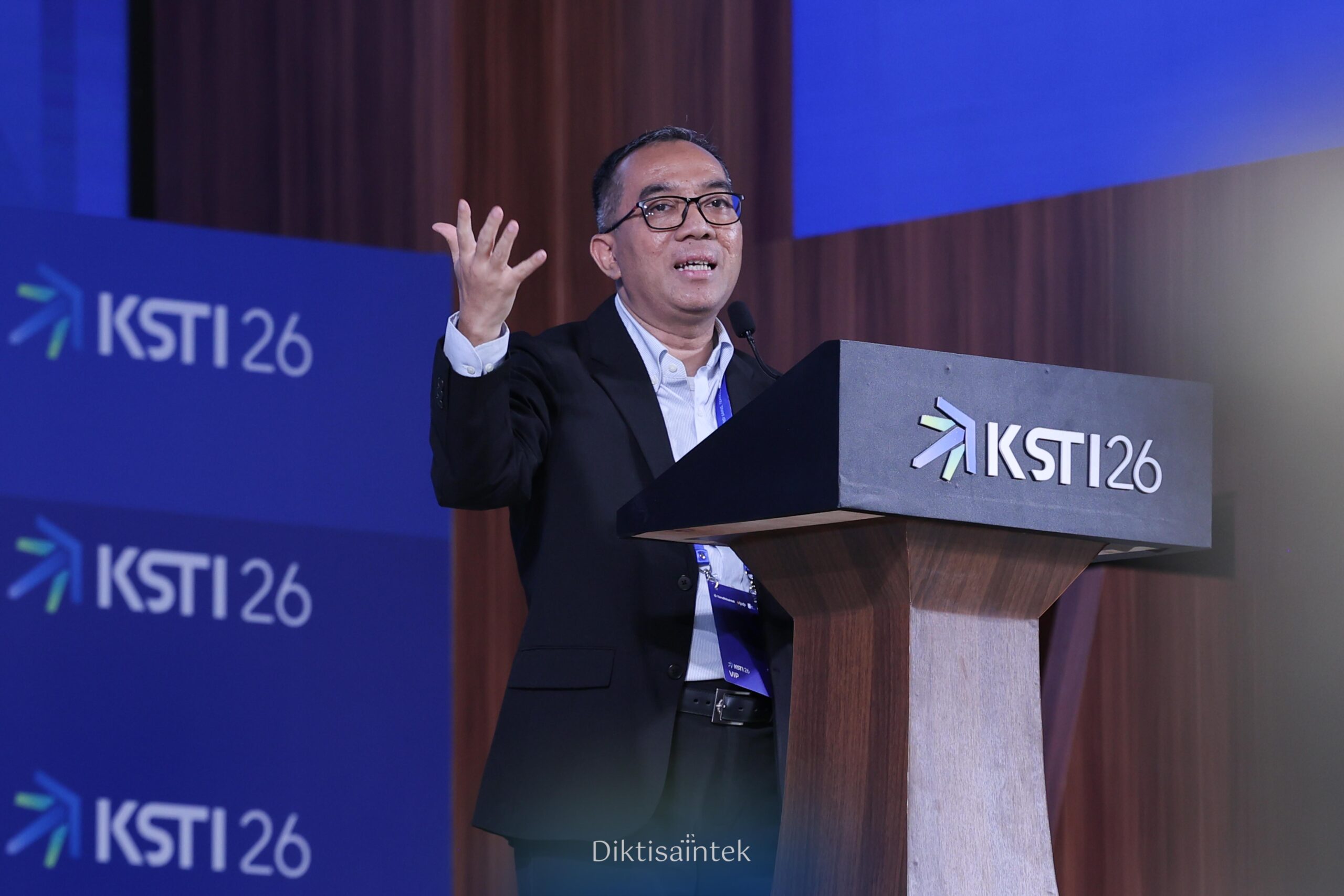
ITS Campus, ITS News – The 2026 Indonesian Science, Technology, and Industry Convention (KSTI) was officially opened by the Minister of Higher Education, Science, and Technology (Mendiktisintek), Prof. Brian Yuliarto, on Wednesday (11/11). Held at Grha Sepuluh Nopember, on the campus of the Sepuluh Nopember Institute of Technology (ITS) in Sukolilo, the forum served as an interactive space for national research, innovation, and industry.
The Minister of Higher Education, Science, and Technology (Mendiktisintek), Prof. Brian Yuliarto, emphasized the importance of directing research to the needs of society and industry. He stated that university research must be able to produce relevant innovations and make a real contribution to the national economy.
In his opening remarks at the 2026 KSTI, Prof. Brian stated that the government has mapped Indonesian researchers into eight national strategic industrial sectors. This step aims to strengthen research’s contribution to Indonesia’s economic growth and technological sovereignty.
He also highlighted the gap between public needs and the direction of national research. Citing a Kompas survey, it was revealed that 23.5 percent of the public wanted agricultural and food research. Meanwhile, health research accounted for around 16 percent of research activity. “If we want to see the relevance of our research, we need to move in the direction that society wants,” he stressed.
Beyond relevance, the government is also focusing on ensuring equitable distribution within the research ecosystem. To date, research activities have been concentrated on the island of Java. Therefore, the government, along with the Education Fund Management Institute (LPDP) and the National Research and Innovation Agency (BRIN), is encouraging the dissemination of research to various regions across Indonesia.
Prof. Brian also cited the development of the Red and White Chip in collaboration with the Republic of Indonesia Public Company for Printing Money (Peruri). This initiative aims to independently design and produce the national identity chip by 2027–2028.
According to him, research achievements should not stop at scientific publications or prototypes. Universities need to encourage researchers to understand aspects of industrialization, including market potential and the economic value of their products. “We need to support this bridging process so that research can develop into commercial products ready for industry acceptance,” he said.
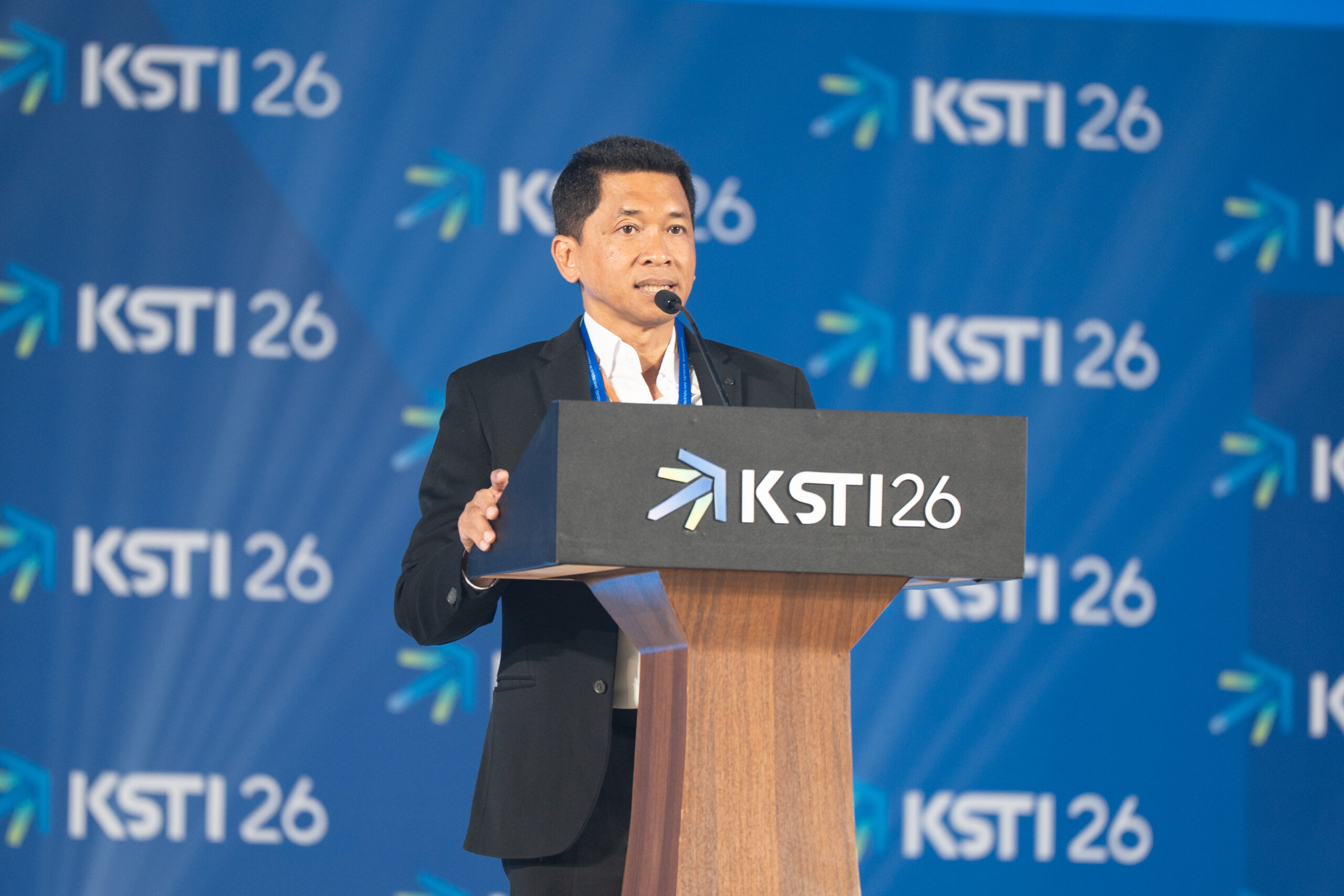
Echoing this sentiment, ITS Rector Prof. Bambang emphasized the importance of combining academic excellence with social benefits. He stated that the Impactful Campus spirit must be reflected in research results that truly address community conditions on the ground.
Prof. Bambang cited the industry’s need for technological solutions, farmers’ need for increased productivity, and fishermen’s need for safety and livelihood security. He argued that universities must ensure innovation delivers tangible benefits to these various sectors. “Academic excellence and social benefits must go hand in hand, so that technological innovation is no longer a luxury for the people,” he said.
The Ministry of Education, Science, and Technology, through the Directorate General of Research and Development (Dirjen Risbang), launched the 2026 National Strategic Research Roadmap and Agenda. On the same occasion, ITS also launched the ITS Science Techno Park (STP) as an effort to strengthen the innovation ecosystem and downstream research output. This facility is developed through four leading clusters: maritime, automotive, creative industries, and information, communication, and robotics technology.
The development of the ITS STP also received support through the Higher Education for Technology and Innovation program in collaboration with the Asian Development Bank. The facility is expected to provide a collaborative space for researchers and industry, while also supporting the development of innovation-based startups. (ITS Public Relations)
Informasi selengkapnya:
[https://ksti2026.kemdiktisaintek.go.id/]