Published on
Monday, 14 September 2026
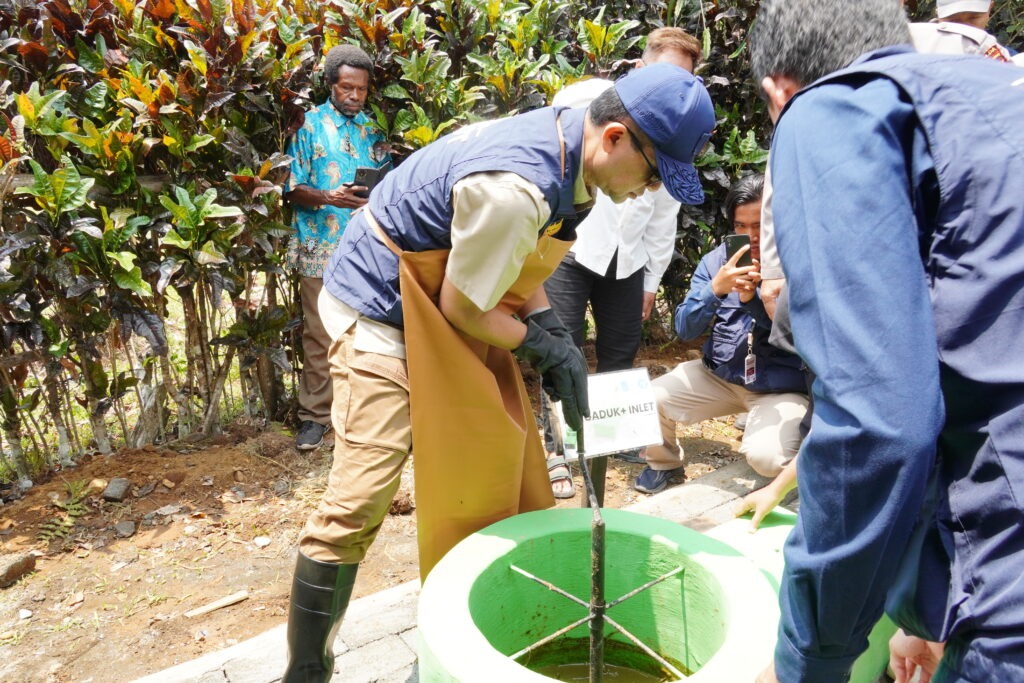
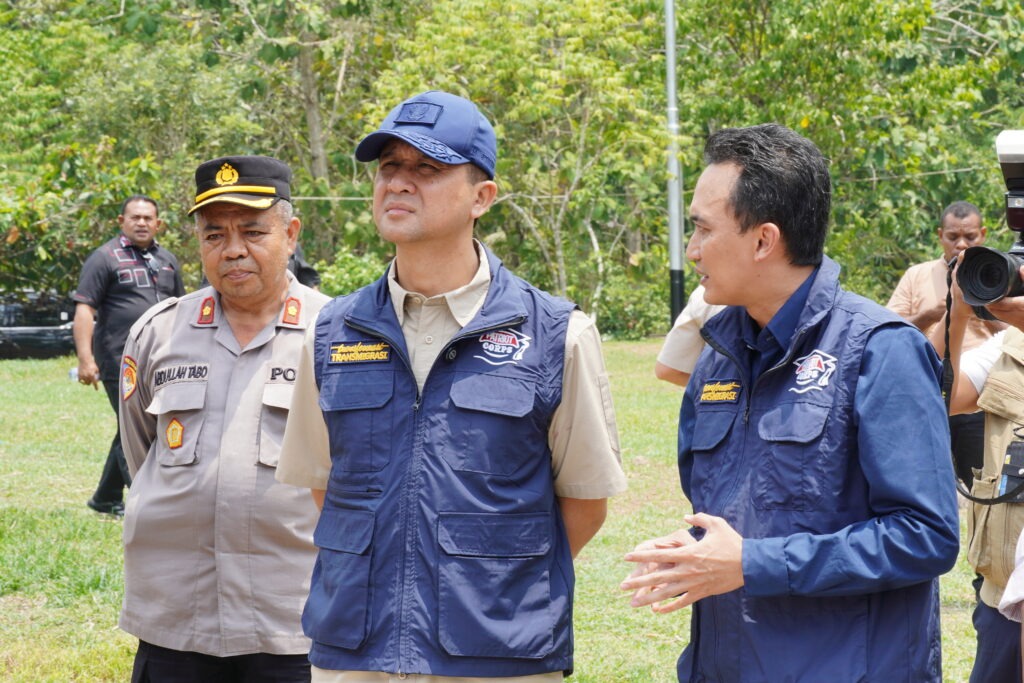
South Manokwari, ITS News — Livestock manure, previously underutilized, is beginning to find new value for the people of Margorukun Village, Oransbari District, South Manokwari, West Papua. Through the Patriot Expedition Team (TEP) 08 of the Sepuluh Nopember Institute of Technology (ITS), the livestock waste is being processed into an alternative energy source through a biogas reactor. This initiative caught the attention of the Indonesian Minister of Transmigration, Dr. Muhammad Iftitah Sulaiman Suryanagara, SH, MA, who personally visited the site on Saturday (September 12).
Until now, the Margorukun community has largely raised cattle, allowing them to roam freely. Meanwhile, household energy needs remain challenging. The majority of residents rely on kerosene for cooking, which is notoriously scarce. This situation presents an opportunity to utilize locally available resources as an alternative energy source.
Seeing this potential, TEP 08 ITS presents a biogas reactor that processes cow dung into biogas that can be used for cooking needs. In addition, biogas can also be converted into electrical energy through a stationary generator. The Head of TEP 08 ITS, Dr. Ir Arief Abdurrakhman ST MT explained that a 10 cubic meter capacity reactor with 10 cows can meet the cooking needs of two houses. “Meanwhile, with 20 cows, the biogas produced can be converted into electricity with a power of 2,000 watts for five hours per day for one house,” he explained.
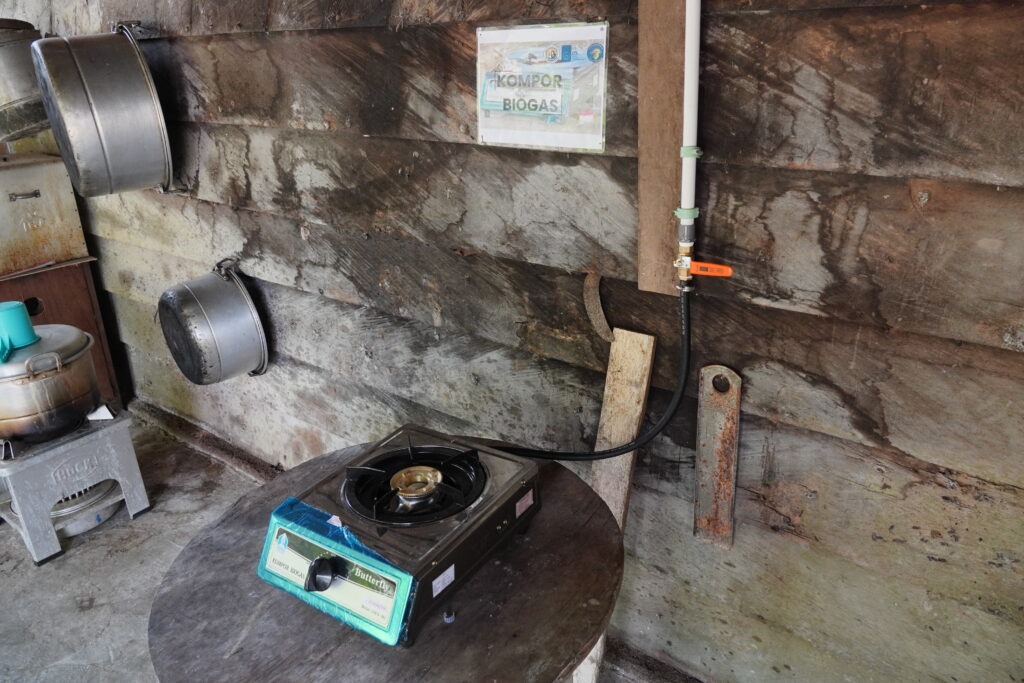
Not only does it meet energy needs, Arief also explained that fermentation residue in the form of bioslurry can be used as fertilizer to support community agricultural activities. This potential is increasingly relevant for residents of the Oransbari District, most of whom depend on the agricultural sector for their livelihoods. “By utilizing livestock waste as an energy source and processing the fermentation residue into fertilizer, a single innovation can address more than one community need, from household energy to agricultural support needs,” said the lecturer from the ITS Instrumentation Engineering Department.
The Minister of Transportation expressed his appreciation for the concrete work carried out by TEP 08 ITS. He believes that the utilization of local resources, such as livestock and agricultural products, should be directed towards strengthening the community’s ability to meet its own needs. Therefore, he encouraged the use of biogas not only for cooking but also for immediate development towards electricity conversion. “Electricity conversion must be realized immediately,” he stressed.
Furthermore, the Minister of Transmigration, known as Iftitah, emphasized that the program’s success isn’t solely measured by the technology developed. More importantly, it’s ensuring the community can sustain and develop its benefits independently.
In line with the Iftitah (Islamic New Year), ITS TEP 08 formed a Patriot Cadre Team (TKP) consisting of local residents and officials equipped with the knowledge and skills to ensure the program’s sustainability after the team returns to its home region. This TKP formation was also carried out at all ITS TEP expedition locations.
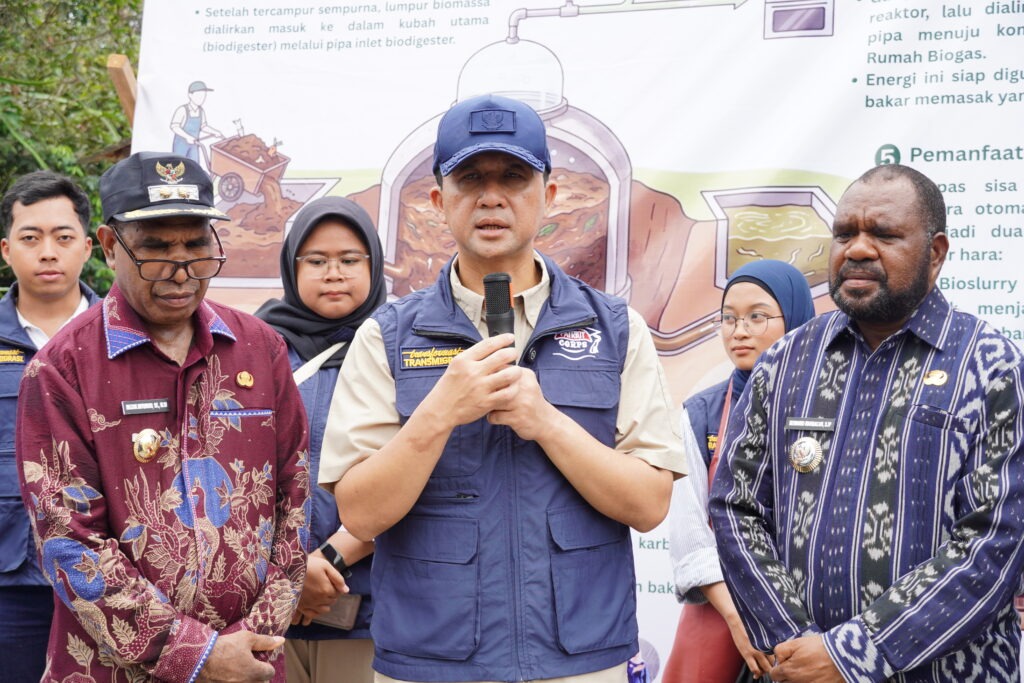
Iftitah assessed the TKP mechanism as a crucial strength in the implementation of ITS’s patriot transmigration program. According to her, the presence of local cadres ensures that the transfer of knowledge and technology continues when the support team leaves the site. Thus, the technology provided is not merely a temporary aid, but rather a resource for the community to build their own prosperity. “Not only for the transmigrant community, but also for the Papuan people as a whole,” she said.
South Manokwari Regent Bernard Mandacan also attended the site inspection and expressed his appreciation for the initiative brought by TEP 08 ITS. He stated that the presence of science and technology from ITS provides opportunities for the community to develop the potential already available in their environment. “The science and technology brought by the Patriot Expedition Team can spur community empowerment,” he said.
In closing, Arief expressed his gratitude to the Ministry of Transmigration for the Patriot Transmigration program. He believed the program could provide a platform for universities to apply science and technology beyond the campus environment, allowing the community to directly benefit from it. “Through this program, our knowledge and technology can be diversified and have an impact on society,” he concluded.
Ultimately, the biogas reactor in Margorukun is more than just a livestock waste processing facility. This innovation connects local potential with real community needs, transforming livestock waste into energy, residue into fertilizer, and knowledge into resources for the community to continue the program independently. This aligns with the Sustainable Development Goals (SDGs), particularly point 7 on Affordable and Clean Energy and point 11 on Sustainable Cities and Human Settlements.
Furthermore, SDG point 17, “Partnerships to Achieve the Goals,” is also reflected in the collaboration between ITS’s TEP 08 program and the community and local government to ensure that technology doesn’t remain a solution sourced from outside. Instead, it is expected to develop into a local capability that will continue to be developed to strengthen the independence and well-being of the Papuan people. (*)