Published on
Friday, 13 November 2026
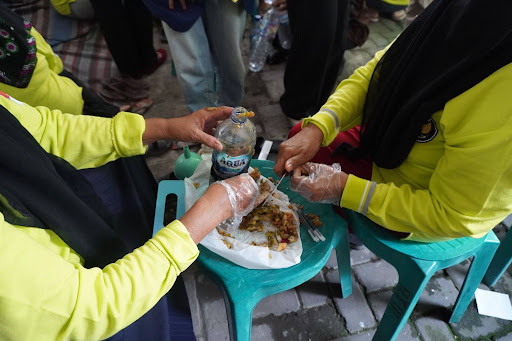
Surabaya, ITS News – Limited green space and increasing household waste generation pose challenges for densely populated urban areas. To address these challenges, the Sepuluh Nopember Institute of Technology (ITS) Community Service Program (KKN Abmas) initiated the development of eco-enzyme-based urban farming in RT 01/RW 14, Kali Rungkut Village, Rungkut District, Surabaya. This program is a step in encouraging sustainable waste management through the net-zero waste concept while also providing productive green space within residential areas.
Kali Rungkut sub-district has environmental potential that has not been optimally utilized by the community. Despite having a waste bank program and experience participating in the Green and Clean program, local waste management is still dominated by inorganic waste. Furthermore, limited open space presents a challenge for residents in developing urban greening and farming activities.
The Head of the ITS PWK Community Service Program, An Nisaa Siti Humaira, ST, MSc, explained that this activity empowers the Kali Rungkut community to become agents of change by encouraging the utilization of organic waste while creating green spaces. “Through eco-enzymes and urban farming, the community can play a direct role in creating a greener and more productive environment,” she explained.
The Community Service Program (KKN Abmas), which ran from September to October 2026, was implemented in three phases. In the first week, the team provided outreach on organic waste management through eco-enzyme production, the net-zero waste concept, and urban farming techniques. These activities aimed to increase community understanding of the importance of independent and sustainable environmental management.
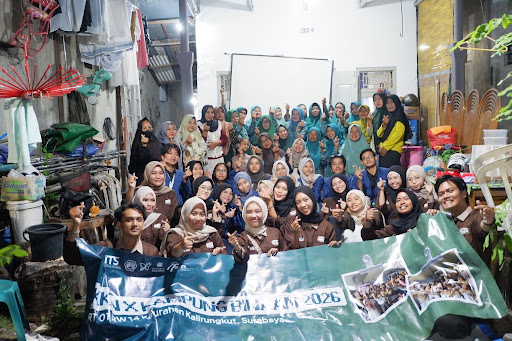
Entering the second week, the team and residents conducted a hands-on experiment producing eco-enzymes using fruit and vegetable waste as fermentation materials. Furthermore, the activity continued with urban farming development through planting in pots, polybags, and utilizing limited space. The integration of these two activities is expected to reduce organic waste while supporting reforestation and household food security.
In the third week, activities focused on evaluating the program’s implementation and providing ongoing support. This step was taken to ensure the community understood plant maintenance and could continue the eco-enzyme fermentation process independently. Adinda Mesya Kamilia, the head of the Abmas Community Service Program (KKN) team, hopes this activity will continue after the KKN program concludes. “We want the community to continue developing waste management habits and utilizing available land so that the benefits can be felt in the long term,” she said.
Through collaboration between academics, students, and the community, this program supports the achievement of the Sustainable Development Goals (SDGs), specifically Goal 11 on Sustainable Cities and Human Settlements, Goal 13 on Climate Change, and Goal 15 on Terrestrial Ecosystems. This innovation is expected to make Kali Rungkut an example of net-zero-waste green village development that can be replicated in other urban areas. (*)