Published on
Saturday, 12 September 2026
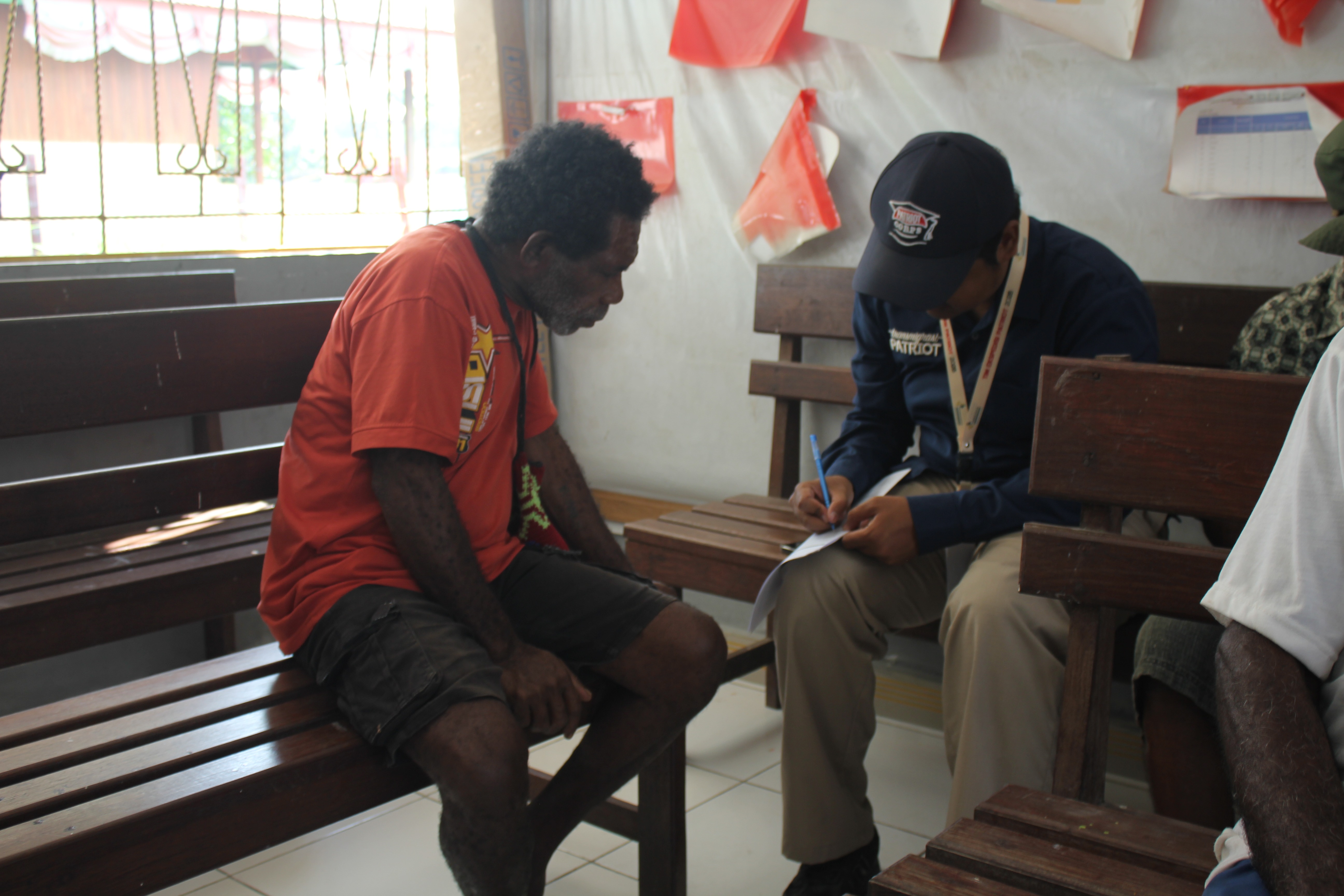
Ransiki, ITS News — Ransiki District in South Manokwari is renowned as one of the centers for producing high-quality cocoa beans in West Papua. However, the Patriot Expedition Team (TEP) of the Sepuluh Nopember Institute of Technology (ITS) in 2026 found that most farming groups still operate individually and subsistence-based.
Khairun Nisa, SIP, MA, the chair of TEP 11 ITS 2026, stated that economic activity in Ransiki relies solely on three markets. Farmers, fishermen, and the wider community rely on these three markets, each with its own unique characteristics, to meet their needs and sell their produce. “So, there’s only one market selling basic necessities, another selling fishermen’s catches, and another that’s only open in the afternoon,” Nisa explained.
Local communities also face challenges such as low organizational governance capacity, weak financial record-keeping, and limited business partnership networks. There is also a reliance on middlemen as the primary distributors of agricultural produce.
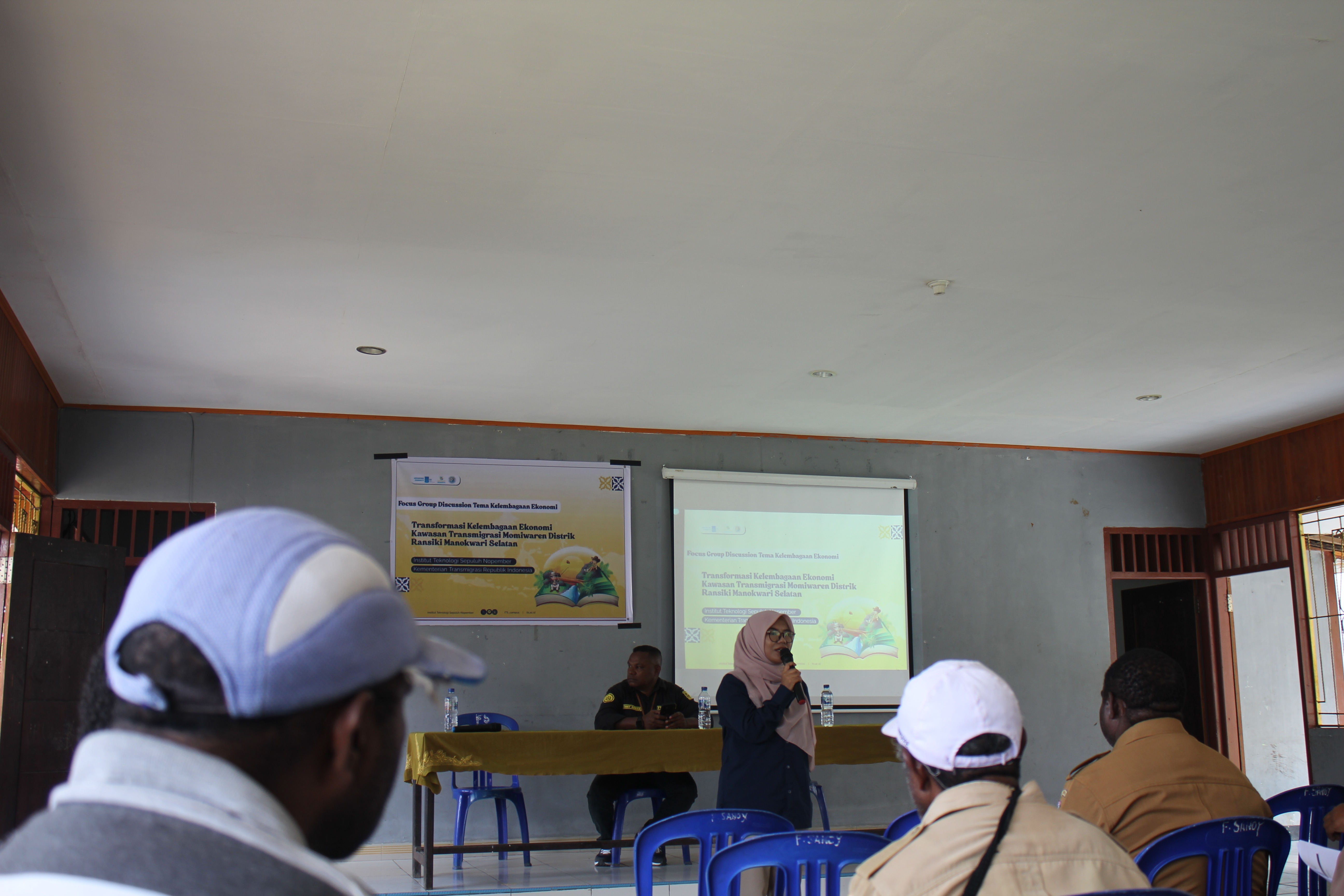
Khairun Nisa SIP MA as the chair of TEP 11 ITS 2026 while leading the FGD to support the strengthening of the economic institutions of the Ransiki community.These socioeconomic conditions mean that the region’s economic added value has not been optimally enjoyed by the local community. The issue of low institutional capacity and village-owned enterprise (BUMDES) in the Momi Waren Transmigration Area was also validated by the 2025 TEP report. “Last year’s TEP report emphasized the need to strengthen economic institutions and improve community financial management capacity,” explained the ITS Development Studies lecturer.
To address these issues, the group designed several key programs divided into three key regional sectors: plantations, fisheries, and Micro, Small, and Medium Enterprises (MSMEs). The team mapped the outputs in the form of groupings of the community’s economic institutional conditions.
This is to determine the economic institutional status of Village-Owned Enterprises (BUMDes), cooperatives, MSMEs, farmer groups, and fishermen’s groups in the area. Furthermore, the team will develop an Economic Institutional Strengthening Training module to ensure the program’s sustainability after the team leaves the assigned location.
In its implementation, the team’s accelerated work program is supported by various parties, including the South Manokwari Regency Government, including the Department of Food Security and Agriculture, the Department of Fisheries, and the Department of Trade, Industry, Cooperatives, and MSMEs.
Human resource capacity building is also fully supported by the Community and Village Empowerment Agency, the Manpower and Transmigration Agency, and the Department of Public Works and Public Housing (DPMPTSP). “The program’s smooth operation is also supported by local businesses, such as the Ransiki Smoked Fish and Fish Floss MSMEs, community groups including the Cocoa Farmers Group, and the Fishermen’s Joint Business Group (KUB),” said Nisa.
In addition to community economic empowerment, the team will also prepare a policy brief for the government. The document will be submitted as a policy recommendation to the Ministry of Transmigration for further development of regional economic institutions.
Finally, to ensure the program continues upon the team’s return, Nisa and her team have prepared an exit strategy through a handover mechanism and cadre development. The developed training modules will be distributed to community members deemed competent during the project.
The initiative to strengthen the economic institutions of the Ransiki community reflects support for the achievement of the Sustainable Development Goals (SDGs). Through the program to strengthen the productive economy, the team strives to increase the added value of local commodities. This aligns with SDG 8 on Decent Work and Economic Growth.
Furthermore, economic strengthening, supported by strong cross-sector collaboration to maintain long-term sustainability, also aligns with SDG point 17, which concerns Partnerships to Achieve the Goals. (*)