Published on
Friday, 20 November 2026
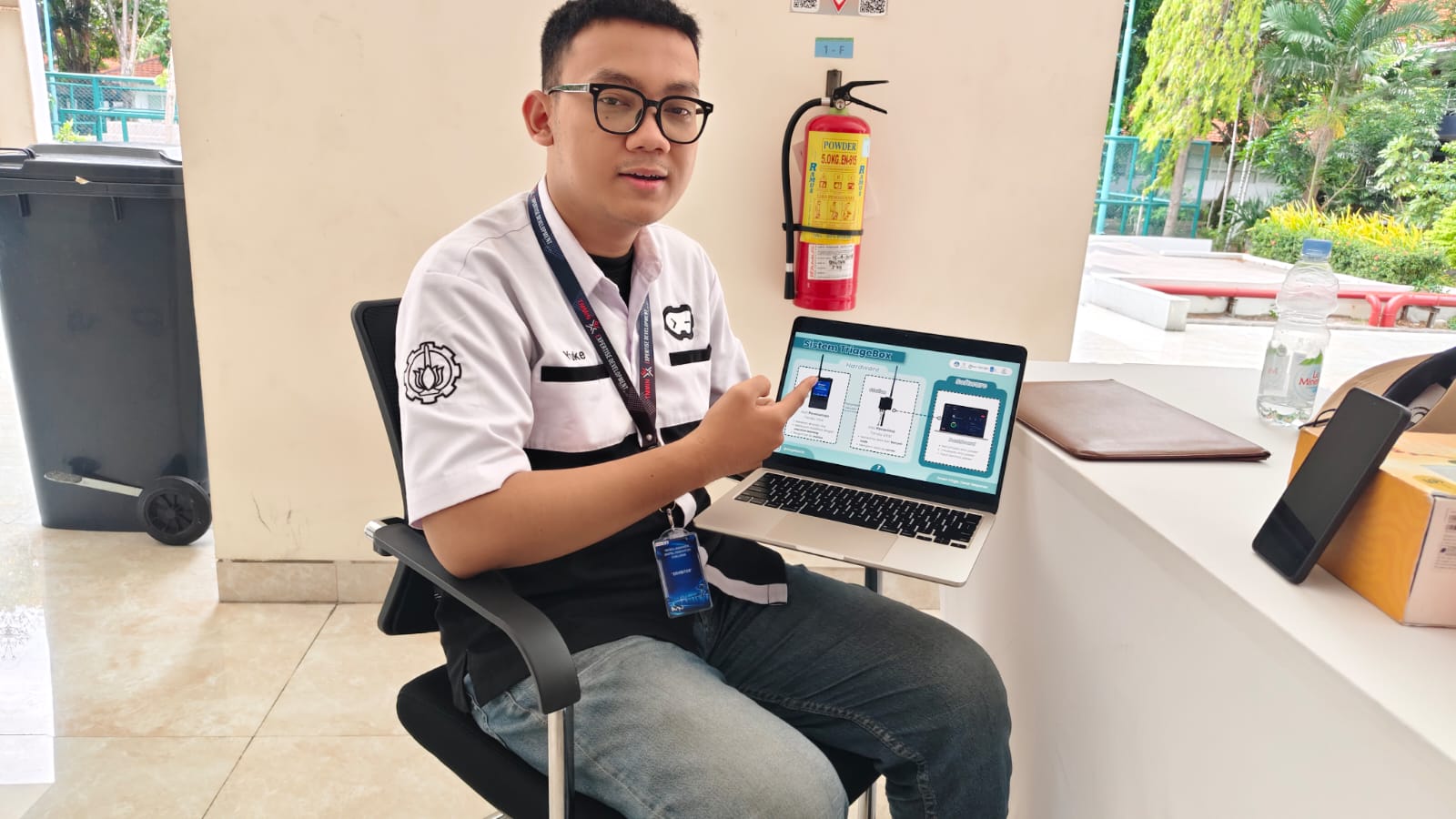
ITS Campus, ITS News — The high frequency of natural disasters in Indonesia requires faster victim response. Addressing this challenge, a student team from Institut Teknologi Sepuluh Nopember (ITS) has introduced an innovative medical triage prioritization device called TriageBox.
ITS TriageBox Team Leader Yuke Brilliant Hestiavin explained that the innovation developed by her team stemmed from concerns over Indonesia’s geographical location in the Ring of Fire. Mass disasters can strike unpredictably, causing the number of affected victims to surge massively. “This condition makes manual triage, or the process of determining treatment priority, suboptimal,” she added.
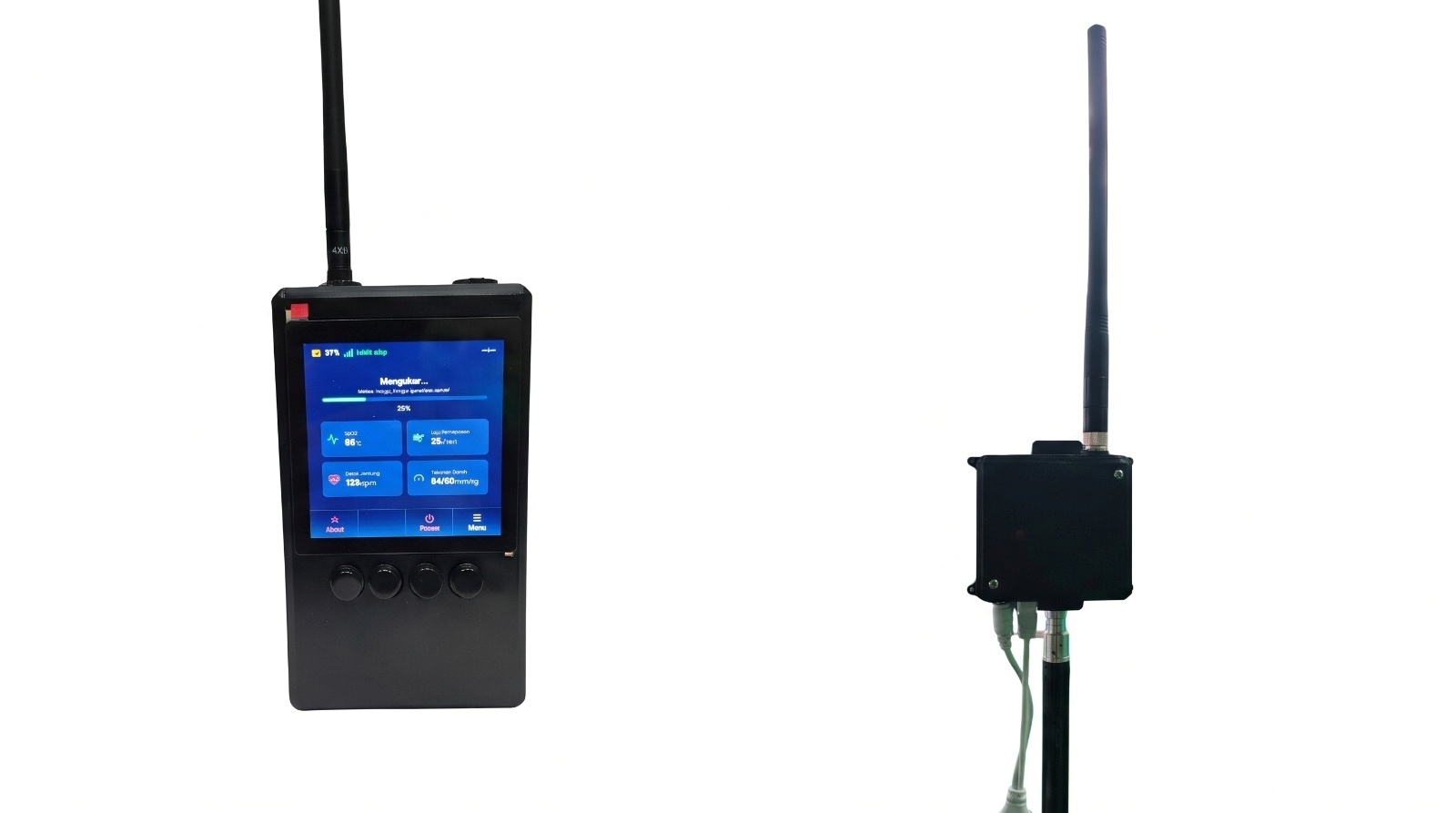
Building on this problem, TriageBox offers a smart response solution for natural disaster victims using an integrated system consisting of a Node and a Station. Yuke explained that the Node is a field device used to read victims’ vital data, while the Station is a centralized monitoring unit that receives and displays victim data via a local dashboard.
In addition, the device operates through two main procedures using its integrated system. First, affected victims are fitted with a Radio Frequency Identification (RFID) wristband to record initial identification data. This is read by the Node sensors, which generate vital sign data including heart rate, oxygen saturation, respiratory rate, and electrocardiogram (ECG) signals.
Next, the victims’ vital data from the Node is processed using machine learning to classify treatment priorities. The vital data is processed locally without relying on an internet connection using a Decision Tree model. This approach produces triage categories consisting of a red signal indicating critical victims, yellow indicating severely injured victims, and green indicating victims with minor injuries.
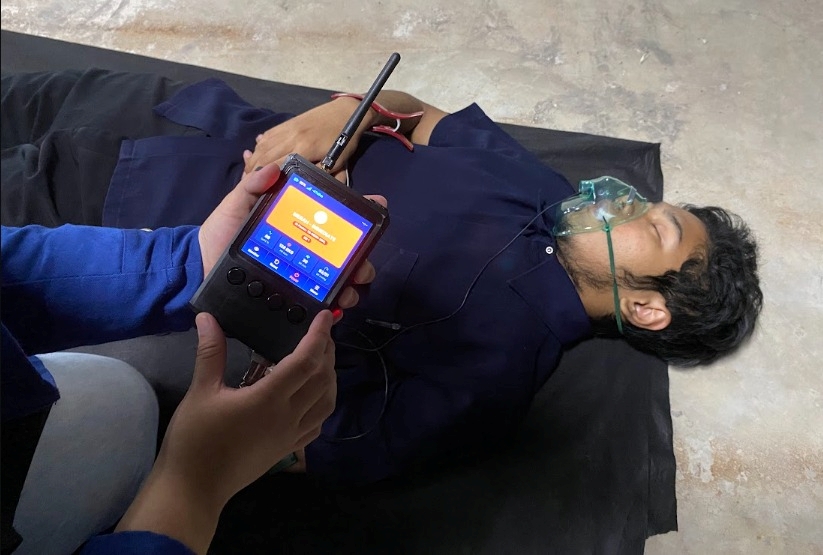
The triage results are received by the Station via a LoRa network, which forwards the data to the dashboard to display comprehensive information, including a list of victims along with their identities, triage categories, vital signs, and monitoring status. “This relatively complex process operates with a range of over 500 meters from the central command post,” explained the student from the ITS Department of Computer Engineering.
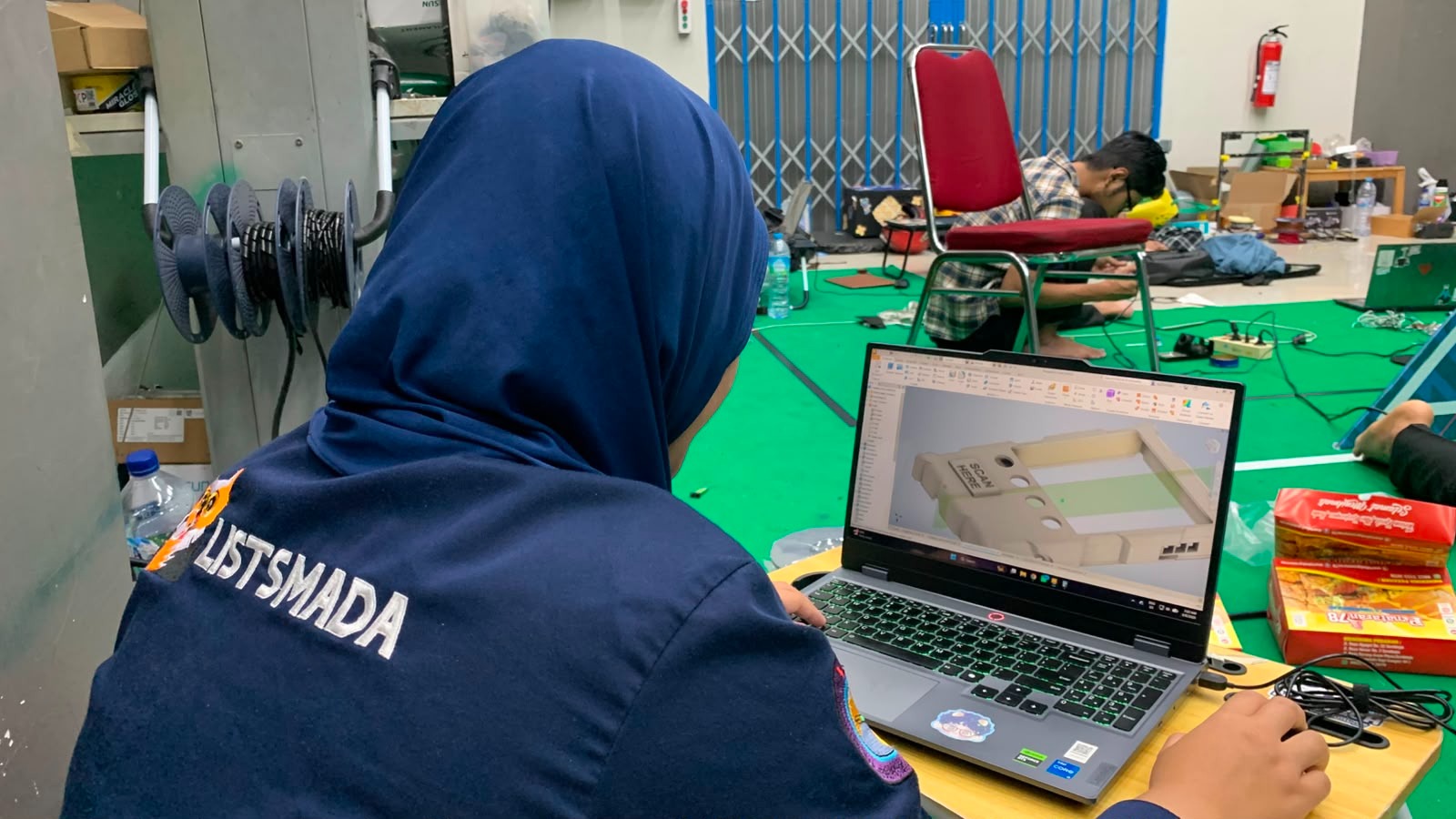
Specifically, the integrated TriageBox system is built from two core sections: the Unit Processing and Communication (UPC) and the sensor module. The UPC consists of three components: an STM32 for signal filtering and validation, an ESP32 to run the Decision Tree model, and a LoRa SX1728 for data distribution. Meanwhile, the sensor module includes four components—MAX30102, a condenser microphone, RC522, and AD8232—to detect victims’ vital signs.
Notably, the team—which also includes Izzah Azizah (Department of Biomedical Engineering), Andika Rizky Noval Nugraha (Department of Electrical Engineering), Aslam Pandu Sasminto (Department of Mathematics), and Clarissa Aydin Rahmazea (Department of Information Technology)—has achieved remarkable recognition with this innovation. The ITS Student Creativity Program – Constructive Idea (PKM-KC) team won a silver medal in the Presentation category and a bronze medal in the Poster category at the 2026 National Student Scientific Week (Pimnas).
Through the innovation of this team, supervised by Dr Rudy Dikariono ST MT, ITS reaffirms its commitment to promoting impactful, appropriate technology. This prototype is expected to help healthcare workers collect disaster victim data more rapidly and accurately. The innovation also supports the achievement of Sustainable Development Goals (SDGs), specifically Goal 3 on Good Health and Well-being. (HUMAS ITS)
Reporter: Mohammad Fariz Irwansyah