
Published on
Saturday, 1 August 2026
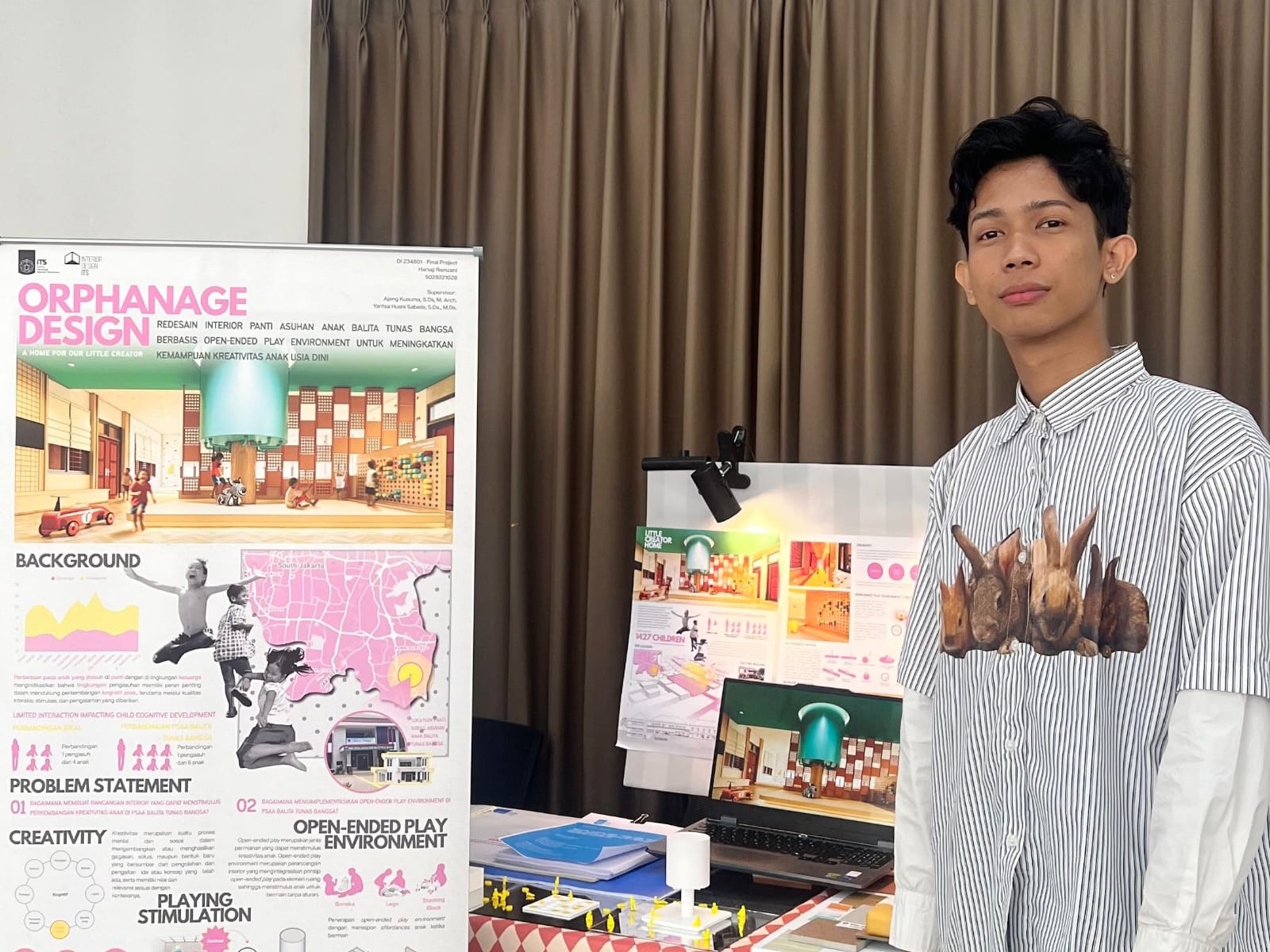
ITS Campus, ITS News — The unequal ratio of caregivers in orphanages often impacts the cognitive development of toddlers. Responding to this issue, students at the Sepuluh Nopember Institute of Technology (ITS) designed an orphanage interior based on an open-ended play environment to stimulate creativity in early childhood.
The design was initiated by Hartaji Ramzani, a student in the ITS Interior Design Department. He explained that the idea was inspired by the conditions at the Balita Tunas Bangsa Children’s Social Home (PSAA) in Jakarta. He found the caregiver-to-child ratio to be 1:6, far below the ideal 1:4. “This situation has the potential to impact the development of children’s cognitive abilities,” explained the young man from Jakarta.
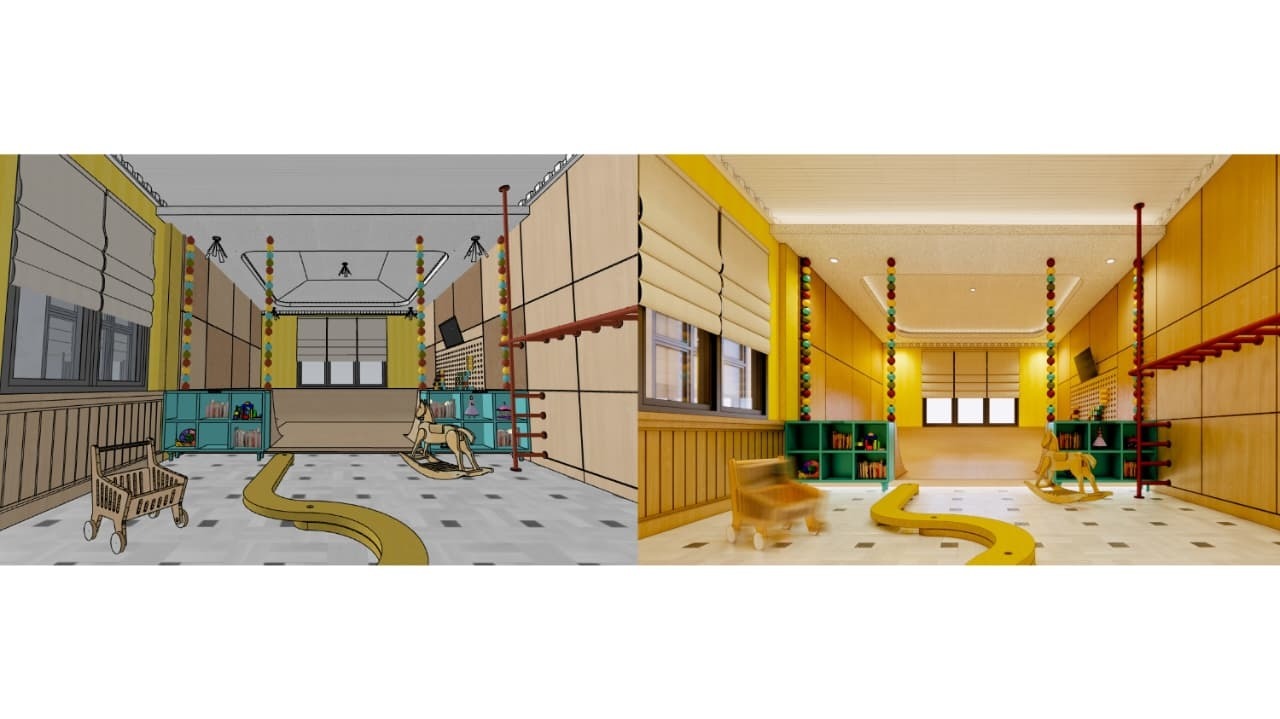
To address the shortage of caregivers, the student, known as Aji, created an open-ended play environment without rigid rules . This concept is implemented through interactive features such as pegboard toys on the walls and flexible, stackable furniture. “This space encourages children to learn independently through play experiences,” explained the 2022 student.
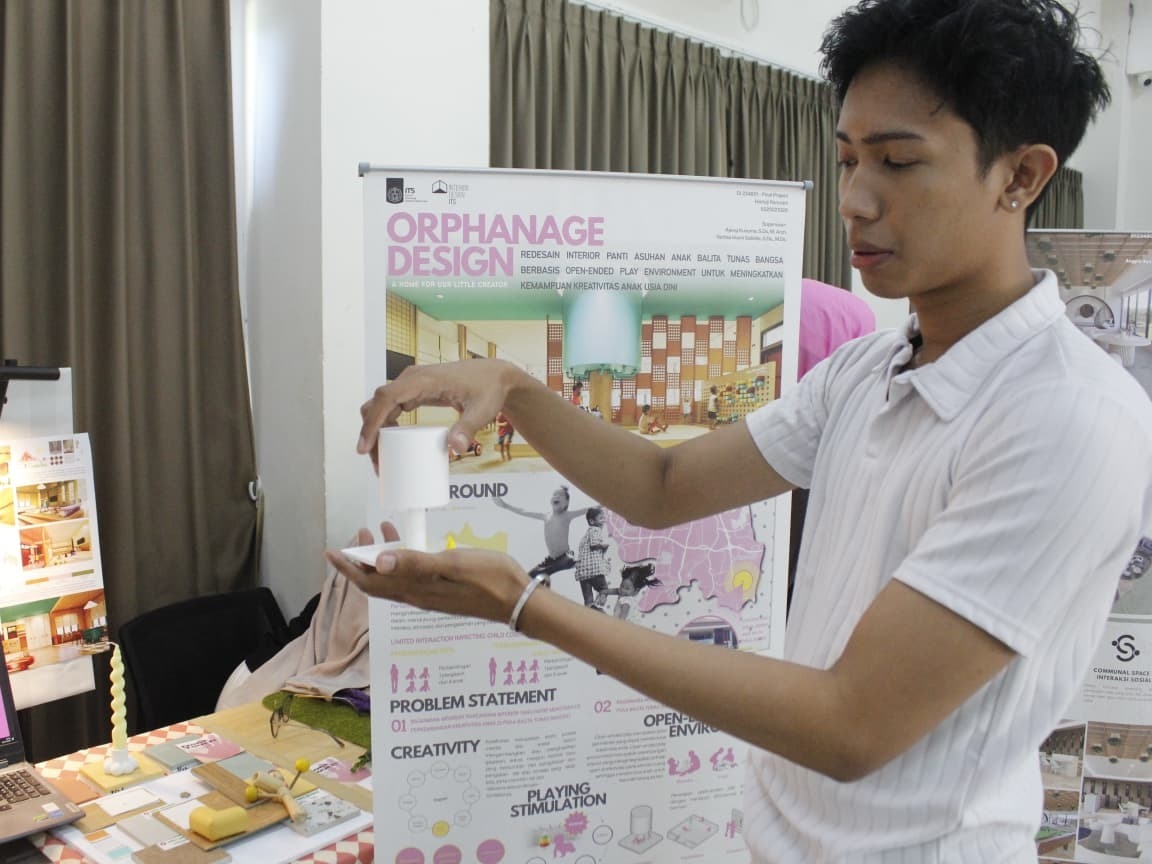
Through these play experiences, this design focuses on developing three key indicators of toddler creativity: openness, creative abilities, and independence . This psychological aspect is achieved through the provision of free exploration areas, multifunctional imaginative facilities, and the absence of interference from furniture placement rules. “These three indicators can be naturally developed through an interior design approach,” he added.
Visually, Aji explained, the interior design uses triangular and rhombic patterns to represent the shape of a house’s roof. Each corner of the furniture is designed to be rounded, with a maximum height of 1 meter to ensure the physical safety of toddlers. The choice of soft colors, such as green and pink, is adapted to the level of motor activity in each room.
This innovative research was inseparable from the guidance of supervising lecturers Ajeng Kusumadewi Putri Jatmiko, SDs MArch, and Yaritsa Husni Sabiela, SDs MDs. They ensured the design of the space was more inclusive and prioritized safety. The primary focus was on creating a design that addressed social issues and was comfortable to use.
According to Aji, his innovative design supports the achievement of Sustainable Development Goals (SDGs) points 3, 4, and 10. These goals include a Healthy Life and Quality Education, realized through safe spaces that stimulate children’s psychological well-being and learning processes.
Additionally, Aji continued, the goal of reducing inequality is also achieved by providing equal opportunities for growth and development for children in orphanages. “Hopefully, this design can serve as a solution for orphanage managers,” he said. (ITS Public Relations)
Reporter: Dicka Elkana Putra