Published on
Thursday, 2 July 2026
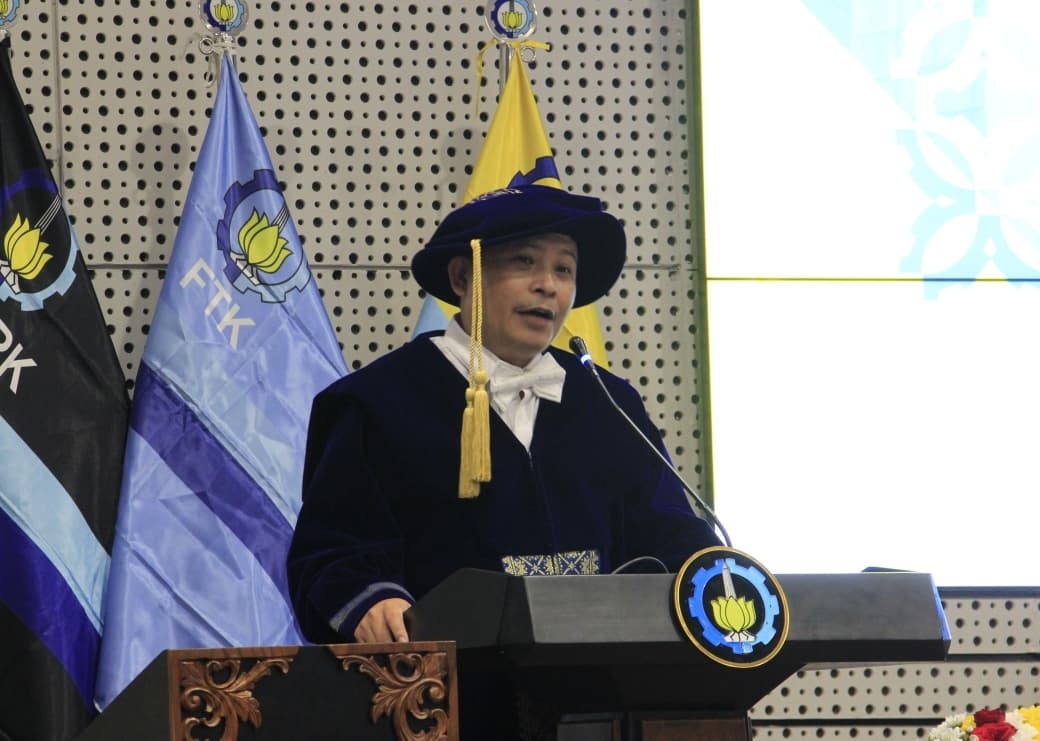
ITS Campus, ITS News — The high risk of ship accidents remains a major challenge for Indonesia as a maritime nation. To address this issue, the 244th Professor of the Sepuluh Nopember Institute of Technology (ITS), Prof. Dr. Eng. Muhammad Badrus Zaman, ST., MT., initiated the integration of ship navigation systems and human factors as an effort to improve national shipping safety.
The Professor of Ship Navigation Safety Systems explained that ship accidents can be influenced by a number of factors, ranging from the condition of the ship, the environment, machinery and electrical systems, human factors, and management. He highlighted the human factor as the dominant cause of ship accidents. “Strengthening navigation safety is not only done through technological devices, but also takes into account the capabilities and decision-making of the ship’s crew,” he explained.
Based on this, Badrus initiated a ship navigation safety system that integrates navigation technology with human factors. This integration is designed so that navigation devices not only function as a means of monitoring the ship’s position but also support the crew in assessing navigation risks more accurately. He added that system integration makes the decision-making process on board more measurable in relation to operational conditions in the field.
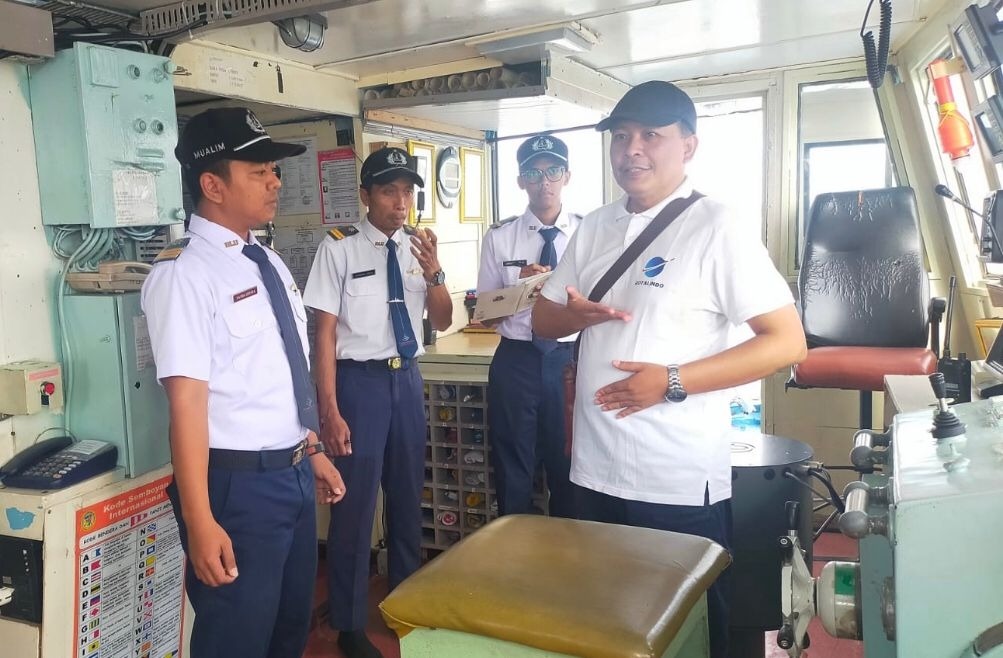
In his scientific speech entitled ” Ship Navigation Safety System as a Pillar to Strengthen the National and Global Maritime Axis ,” Badrus utilized the Automatic Identification System (AIS) to analyze ship traffic density in real time . The AIS data was then combined with the M-SHEL model, an analytical framework that examines the interaction between humans and five system components: management, software, hardware, environment, and crew.
The professor from the Department of Marine Engineering (Siskal) at ITS continued, explaining that the integration of the AIS system and the M-SHEL model results in a collision risk assessment divided into three levels: low, medium, and high. Furthermore, the system also generates safety action recommendations that can be directly implemented by the captain in the field. “This system engineering provides data-based guidance to the crew in responding to shipping situations,” explained the Banyuwangi native.
The researcher, a member of the ITS Maritime Science Techno Park (STP), explained that this research was developed through collaboration with several institutions. He explained that collaborations have been established with Kobe University in Japan, Universiti Teknologi Malaysia, and Wismar University of Applied Sciences in Germany. Domestically, Badrus actively collaborates with the Indonesian Ministry of Transportation and the National Transportation Safety Commission (KNKT).
Badrus’ research aligns with Sustainable Development Goals (SDGs) point 9 on Industry, Innovation, and Infrastructure, and point 14 on Marine Ecosystems. Going forward, he hopes for strengthened interdisciplinary collaboration and partnerships with industry and government. “Continued collaboration is needed so that this navigation safety research can be implemented effectively for Indonesia’s maritime advancement,” he emphasized. (ITS Public Relations)
Reporter: A Rifda Yuni Artika
Translator: Devinka Mutianeira