Published on
Wednesday, 15 July 2026
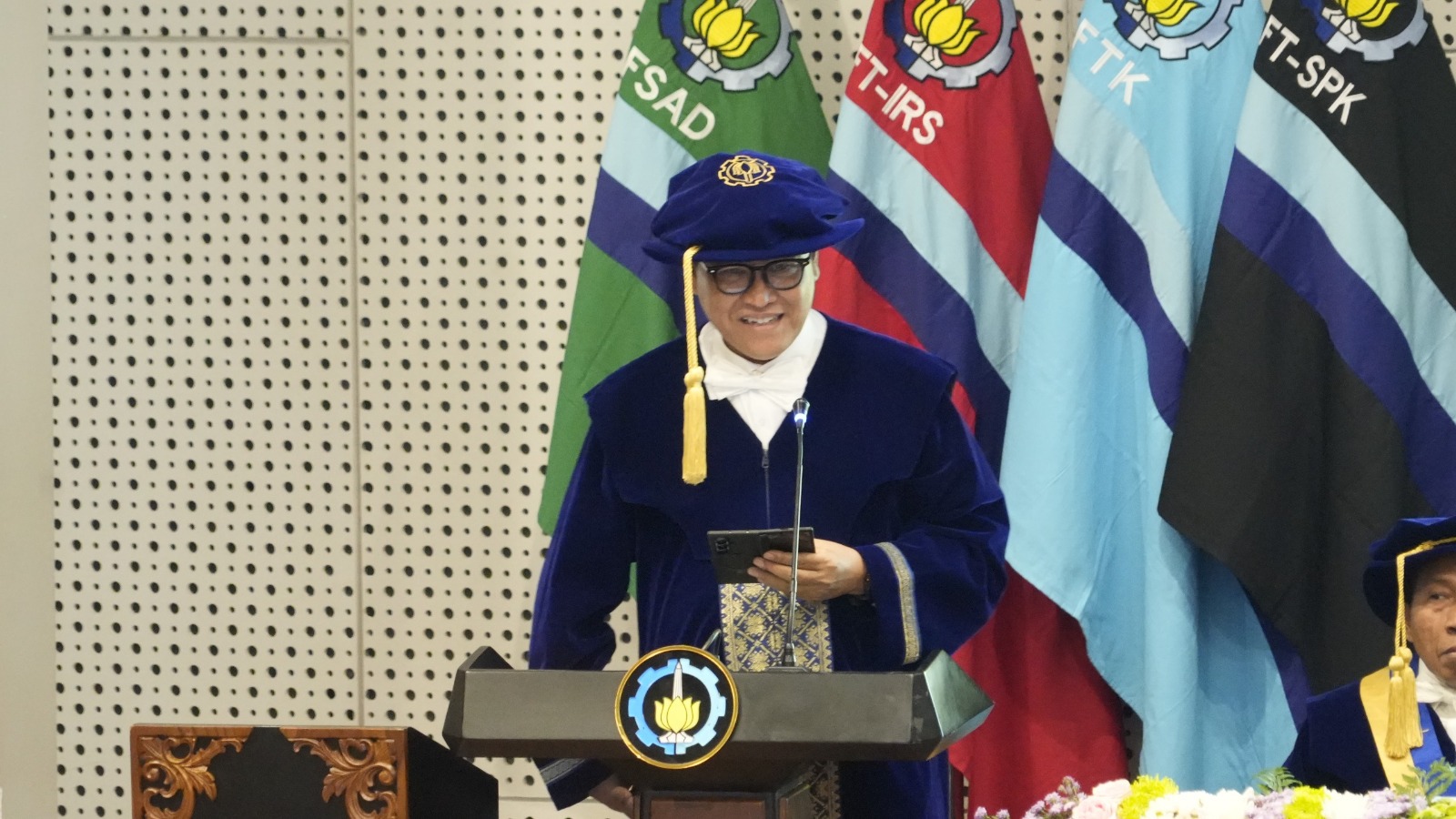
ITS Campus, ITS News — The development of artificial intelligence technology is now increasingly impacting various sectors of life. Responding to this challenge, Professor Dr. Ir. Syamsul Arifin, MT, Professor of Engineering Physics , Faculty of Industrial Technology and Systems Engineering (FTIRS) , Sepuluh Nopember Institute of Technology (ITS) , initiated the concept of an innovative integrated modeling of artificial intelligence systems.
In his inaugural scientific speech as a professor, Syamsul introduced a paradigm called System Modeling Based on Artificial Intelligence (SYMBA-AI). This approach combines artificial intelligence with the Conceive, Design, Implement, Operate (CDIO) framework to produce adaptive, predictive systems capable of supporting data-driven decision-making. “It can also be used in higher education curricula with a Science, Technology, Engineering, and Mathematics (STEM) approach,” he added.
Furthermore, the 247th ITS Professor explained that the success of artificial intelligence is determined by the ability to transform the complexity of real-world phenomena into adaptive computational forms. This long track record stems from Syamsul’s 36 years of deep dedication in the field of Instrumentation and Control. “System modeling serves as a bridge connecting data, knowledge, and AI technology, resulting in relevant solutions for society,” he explained.
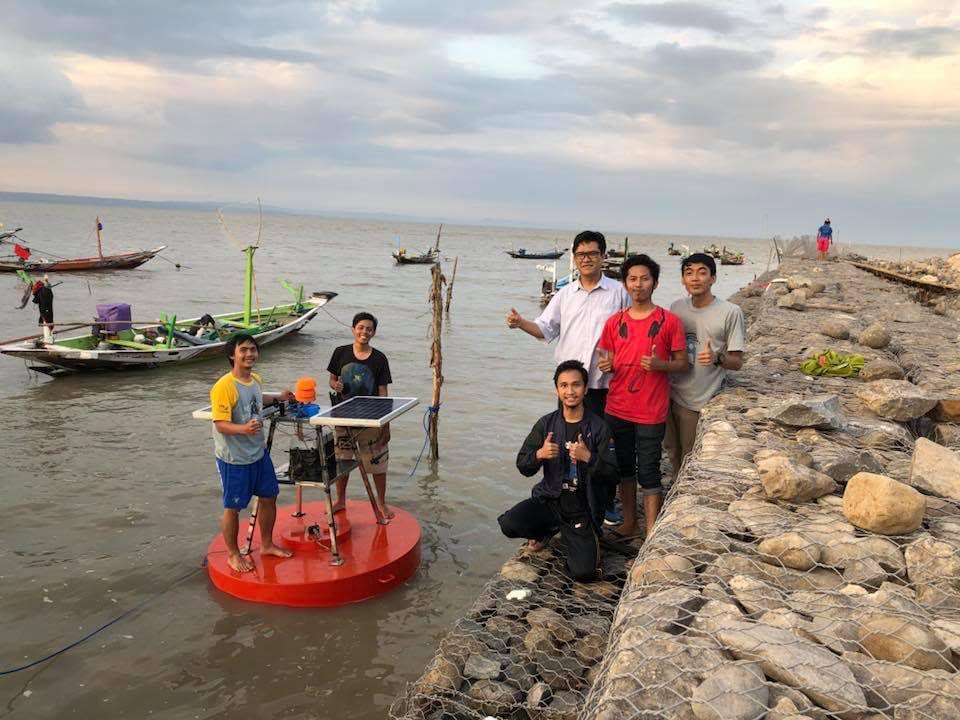
The concrete downstreaming of this Mojokerto-born man’s expertise is realized in the Type II Weather Buoy. This smart, Internet of Things (IoT)-based floating weather station is specifically designed to detect high sea wave anomalies to minimize safety risks for fishermen and commercial shipping. This device acquires external ocean data in real time, including wind speed, ocean currents, wave height, temperature, and humidity.
The main advantage of the Type II Weather Buoy lies in its artificial intelligence system, which combines a Fuzzy Logic System and an Artificial Neural Network (ANN). Through this algorithm, complex meteorological numerical data is translated into a seaworthiness status, such as safe to sail, alert, or unseaworthy. “The information can be accessed directly by fishermen via their mobile phones, and the predictor test results recorded an accuracy of up to 86 percent,” said the husband of Prof. Dr. Ir. Aulia Siti Aisjah MT, who is also a Professor in the Department of Engineering Physics at ITS.
Beyond marine physics systems, the 2024 ITS Adhidarmabakti Award recipient is also expanding the benefits of AI to higher education. Syamsul designed a mobile- based Intelligent Learning Ecosystem to monitor online student attention. Using a camera, the system automatically analyzes students’ facial expressions in live Zoom videos and converts them into reminders to maintain effective lectures.
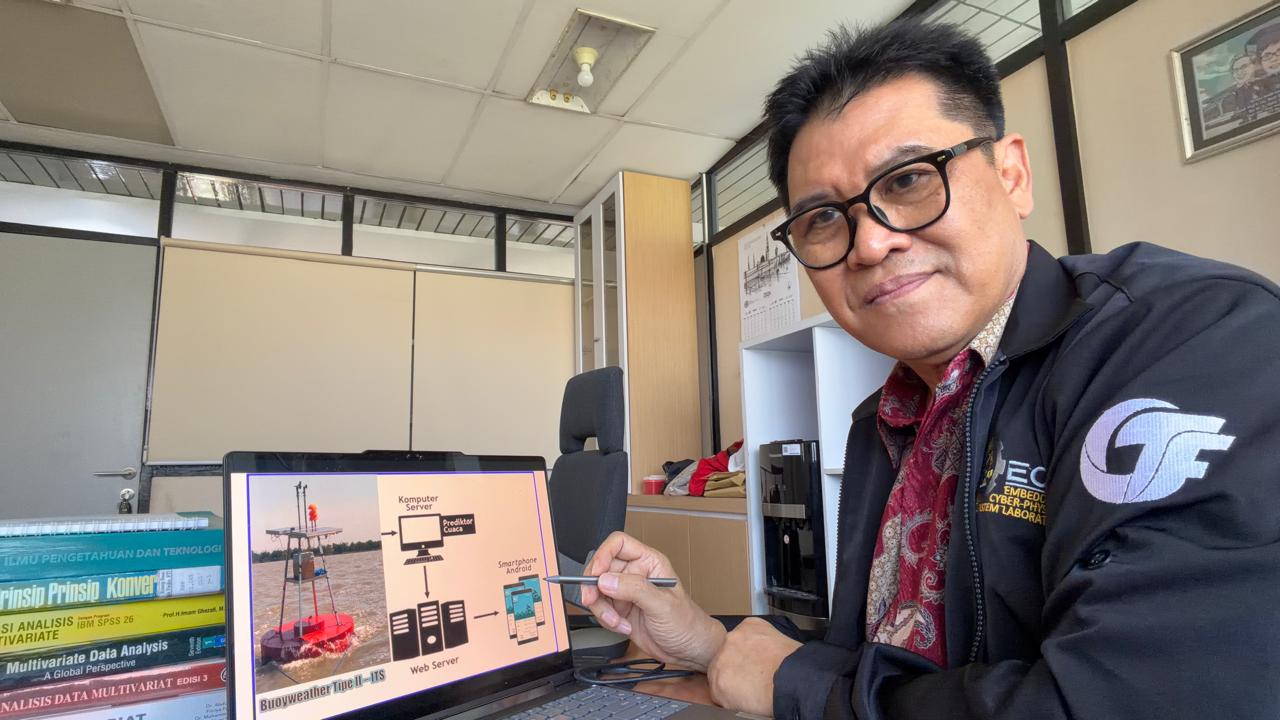
The birth of the SYMBA-AI paradigm makes a significant scientific contribution by expanding physical system modeling toward human-centered systems. This interdisciplinary approach enables the widespread application of artificial intelligence in sectors ranging from maritime and transportation to healthcare and education. This track record is expected to underpin the development of Indonesia Emas 2045 by strengthening superior human resources and enhancing national STEM competencies.
Going forward, Syamsul emphasized that this intelligent modeling is not merely an academic approach, but a solid foundation for spurring national technological independence. This step is ITS’s concrete contribution to supporting the achievement of the Sustainable Development Goals (SDGs), specifically point 4 on Quality Education and point 9 on Industry, Innovation, and Infrastructure. “Learning is transforming knowledge into wisdom and compassion,” he reminded. (ITS Public Relations)
Reporter: Nur Anisa Alya Eriska
Translator: Devinka Mutianeira