Published on
Friday, 4 September 2026
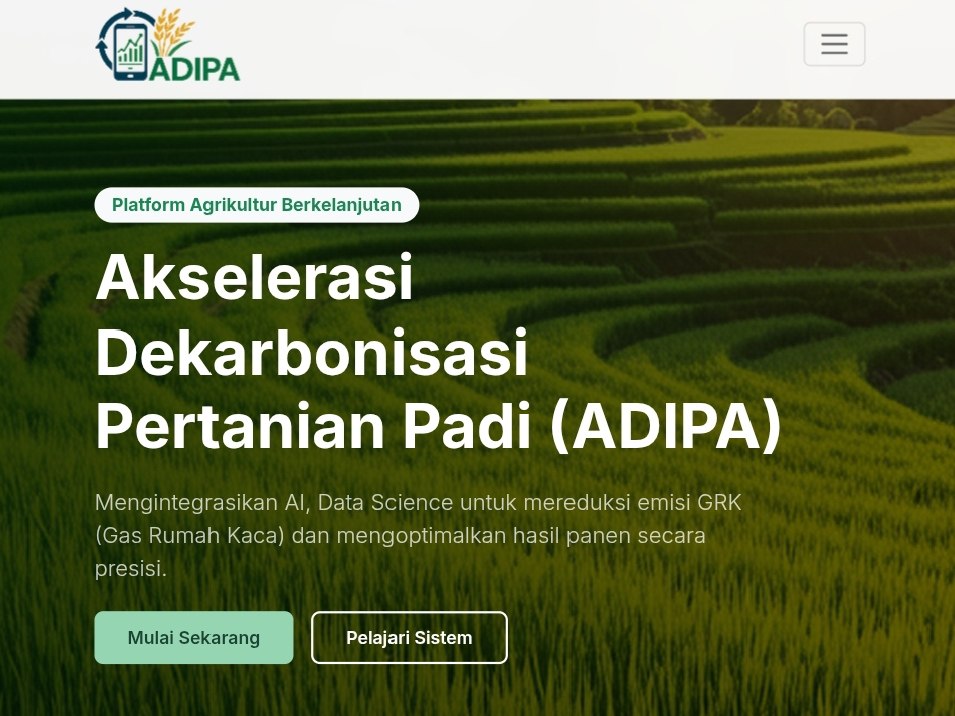
Malang, ITS News — The Sepuluh Nopember Institute of Technology (ITS) continues to accelerate the downstreaming of research related to climate change mitigation. This time, the ITS research team held an official audience with the East Java Province Center for Agricultural Modernization Application (BRMP) in Malang on August 24. The meeting discussed the implementation of the Rice Agriculture Decarbonization Acceleration (ADIPA) platform .
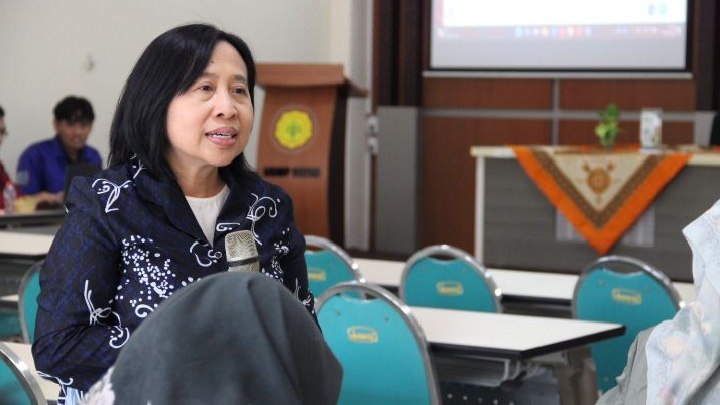
ITS Research Team Leader, Prof. Erma Suryani, ST, MT, PhD, explained that the rice farming sector contributes significantly to greenhouse gas emissions. The carbon footprint of rice fields in East Java reaches 1.2 to 1.68 million tons of carbon dioxide equivalent. “Technological solutions are needed to ensure food security and decarbonization can go hand in hand,” explained the Sumenep-born academic.
Based on these challenges, Erma and her team developed the ADIPA platform, which integrates System Dynamics modeling with artificial intelligence and the Internet of Things (IoT). Simulations of this system demonstrated that the Alternate Wetting and Drying (AWD) method can increase rice productivity by up to 4.5 percent. This scenario is projected to reduce emissions by up to 20 percent by 2040.
Beyond focusing solely on the periodic drying method, the ADIPA model also simulates various other mitigation scenarios. These scenarios include zero-burning straw waste management and precision nutrient management using the Leaf Color Chart (BWD). Furthermore, the platform precisely considers the use of low-emission rice varieties.
Technically, the ADIPA interactive dashboard presents a spatial mapping of emissions distribution, equipped with an early warning system. This smart facility is designed to detect environmental anomalies such as methane gas spikes in a region. To ensure the accuracy of the simulation, the dynamic model has been rigorously validated with an error rate of less than 5 percent
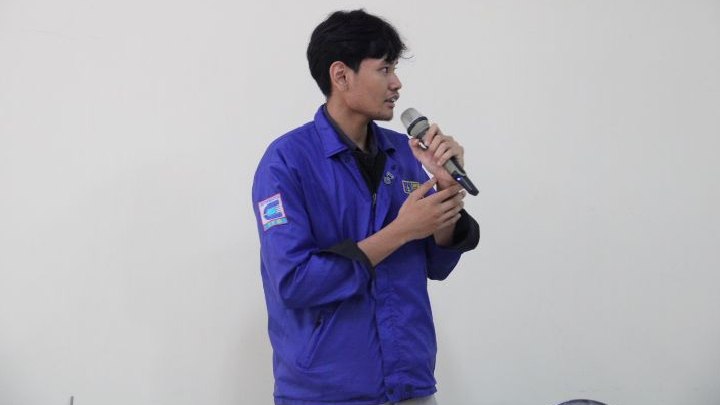
In terms of development, Putu Ardanatha Pratama, Research Assistant for the ADIPA IT Team, explained that the system’s infrastructure is highly adaptive. The platform is designed to absorb data through public Application Programming Interfaces (APIs) from various official government agencies. “We always ensure valid calculations and that the system interface is user-friendly for farmers,” said the student from the ITS Informatics Engineering Department .
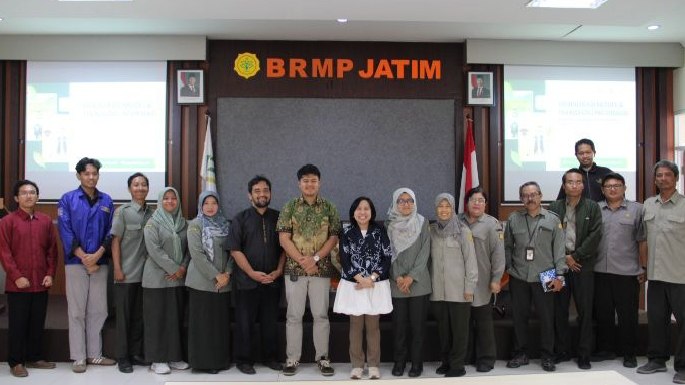
The hearing solidified BRMP East Java’s role as a model verification partner and field trial pilot. The sustainability of the ADIPA platform will be managed through a collaborative governance scheme between academics and local government agencies. This ensures the system remains relevant and reliable after the research funding period ends.
This innovation significantly supports the achievement of Sustainable Development Goals (SDGs) point 2 on Zero Hunger and point 13 on Climate Change Management. Erma hopes this research can form the basis for targeted public policy. “This synergy must contribute to reducing national emissions without sacrificing food security,” emphasized the lecturer from the ITS Information Systems Department . (*)
Reporter: Dicka Elkana Putra
Redaktur: Putu Calista Arthanti Dewi