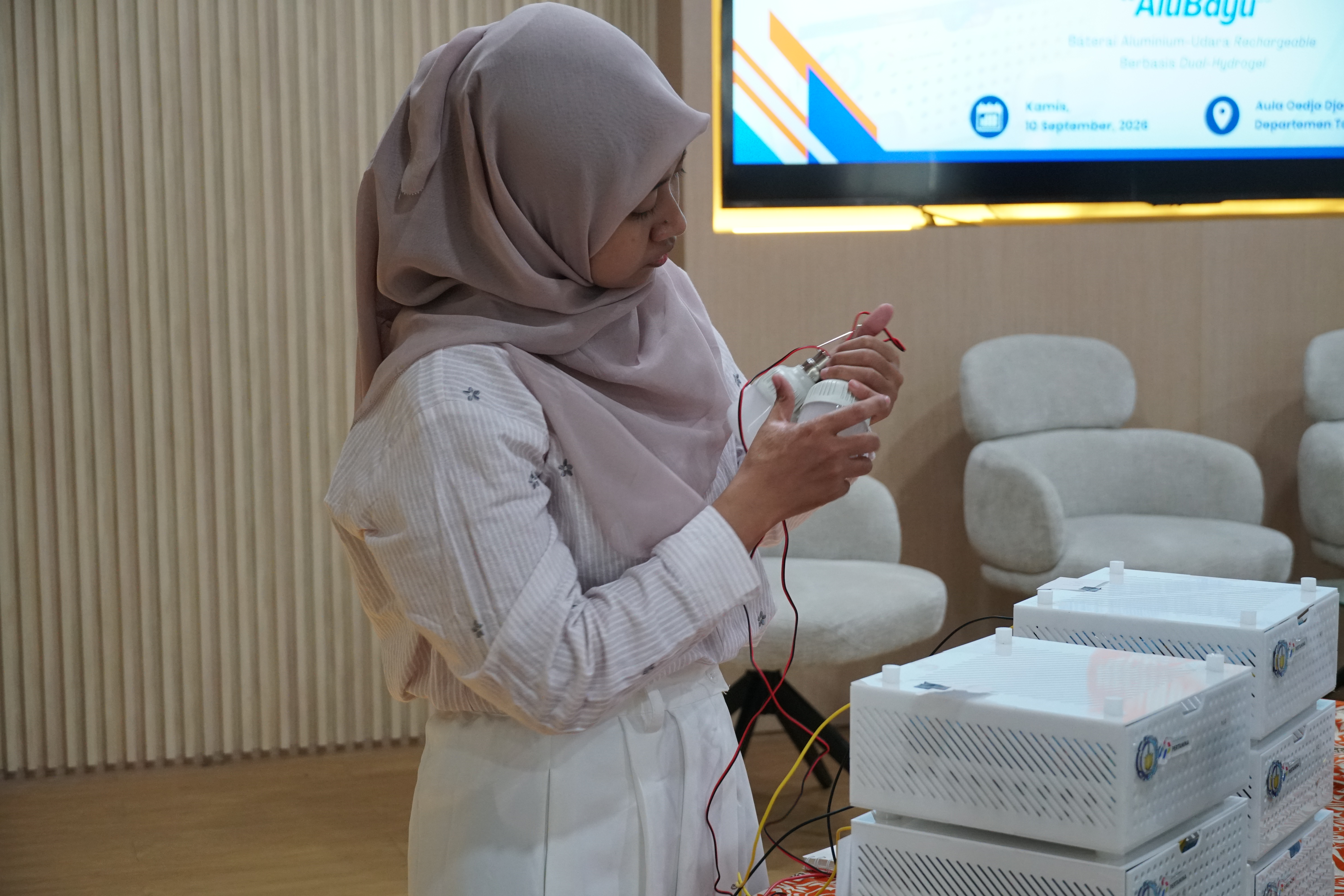
Portrait of a trial of turning on a lamp with an energy source from a hydro-aluminum battery developed by the Electrochemistry and Corrosion Laboratory, Department of Chemical Engineering, ITS
The dual-hydrogel battery system is projected as a safe and environmentally friendly future energy storage solution. This technological innovation, funded by PT Pertamina Persero, is a strategic development in support of national technological independence.
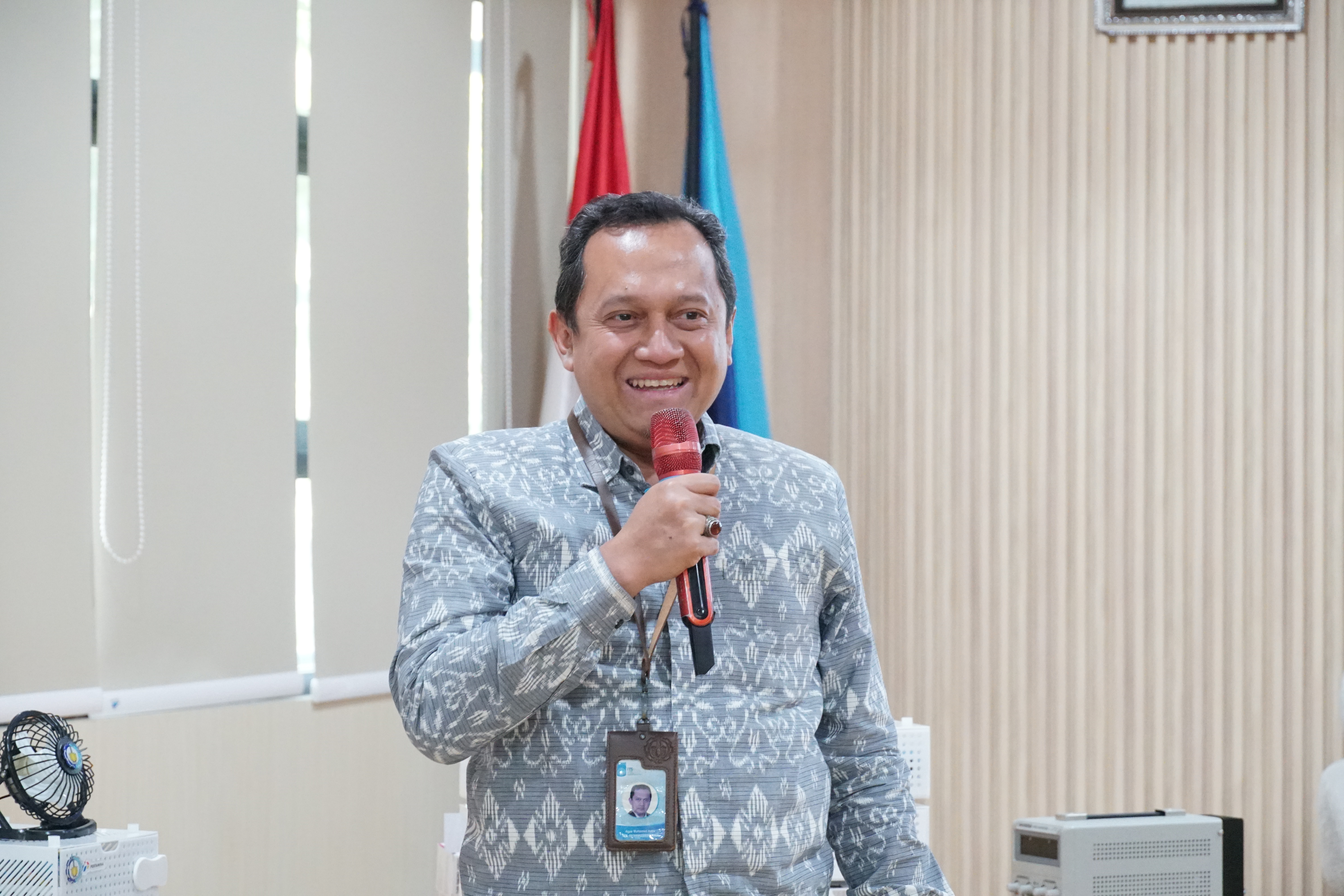
Vice Chancellor IV Prof. Agus Muhamad Hatta MSc PhD encourages research results that have an impact
ITS Vice Rector IV for Research, Innovation, Cooperation, and Alumni Prof. Agus Muhamad Hatta ST MSc PhD highlighted the uniqueness of the aluminum-air battery based on seawater and local aluminum (dual-hydrogel). According to the lecturer who is usually called Hatta, this development is very solution in meeting energy needs in coastal, suburban, and outermost areas. “So this development is in line with ITS’s spirit to be a campus that impacts society,” said the ITS Professor of Engineering Physics.
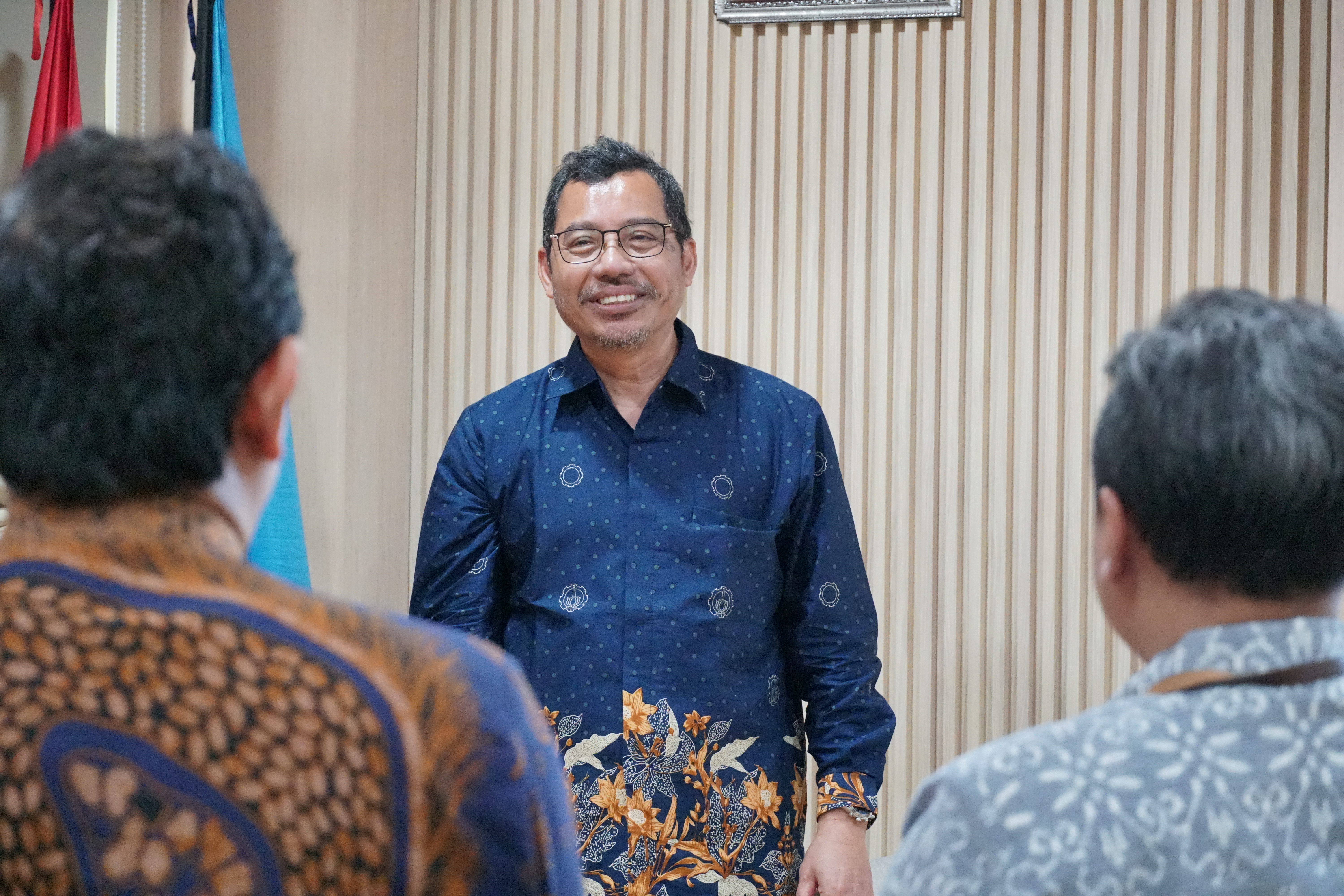
Head of the Hydro-Aluminum Battery Research Team Prof. Dr. Ir. Heru Setyawan MEng
Meanwhile, Prof. Dr. Ir. Heru Setyawan, MEng., the head of the research team, explained that the components in the technology they developed utilize local biomass resources. These include aluminum anodes, solid-state electronics made from a polymer electrolyte gel made from coconut fiber, and liquid electronics utilizing NaCl from seawater. Additionally, cathode components are sourced from nickel and iron.
By utilizing these components, AluBayu offers the advantage of a solid-sealed dual electrolyte system. This system separates the electrolyte types into the anode, which is the negative pole, and the cathode, which is the positive pole. “The use of two different electrolytes optimizes the chemical reaction between aluminum metal and air oxygen,” explained the ITS Professor of Chemical Engineering.
Currently, a single AluBayu prototype module consists of 20 compact cells measuring 4×6 cm and weighing approximately 20.2 grams. The module is described as capable of producing a nominal voltage of approximately 11.6 volts with an existing current and power rating of approximately 0.15 mA. With these specifications, this battery is considered to have very high utility prospects for specific applications.
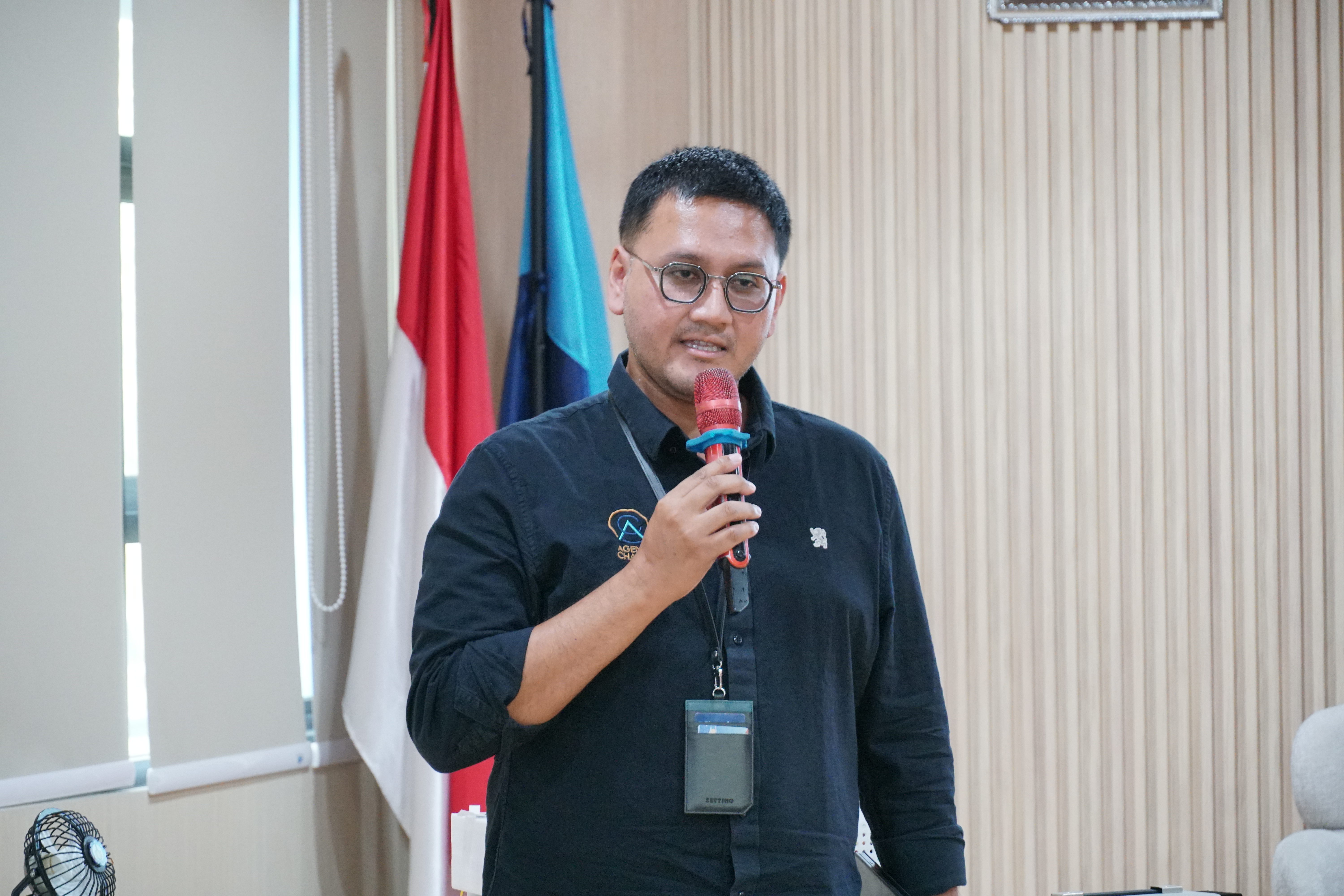
Senior Specialist Technology Innovation Downstream and New Energy PT Pertamina Persero Haryo Satriya
Haryo Satriya, Senior Specialist in Technology Innovation Downstream and New Energy at PT Pertamina Persero, also assessed that Pertamina sees this innovation as the battery of the future. “With its lightweight advantages and environmentally friendly raw materials, AluBayu has great potential for application in emergency support devices,” Haryo said.
For sustainability, PT Pertamina, as a partner, is committed to supporting AluBayu’s development through to the downstream stage. However, Haryo noted several issues that still need further development, including the relatively low battery life. “We will bring the existing prototype to Jakarta for further review and assessment, along with the company’s management’s policy direction,” he said.
The development of this environmentally friendly rechargeable battery by ITS researchers demonstrates how ITS is promoting the achievement of the Sustainable Development Goals (SDGs), particularly SDG point 7 on Affordable and Clean Energy and point 17 on Partnerships to Achieve the Goals through collaborations with industry partners such as PT Pertamina Persero. (ITS Public Relations)