
Published on
Thursday, 9 July 2026
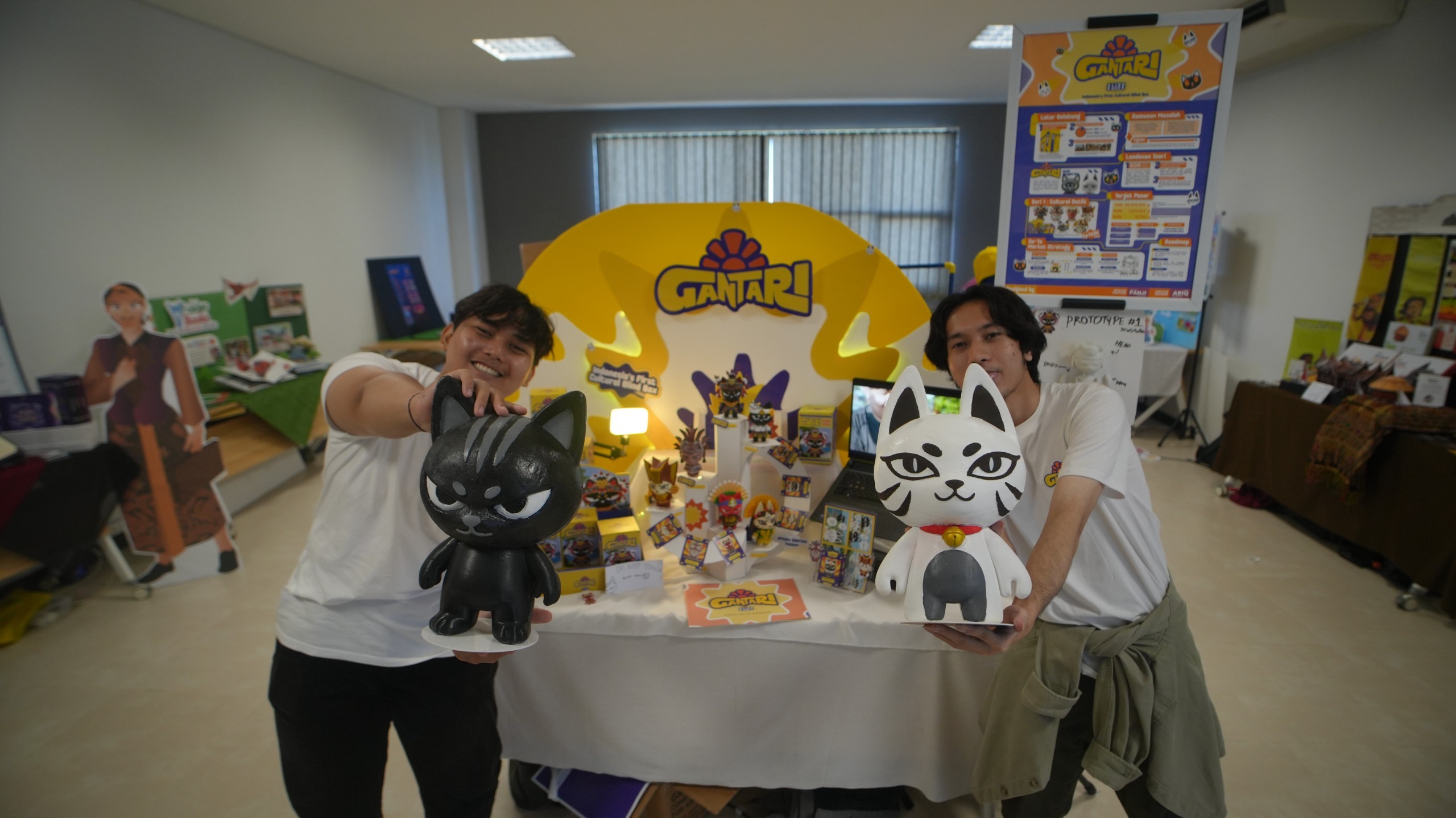
ITS Campus, ITS News – Facing a market for collectible toys in Indonesia currently flooded with imported blind box art toys , students from the Visual Communication Design (DKV) Department at the Sepuluh Nopember Institute of Technology (ITS) have introduced a product called Gantari. This product is a pioneering local blind box that celebrates Indonesian culture while offering an innovative alternative for the younger generation.
Behind this innovation, I Nyoman Panji Wiradinata and Teuku Ariq Musyaffa designed Gantari using cat mascots named Taka and Tara. Through this modern toy trend, the two included an interactive educational mission to introduce a variety of Indonesian traditional clothing to the younger generation. “We want to introduce local culture in a contemporary way,” said Panji, I Nyoman Panji Wiradinata’s nickname.
To realize this mission, the ITS Visual Communication Design (DKV) students from the class of 2023 have implemented the first Cultural Blind Box system in Indonesia, combining traditional clothing with popular cultural trends. This uniqueness is reinforced through a rarity system for collectible items, such as Common, Rare , and Secret, to stimulate psychological appeal for toy collectors. “Gantari is here to fill the gap in the market for collectible toys based on local culture,” added Teuku Ariq Musyaffa, commonly known as Ariq.
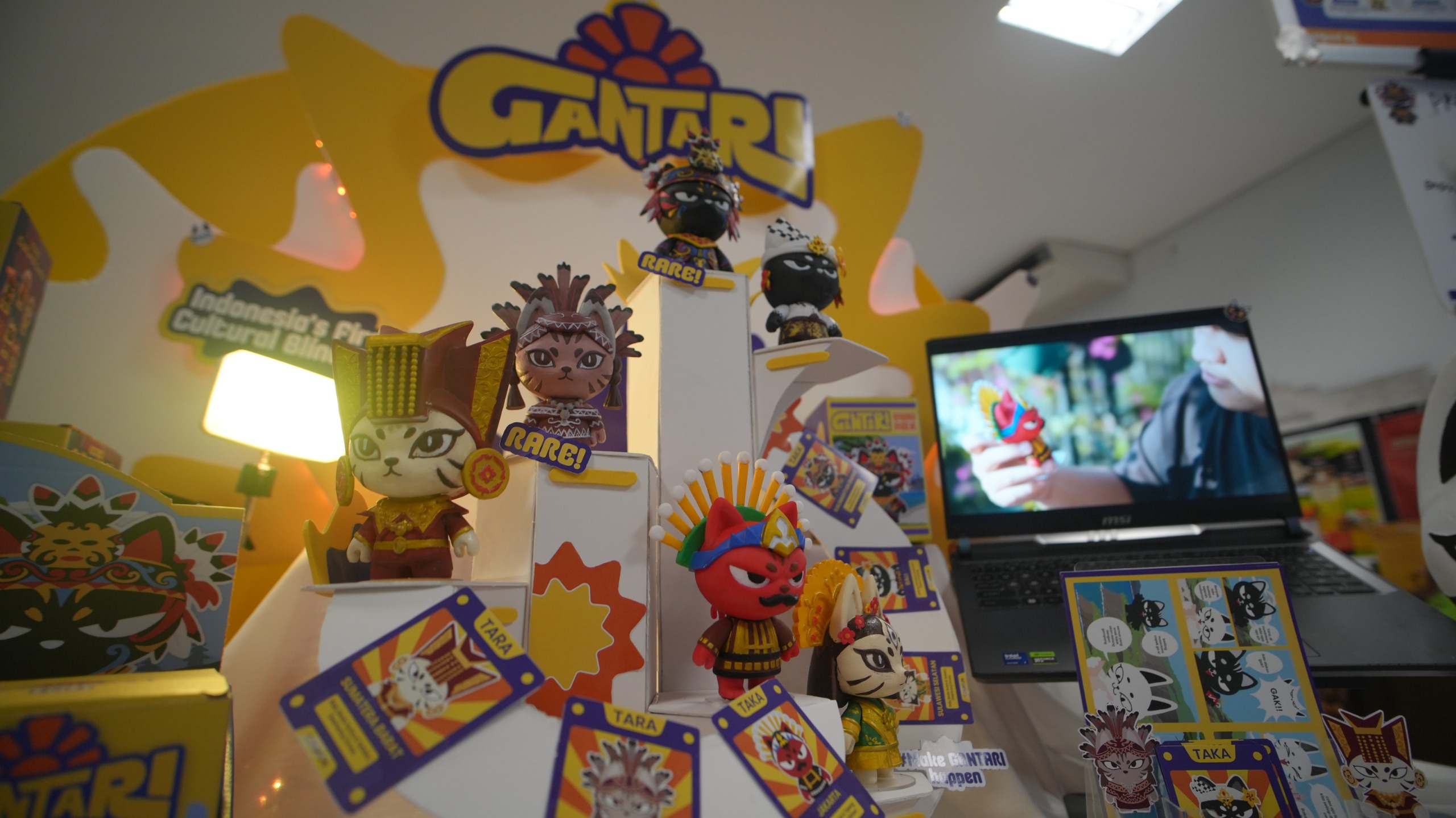
As a first step, Gantari’s inaugural series features six traditional costumes from West Sumatra, Central Kalimantan, Jakarta, South Sulawesi, Bali, and West Kalimantan. The 13.5-centimeter-tall prototype figures are molded using solid resin, with the clothing details hand-painted. “The coloring uses acrylic paint and an airbrush , while the details of the traditional clothing are applied using a 0.1-millimeter microbrush,” Ariq explained.
These two sixth-semester students further enhance the toys’ educational value by including mini story cards and figurines in each package. These cards feature folk tales and information about regional attire, providing collectors with a casual cultural learning experience. “We believe culture can live on among the younger generation in a fun way,” Ariq said.
Moving to the next stage, the ITS team projects a price of Rp 159,000 per unit of Gantari, made of PVC, for large-scale production. Development plans also include a second series themed on Indonesian mythology, featuring legendary figures from the archipelago. More than just a student project, Gantari is a superior innovation that supports Sustainable Development Goals (SDGs) point 8 on Responsible Consumption and Production. (ITS Public Relations)
Reporter: Nur Anisa Alya Eriska
Translator: Devinka Mutianeira