Published on
Monday, 2 November 2026
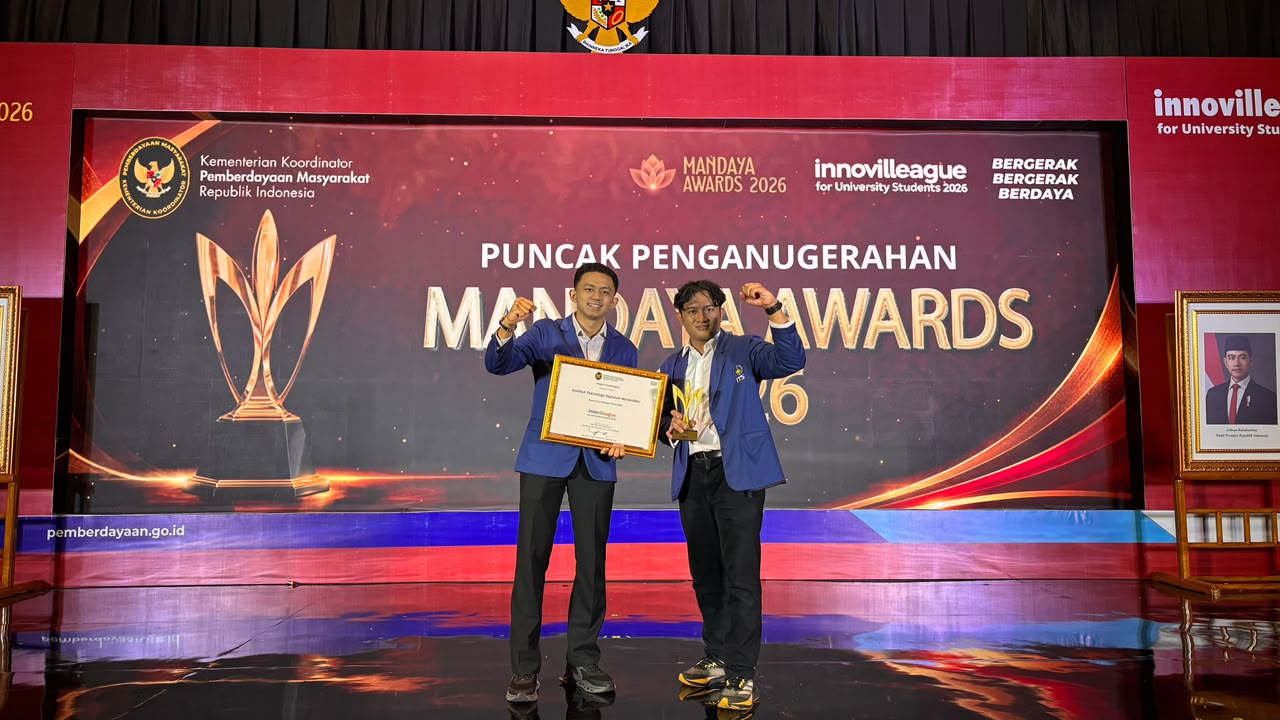
Jakarta, ITS News — A commitment to building empowered villages through the use of circular technology has led students of Institut Teknologi Sepuluh Nopember (ITS) to national success. The ITS delegation won 2nd Place in Innovilleague at the Mandaya Awards 2026, organized by the Coordinating Ministry for Community Empowerment of the Republic of Indonesia (Kemenko PM RI) in Jakarta several days ago.
This notable achievement was earned by Tim Estafet Sosial, a cross-departmental group of ITS students led by Riva Rizkiana Ramadhani from the Department of Engineering Physics and Hilmy Alfadel Nurindaputra from the Department of Industrial Mechanical Engineering. Through a program concept titled Smart Circular Village: Integrated Waste Management System, the ITS team combined solar energy, waste management, and modern aquaculture to revitalize coastal areas.
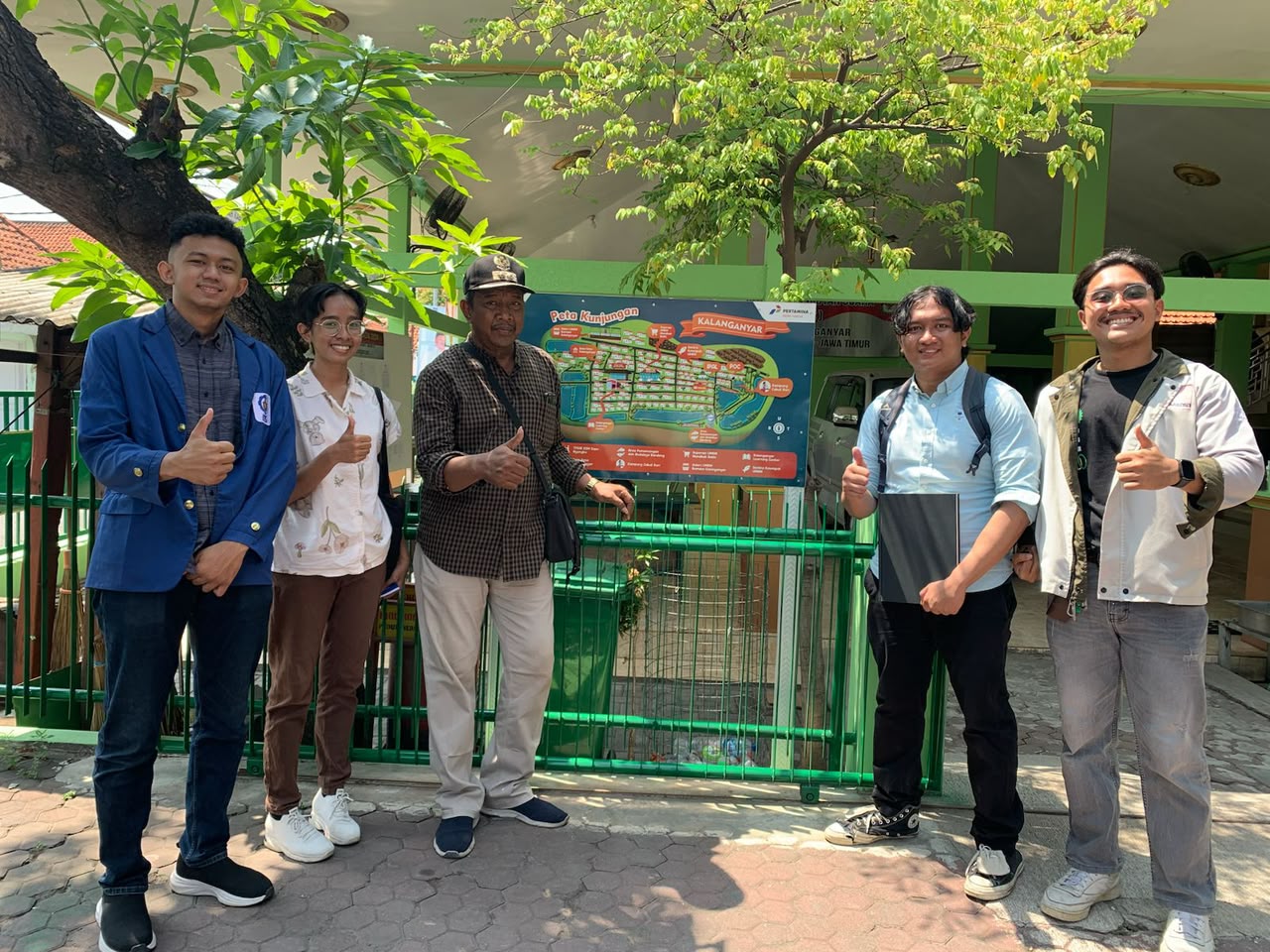
The idea originated from concern over the condition of Kalanganyar Village, Sedati, Sidoarjo, which had lost most of its fishponds due to tidal flooding. Local residents were also burdened by food waste polluting the waterways feeding the ponds. Meanwhile, the village’s Reuse, Reduce, Recycle Waste Management Facility (TPS3R) at that time relied on only a handful of underpaid workers.
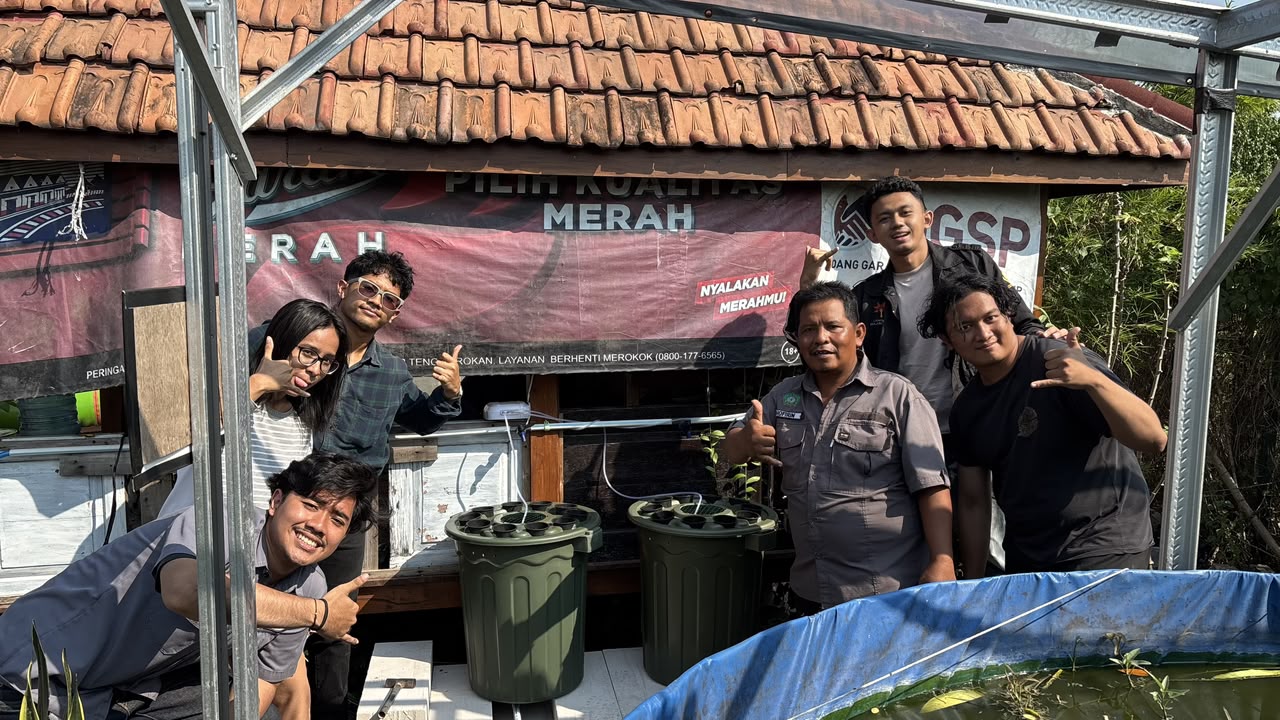
In response to these issues, Hilmy and his teammates formulated a circular economy innovation integrating waste management, aquaculture, and micro, small, and medium enterprises (MSMEs). Organic waste is naturally decomposed using maggot larvae, which then serve as alternative fish feed. This circular chain is further supported by a solar-powered dryer and Internet of Things (IoT)-based smart ponds to boost village efficiency.
In the waste sector, the team installed a modular Magobox Tower Lite system at the TPS3R for waste bioconversion using black soldier fly larvae. To accelerate post-harvest processing, the team integrated a solar- and biogas-powered rotary dryer. “The maggot facility serves as the key to decomposing the village’s monthly waste while producing high-nutrient feed,” Hilmy explained.
The seventh-semester student added that the harvested maggots are supplied as feed for smart biofloc ponds and bucket fish farming (budikdamber). These circular tarpaulin ponds are integrated with a digital water-quality monitoring platform powered by IoT sensors and artificial intelligence. This step has proven effective in reducing tilapia mortality rates while cutting commercial pellet costs.
Support for local businesses was strengthened through the mechanization of the Processed Fish MSME (Olikan), which produces crackers from milkfish scale waste. The team installed an Off-Grid Rooftop Solar Power Plant (PLTS) to supply electricity for the mixing and cutting machines. “We installed solar panels so that milkfish-scale cracker production can continue operating energy-efficiently without burdening residents with high costs,” added the young man from Jombang.
Beyond merely implementing technology, the team positioned themselves as ecosystem builders who guided residents from initial planning to self-reliance. Under the direction of Riva as Project Leader and Hilmy as Technical Project Manager, this social collaboration engaged dozens of university students and Karang Taruna, delivering direct benefits to more than 97 coastal residents. “The key to successful empowerment lies in the active involvement of the local community as the primary drivers,” Hilmy emphasized.
The operation of this self-reliant village system has proven to reduce expenses while boosting residents’ additional income by tens of millions of rupiah annually. This concrete initiative also supports the achievement of the Sustainable Development Goals (SDGs), particularly Goal 7 on Affordable and Clean Energy and Goal 12 on Responsible Consumption and Production. “For us, university students are moral agents of change called to serve and bring positive impact to society,” Hilmy concluded optimistically. (HUMAS ITS)
Reporter: Dinda Fithriyyah