Consolink, an Automatic Soil Consolidation Testing Solution Created by ITS Students
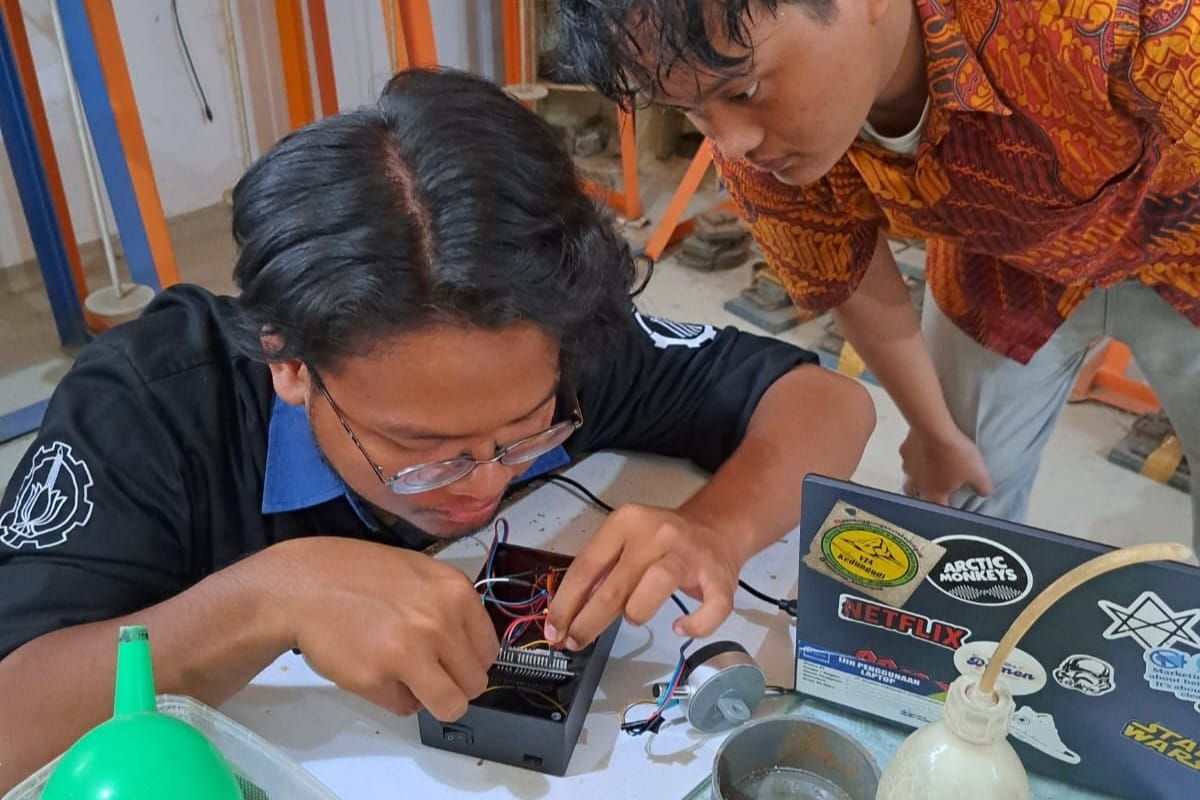
The process of integrating the automatic dial reading system carried out by Muhammad Ken Fajri Azka Arafah (left) and Celvin Mico Rizki P (right)
ITS Campus, ITS News — A collaboration between a team of students and lecturers from the Sepuluh Nopember Institute of Technology (ITS) has resulted in an internet of things (IoT) -based automatic dial reading system for soil consolidation testing. The innovation, called Consolink, is designed to simplify the lab process and minimize the risk of manual reading errors. Furthermore, this tool also allows real-time access to test data .
Consolink was developed to meet laboratory needs and will be developed into a system capable of automatically adding weights. Aan Fauzi, Head of the ITS Transportation and Geotechnics Laboratory, hopes that all laboratory equipment can be transformed into technology-based devices as part of infrastructure modernization. “We want all the equipment in the lab to become more sophisticated and, of course, more efficient,” he said.
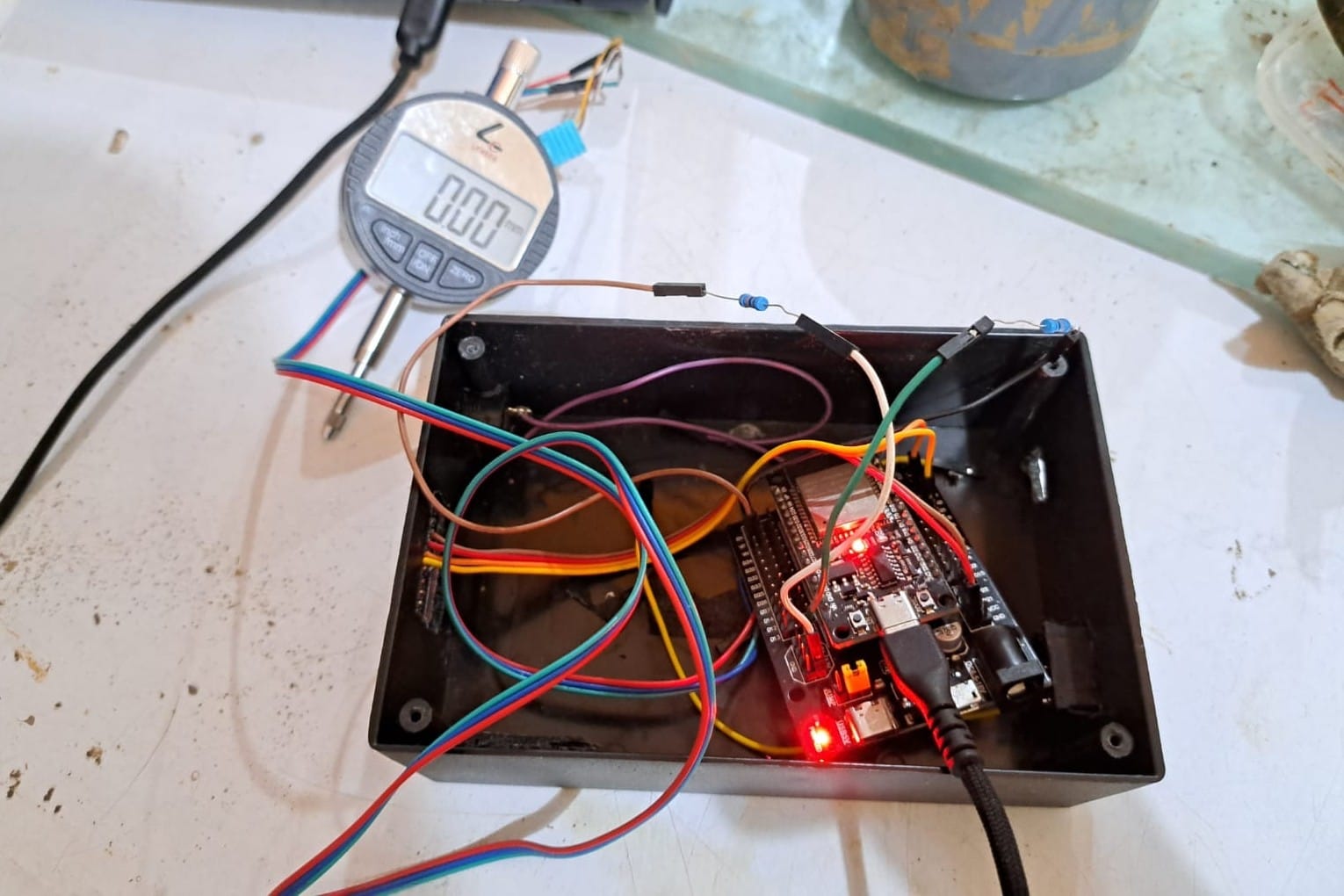
Results of system connectivity tests on Consolink, a collaborative design innovation between ITS lecturers and students
Consolink Development Team Leader Deris Faisa Ralindra ST MT explained that Consolink’s development stemmed from a key issue with manual soil consolidation testers, which had erratic readings. This new system is designed to automatically record data at standard intervals without an operator in the laboratory. “This tool is very helpful because we no longer need to go to the laboratory in the middle of the night,” he said.
Besides addressing uncertain time constraints, manual consolidometers often experience technical issues, such as jammed dial gauge needles that require a tap to move them again. With a digital system based on a displacement sensor integrated with the ESP32, readings are more stable and accurate. “With this digital version, the level of accuracy is higher and there’s no longer the need to tap the dial like with the old method,” he explained.
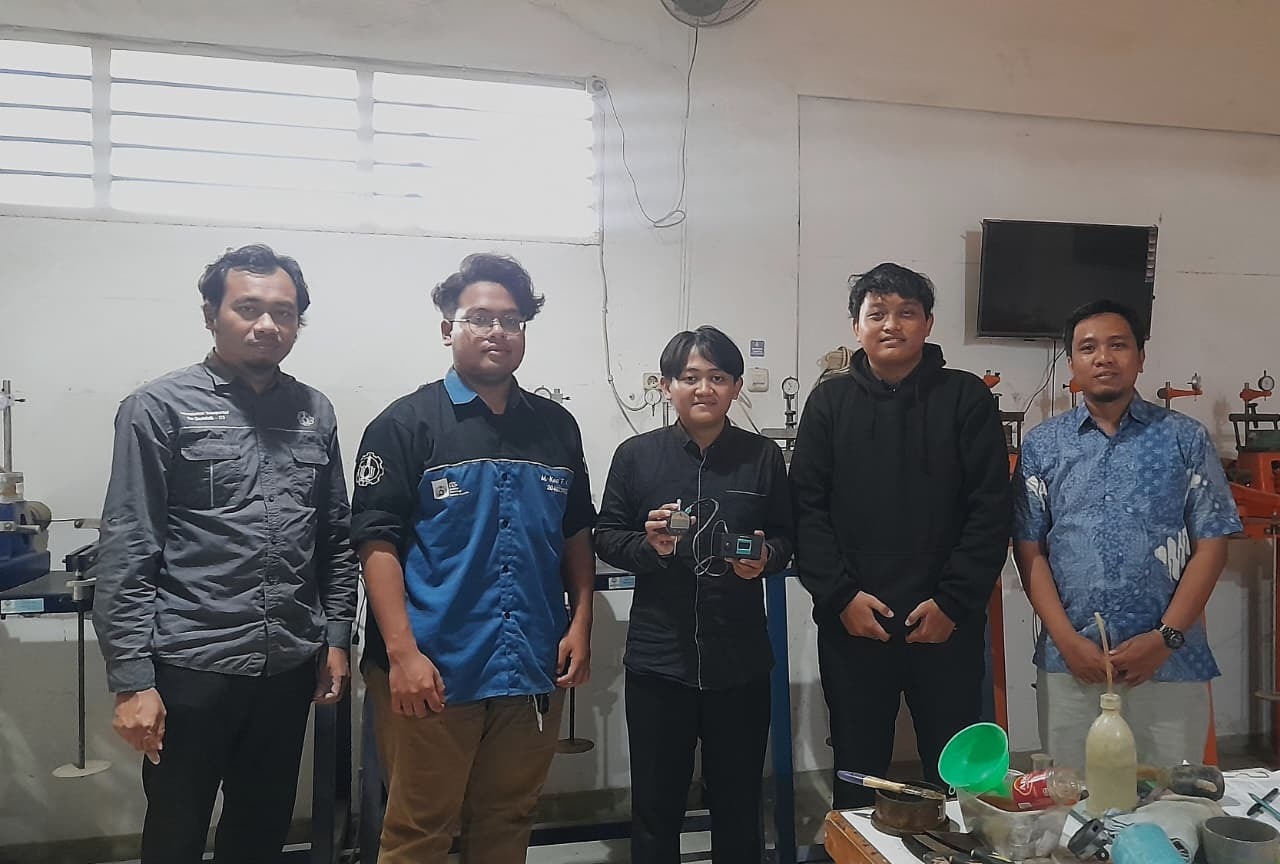
The Consolink development team from ITS, an automatic dial reading system based on the Internet of Things (IoT)
Handika Ardhi Nugraha, a member of the development team, also admitted to finding it difficult to read dial gauges manually during lab work. He then proposed an IoT-based automated system, collaborating with colleagues from the ITS Department of Electrical and Automation Engineering to design a prototype. “Initially, the idea arose from my anxiety about having to read dial gauges at night during lab work, so I thought about creating an automated tool,” explained the ITS Civil Infrastructure Engineering student.
From a technical perspective, two students from the ITS Department of Electrical Automation Engineering who are also members of the team, namely Celvin Mico Rizki P and Muhammad Ken Fajri Azka Arafah, designed the integration of sensors, storage modules, and Blynk connectivity for remote monitoring. This system uses an SD card as a logger and the Blynk application for real-time monitoring. “Data can be taken at certain time intervals and directly stored on the SD card and appears in Blynk, although there are decimal rounding limitations,” explained Celvin Mico Rizki P or who is usually called Mico.
According to Deris, the implementation of Consolink has also had a significant impact on student labs and research. Now, students no longer need to be on duty 24/7 in the laboratory to record changes in soil deformation, as all data is recorded automatically and can be accessed via laptop or smartphone. “This convenience helps students and technicians because readings are automatic and provide higher accuracy,” Deris said.
In terms of community service, the laboratory is ready to accept tests from external partners. The implementation of this automated system is expected to expedite service delivery and improve data consistency for industry and contractors. “The impact should be a faster, more accurate reading process, and lab technicians will no longer be burdened with manual readings,” he added.
The development of Consolink also aligns with the Sustainable Development Goals (SDGs) , particularly point 9 on Industry, Innovation, and Infrastructure, and point 11 on Sustainable Cities and Settlements. The application of IoT technology to soil consolidation testing also encourages innovation in laboratory infrastructure, increases the efficiency of research processes, and supports safer and more sustainable construction. (ITS Public Relations)
Reporter: ION20
Translator: Devinka Mutianeira
Related News
-
ITS Formulates Inclusive Education System Policy for Students with Disabilities
ITS Campus, ITS News — The Sepuluh Nopember Institute of Technology (ITS) has once again demonstrated its commitment to
December 03, 2025 12:12 -
ITS Develops Andal App, a Solution for MSMEs to Manage Inventory
ITS Campus, ITS News — Amidst rapid technological advancements, many Micro, Small, and Medium Enterprises (MSMEs) still rely on
December 03, 2025 12:12 -
Consolink, an Automatic Soil Consolidation Testing Solution Created by ITS Students
ITS Campus, ITS News — A collaboration between a team of students and lecturers from the Sepuluh Nopember Institute
December 03, 2025 12:12 -
Supporting Economic Empowerment, ITS Signs MOU with BSI
ITS Campus, ITS News — The Sepuluh Nopember Institute of Technology (ITS) continues to strengthen its tangible and sustainable
December 03, 2025 12:12