ITS Doctoral Project Simulation Model Supports the Welfare of Ojol Partners
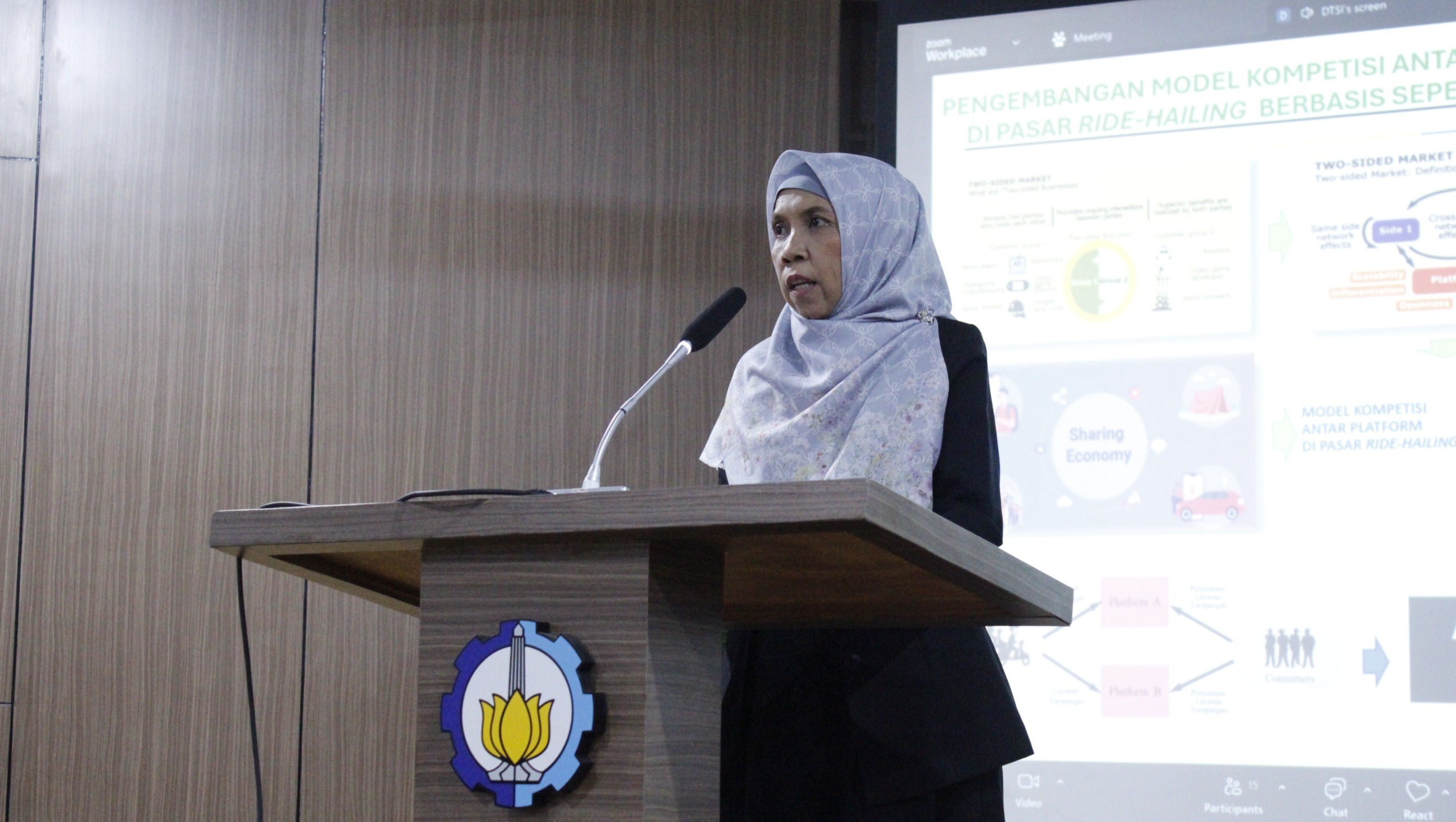
Dr. Dyah Herawatie MSi while presenting her dissertation in the Open Doctoral Promotion Session at the Department of Systems and Industrial Engineering, ITS
ITS Campus, ITS News — A doctoral graduate of the Department of Systems and Industrial Engineering, Sepuluh Nopember Institute of Technology (ITS), has successfully developed a simulation model to analyze the benefits and impacts of using two online motorcycle taxi (ojol) platforms simultaneously. Dr. Dyah Herawatie, MSi, successfully focused her research on the dynamics of the online transportation market in Indonesia.
Given the dominance and use of multiple online transportation platforms , this clearly impacts company operations and the well-being of partners in Indonesia. Based on this focus, Dyah developed and wrote her dissertation, ” Developing an Inter-Platform Competition Model in the Motorcycle-Based Ride-Hailing Market.”
In his research, the Airlangga University (Unair) lecturer used the Agent-Based Modeling & Simulation (ABMS) method combined with a geographic information system (GIS). This combination can model driver and passenger behavior realistically and dynamically. “Both can also simulate a number of scenarios that are most profitable for online motorcycle taxi drivers,” he added.
The developed model includes several key aspects, such as driver reactive strategies, cruising modes, and the platform’s broadcast area radius . All three are simulated to study the impact of strategy changes on profitability and service efficiency for the company, drivers, and passengers. The model is then simulated in both single- platform and two- platform competition scenarios .
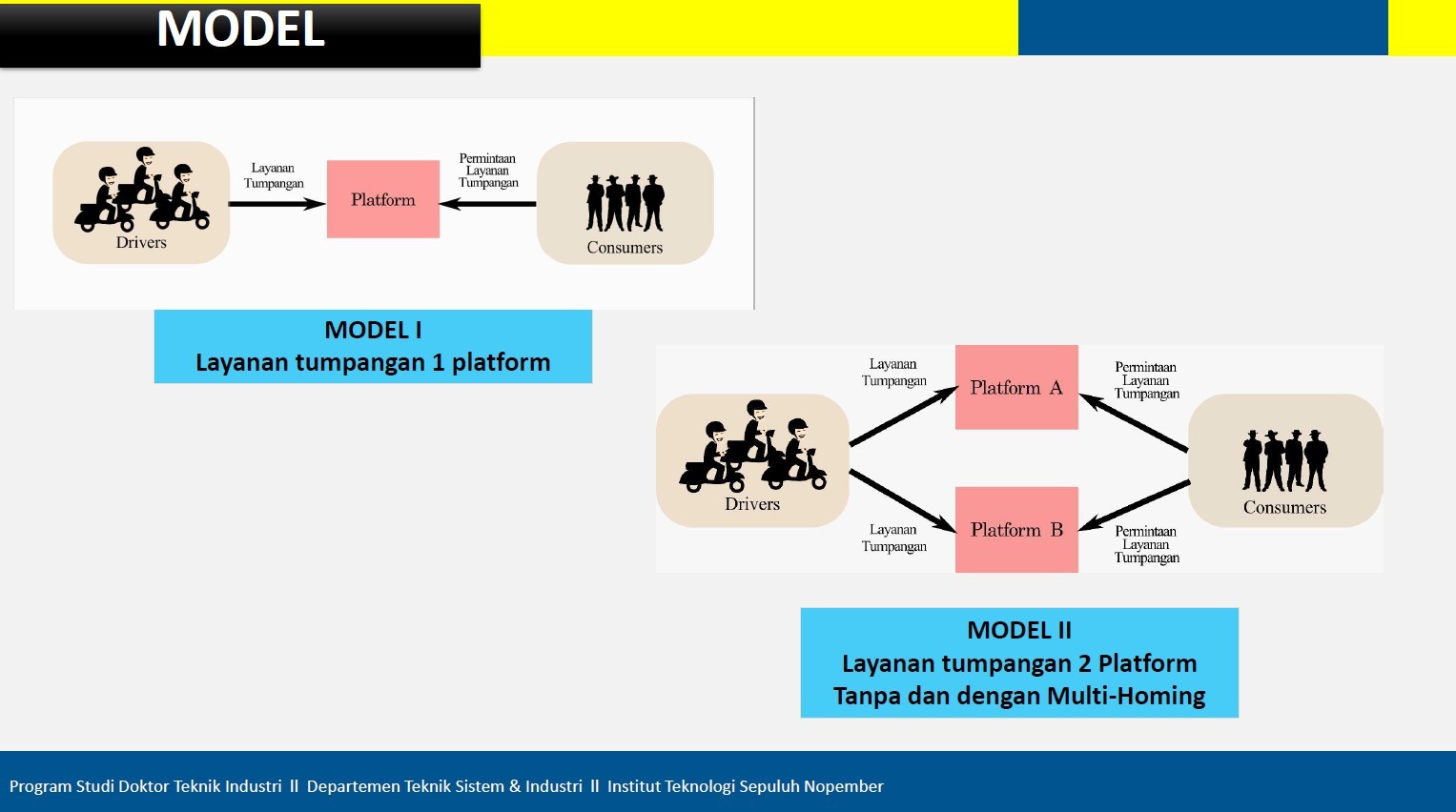
The difference between the single platform scenario model and two platform competition developed in the dissertation of Dr. Dyah Herawatie MSi
In a single- platform scenario , Dyah found that the best strategy for drivers was to accept all orders. Meanwhile, the optimal broadcast area radius to maximize net income ranged from two to three kilometers from the driver. “While this strategy shows good results, the intensity of passenger demand also affects the results,” she said.
Meanwhile, in a two- platform competition scenario, there’s potential for increased income for drivers who multi-homed (MH). Dyah explained that drivers using two platforms have the potential to earn additional income, especially during low to moderate demand periods. This is because the MH strategy expands passenger service access, particularly on platforms that are less dominant in the market.
With these findings, Dyah makes a significant contribution that can serve as a scientific reference for various parties. For the government, these findings offer insights into formulating fair and sustainable policies related to competition management and MH practices. For platform companies , they can provide a basis for designing better operational strategies and managing the risks arising from MH.
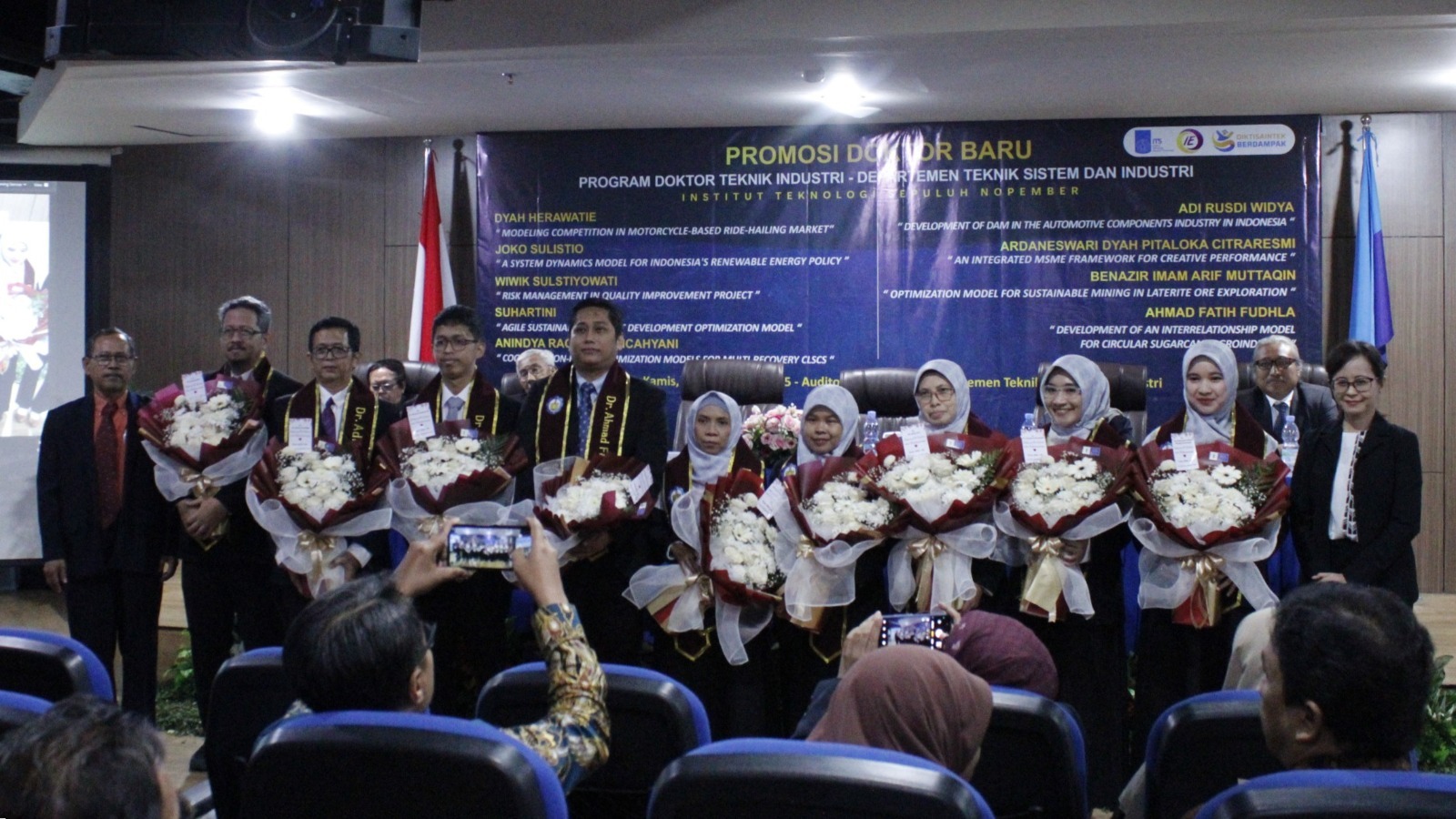
Dr. Dyah Herawatie MSi (sixth from right) with eight other doctors after the Open Doctoral Promotion Session at the Department of Systems and Industrial Engineering, ITS
The 1987 ITS Statistics alumnus emphasized that the research doesn’t stop at this stage. The model will be further developed to test various driver proportions, demand variations, and the competitive strategies of the two platforms . “The next phase will focus on a more in-depth analysis of the impact of multi-homing on driver profits, platforms , and market structure,” he explained.
Dyah’s doctoral studies were fraught with challenges. During her studies, she experienced health problems amid the COVID-19 pandemic. Despite this, her determination to complete her research remained strong. She overcame these difficult times thanks to the full support of her family, supervisors, the examining team, the entire campus, and colleagues.
Furthermore, this simulation model also contributes to supporting the implementation of the Sustainable Development Goals (SDGs), particularly SDG 8, which focuses on Decent Work and Economic Growth. Through modeling that focuses on driver welfare and operational optimization, this research can serve as a tool for formulating strategies to increase the income of motorcycle taxi (ojol) partners in Indonesia. (ITS Public Relations)
Reporter: Syahidan Nur Habibie Ash-shidieq
Translator : Devinka Mutianeira
Related News
-
ITS Supports Scientific Contribution in Post-Disaster Rehabilitation Consortium
ITS Campus, ITS News — Institut Teknologi Sepuluh Nopember (ITS) takes part in the Higher Education Consortium for Post-Disaster Rehabilitation
October 14, 2025 10:10 -
ITS Becomes One of the Top Recipients of the Hitachi Innovation Awards
ITS Campus, ITS News — Institut Teknologi Sepuluh Nopember (ITS) continues to demonstrate its commitment to strengthening research and innovation.
October 14, 2025 10:10 -
Strengthening the Role of Higher Education Institutions, ITS Attends the Briefing of the President of the Republic of Indonesia
Jakarta, ITS News — Institut Teknologi Sepuluh Nopember (ITS) never stops continuously being involved in the development of the
October 14, 2025 10:10 -
ITS Facilitates Aid for 34 ITS Students Who Are Victims of Sumatra Floods
ITS Campus, ITS News — Institut Teknologi Sepuluh Nopember (ITS) continues to show its concern for students affected by
October 14, 2025 10:10