Supporting Food Security, ITS Professor Researches Plant Adaptation in Suboptimal Land
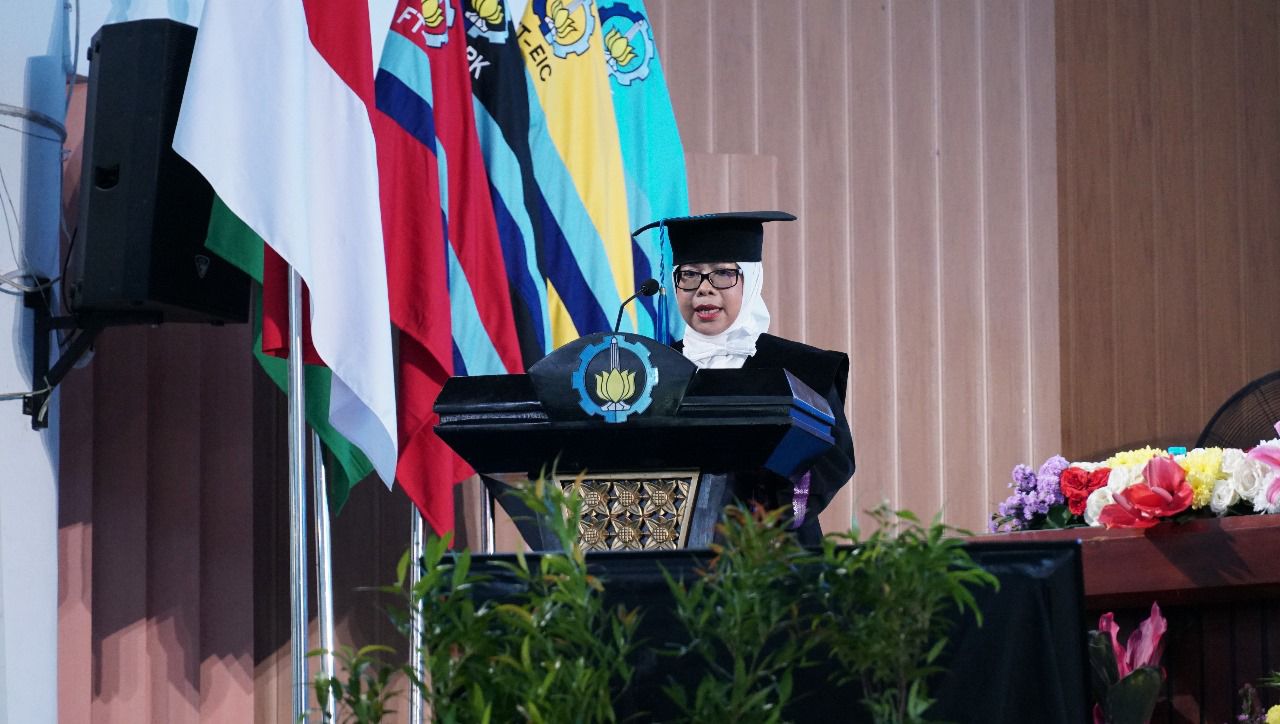
ITS’s 225th Professor, Prof. Dr. Tutik Nurhidayati, M.Si., presenting her scientific speech at the ITS Professor Council Open Session at Grha Sepuluh Nopember ITS
ITS Campus, ITS News — The challenge of limited fertile land in Indonesia has prompted research to find solutions for future food security. In response to this, the 225th Professor at Institut Teknologi Sepuluh Nopember (ITS), Prof. Dr. Tutik Nurhidayati, M.Si., has developed research on plant physiology, particularly plant adaptation to abiotic stress in suboptimal land.
The professor from the Department of Biology, Faculty of Science and Data Analytics (FSAD) at ITS emphasized that plants play a vital role as the main source of energy for life on earth. According to him, understanding the physiological mechanisms of plants is crucial for maintaining crop productivity amid climate change. “Because they are sessile or immobile, plants must adapt to extreme conditions such as drought, salinity, and flooding,” she explained.
In her research, Tutik discovered important genes that help plants survive in extreme conditions. In porang, genes that regulate sugar formation and cell walls play a role in coping with drought and salinity. Meanwhile, in tobacco, genes that regulate metabolism and stress hormones help plants survive when flooded. “Each species has a different way of adapting, and even a single gene can be a new discovery,” she explained.
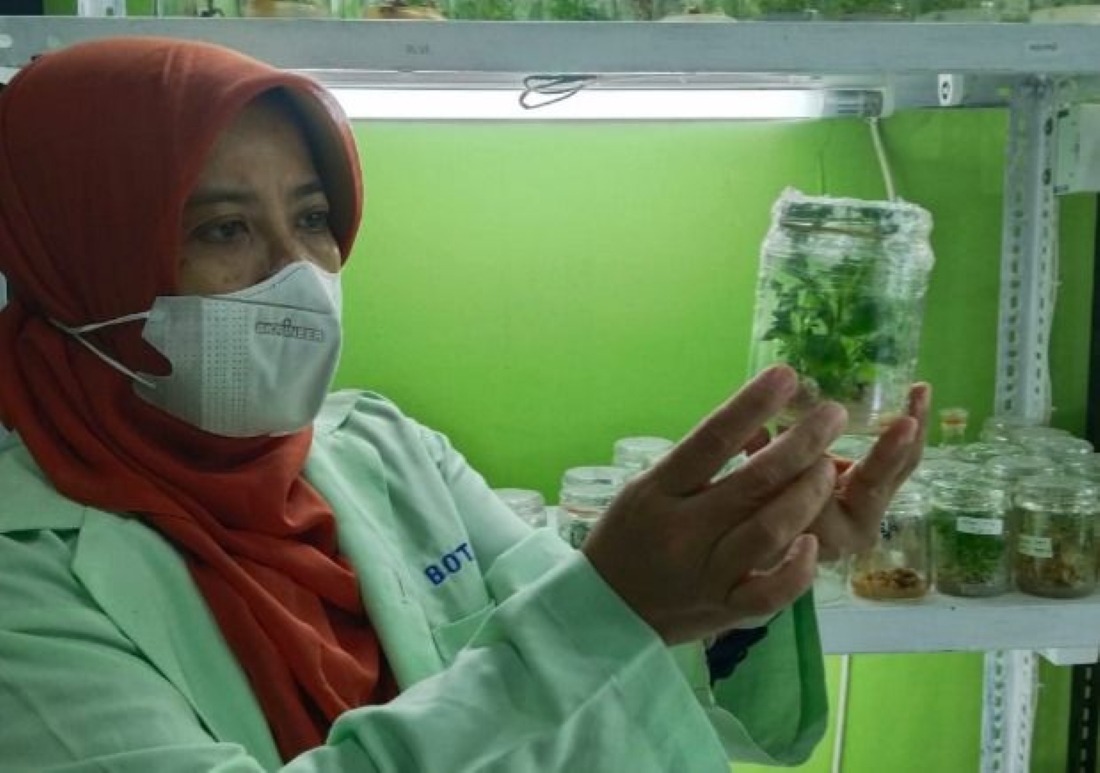
Prof. Dr. Tutik Nurhidayati, M.Si., while researching tissue culture with the application of growth regulators and polyethylene glycol to produce plants that are more resistant to drought stressIn addition, Tutik also utilizes supporting technologies such as mycorrhiza applications, rhizobacteria, and tissue culture techniques. With this approach, plants can survive and increase productivity even when grown on marginal land. For example, the developed porang tissue culture is capable of providing disease-free superior seeds throughout the year, so that food supply is no longer dependent on the season.
Furthermore, this research is expected to strengthen national food security. By utilizing suboptimal land that was previously unproductive, the availability of food sources can increase. “Through plant physiology, we can create superior seeds and improve the land with the help of microorganisms, so that crop production remains optimal,” said the woman who was born in Magetan on September 10, 1972.
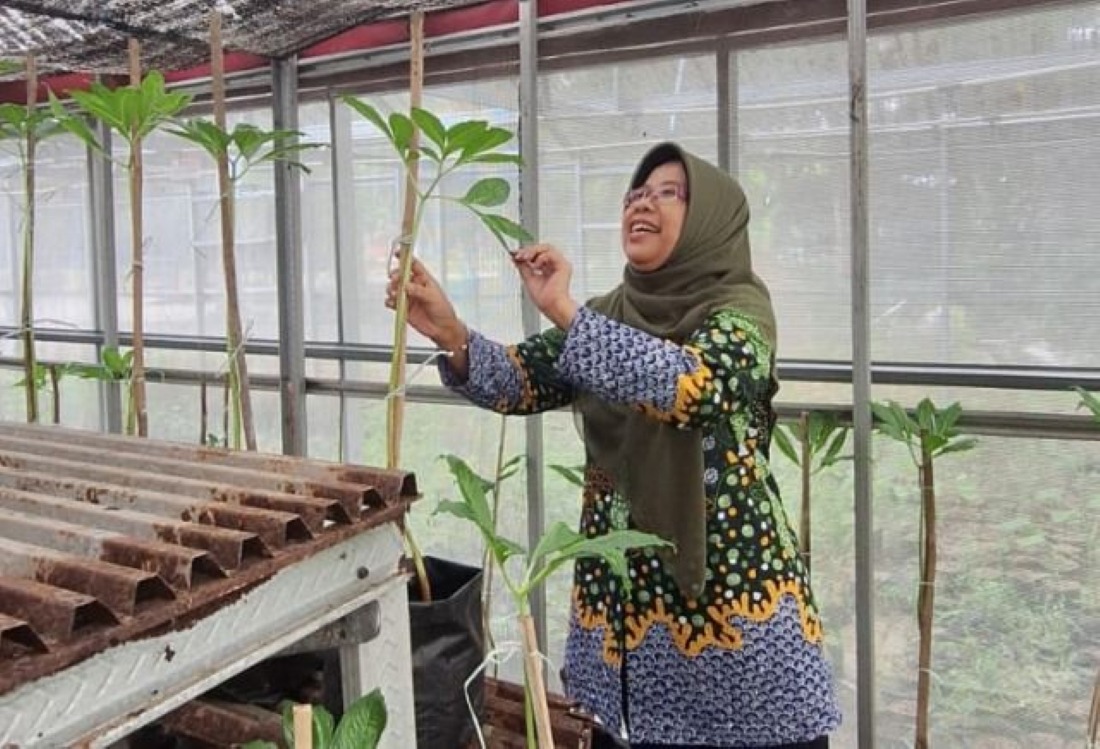
Prof. Dr. Tutik Nurhidayati, M.Si., observing the growth of porang plants as part of research on plant resistance to extreme environmental conditions
Not only in the field of biology, Tutik also collaborates across disciplines. Together with researchers in the fields of chemistry and chemical engineering, she developed porang into flour and glucomannan rice while reducing its oxalate content. This collaboration expands the benefits of research to the food and health industries.
Finally, this mother of two emphasized that this research also supports the achievement of Sustainable Development Goal (SDG) 2 on food security. According to her, plant physiology is not just theory, but the key to creating superior varieties that can survive in extreme conditions. “With plant physiology, we can ensure food availability while saving the earth from the threat of environmental crisis,” she concluded. (ITS Public Relation)
Reporter: Nabila Rahadatul Aisy Koestriyaningrum
Related News
-
ITS Supports Scientific Contribution in Post-Disaster Rehabilitation Consortium
ITS Campus, ITS News — Institut Teknologi Sepuluh Nopember (ITS) takes part in the Higher Education Consortium for Post-Disaster Rehabilitation
August 26, 2025 14:08 -
ITS Becomes One of the Top Recipients of the Hitachi Innovation Awards
ITS Campus, ITS News — Institut Teknologi Sepuluh Nopember (ITS) continues to demonstrate its commitment to strengthening research and innovation.
August 26, 2025 14:08 -
Strengthening the Role of Higher Education Institutions, ITS Attends the Briefing of the President of the Republic of Indonesia
Jakarta, ITS News — Institut Teknologi Sepuluh Nopember (ITS) never stops continuously being involved in the development of the
August 26, 2025 14:08 -
ITS Facilitates Aid for 34 ITS Students Who Are Victims of Sumatra Floods
ITS Campus, ITS News — Institut Teknologi Sepuluh Nopember (ITS) continues to show its concern for students affected by
August 26, 2025 14:08