Optimizing Brain Disease Diagnosis, ITS Doctoral Graduate Innovates MRI-Based AI
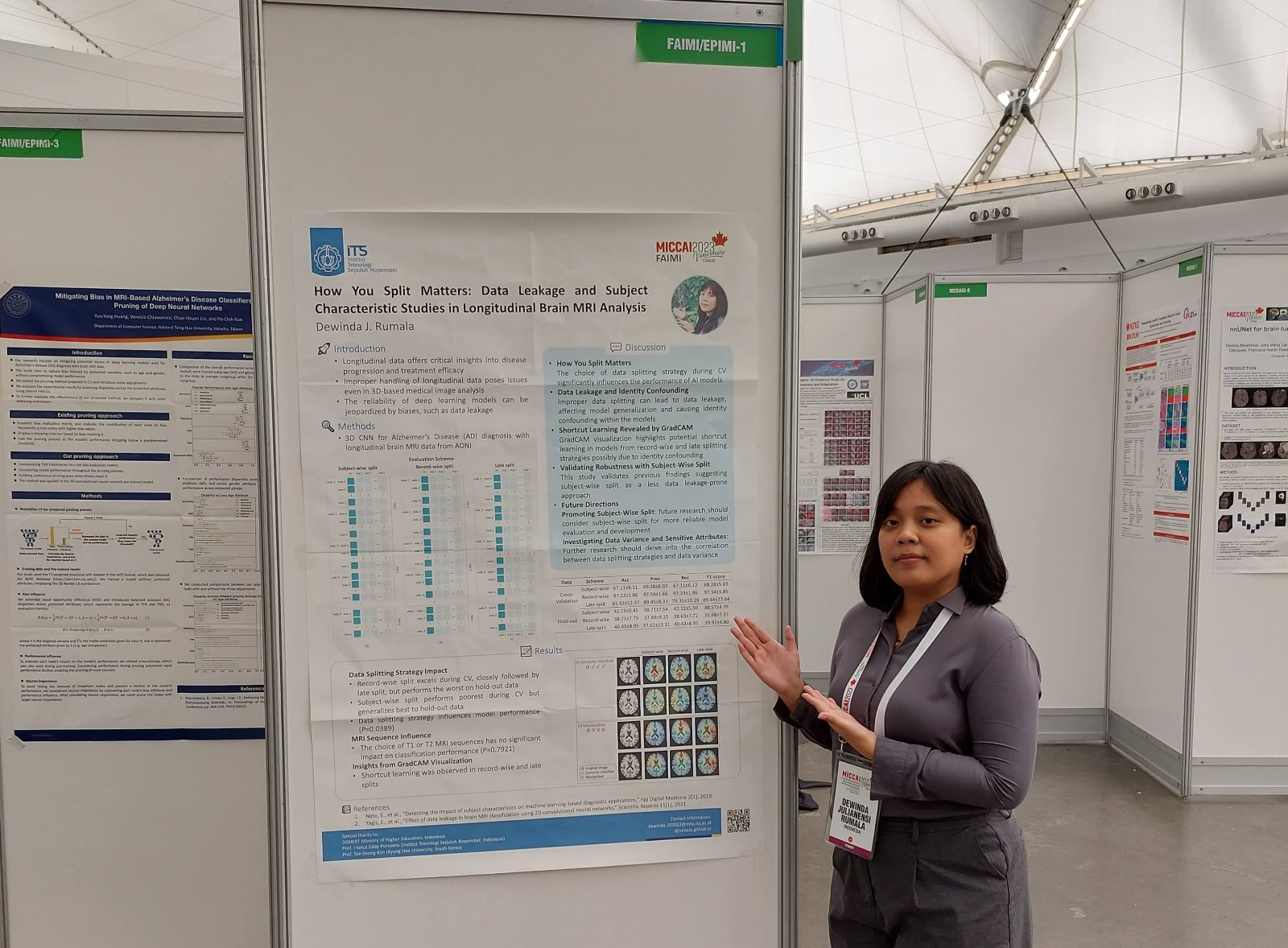
The MICCAI Conference in Vancouver was an opportunity for Dr Dewinda Julianensi Rumala ST to introduce her research results to the global community.
ITS Campus, ITS News — Brain diseases such as Alzheimer’s and tumors require accurate and fast diagnosis to increase the chances of medical treatment. Responding to this challenge, a new doctoral graduate from Institut Teknologi Sepuluh Nopember (ITS), Dr. Dewinda Julianensi Rumala ST, developed Artificial Intelligence (AI) to assist doctors in diagnosing brain diseases more accurately.
Dewinda explained that although Magnetic Resonance Imaging (MRI) has become the main tool in diagnosing brain diseases, its weakness is that the interpretation of MRI images still relies on manual analysis by doctors. “To improve accuracy and efficiency, AI can play a role in detecting disease patterns that may not be visible to the human eye,” explained the woman from Probolinggo.
In her research, the doctoral graduate from the ITS Department of Computer Engineering developed a deep learning model with a deep-stacked ensemble learning approach. This approach combines several artificial neural networks to produce more stable and accurate predictions. “There is no single perfect model, but the combination of various models can create a stronger and more adaptive system,” she added.
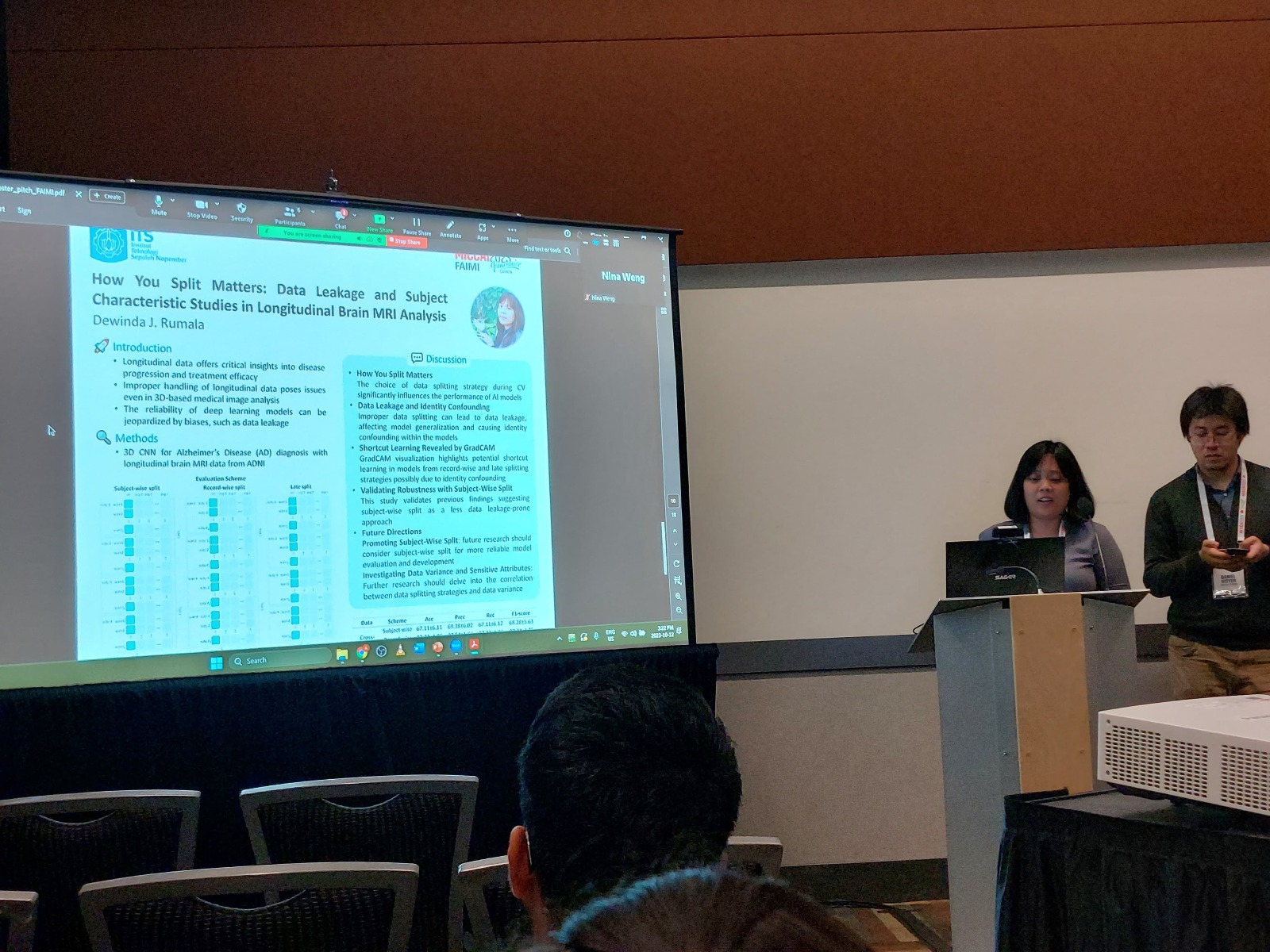
Dr Dewinda Julianensi Rumala ST (on podium) sharing her findings in the field of medical image computing at MICCAI, Vancouver, Canada
In addition, this innovation also uses Explainable AI (XAI) so that doctors can understand how the AI makes decisions. Using the Grad-CAM technique, the model can show parts of the MRI image that became the basis for the diagnosis, thus increasing doctors’ confidence in using AI as a supporting tool. “It’s not only about accuracy, but also transparency so that AI is accepted and trusted by medical personnel,” she explained.
According to Dewinda, this innovation also aligns with Sustainable Development Goals (SDG) point 3, which focuses on improving health services. Not only that, the development of AI in the medical world drives innovation and progress in health technology in line with SDG point 9 regarding industry, innovation, and infrastructure.
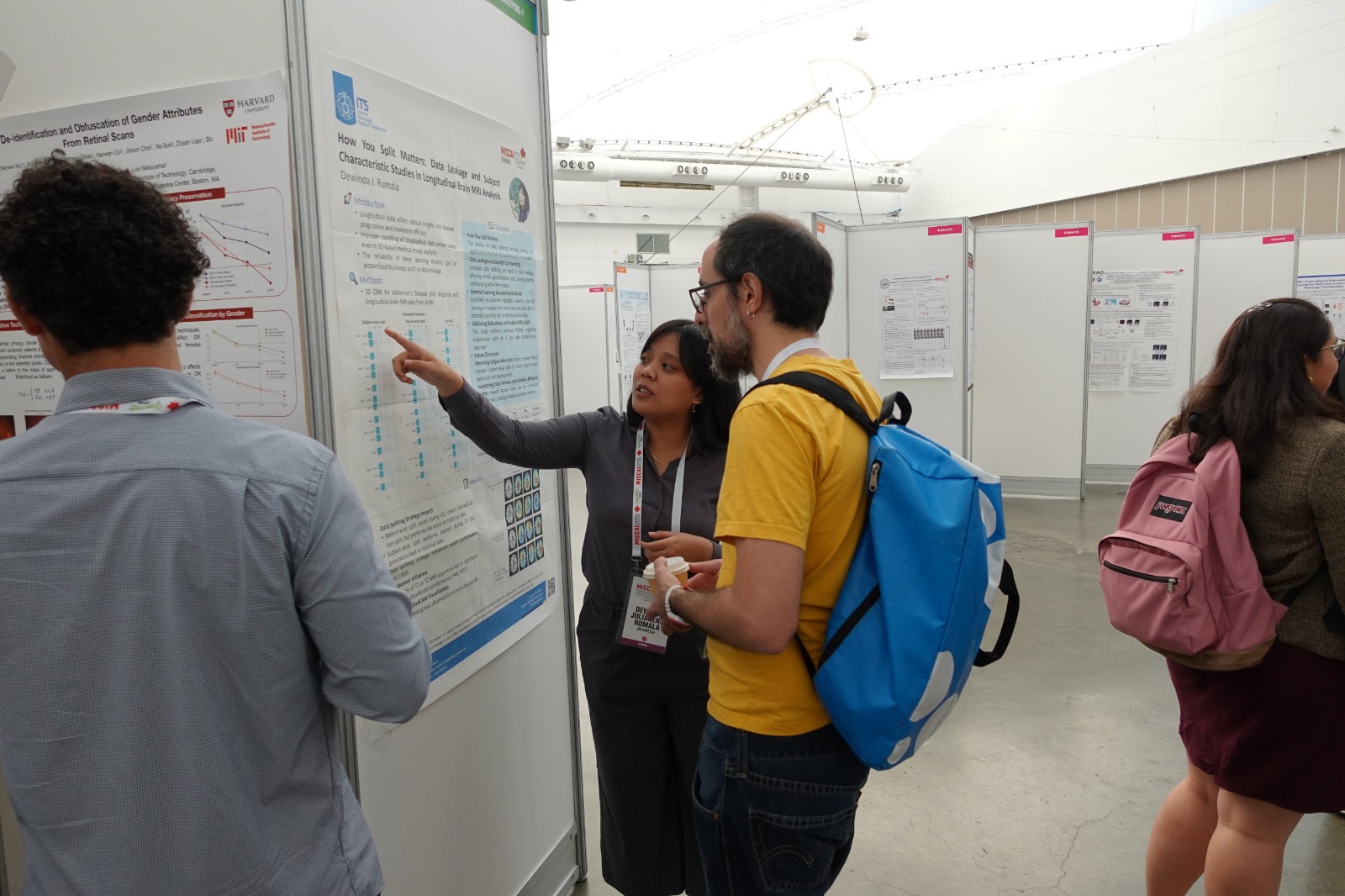
Dr Dewinda Julianensi Rumala ST (pointing) while presenting the results of her research at the MICCAI conference in Vancouver, Canada
Dewinda added that this research also supports SDGs point 10, which focuses on reducing inequality. This is because her innovation was designed with high accuracy so that it can be inclusively used by various demographic groups. “Besides that, the lightweight model ensures that this technology remains accessible and applicable, even in areas with limited computing infrastructure,” she explained.
Not only recognized academically, Dewinda’s research has also been recognized globally. The results of her research have been published in three international journals and five Scopus-indexed conferences, including in Springer Q1. She also had the opportunity to attend the MICCAI Workshop in Canada, the most prestigious conference for AI in medical image analysis, and succeeded in winning the Best Poster Presentation Award at the event.
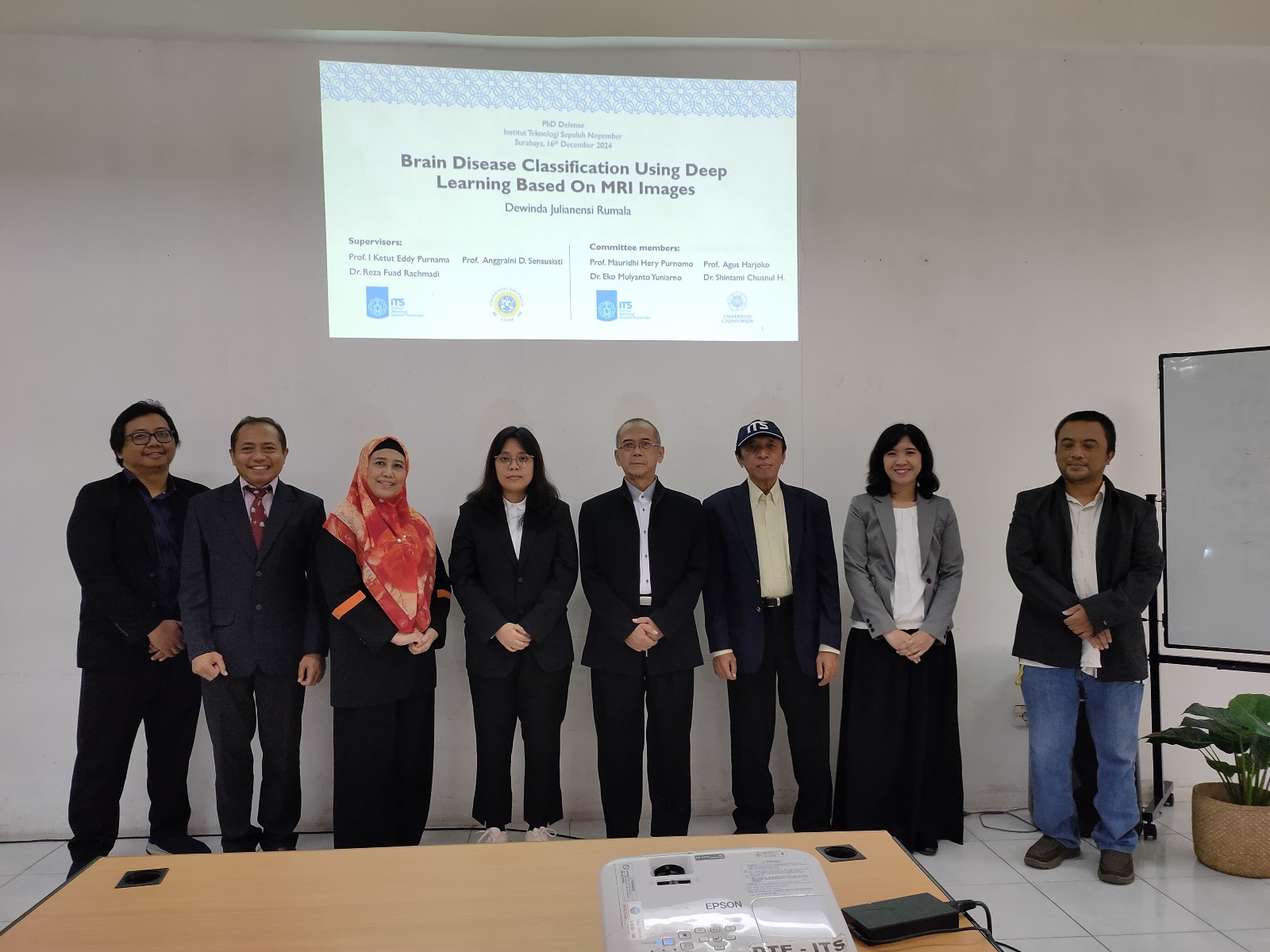
Dr Dewinda Julianensi Rumala ST (fourth from left) with her supervisor, Prof I Ketut Eddy Purnama (fourth from right) after the closed doctoral promotion hearing
Besides scientific publications, together with her academic advisor Prof. Dr. I Ketut Eddy Purnama ST MT, Dewinda has also produced two national patents, namely SICOSA2U and iBrain2U, which focus on AI-based brain disease classification systems. With this innovation, she hopes that AI will not only become a research tool, but can also be applied in real medical practice to improve the quality of brain disease diagnosis.
Going forward, Dewinda plans to develop a more adaptive model with a broader dataset so that AI can be even more accurate in various patient conditions. “Hopefully, this research can become a stepping stone for the development of more inclusive medical AI systems that are beneficial to the healthcare world,” concluded the MIDL and MICCAI paper reviewer optimistically. (ITS PUBLIC RELATIONS)
Reporter: Naurah Fitri
Related News
-
ITS Formulates Inclusive Education System Policy for Students with Disabilities
ITS Campus, ITS News — The Sepuluh Nopember Institute of Technology (ITS) has once again demonstrated its commitment to
April 16, 2025 10:04 -
ITS Develops Andal App, a Solution for MSMEs to Manage Inventory
ITS Campus, ITS News — Amidst rapid technological advancements, many Micro, Small, and Medium Enterprises (MSMEs) still rely on
April 16, 2025 10:04 -
Consolink, an Automatic Soil Consolidation Testing Solution Created by ITS Students
ITS Campus, ITS News — A collaboration between a team of students and lecturers from the Sepuluh Nopember Institute
April 16, 2025 10:04 -
Supporting Economic Empowerment, ITS Signs MOU with BSI
ITS Campus, ITS News — The Sepuluh Nopember Institute of Technology (ITS) continues to strengthen its tangible and sustainable
April 16, 2025 10:04