Published on
Tuesday, 4 April 2023
ITS Campus, ITS News – Currently activities to eliminate or reduce stress levels in society are increasing and this has the potential to become a healing tour or healing tourism. Seeing this phenomenon, students of Institut Tekonologi Sepuluh Nopember (ITS) conducted research regarding the cultural sensibility of the Tengger tribe in East Java and its potential as healing tourism based on local wisdom in Indonesia.
The head of the initiating team, Mukhammad Akbar Makhbubi, said that the potential for developing healing tourism for the Tengger Tribe lies in its people and culture. In achieving peace and prosperity, the people of the Tengger Tribe live by devoting themselves to customary rules known as the malima ban (lima ‘ma’) and the walima guidelines (lima ‘wa’).
The student, who is often called Bobi, explained that the prohibitions for malima are theft or stealing, playing or gambling, drugs or consuming drugs, drinking or consuming liquor, and madon or adultery. And walima (five ‘wa’), namely sane or healthy, wareg or enough to eat, wastra or enough clothing, homestead or owning a house, and wasis or wise.
In addition, the Tengger Tribe is in the area of Bromo Tengger Semeru National Park (TNBTS), which is one of the tourism focuses of East Java Province. “The existence of the Tengger people who live side by side with the TNBTS area can be potential in the development of healing tourism,” explained the ITS Regional and Urban Planning Department (PWK) student.
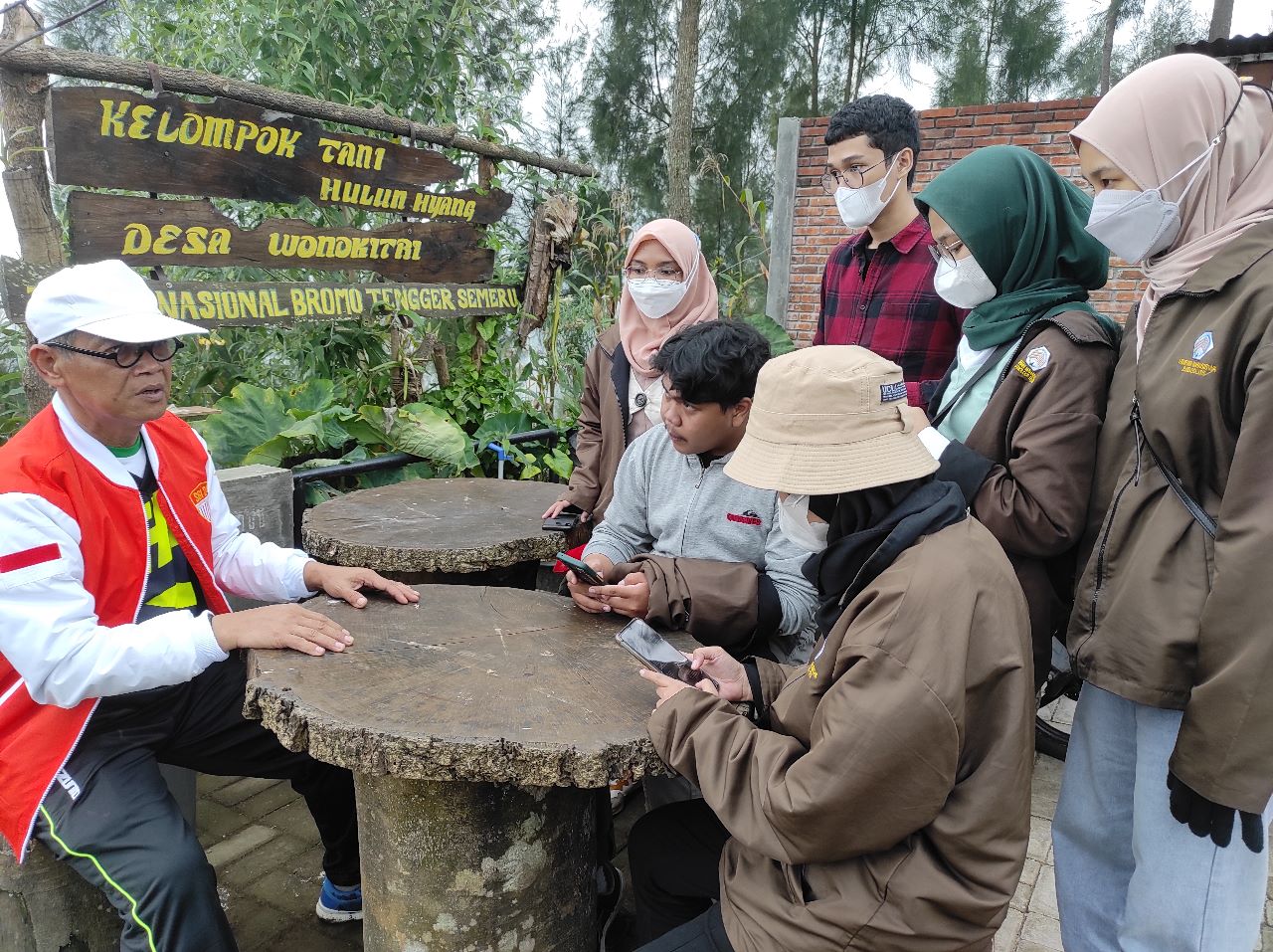
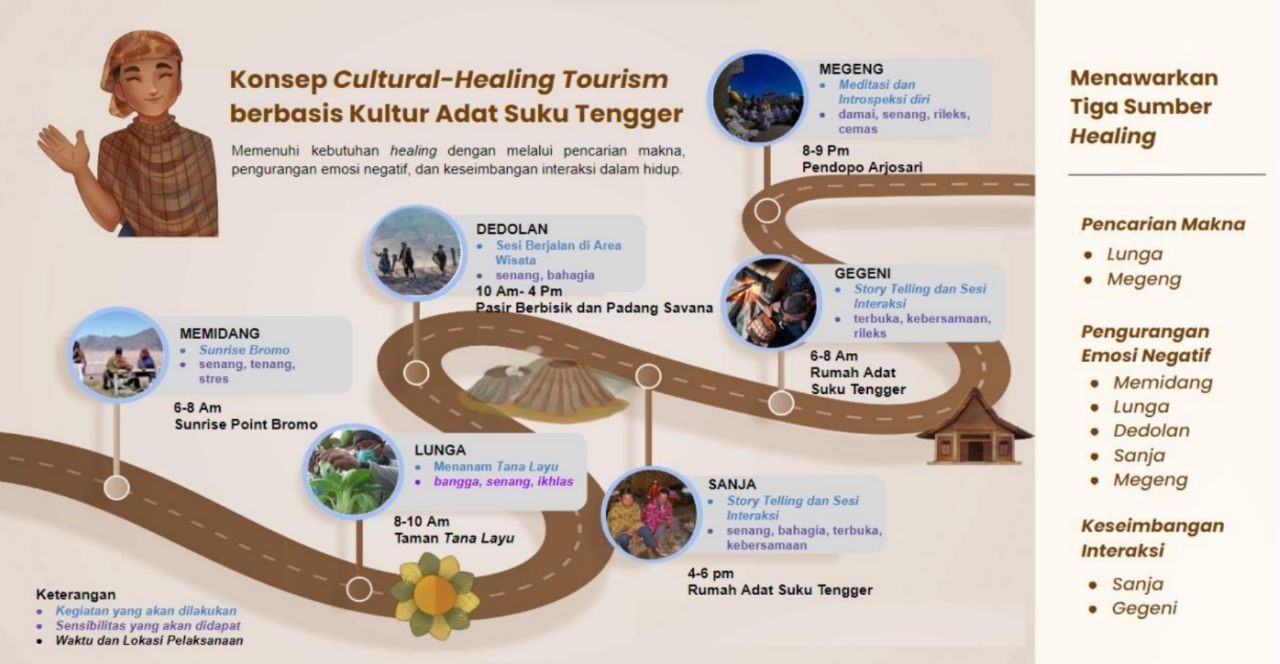
He explained, from the research results in the Ngadisari Traditional Village, Probolinggo Regency, and the Wonokitri Traditional Village, Pasuruan Regency, six cultural sensitivities can become the potential for developing healing tourism for the Tengger Tribe. These cultures consist of lunga or gardening, gegeni or gathering in the kitchen or fireplace, Sanja or visiting before dusk, cooking or sunbathing oneself, megeng or meditation, and dedolan or wandering.
Furthermore, explained Bobi, this culture is the Tengger people’s way of interpreting culture and their daily activities. Carrying out these activities can create a feeling of joy, calm, sincerity, openness, and peace from the indigenous people of the Tengger Tribe. “This activity is considered able to reduce negative emotions and become a reference for the development of healing tourism,” he said.
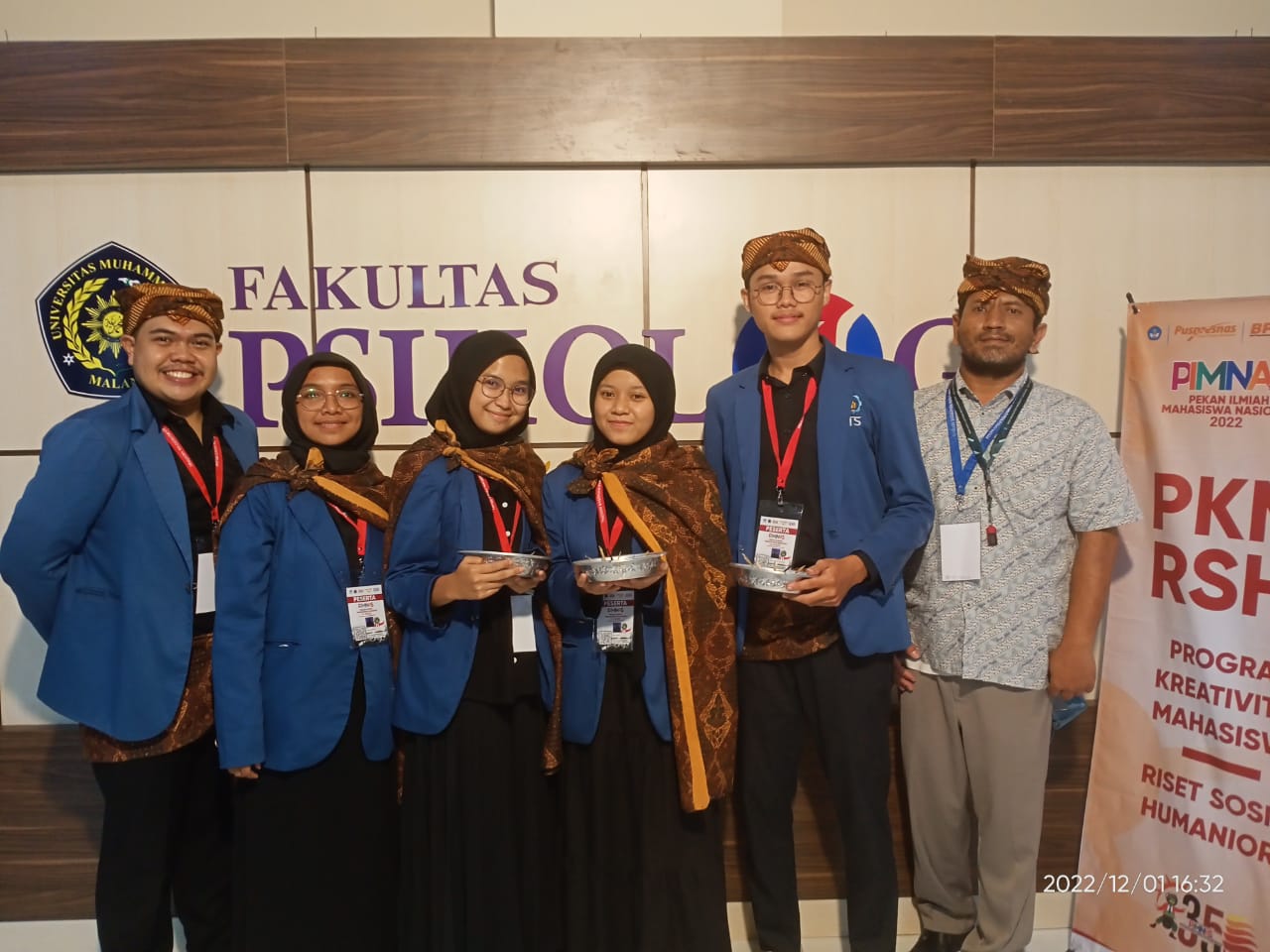
Furthermore, the culture is arranged into a series of activities with the concept of cultural-healing tourism. The idea includes searching for meaning, reducing negative emotions, and balancing interactions. “This concept will bring tourists to experience healing from the daily culture of the indigenous people of the Tengger Tribe,” added Bobi.
Bobi and four ITS PWK Department colleagues hope this research can develop as a form of community readiness and tourism-supporting infrastructure. Under the guidance of Arwi Yudhi Koswara ST MT, the team also won 2nd place in the Humanities Social Research Student Creativity Program (PKM-RSH) in the 2022 National Student Science Week (PIMNAS). (ITS Public Relations)
Reporter: Rayinda Santriana US