Published on
Thursday, 12 November 2026
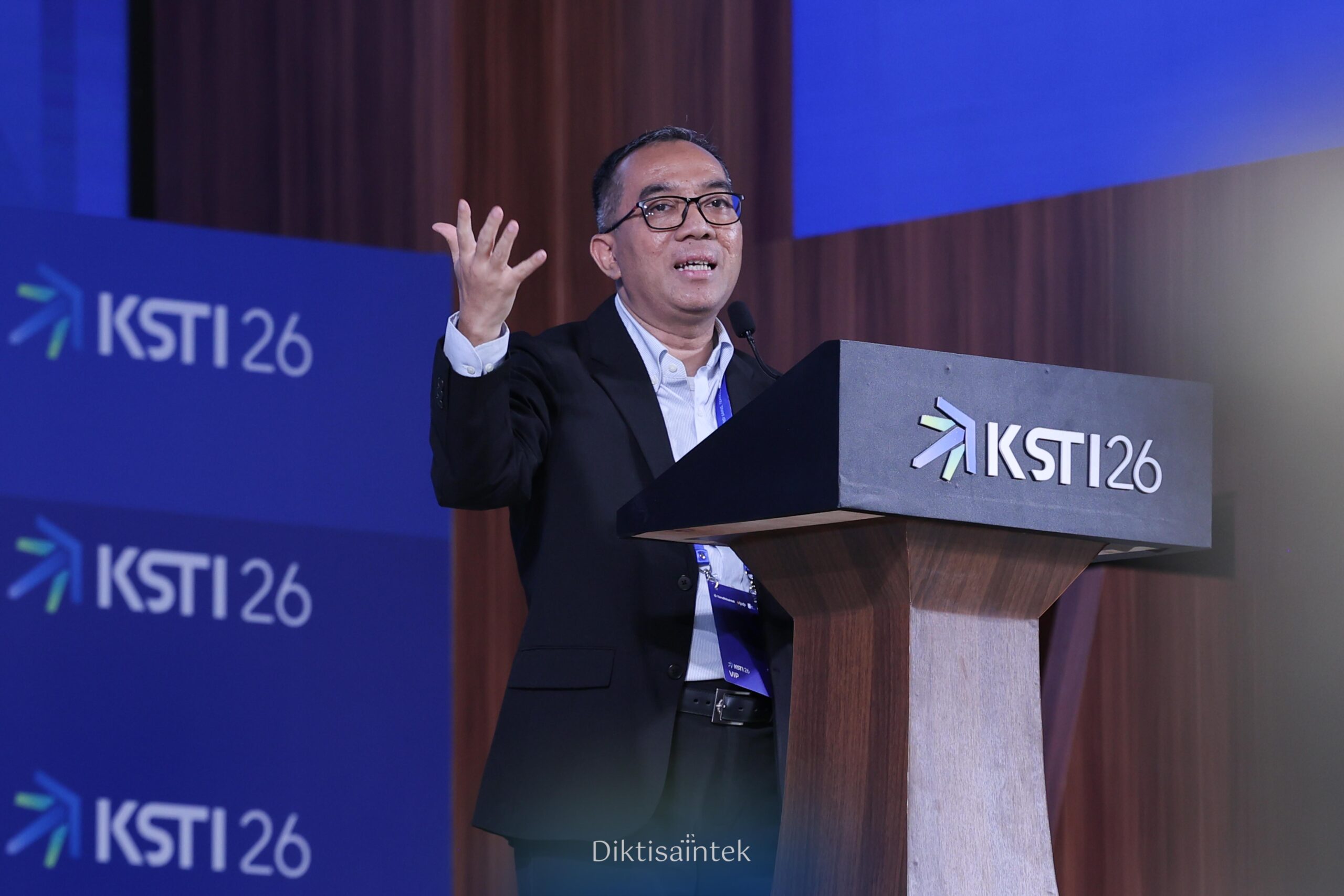
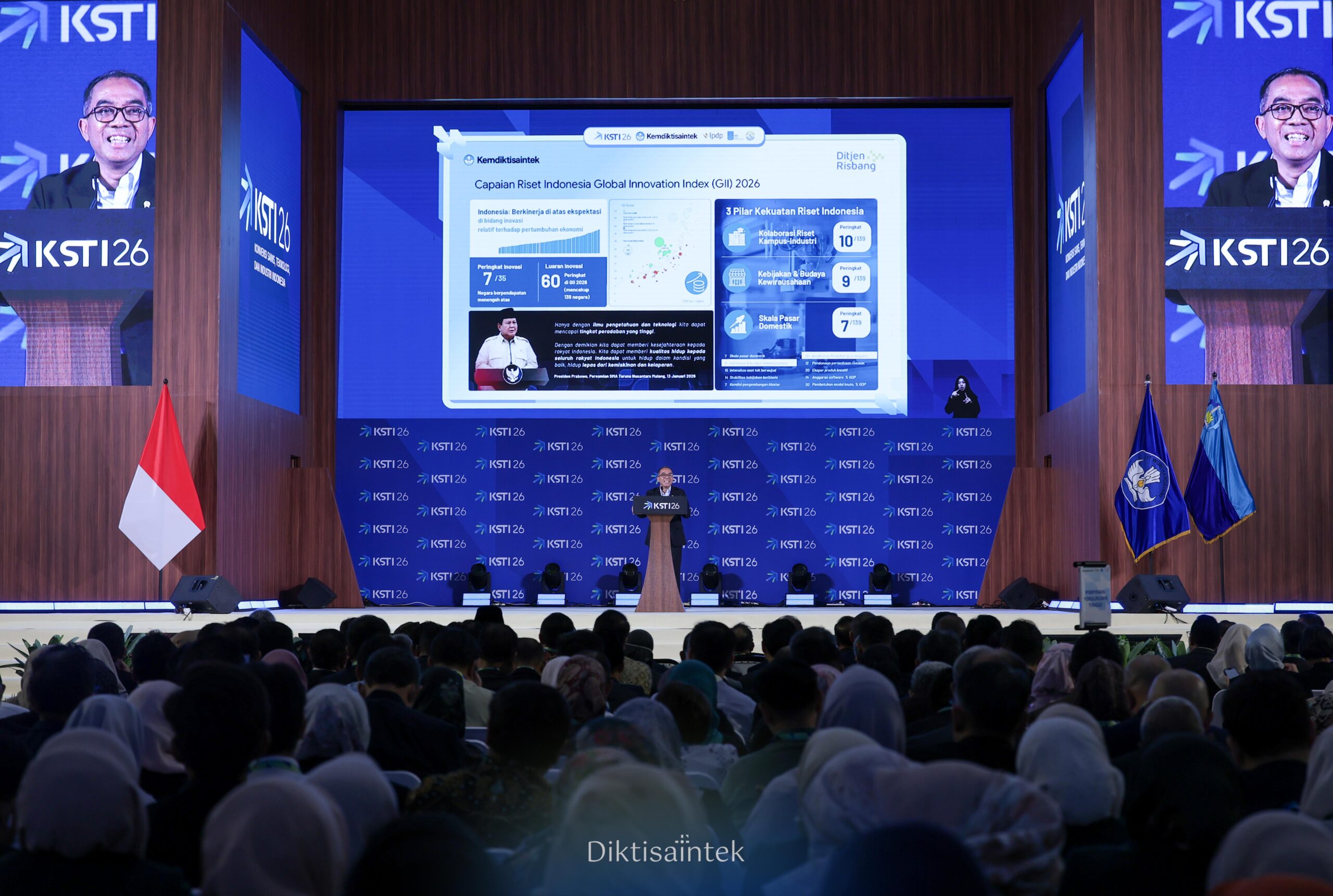
ITS Campus, ITS News – Collaboration between universities, research institutions, and industry is a strategic step towards Indonesia’s independence. Through the 2026 Science, Technology, and Industry Convention (KSTI) on Wednesday (11/11), Minister of Higher Education, Science, and Technology (Mendiktisintek), Prof. Brian Yuliarto, encouraged the acceleration of research downstreaming as a foundation for science and technology-based industries.
Minister Brian emphasized that research needs to be directed towards industrial utilization. He stated that universities need to build synergies with research institutions and industry players to ensure that research results have a clear development path. “We need to move beyond research papers to commercial products that are truly ready for industry acceptance,” he emphasized.
According to Prof. Brian, one of the challenges in the national research ecosystem is the suboptimal connection between research activities and industrialization needs. He highlighted how researchers are still focused on producing scientific papers, but not yet fully engaged in the product development process. “Universities need to encourage researchers to understand the commercial potential of their research,” he said.
s a concrete example, Minister Brian cited the collaboration between universities and the Republic of Indonesia’s Public Company for the Printing of Money (Peruri) in the development of the Red and White Chip. Through this collaboration, Indonesia is targeted to be able to design and produce chips independently by 2027–2028. “This development is one effort to build technological sovereignty and reduce dependence on foreign products,” he explained.
In closing his speech, Prof. Brian expressed his hope that universities would foster more science and technology-based industries. Thus, the professions of researchers and scientists could become promising career choices for the younger generation while simultaneously driving national industrial progress.
These efforts to promote downstream research align with the commitment to the Sustainable Development Goals (SDGs), particularly SDG 9 on Industry, Innovation, and Infrastructure. Developing research-based technology and strengthening collaboration are expected to increase innovation capacity and drive industrial growth. This initiative also supports SDG 17 on Partnerships to Achieve the Goals.
Reporter: Naurah Fitri
More information: