Published on
Friday, 6 November 2026
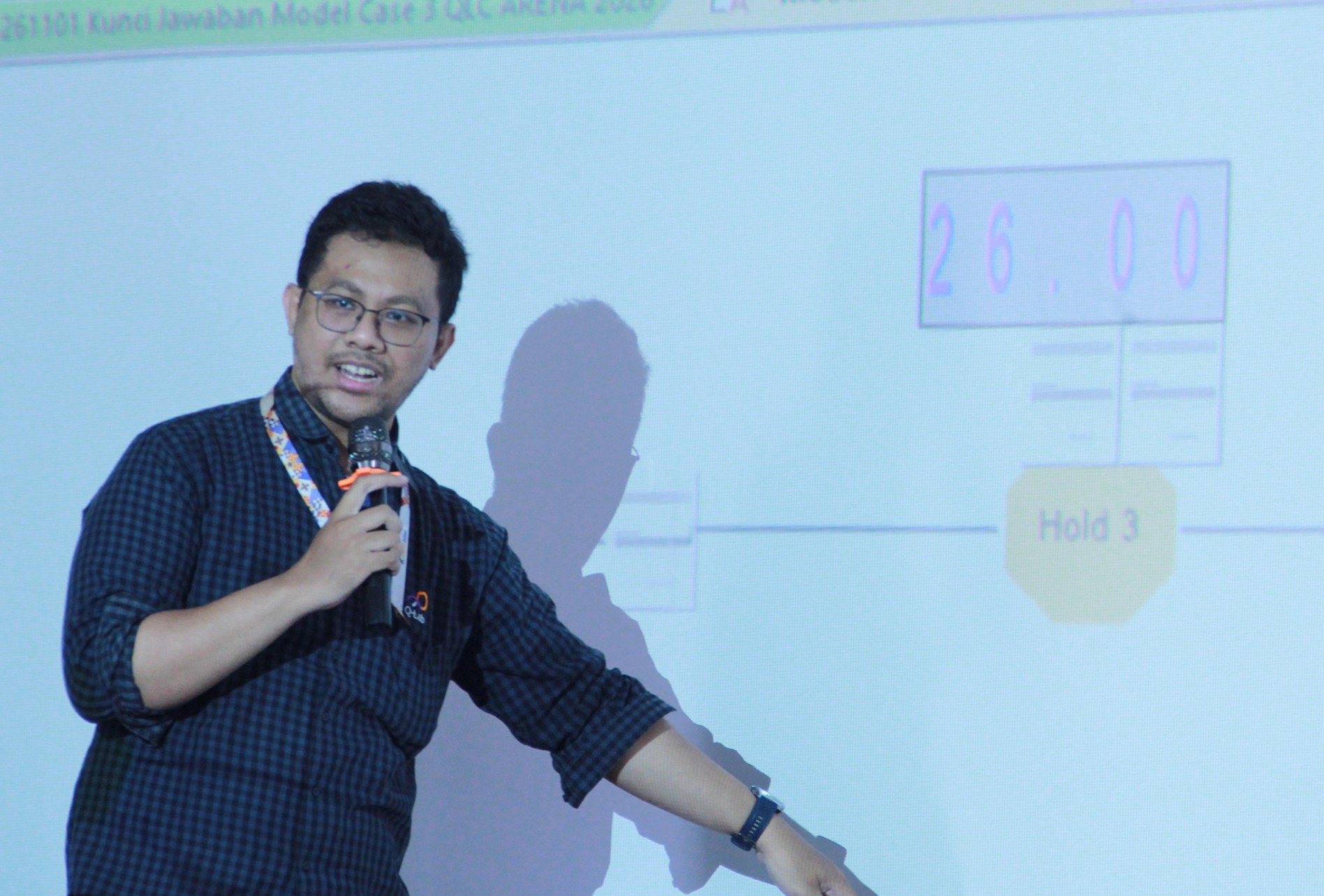
ITS Campus, ITS News — Operational complexity often complicates decision-making in the industrial world. Therefore, through Q-Live Class 2026, the Department of Systems and Industrial Engineering (DTSI) of the Sepuluh Nopember Institute of Technology (ITS) provided participants with Arena simulations and statistical experiments for two days, starting Saturday (October 31).
Ahmed Raecky Baihaqy, ST, MT, a speaker and executive chairman of Q-Live Class 2026, explained that the complexity of industrial systems is inextricably linked to the probabilistic elements that influence their operations. This necessitates simulations to project the impact of capacity and scheduling changes before implementing them directly. “For such a complex system, the most effective approach to finding solutions is simulation,” Raecky, as he is familiarly known, explained.
He further explained that simulation is used when mathematical models are no longer able to solve problems due to variability and interrelationships between variables. Through simulation, system performance can be evaluated and improved without interfering with the real system. This method is considered more cost- and time-effective than direct testing.
Raecky also emphasized the importance of understanding the process logic before building a model. For example, a rule that a stage cannot proceed until the previous stage is completed, or that items with certain conditions cannot pass inspection. “Before building a model, we need to familiarize ourselves with how the system works,” he said.
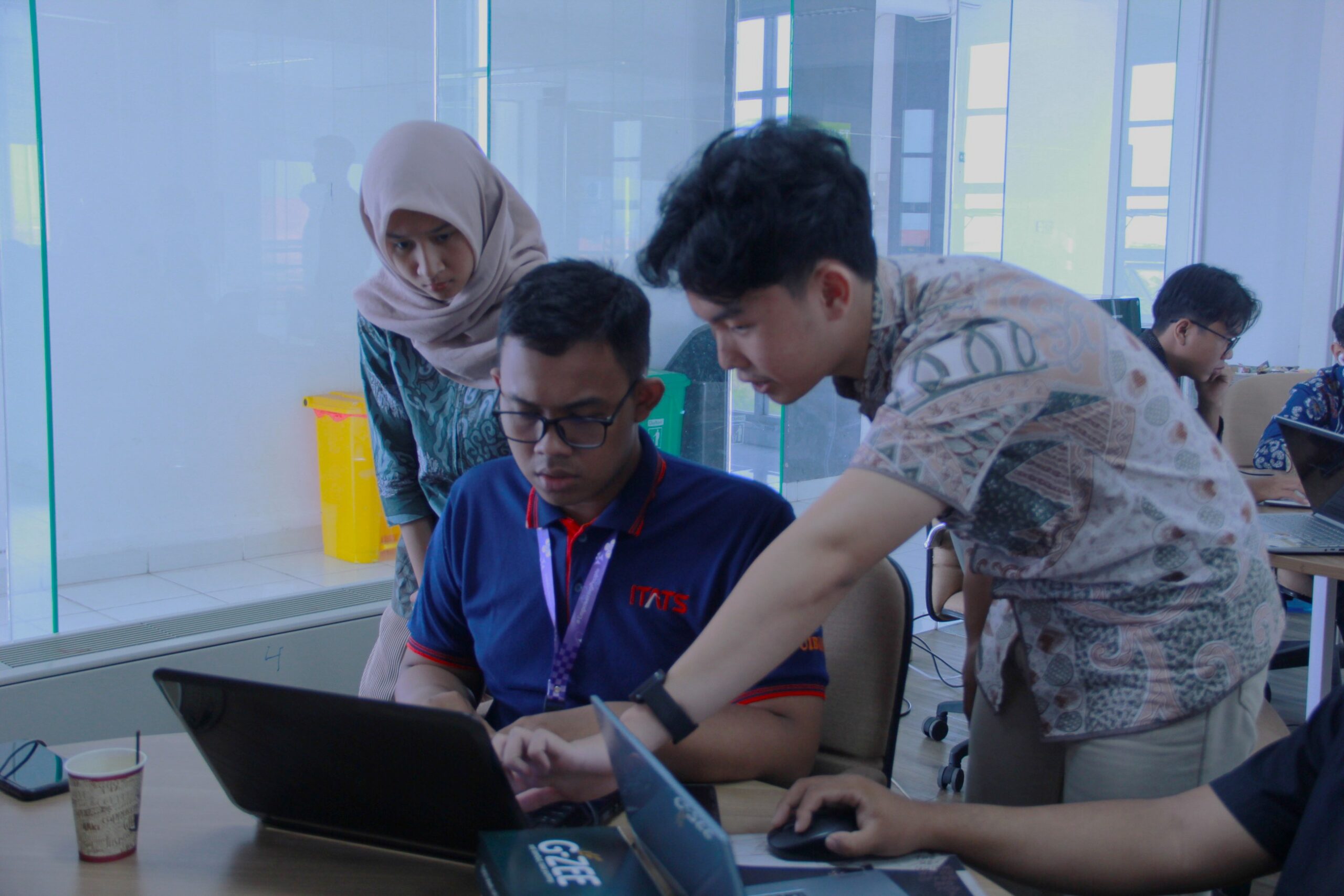
In the training, participants learned the concept of discrete event simulation and input data processing using the Input Analyzer feature in Arena software. The material progressed to case study modeling, model verification, and scenario experiments using Process Analyzer and OptQuest for Arena.
This training is part of the community service program of the Quantitative Modeling and Industrial Policy Analysis (QMIPA) Laboratory at ITS DTSI. This time, the training targeted students from eleven universities in and around Surabaya. In addition to students, lecturers from Airlangga University, Telkom University Surabaya, and Semen Indonesia International University (UISI) also attended.
Going forward, Raecky hopes participants will understand the rationale, timing, and method for implementing simulations. This step aligns with Sustainable Development Goals (SDGs) point 4 on quality education. Furthermore, implementing simulations in the industrial world also contributes to SDG point 9 on industry, innovation, and infrastructure. (*)
Reporter: Naurah Fitri
Redaktur: Putu Calista Arthanti Dewi