Published on
Thursday, 5 November 2026
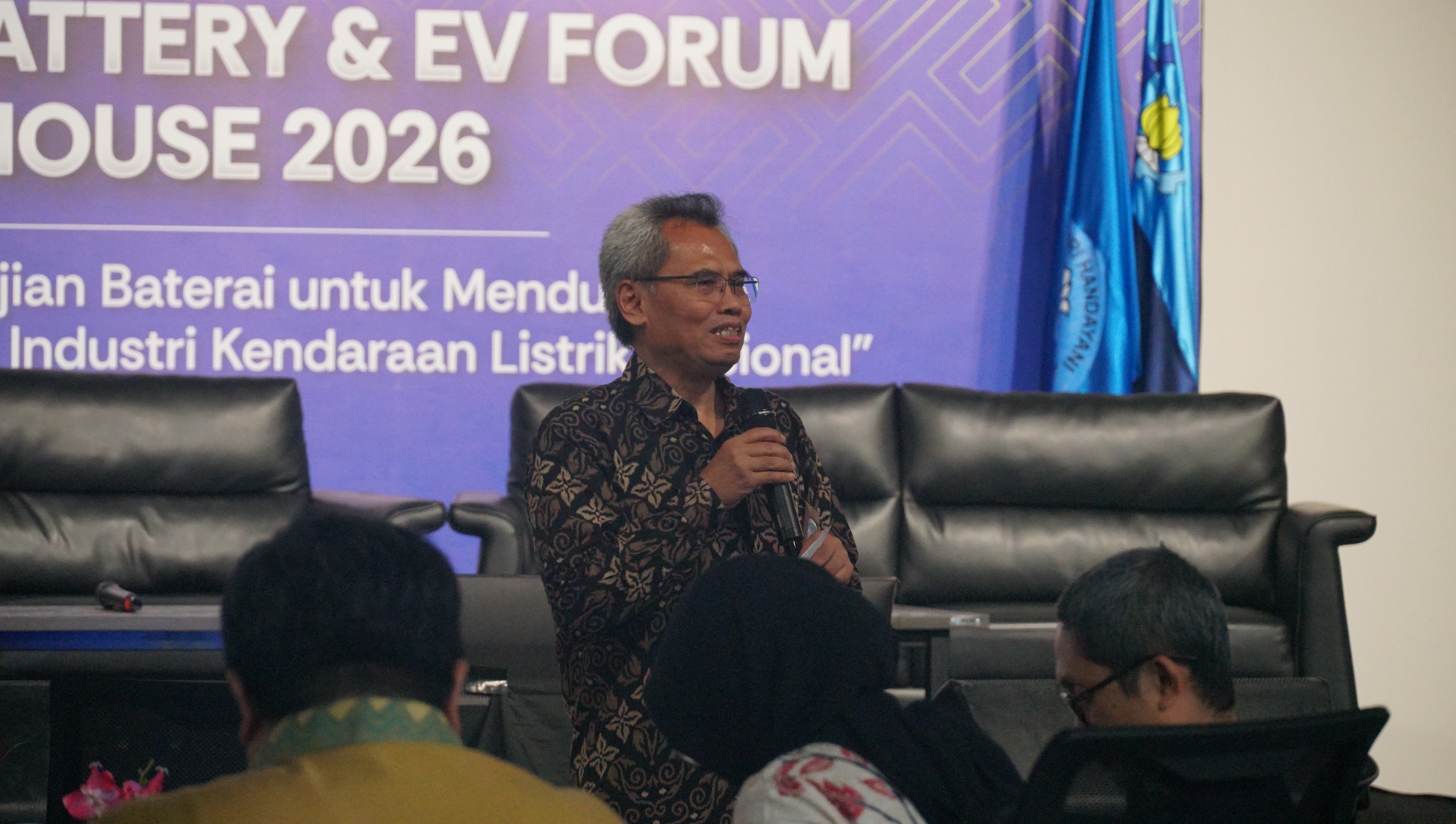
ITS Campus, ITS News — To strengthen the national electric vehicle ecosystem, the Sepuluh Nopember Institute of Technology (ITS ) Automotive Science Techno Park (STP) held an automotive seminar on Wednesday (November 4). The seminar, held at the Creative Center Hall, STP ITS, was part of preparations for the development of an Accredited Battery Testing Laboratory.
The development of this laboratory is a strategic step by ITS to strengthen its electric vehicle battery testing infrastructure. This effort also supports technology development, standardization, and increases the competitiveness of the national electric vehicle industry.
Thus, the ITS Automotive STP strives to introduce the laboratory’s facilities, products, technology, and capabilities to the public, especially policymakers. In line with this, the Director of the ITS Innovation and Science Technology Area (DIKST), Dr. Ir. Endroyono DEA, stated that the ITS STP area is designed to focus more than just one study.
He believes that in technology research, a comprehensive innovation ecosystem with a mutually supportive scientific chain is essential. “For battery-based electric motor vehicles (KLBB), this ecosystem supports safe, reliable battery testing that meets industry needs,” Endroyono explained.
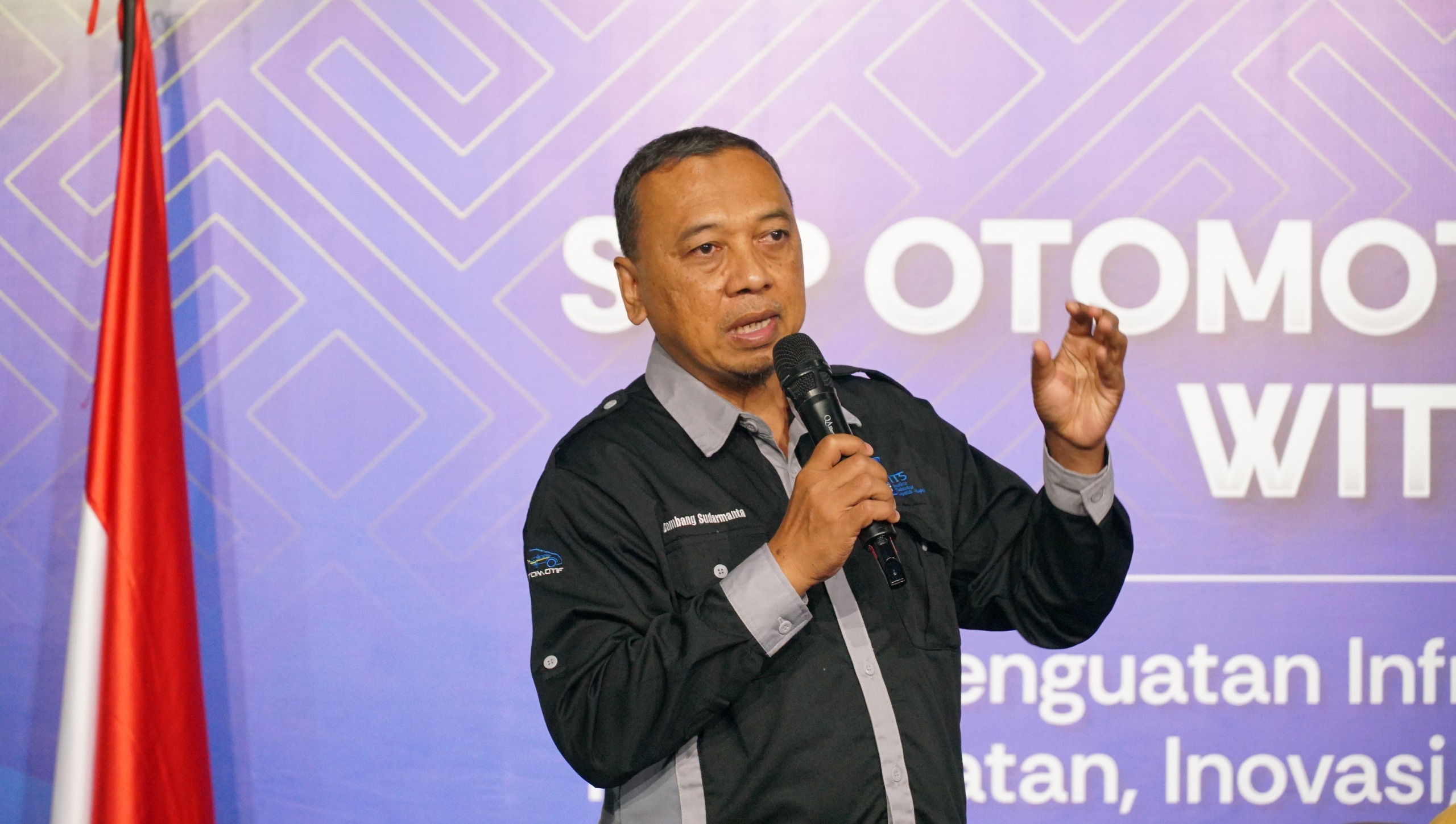
Furthermore, Prof. Dr. Bambang Sudarmanta, ST, MT, Manager of the ITS Automotive Engineering Department, explained that the battery, as the primary component of an electric vehicle, determines its energy storage capacity. Furthermore, the quality of the battery used also influences the vehicle’s performance, safety, reliability, and lifespan.
In electric vehicles, Bambang further revealed that various battery products are used, each with its own characteristics. “These vary based on cell chemistry, battery pack configuration , energy capacity and operating voltage, battery management system, and even protection and thermal management systems,” he explained.
Therefore, the ITS Professor of Mechanical Engineering believes that recognizing and understanding battery product characteristics is essential for strengthening industrial competency. The government, researchers, and industry also need to review policies, supply chains and raw materials, regulations, and integrated and competitive battery testing methods.
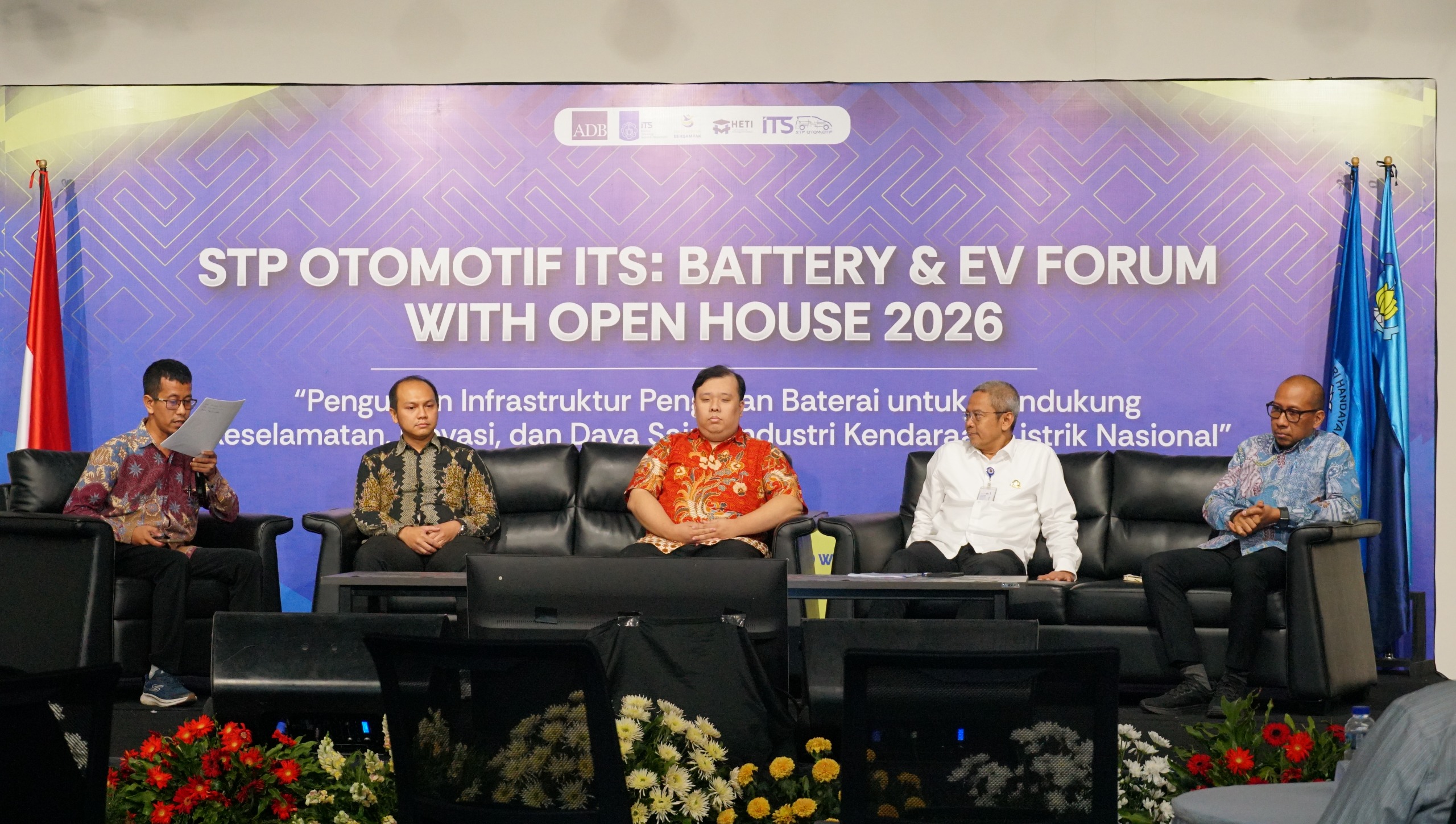
The seminar, followed by an exhibition of STP Omotif’s innovative products, is expected to gather input for standardization testing, accreditation, and collaboration with battery testing laboratories. Bambang, as the head of STP Omotif, also explained that the lab’s accreditation application to the National Accreditation Committee (KAN) has been submitted.
Furthermore, this activity is expected to strengthen the position of the ITS Automotive STP as a center for technology development, testing, research, and human resource competency development in the field of electric vehicles. This will continue to adhere to the laboratory’s official status and accreditation scope, supporting the national energy transition.
This demonstrates ITS’s concrete contribution to the Sustainable Development Goals (SDGs), particularly SDG 4, which focuses on Quality Education, which will ultimately lead to SDG 7, which focuses on Clean and Affordable Energy. This goal is also supported by multi-stakeholder collaboration, in accordance with SDG 17, which focuses on Partnerships to Achieve the Goals.