Published on
Saturday, 10 October 2026
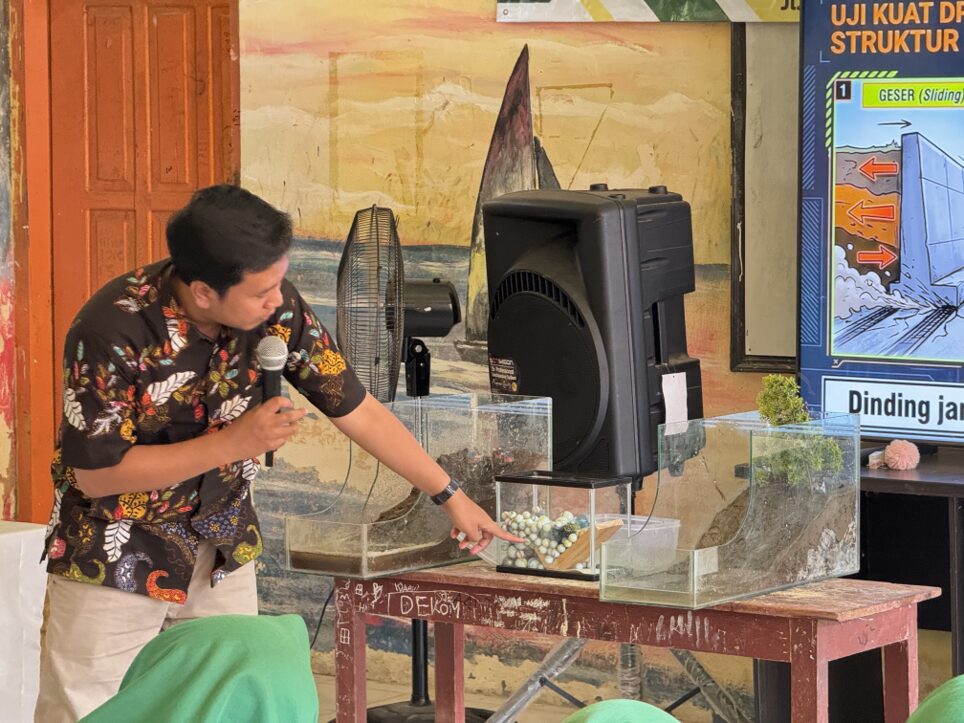
ITS Campus, ITS News — The Sepuluh Nopember Institute of Technology (ITS) continues its efforts to improve disaster literacy and preparedness among the younger generation. Through Community Service (Abmas) activities, a team of lecturers and students from the Department of Civil Infrastructure Engineering (DTIS), Faculty of Vocational Studies, ITS, provides education on the phenomena of liquefaction and landslides to high school students through interactive learning and simple simulations.
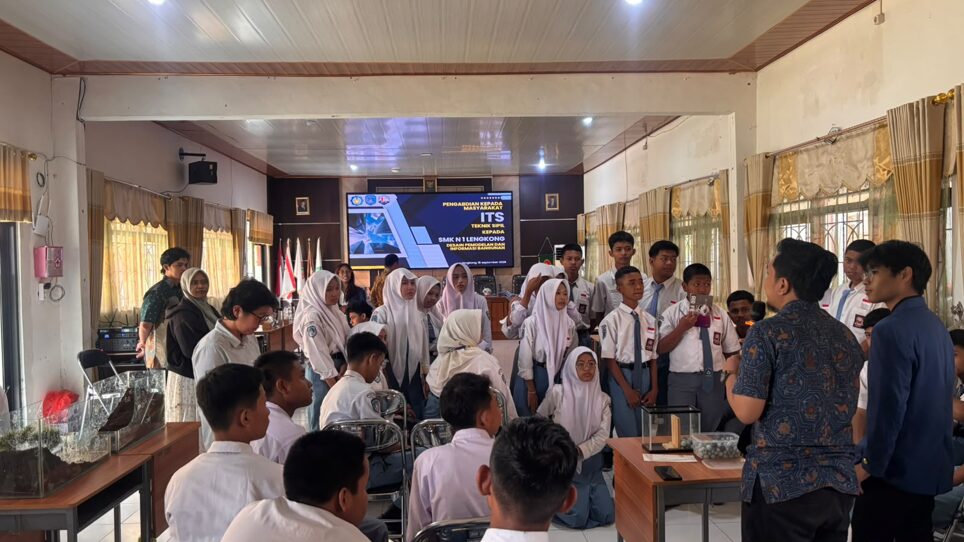
The activities were held at two locations. The first activity was held at SMKN 1 Lengkong, involving 50 students on Tuesday (September 15th). A similar activity was held at MA Al-Amien Prenduan, involving 80 students on Wednesday (September 30th). This disaster education program reached a total of 130 high school/vocational school students.
Unlike conventional disaster management, this activity combines conceptual explanations, interactive discussions, and live demonstrations. Students are encouraged to understand how liquefaction and landslides occur, the factors that influence them, their impacts, and possible mitigation measures.
To provide a more realistic picture, the ITS team designed a simple simulation device consisting of sand, water, building and vehicle models, and a vibrating device. Through this simulation, students can directly observe changes in soil behavior when subjected to vibrations and their impact on structures above ground level. The simulation approach was chosen because it can help students understand the phenomenon of liquefaction in a more practical way.
Next, lecturers from the Department of Civil Infrastructure Engineering ITS, Aaan Fauzi ST MT and Deris Faisa Ralindra ST MT explained the mechanism of disasters and invited students to discuss various liquefaction and landslide incidents and the importance of recognizing potential hazards in the surrounding environment.
Deris, the head of the committee, explained that this community service program aims not only to introduce disaster terms and phenomena to students, but also to help them understand how they occur, their impacts, and how mitigation can be implemented. Furthermore, the activity is expected to foster a more conscious mindset among the younger generation regarding disaster risks. “Through simple simulations, concepts that were previously quite abstract are expected to become easier for students to understand and remember,” Deris said.
Deris further stated that schools have a strategic role in fostering a culture of disaster awareness from an early age. It is hoped that the knowledge students acquire will not stop in the classroom but will also be shared with their families and the surrounding community.
The hope is that these students can become part of a generation that is more responsive and prepared to face disasters. This aligns with the program’s goal of encouraging students to become agents of disaster education and increase preparedness for potential disasters in their surroundings. “They can also become agents of education, disseminating simple knowledge about disasters to friends, family, and the surrounding community,” he added.
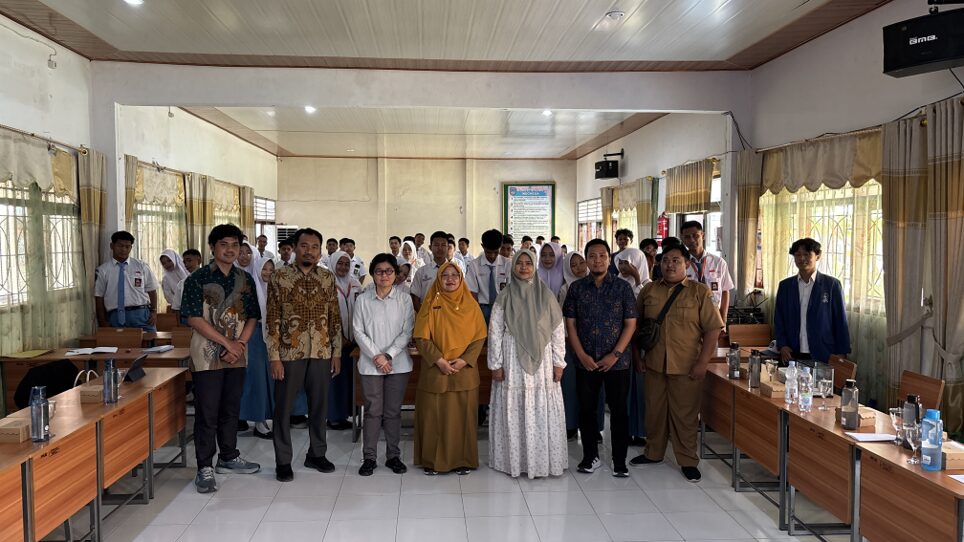
The event was also attended by Prof. Ir. Dr. Chan Chee Ming from Universiti Tun Hussein Onn Malaysia (UTHM). Chan emphasized the importance of young people learning about various natural disaster phenomena, including landslides and liquefaction. The presence of UTHM academics also provided students with a broader perspective on the importance of science and engineering in supporting disaster risk reduction efforts.
Through a combination of education, discussion, and simulation, the ITS Community Service team hopes students will be able to understand disaster phenomena in a more accessible, engaging, and contextual way. This participatory approach is also designed so that students are not merely recipients of information but also actively involved in the learning process.
This program is one of ITS’s contributions to bringing knowledge from higher education closer to the community. In addition to strengthening disaster literacy, the activity is expected to foster a culture of disaster awareness, preparedness, and responsiveness within the school environment from an early age. This also aligns with the Sustainable Development Goals (SDGs), particularly point 11 on Sustainable Cities and Settlements. (*)