Published on
Sunday, 4 October 2026
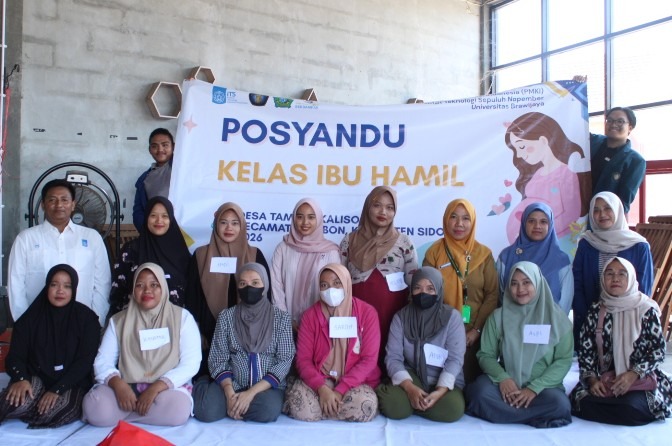
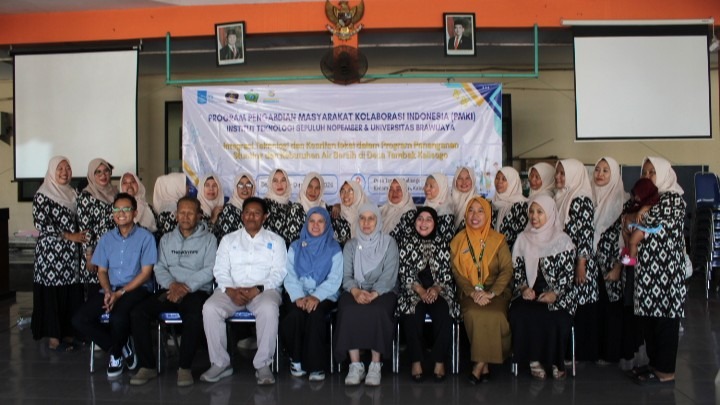
Sidoarjo, ITS News — The Sepuluh Nopember Institute of Technology (ITS) continues to expand its contribution to addressing various issues facing rural communities. This effort is realized through the 2026 Indonesian Collaborative Community Service (PMKI) program with Brawijaya University (UB), which targets health, sanitation, and water quality issues in the community.
PMKI 2026 Chairperson Eko Agus Suprayitno SSi MT explained that the community service program will run for six months until December. The activity, held in Tambak Kalisogo Village, Sidoarjo, involves people from various village communities. “Everyone from village officials and integrated health post (Posyandu) cadres, pregnant women, and mothers with toddlers are involved,” Eko explained.
In addition to involving the community, Eko explained that the ITS and UB teams are also developing appropriate technology for toddler health and nutrition screening. This Internet of Things (IoT) -based innovation can measure height and weight, heart rate, oxygen saturation, and body temperature in an integrated manner.
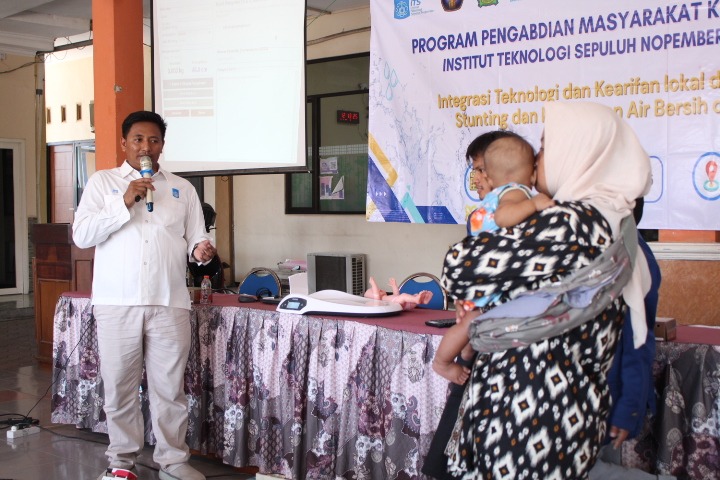
The lecturer from the ITS Biomedical Engineering Department added that the measurement results are recorded and integrated through a website to facilitate monitoring of children’s condition. Height and weight data can also be used to help classify nutritional status based on age, height, and weight. “This tool will assist integrated health post (Posyandu) cadres in conducting more measurable health and nutrition screenings for toddlers,” he explained.
The member of the ITS Biocybernetics Laboratory explained that this community service program also involved community health centers and nutritionists in a capacity-building program for village mothers. Pregnant women and mothers of toddlers received education on pregnancy health, childbirth, and caring for babies and toddlers. “This education class has been held twice and has been attended by around 15 mothers,” Eko added.
Eko stated that this activity also included communication training for PKK mothers and integrated health post (Posyandu) cadres. The training, delivered by a PMKI member, Mirzah Ardiansyah, SE, MM, CMC, CPSS, focused on skills for conveying information effectively and easily.
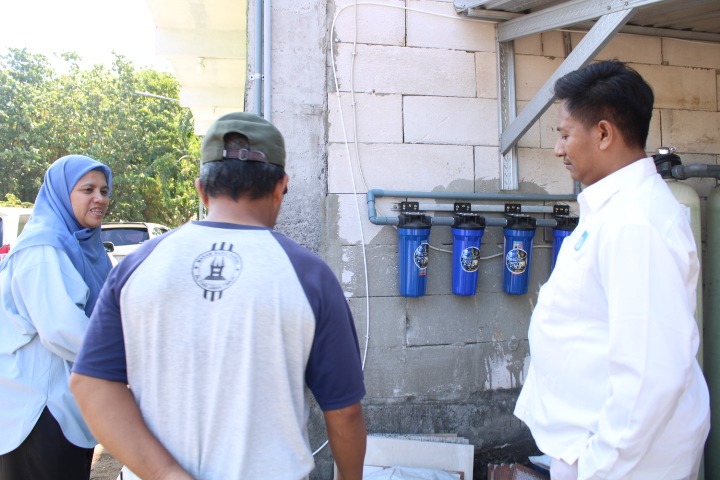
Furthermore, this village, located on the coast of Sidoarjo Regency, also faces issues with salinity and high dissolved substance content. PMKI member Ir. Rahmadwati ST MT PhD IPM ASEAN Eng explained that her team is also developing a reverse osmosis (RO)-based water filtration system. This technology is used to improve water quality so that it can be used by the community daily.
Furthermore, the UB Electrical Engineering lecturer revealed that the initial water measurement showed a Total Dissolved Solids (TDS) value of around 2,400 mg/L. After going through a filtration process, this value was reduced to around 750 mg/L. “This decrease indicates an improvement in water quality, but further testing with other parameters is still needed,” he said.
The team, consisting of Dr. Rachmad Setiawan, ST, MT, Rezky El Arief Arief, ST, MT, PhD, and Ir. Nurussa’adah, MT, is also developing a well drilling facility. This facility aims to provide an alternative water source when the primary supply is disrupted. The presence of this backup water source is expected to support the sustainable fulfillment of the community’s water needs.
Through training and the use of appropriate technology, these cadres are expected to become increasingly skilled at addressing a variety of issues, from health and communications to clean water. Going forward, this program is expected to provide targeted solutions while bringing sustainable benefits to the community.
Collaboration within PMKI 2026 is expected to produce solutions tailored to community conditions. These efforts also support the Sustainable Development Goals (SDGs), specifically Goal 3 on Healthy and Prosperous Lives, Goal 6 on Clean Water and Adequate Sanitation, and Goal 17 on Partnerships to Achieve the Goals. (*)
Reporter: Hani Aqilah Safitri
Redaktur: Syahidan Nur Habibie Ash-Shidieq