Published on
Friday, 4 September 2026
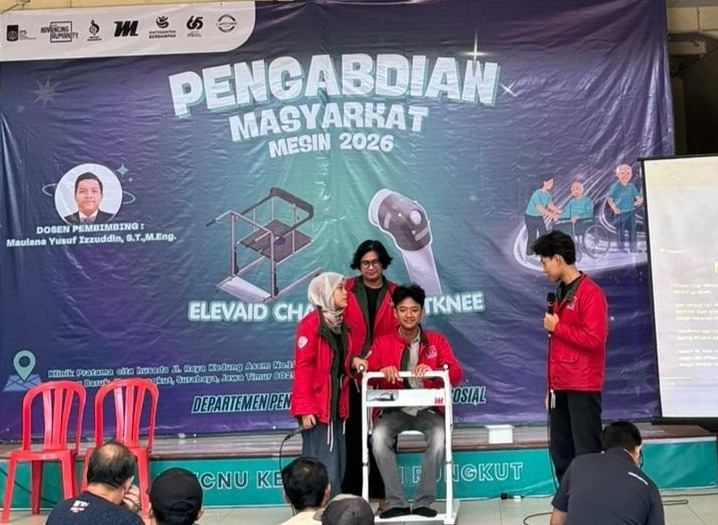
ITS Campus, ITS News — To address the healthcare needs of seniors with knee problems and limited mobility, a team of students and lecturers from the Sepuluh Nopember Institute of Technology (ITS) has developed innovations called AngetKnee and Elevaid Chair. Both innovations combine heat-vibration therapy and a linear actuator- based patient transfer mechanism .
AngetKnee is designed as a wearable device that integrates knee support , thermal therapy , and mechanical vibration therapy into one device. This combination was chosen because the two therapeutic methods have complementary non-pharmacological benefits to help relieve pain and stiffness in the knees of osteoarthritis sufferers.
The head of the development team, Maulana Yusuf Izzuddin ST MEng, explained that the integration of these three functions is aimed at providing a practical therapy device for users. “We want to combine the functions of support, heat therapy and vibration in one compact and portable device,” explained the man who is usually called Yusuf.
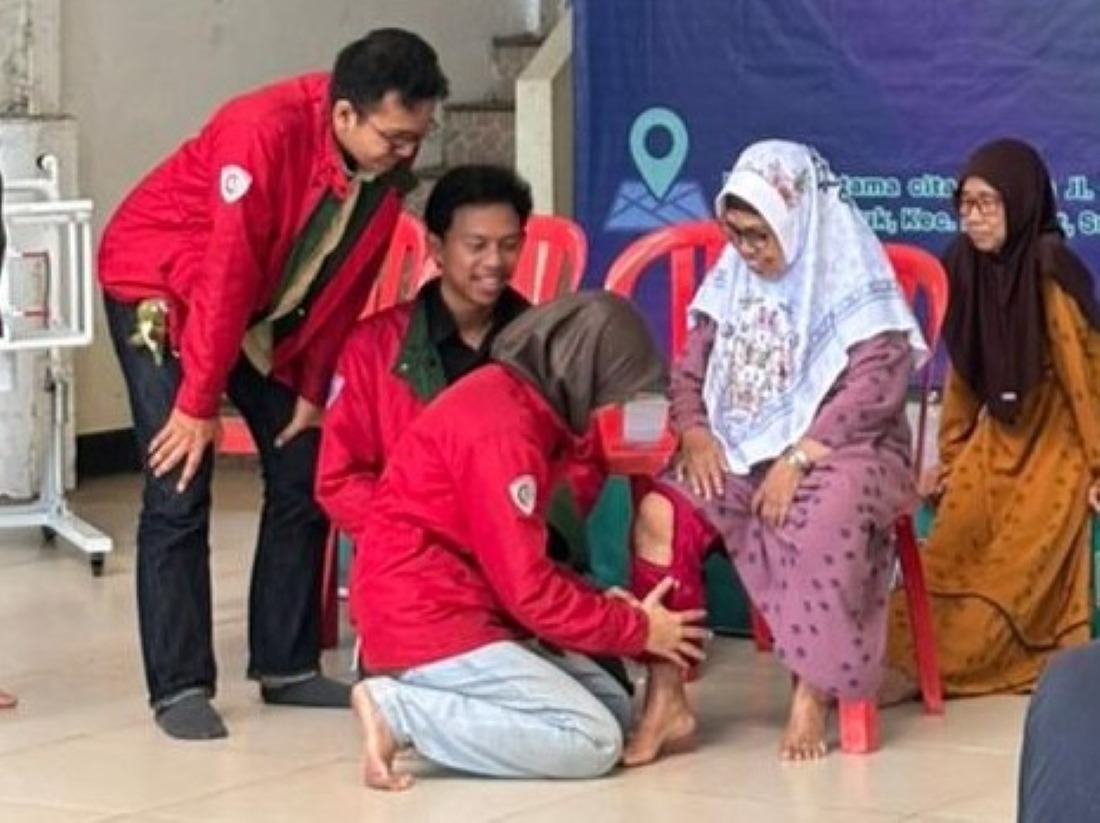
All components of AngetKnee, from the heater pad , vibration module, temperature sensor, microcontroller, battery, to the electronic enclosure , are integrated in a wireless system. AngetKnee testing was conducted at heater temperatures of 38°C, 42°C, and 46°C and vibration intensities of 1 to 3. Using Two-way ANOVA, the results showed that the combination of temperature 42°C and vibration intensity level 2 provided the best response for users.
Meanwhile, the Elevaid Chair was developed to facilitate patient transfers with its electric up-and-down mechanism. This device uses a linear actuator controlled by a DPDT switch, allowing for gradual adjustment of the chair’s position, reducing the need for manual patient transfers.
According to Yusuf, this mechanism is designed to reduce the physical burden on the caregiver when assisting the patient in changing positions. “The Elevaid Chair is designed to reduce the need to manually lift the patient during the transfer process,” explained the lecturer in the ITS Department of Mechanical Engineering.
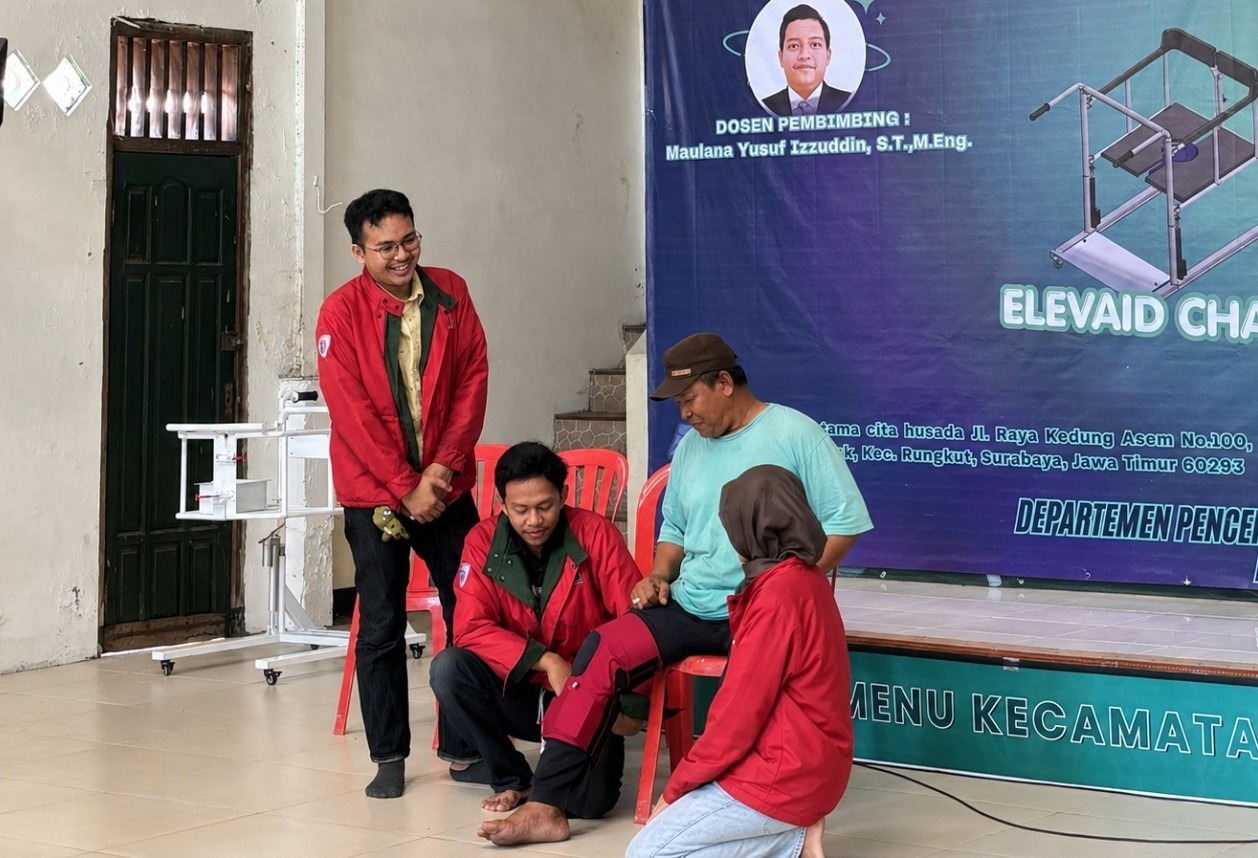
Yusuf explained that the Elevaid Chair was tested with varying patient loads of 55, 70, and 90 kilograms and transfer heights of 45, 55, and 65 centimeters. The test results showed that patient load was the dominant factor influencing all response variables. Optimal transfer smoothness was achieved at a load of around 55 kilograms, while loads approaching 90 kilograms caused decreased smoothness and increased shaking.
These findings serve as the basis for refining both innovations before wider implementation. The team aims to improve temperature and vibration control in the AngetKnee, as well as actuator capacity, structural strength, stability, and shock reduction in the Elevaid Chair. “The test results serve as the basis for us to refine the device to make it safer and more tailored to user needs,” he explained.
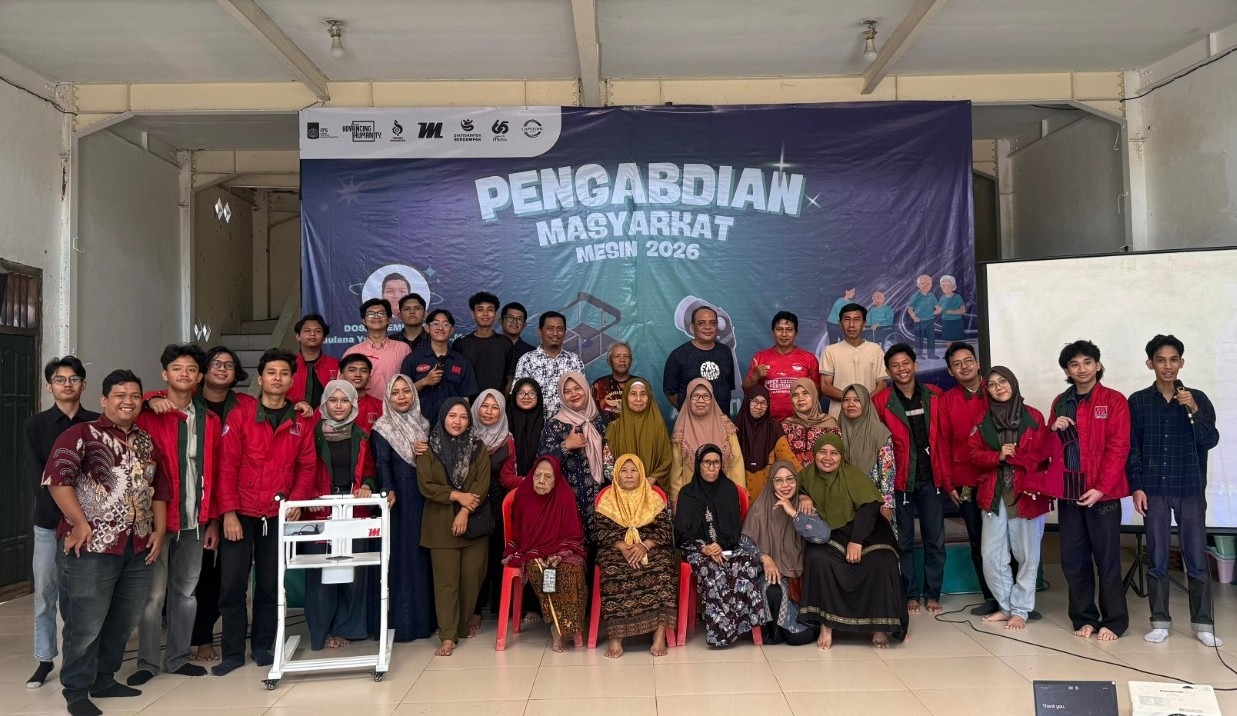
The two technologies were also handed over to the Pratama Cita Husada Clinic and community representatives in Rungkut District, Surabaya, as part of a Community Service program. Implementation was carried out through outreach, demonstrations, training, practical use, and evaluation of performance and user acceptance to support technology adoption in community-based healthcare services.
The development of the AngetKnee and Elevaid Chair demonstrates ITS’s commitment to translating mechanical technology into solutions that address community needs. These innovations also support the achievement of the Sustainable Development Goals (SDGs), specifically point 3 on Healthy and Prosperous Living and point 9 on Industry, Innovation, and Infrastructure, through the development of user-centered health technology. (ITS Public Relations)
Reporter: Iffah Najwa Ulya