Published on
Saturday, 8 August 2026
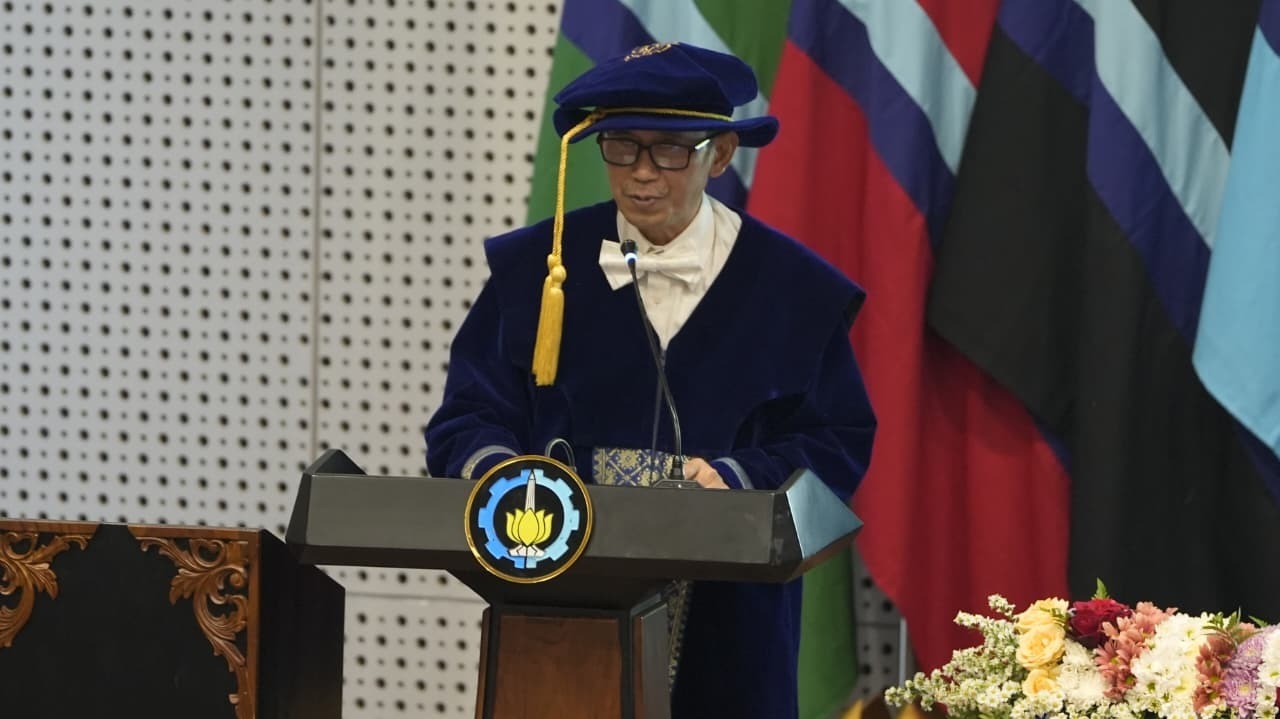
ITS Campus, ITS News – Indonesia is an archipelago with thousands of islands stretching across the vast expanse. To support maritime and air connectivity, autonomous technology that can work in an integrated manner is needed. As a solution, the 256th Professor of the Sepuluh Nopember Institute of Technology (ITS), Prof. Dr. Ir. Ari Santoso DEA, has initiated a maritime and air autonomous vehicle system.
The lecturer from the ITS Department of Electrical Engineering explained that Indonesia’s geographical conditions often pose challenges in various aspects. These issues encompass connectivity, safety, communication, and inter-island distribution. These issues encompass shipping safety, submarine cable inspection, marine resource monitoring, and disaster mitigation.
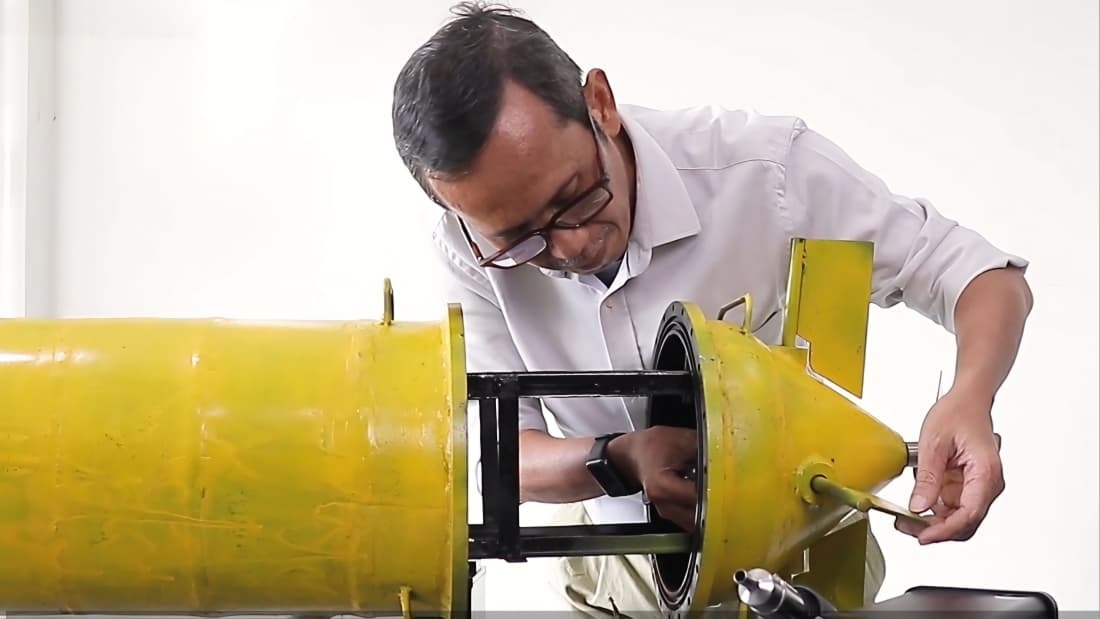
As a solution, this Surabaya-based professor designed three pillars of autonomous vehicles for the surface, underwater, and air. This technology is realized in the form of an autonomous underwater vehicle (AUV), an unmanned surface vehicle (USV), and an unmanned aerial vehicle (UAV). “These three are an integration of various disciplines, including mechanics, hydrodynamics, aerodynamics, electronics, sensors, and artificial intelligence,” he explained.
Conceptually, Ari explained that the autonomous vehicle system being developed operates in a closed -loop system . This pattern consists of six main components: measurement, perception, guidance, control, actuator , and environment . “All six are interconnected in a repetitive flow of information and actions to produce adaptive, safe, and optimal decisions and movements,” he said.
Digging deeper, each component has a specific function and role. Measurement is responsible for reading sensor data, perception understands the environment, and guidance determines direction and trajectory. Meanwhile, control maintains stability and accuracy, actuators execute physical commands, and the environment acts as a source of disturbances that the system must anticipate.
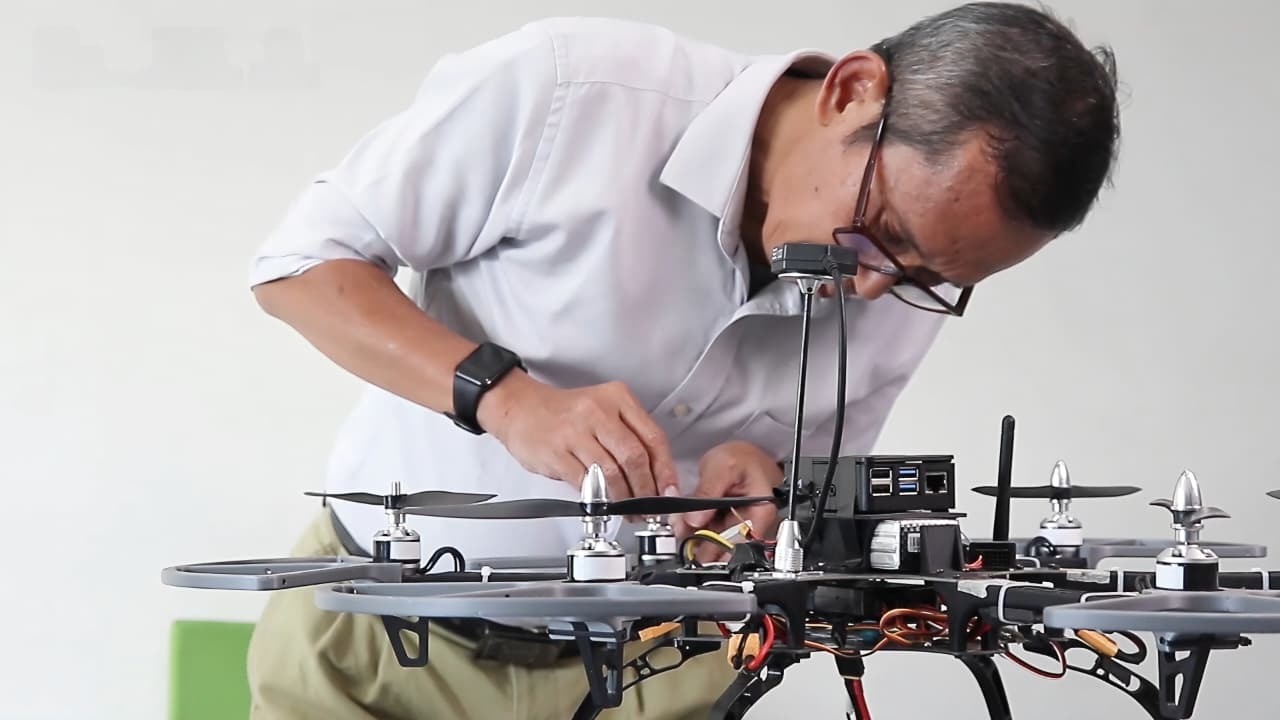
Through these applications, AUV, USV, and UAV technologies can operate optimally in their respective areas. In the maritime realm, the man born on February 18, 1966, explained that AUVs are deployed as technology for underwater inspections, such as electrical cables, pipes, and coral reefs. Meanwhile, USVs serve as surface vehicles for communication and marine observation. “Meanwhile, in the air, UAVs function to expand the range of observation,” he added.
Thus, Ari’s autonomous vehicle system is a strategic technology that strengthens the sovereignty of the Unitary State of the Republic of Indonesia (NKRI) over its archipelagic territory. This step aligns with ITS’s commitment to Sustainable Development Goals (SDGs), point 9 on Industry, Innovation, and Infrastructure, and point 14 on Marine Ecosystems. “Indonesia’s seas are not just territorial boundaries, but also a space for economic development, energy, data, innovation, history, and sovereignty,” Ari emphasized. (ITS Public Relations)
Reporter: Jecklin Chintya Galle Djami