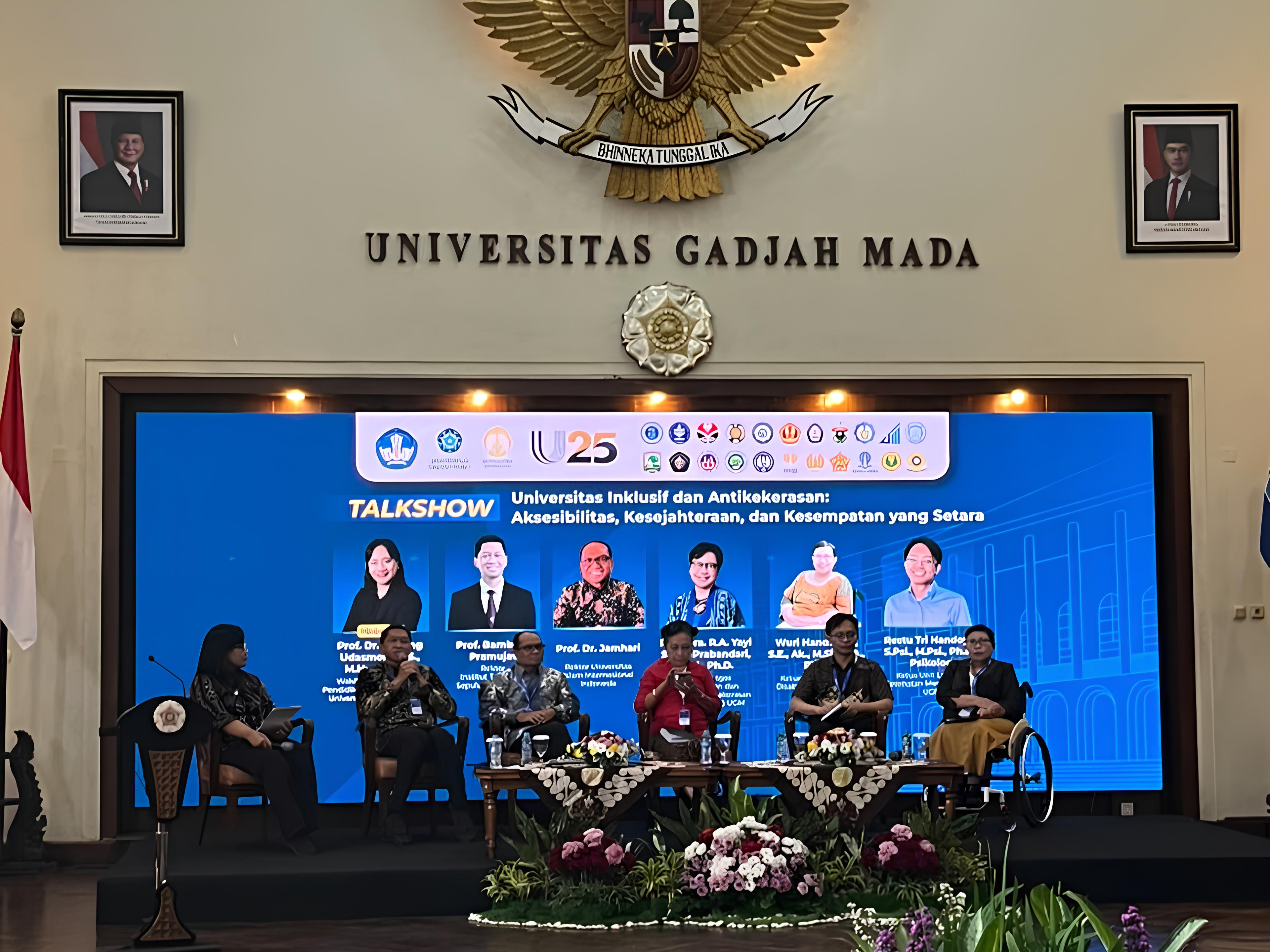
ITS Chancellor Prof. Bambang Pramujati was a speaker with the ranks of PTN-BH chancellors throughout Indonesia (1)
ITS Campus, ITS News — The Rector of the Sepuluh Nopember Institute of Technology (ITS), Prof. Dr. (HC) Ir. Bambang Pramujati, ST, MScEng, PhD, was present as a resource person in a talk show entitled “Inclusive and Anti-Violence University: Accessibility, Welfare, and Equal Opportunities.” The event, which is part of the U25 PTN-BH Leaders Forum 2026, took place at Gadjah Mada University (UGM) for two days, starting Wednesday (29/7).
This meeting was designed as a strategic forum for leaders of State Universities with Legal Entities (PTN-BH) throughout Indonesia. During the talk show, Bambang stated that a university’s excellence is no longer measured solely by academic achievement. “So, the direction universities are moving towards is to be able to build a human-centered ecosystem,” Bambang stated.
Given that higher education has a primary mission to build human civilization, ITS views an inclusive university as more than just a place that accommodates differences. “Universities must provide a platform that nurtures each individual to thrive,” explained the ITS figurehead.
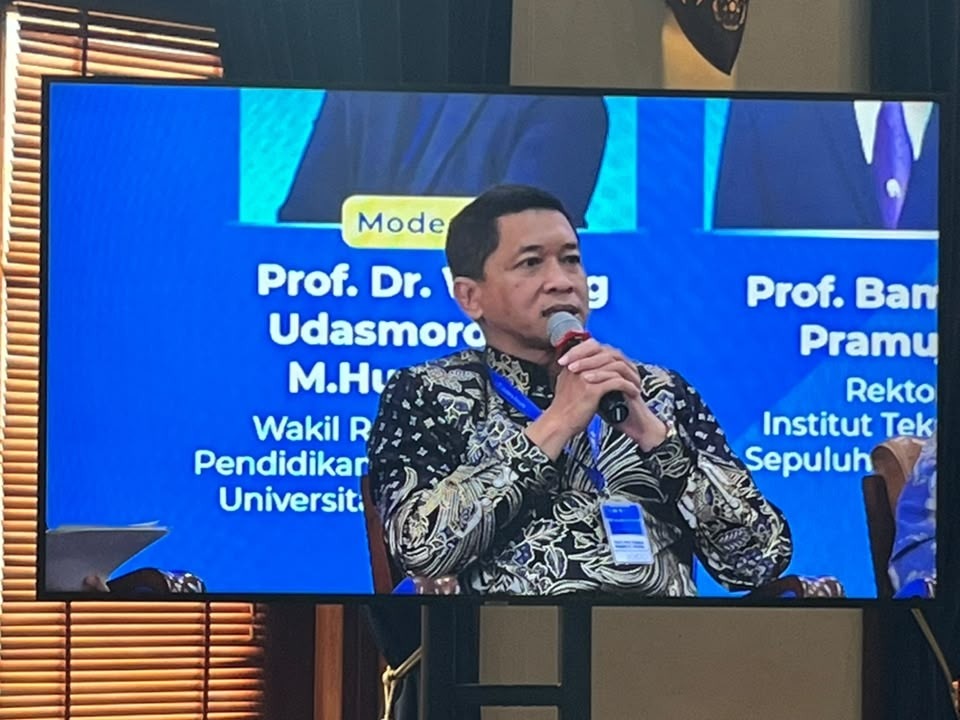
ITS Chancellor Prof. Bambang Pramujati was a speaker in the Talkshow agenda which discussed Inclusive and Anti-Violence Universities at UGM.
Furthermore, Bambang emphasized that for technology universities like ITS, innovation is not merely defined as the ability to build infrastructure or produce advanced technology. Engineering science must be directed towards solving humanitarian problems.
To achieve this, ITS is supported by five main pillars: governance, infrastructure, digital campus, welfare, and inclusive innovation. The ITS Professor of Mechanical Engineering explained that these five pillars are designed in an integrated manner to ensure that inclusivity becomes a living culture on campus.
ITS’s real commitment to translating these pillars is demonstrated through various disability-friendly assistive technology innovations created by its academic community. These include the Neutrack AI Glove, an AI-based smart glove for navigation for the blind and Alzheimer’s patients, the BaaDaaBoo pre-writing educational toy, the SMILE Hand Therapy gamified physical therapy, and the MobiAi eye-control smart wheelchair. “All of these innovations emphasize the principle that technology must be developed with empathy so that no one is left behind,” Bambang emphasized.
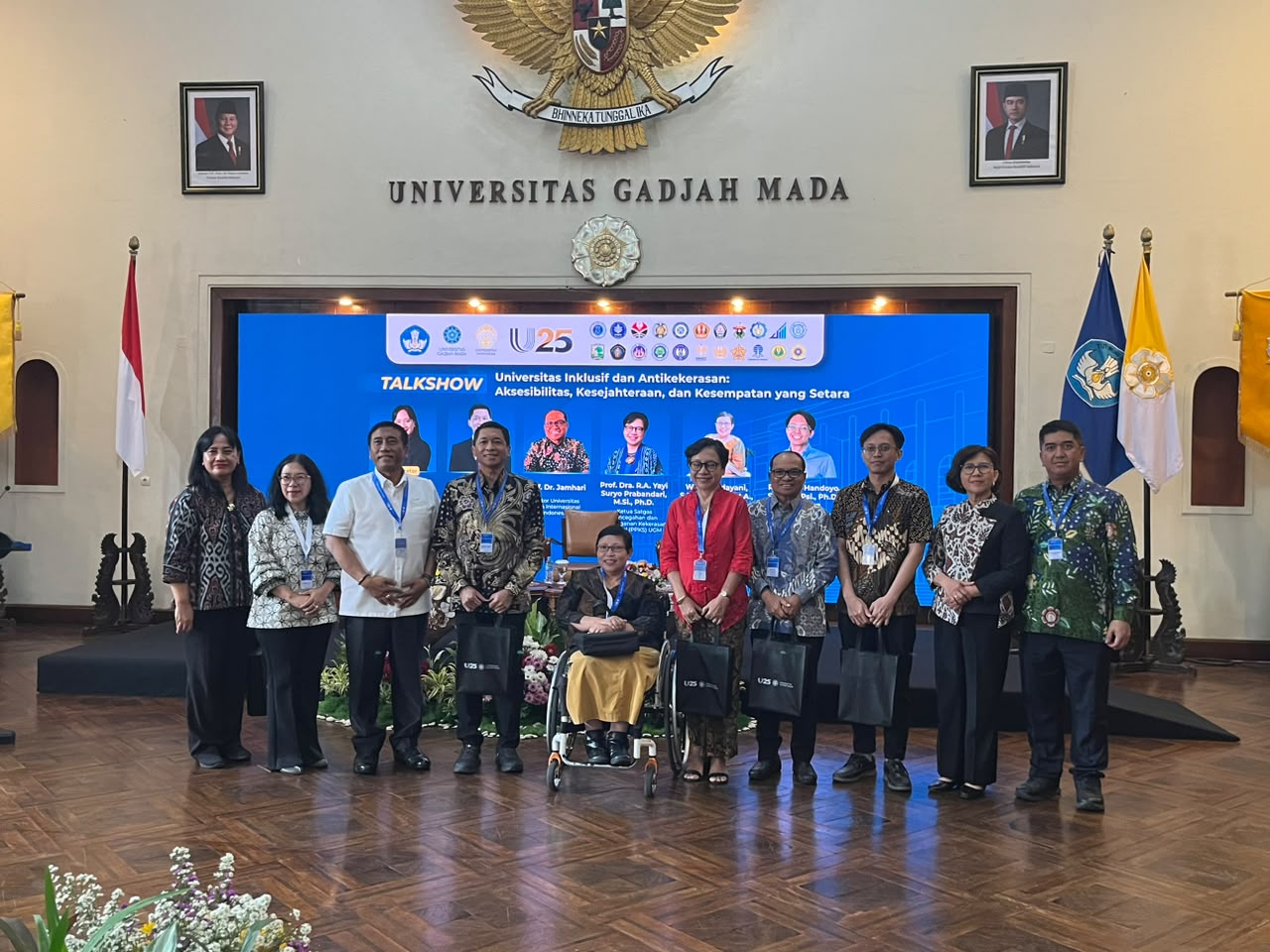
Prof. Bambang Pramujati (fourth from left) called for an inclusive and equitable campus. Furthermore, the Rector also highlighted the importance of mental health as an integral part of building an inclusive university. Technology campuses with their high academic pace present increasingly complex psychological challenges. The Look, Listen, Link approach is one recommended strategy.
Therefore, mental health services cannot simply consist of counseling when problems arise. According to Bambang, an ecosystem needs to be established early, starting with early screening, academic mentoring, and professional referral mechanisms when necessary. “All levels need to be equipped with the basic skills to recognize early symptoms, listen empathetically, and connect with professional services,” Bambang emphasized.
The ITS leadership also places significant emphasis on preventing sexual violence. According to him, an inclusive campus cannot be achieved without creating a sense of security for its academic community. Therefore, strengthening the Sexual Violence Prevention and Handling Task Force (PPKS) is imperative for any institution. “Provide strong policy support, a reliable reporting system, and swift and victim-friendly handling,” he emphasized.
Bambang believes that a culture of anti-violence must be built through ongoing education. Literacy about healthy relationships, social etiquette, and respect for the dignity of every individual needs to be part of everyday academic life. “An increase in the number of reports doesn’t necessarily mean a university is failing; rather, it can be an indicator of growing trust in the university’s protection systems,” Bambang emphasized.
This collective effort is expected to strengthen standards for safety, mental health, accessibility, and humane campus governance. Therefore, Bambang urged all leaders of PTN-BH (State Universities and Legal Entities) to view inclusivity as a shared agenda in creating a safe environment for the entire campus community.
Through this approach, ITS aims to demonstrate that technology and humanity are not mutually exclusive. These two aspects can be two forces that must work hand in hand in building a more inclusive, non-violent, and globally competitive future for Indonesian higher education.
The issues raised at the strategic forum align with the global Sustainable Development Goals (SDGs) agenda, specifically point 4, which promotes inclusive and equitable quality education, and point 10, which aims to reduce disparities in the academic environment through equal accessibility. All commitments are reinforced by humanistic campus governance, which calls for strategic partnerships (SDG point 17). (*)