

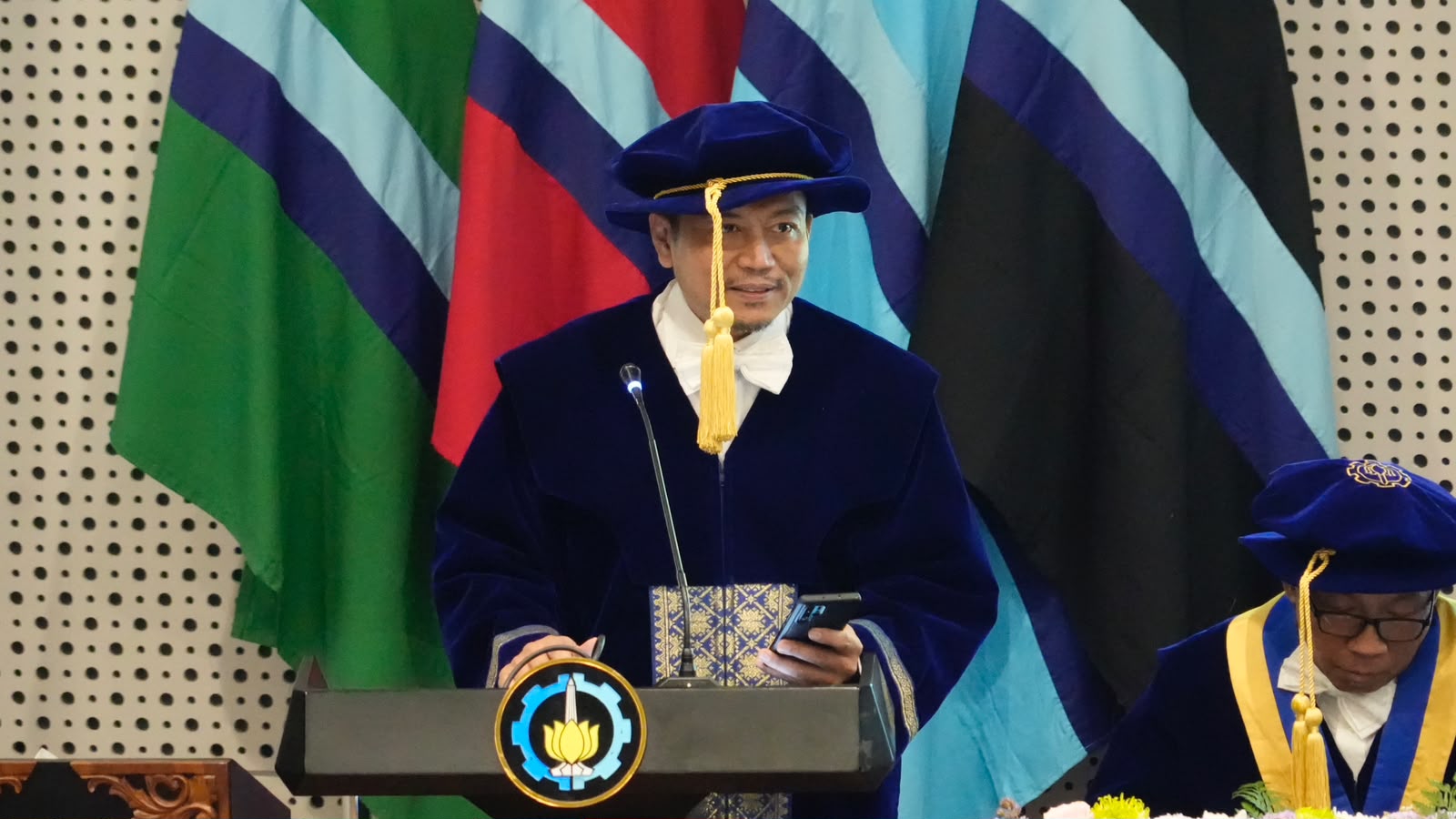
ITS Campus, ITS News — The transition to new, renewable energy is changing the character of Indonesia’s modern electricity system. To address this challenge, the 252nd Professor of the Sepuluh Nopember Institute of Technology (ITS), Prof. Dr. Eng. Ir. Ardyono Priyadi, ST., MEng., is researching the dynamics of power system stability to ensure reliability and resilience in the face of disruptions.
The professor from the ITS Department of Electrical Engineering explained that the increasing penetration of inverter-based renewable energy generators has reduced system inertia, making the electrical system more vulnerable to disruptions. According to Ardyono, this situation needs to be addressed through smart grid- based automatic monitoring and control . “The electric power system is required to respond to disruptions quickly, accurately, and reliably,” he said.
The main innovation in this research by the Head of the ITS Electrical Engineering Department for the 2015-2019 period lies in the method for calculating the critical clearing time (CCT), which is the time limit a system has to resolve a disturbance before losing stability. According to Ardyono, the longer the CCT value, the greater the chance the system will isolate the disturbance and maintain network operation.
To extend the CCT, Ardyono and his team developed various approaches, including the use of supercapacitors as energy dampers, Superconducting Fault Current Limiters (SFCLs) to limit fault currents, and the integration of Virtual Synchronous Generators (VSGs) into renewable energy-based microgrid systems. “These various approaches can extend the system’s tolerance before losing synchronization,” he added.
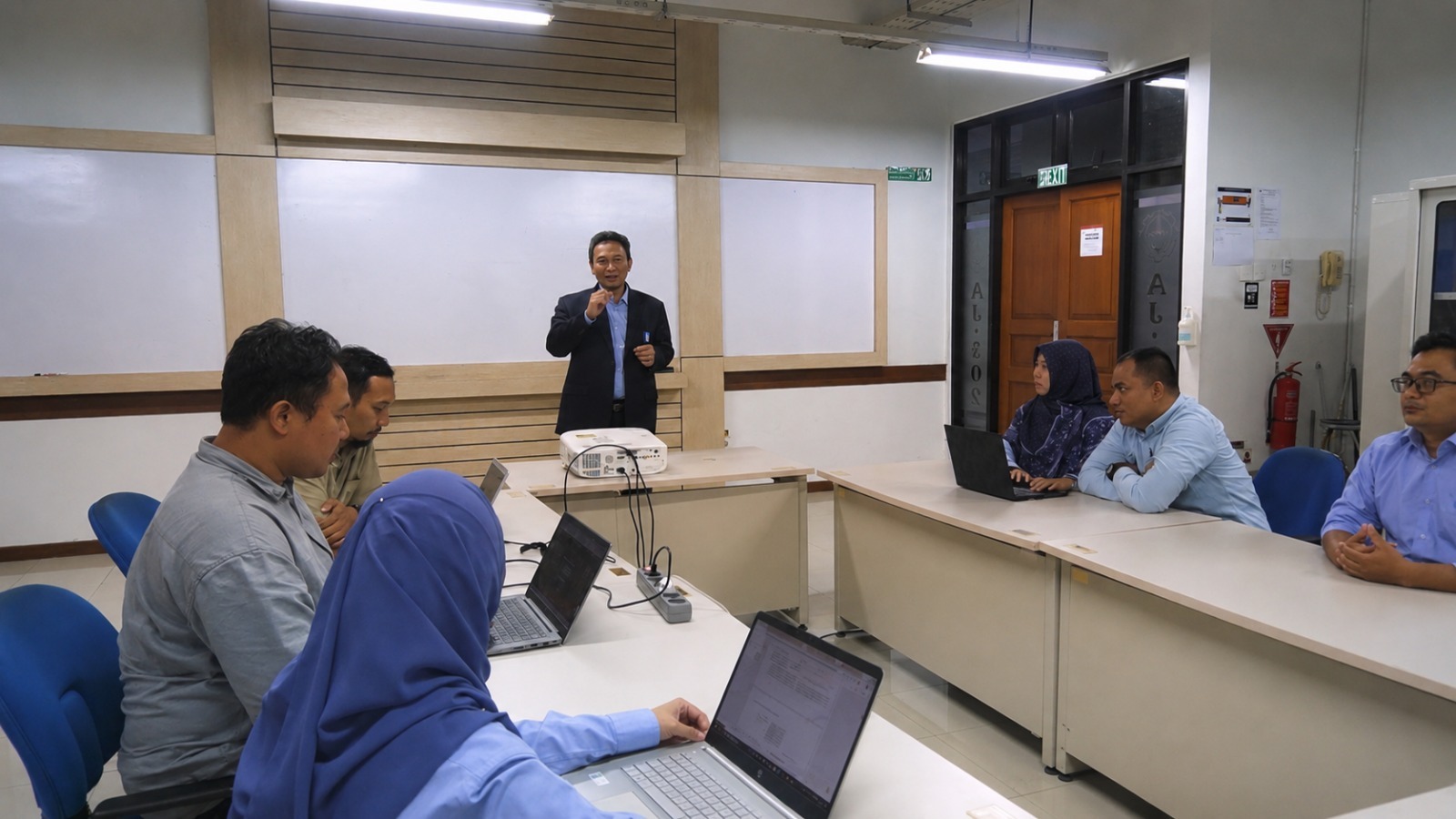
Ardyono also developed a protective relay coordination method based on transient stability analysis that integrates overcurrent relays and reverse power relays . Since its implementation in industrial electrical systems in 2016, the method has been able to keep generators operating when the main grid is disrupted. “This relay coordination can improve system stability and reliability, especially when inverter-based renewable energy enters the system on a large scale,” he explained.
Ardyono explained that his research findings have been applied and are working well in various large industries, including PT PLN, PT Pupuk Kaltim, PT Kaltim Daya Mandiri, and Medco Energi. This implementation demonstrates that his research findings are not merely academic but also provide solutions utilized in the industrial world.
The Head of the ITS Postgraduate Subdirectorate also conveyed a message to the younger generation of researchers to continue developing innovations in the field of electric power systems. “Don’t give up easily in developing algorithms or methods to address electric power system issues for the sake of national independence,” he urged.
Through this research, Ardyono hopes that Indonesia will be better prepared for the transition to a modern, reliable, and sustainable electricity system. This contribution also supports the achievement of the Sustainable Development Goals (SDGs), particularly point 7 on Clean and Affordable Energy and point 9 on Industry, Innovation, and Infrastructure. (ITS Public Relations)
Reporter: Iffah Najwa Ulya